Artwork
Krishna and Balarama
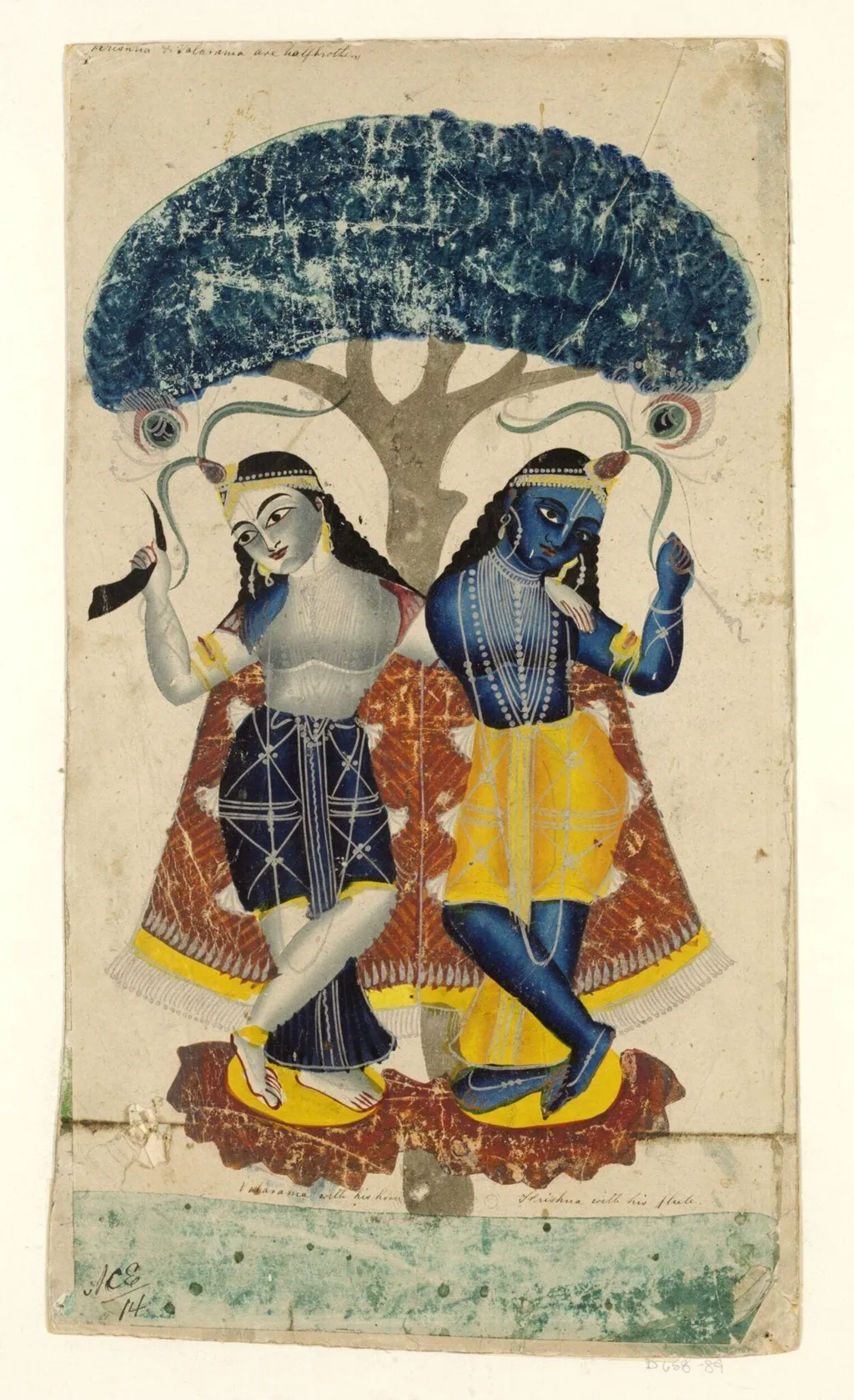
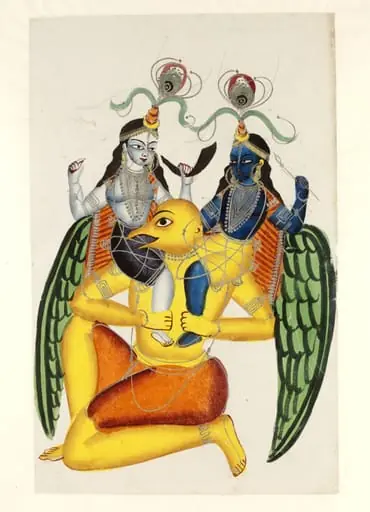
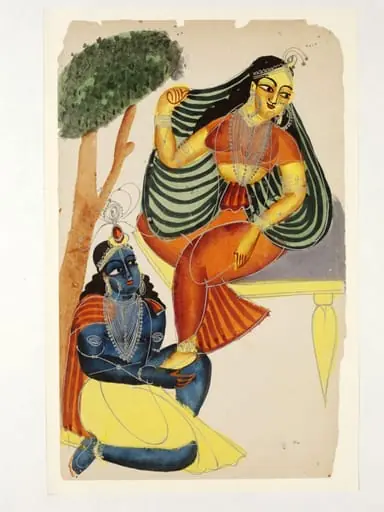
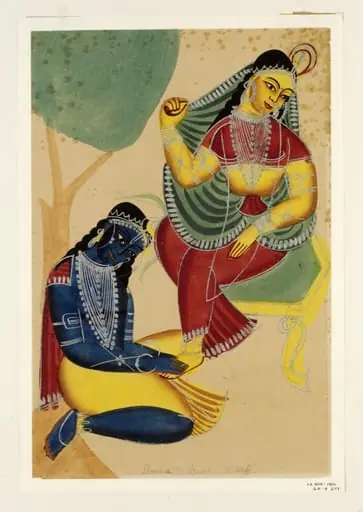
Krishna and Balarama is a paint painting by the Impressionist artist Unknown. It dates from 1850 and is held in the collection of the Victoria and Albert Museum.
About this work
Overview
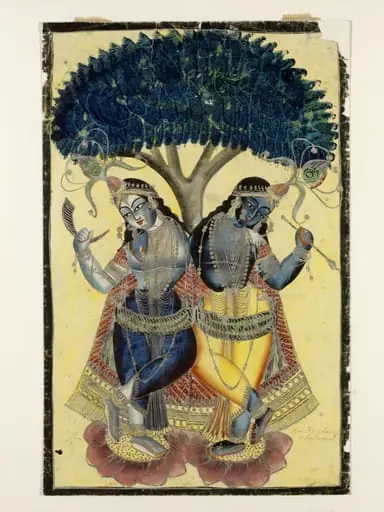
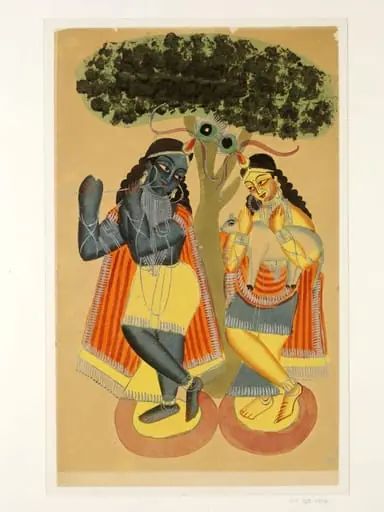
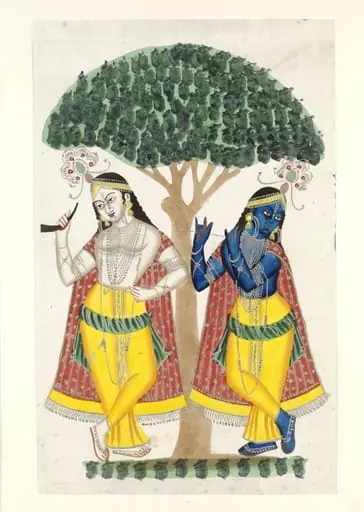
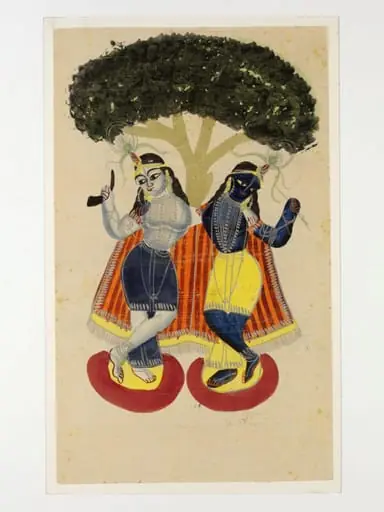
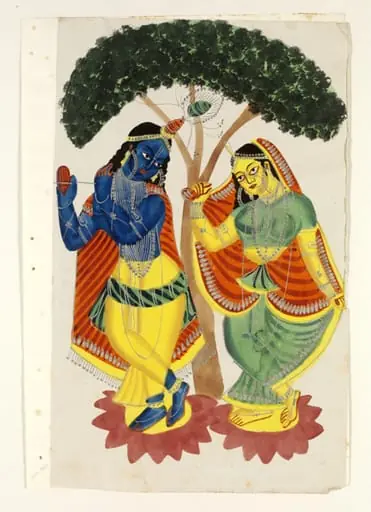
Created circa 1850, this watercolor on paper portrays the Hindu deities Krishna and Balarama in a tranquil outdoor setting. The figures stand beneath a broad‑leaved tree, their garments rendered in vivid yellow and blue with gold edging. The composition is modest in scale and serves as a devotional illustration of the brothers, one with a flute, the other with a drum‑like staff.
Subject & Meaning
The pairing emphasizes the complementary roles of the two brothers within Vaishnavite narratives, highlighting themes of harmony and spiritual guidance.
Krishna, traditionally associated with music and divine play, is shown holding a flute, while Balarama, his elder sibling, carries a curved staff that functions as a drum. Their blue skin, a conventional iconographic device, signifies their divine nature. The pairing emphasizes the complementary roles of the two brothers within Vaishnavite narratives, highlighting themes of harmony and spiritual guidance.
Technique & Style
The work employs transparent watercolor washes over paper, accented with tin‑alloy highlights that catch the light and delineate details. Outlines are rendered in bold ink, giving the faces a graphic clarity. The background features a dark, textured canopy of foliage and a reddish ground, creating a simple yet effective contrast with the brightly colored attire of the figures.
History & Provenance
Acquired by the Department of Prints and Drawings in 1889, the painting entered the collection through a purchase from the dealer G. Wild. It is catalogued under reference RP 51/2237. Since its accession, the piece has been documented as part of the museum’s holdings of 19th‑century Indian devotional art.
Artist & collection

 Domestic Scene
 Giacomo and Cardinal Marco, investing Andrea, Abbot of San Zeno, with his Benefice
 The Nymph of Fontainebleau
 Portrait of a Woman
 Madonna and Child with Saints in the Enclosed Garden
 Venus and Minerva
 Family Group of Four on Sofa
 Wall painting from Room H of the Villa of P. Fannius Synistor at Boscoreale