Artwork
Hanuman, Rama and Sita and Lakshmana
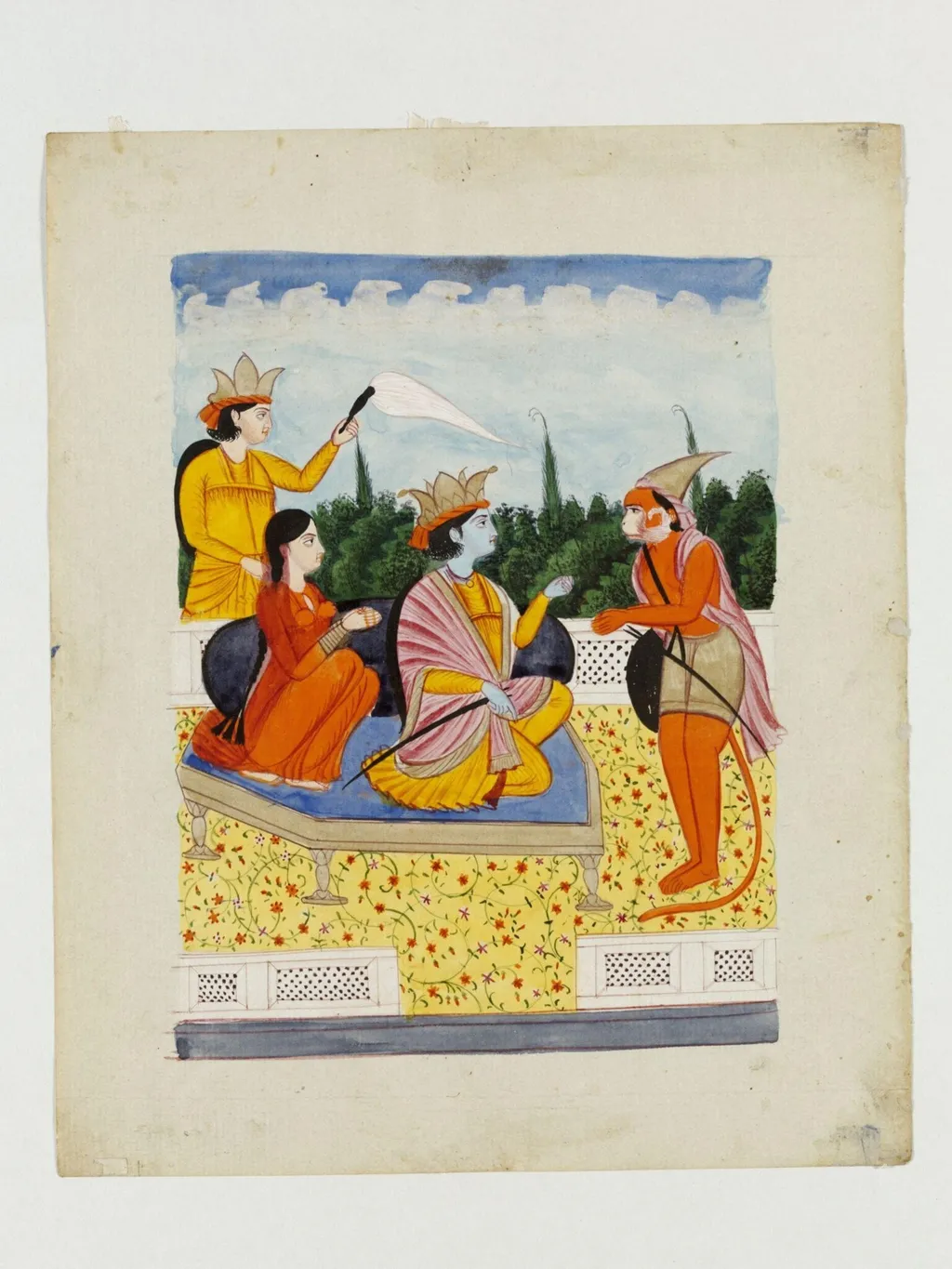
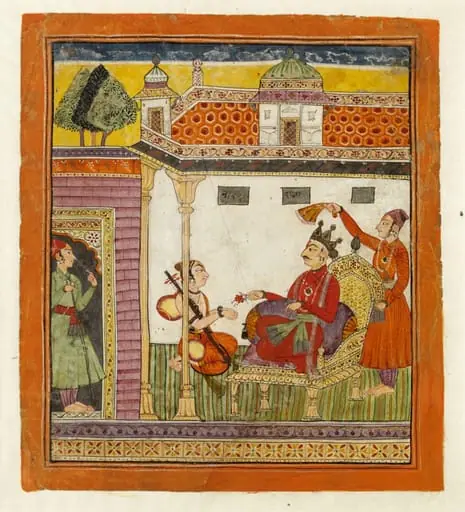
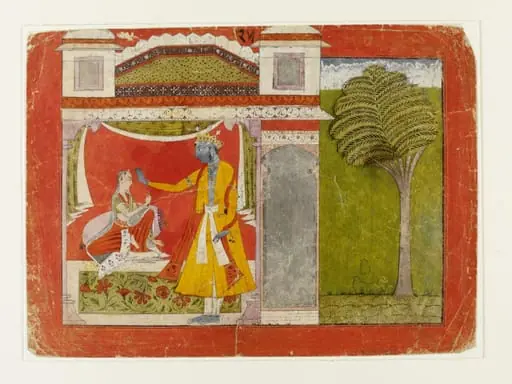
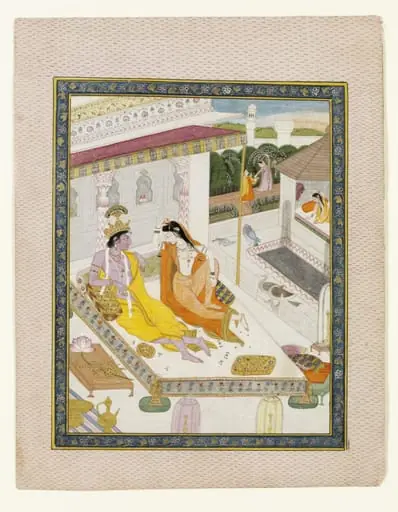
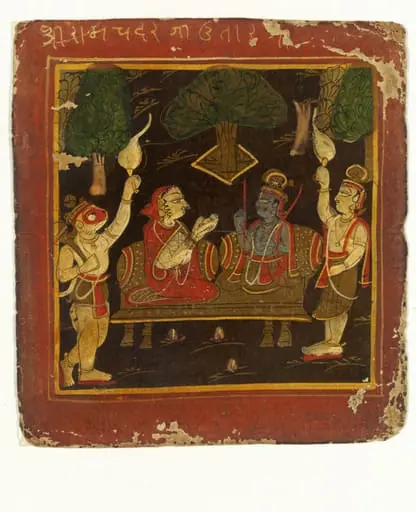
Hanuman, Rama and Sita and Lakshmana is a paint painting by the Indian Miniature artist Unknown. It dates from 1850 and is held in the collection of the Victoria and Albert Museum. This opaque watercolor on paper presents a small narrative scene set on a bright terrace.
About this work
Overview
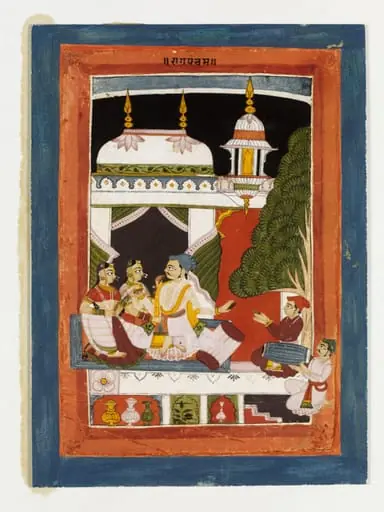
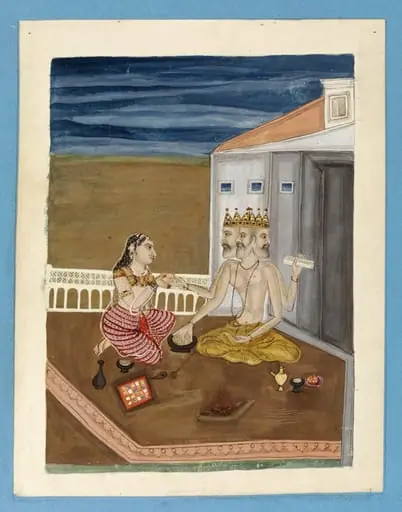
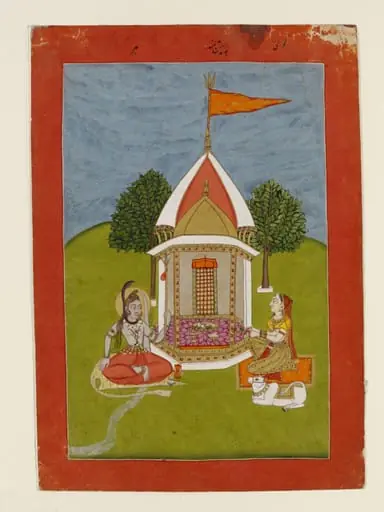
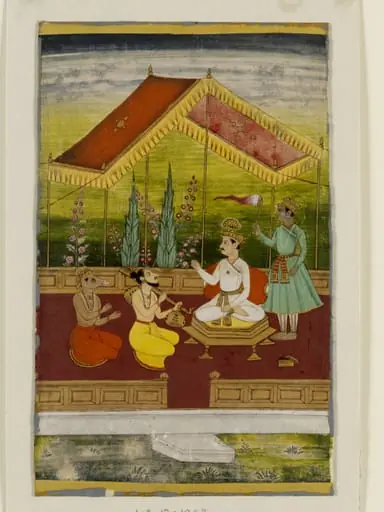
This opaque watercolor on paper presents a small narrative scene set on a bright terrace. Four figures occupy the composition: a seated woman in red, a man in yellow holding a white fan, another man in yellow and pink with a staff, and a vibrant orange figure with a monkey‑like face brandishing a bow. The background features a blue sky, trees and a white building with a patterned railing.
Subject & Meaning
The central action shows the monkey deity Hanuman bowing before the divine couple Rama and Sita, a gesture of devotion common in Hindu iconography. Behind them stands Lakshmana, identifiable by his holding of a fly‑whisk, indicating his role as attendant and protector. The arrangement emphasizes loyalty and reverence within the epic narrative of the Ramayana.
Technique & Style
Executed in opaque watercolor, the work employs flat areas of vivid pigment that flatten spatial depth, a characteristic of many South Asian courtly paintings. The use of strong primary colors—yellow, red, orange—and the stylized rendering of faces and garments create a decorative surface rather than a naturalistic illusion.
History & Provenance
The painting is one of 196 items—prints, drawings and paintings—assembled by J. Lockwood Kipling between 1865 and 1893. Most of the album consists of lithographs marketed at fairs and bazaars in Upper India and Bengal. In 1917 the collection was bequeathed to the museum by Kipling’s son, the writer Rudyard Kipling.
Context
The album reflects the 19th‑century British interest in Indian visual culture, gathering works that were widely circulated among colonial audiences. Such pieces often served both as souvenirs and as educational material about Indian religious narratives, illustrating how Hindu mythological themes were adapted for a market beyond their traditional devotional settings.
Artist & collection

 Domestic Scene
 Giacomo and Cardinal Marco, investing Andrea, Abbot of San Zeno, with his Benefice
 The Nymph of Fontainebleau
 Portrait of a Woman
 Madonna and Child with Saints in the Enclosed Garden
 Venus and Minerva
 Family Group of Four on Sofa
 Wall painting from Room H of the Villa of P. Fannius Synistor at Boscoreale