Artwork
Pancham Raga
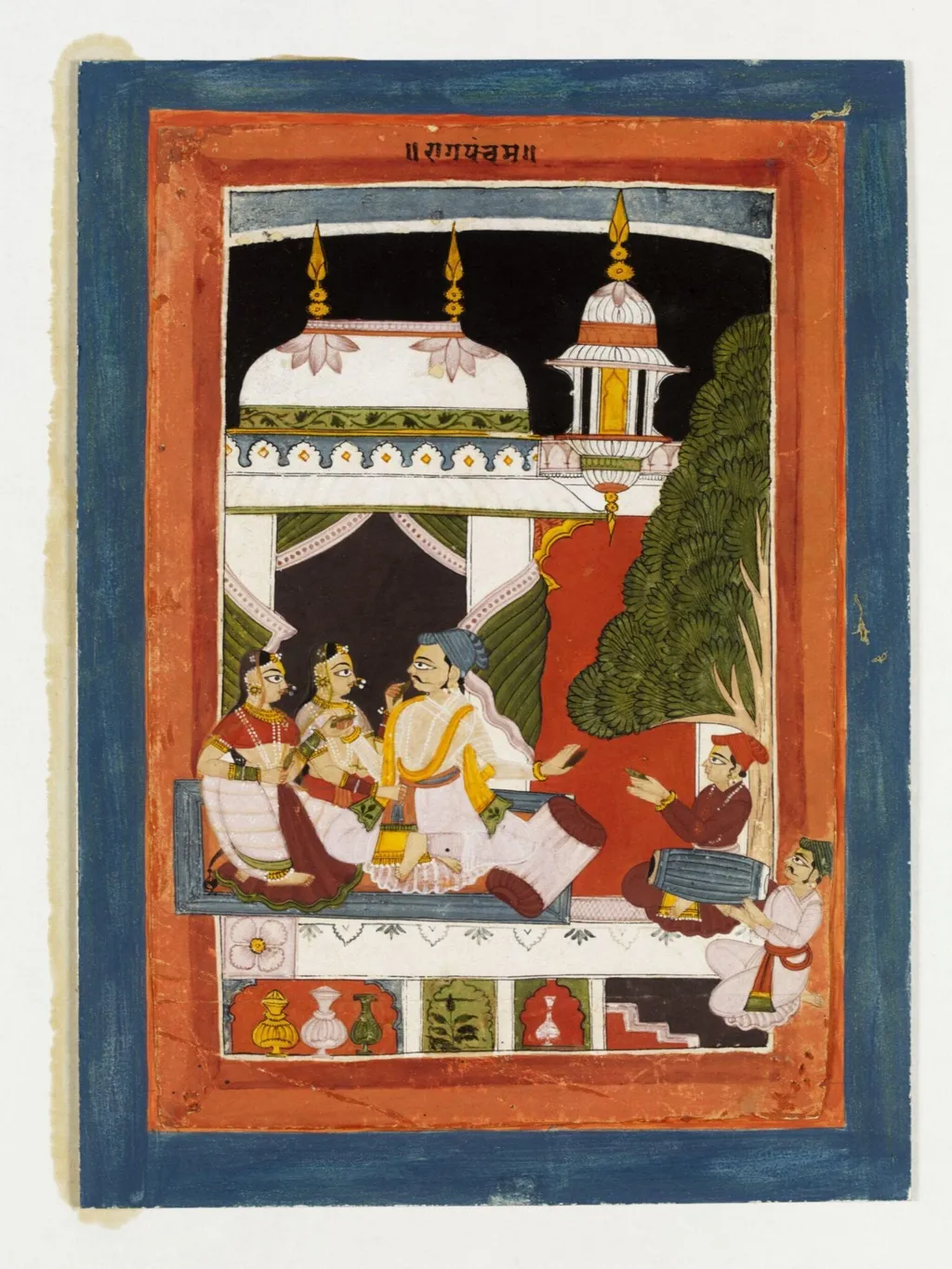
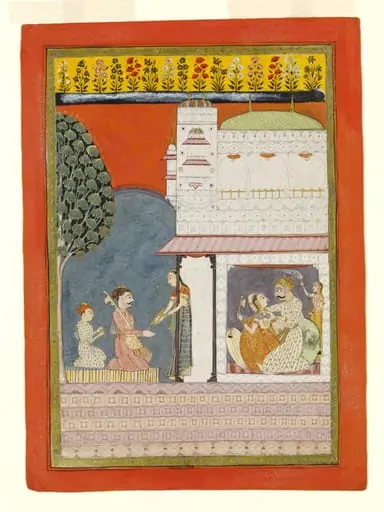
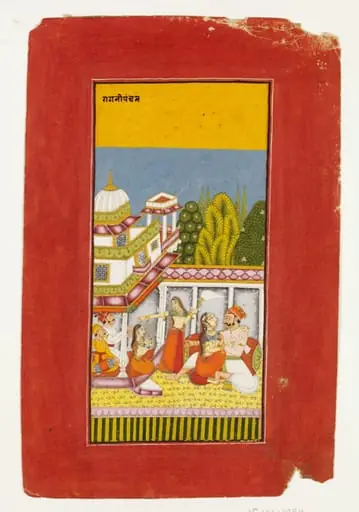
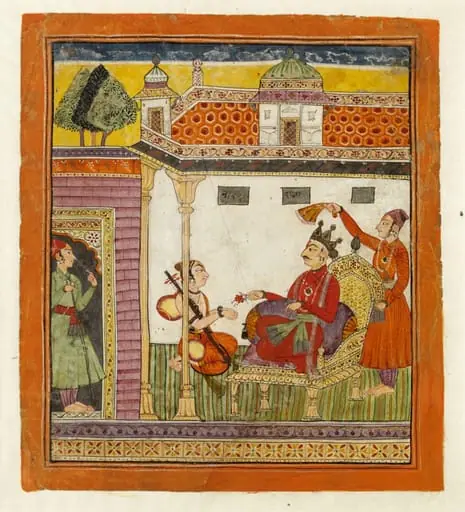
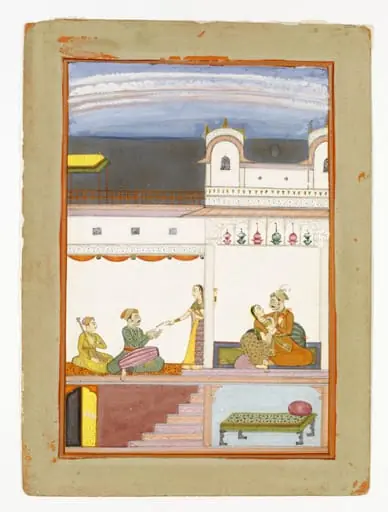
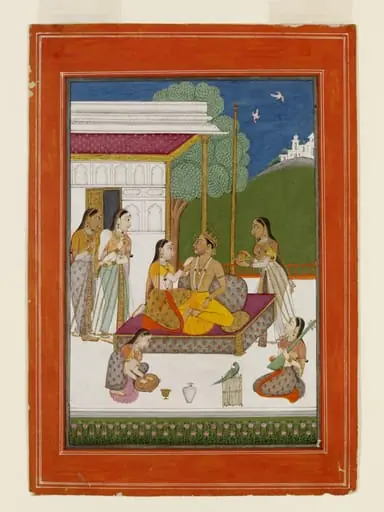
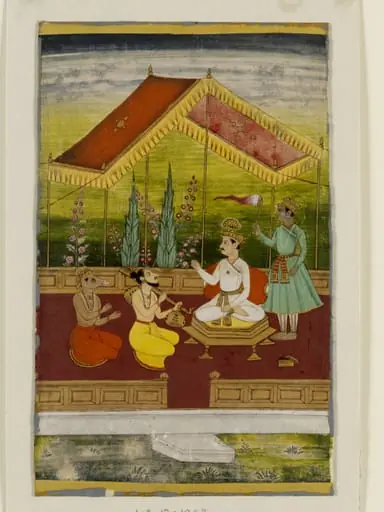
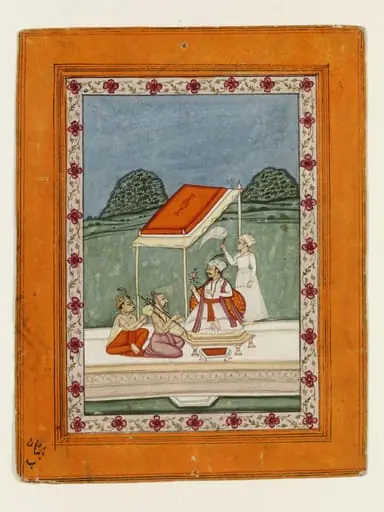
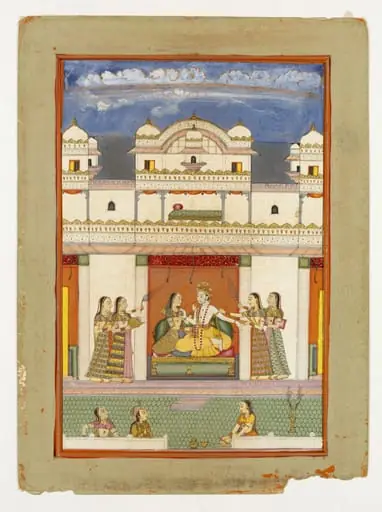
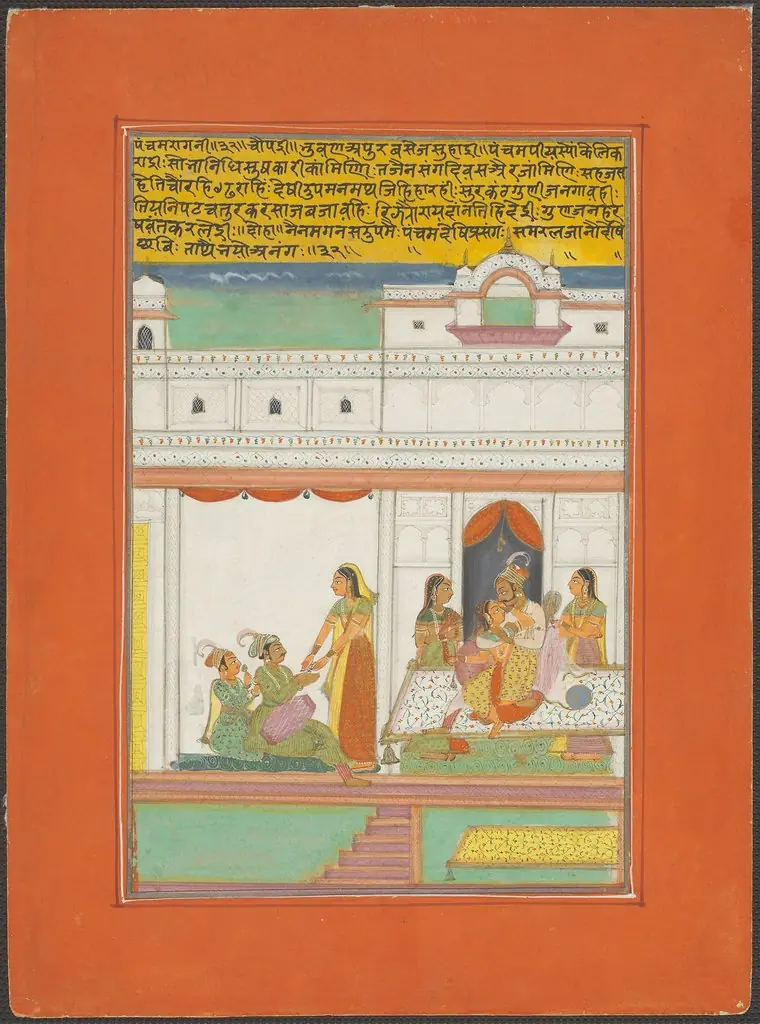
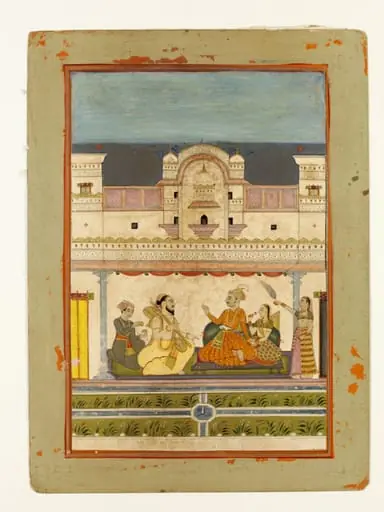
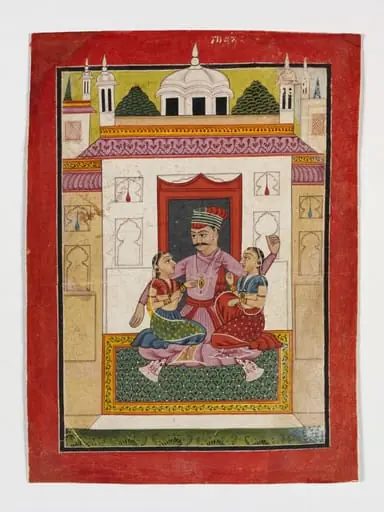
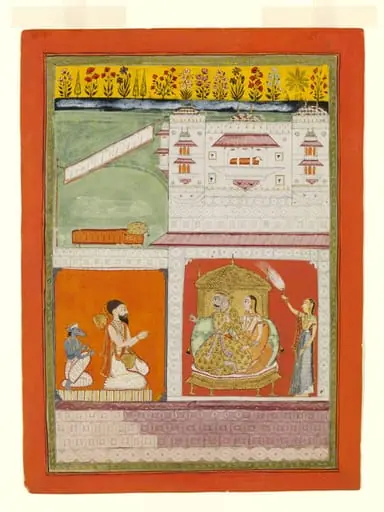
Pancham Raga is a paint painting by Unknown. It dates from 1650 and is held in the collection of the Victoria and Albert Museum. This painting portrays an intimate gathering on a terrace, where figures engage in music and social exchange.
About this work
Overview
This painting portrays an intimate gathering on a terrace, where figures engage in music and social exchange. The composition centers on a singer receiving pan from two women, while a drummer provides accompaniment. Brightly attired men and women, adorned with jewelry and headpieces, occupy the foreground, set against an architectural backdrop of domes and spires under a darkened sky.
Subject & Meaning
The scene illustrates the Pancham Raga, a classical musical mode in Indian tradition.
The scene illustrates the Pancham Raga, a classical musical mode in Indian tradition. The offering of pan—a betel leaf preparation—symbolizes hospitality and refinement, while the presence of musicians underscores the cultural significance of raga performances. The figures’ gestures and expressions suggest a moment of shared artistic and social connection, reflecting ideals of courtly leisure and aesthetic appreciation.
Technique & Style
Executed in vibrant pigments, the work employs bold outlines and flat areas of color to define forms, characteristic of traditional Indian miniature painting. The architectural elements and foliage are rendered with precision, while the figures exhibit delicate detailing in attire and ornamentation. A deep blue and orange border frames the scene, enhancing its visual contrast and decorative quality.
History & Provenance
The painting originates from a period and region associated with the production of ragamala series, which visually interpret musical modes. Its precise origins and early ownership remain undocumented, though its stylistic features align with courtly workshops of northern India. The work later entered institutional collections, where it has been preserved as an example of Mughal or Rajput painting traditions.
Context
Such compositions emerged within a cultural milieu where music, poetry, and visual art intersected. Ragamala paintings served both aesthetic and didactic purposes, depicting raga personifications to evoke their emotional and atmospheric qualities. The terrace setting reflects the importance of private gatherings in elite circles, where patrons and artists collaborated to celebrate refined pastimes.
Legacy
The painting contributes to the understanding of ragamala iconography and the broader tradition of Indian miniature art. Its depiction of musical performance and social ritual offers insight into historical practices of patronage and artistic production. Preserved in museum collections, the work continues to inform studies of South Asian visual culture and its intersections with music and literature.
Artist & collection

 Domestic Scene
 Giacomo and Cardinal Marco, investing Andrea, Abbot of San Zeno, with his Benefice
 The Nymph of Fontainebleau
 Portrait of a Woman
 Madonna and Child with Saints in the Enclosed Garden
 Venus and Minerva
 Family Group of Four on Sofa
 Wall painting from Room H of the Villa of P. Fannius Synistor at Boscoreale