Artwork
Hare, Spoonbill, and Fish
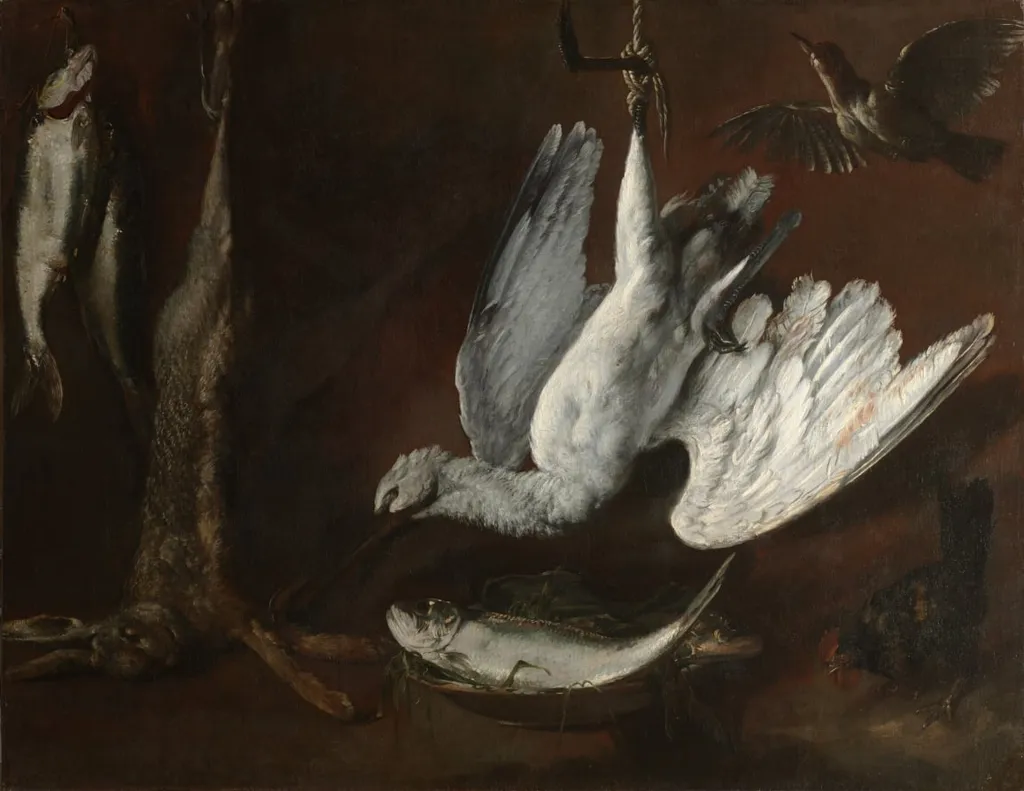
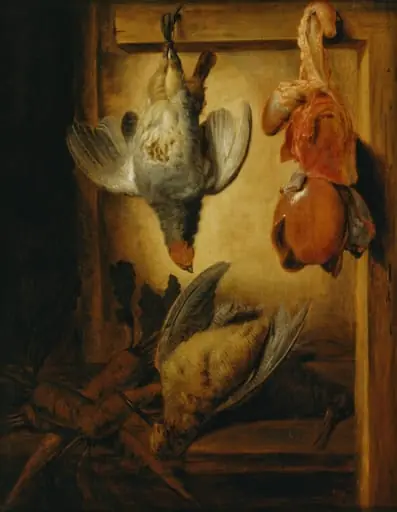
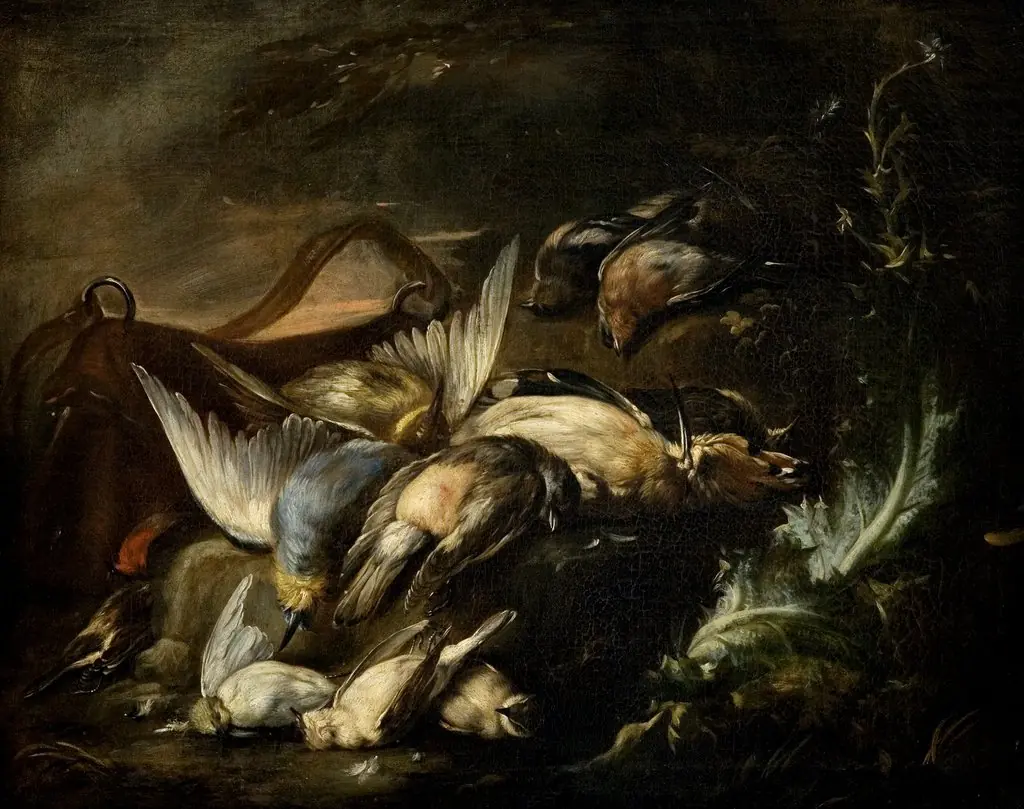
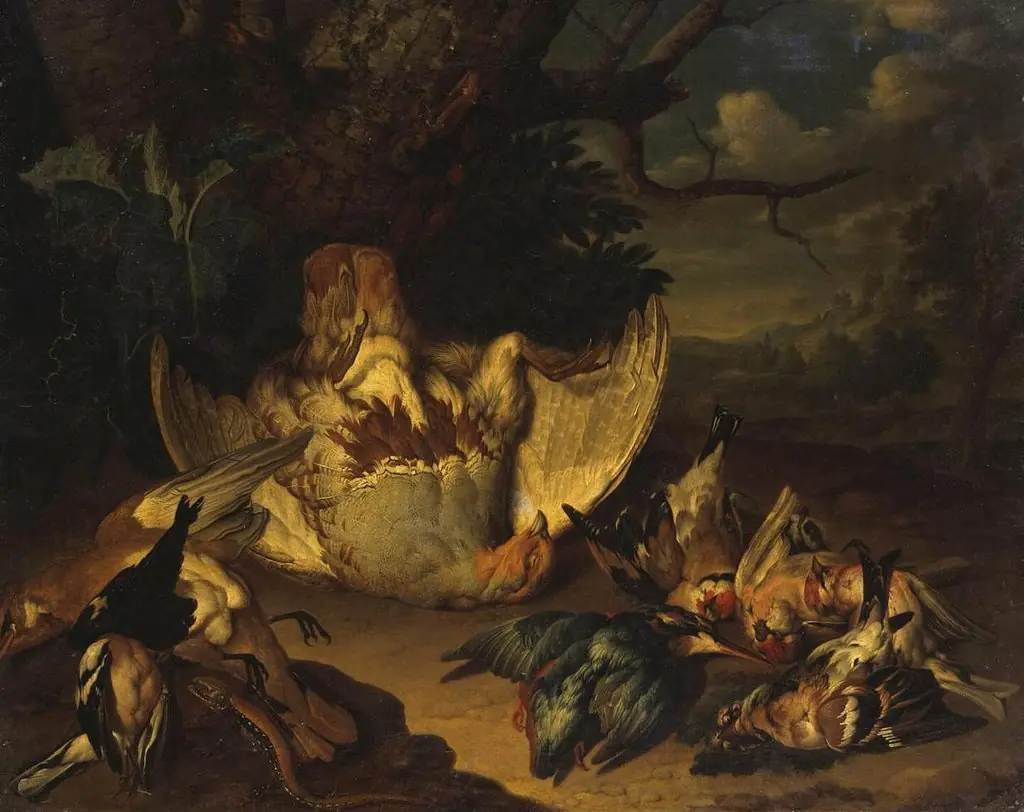
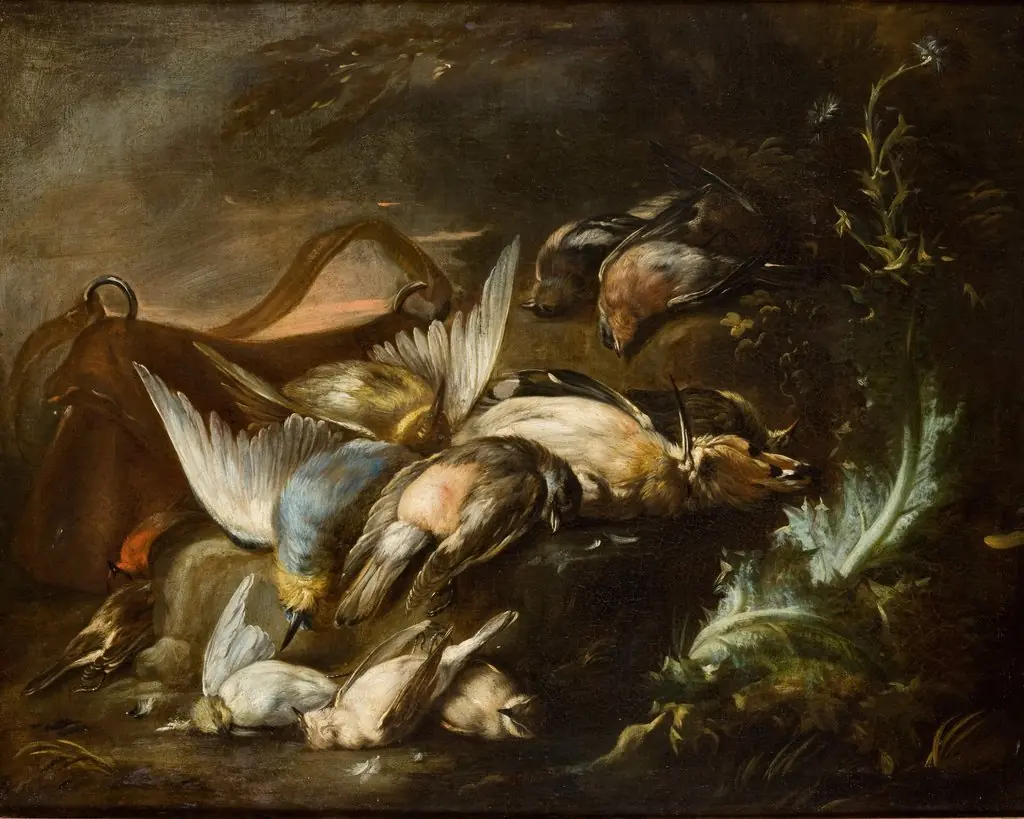
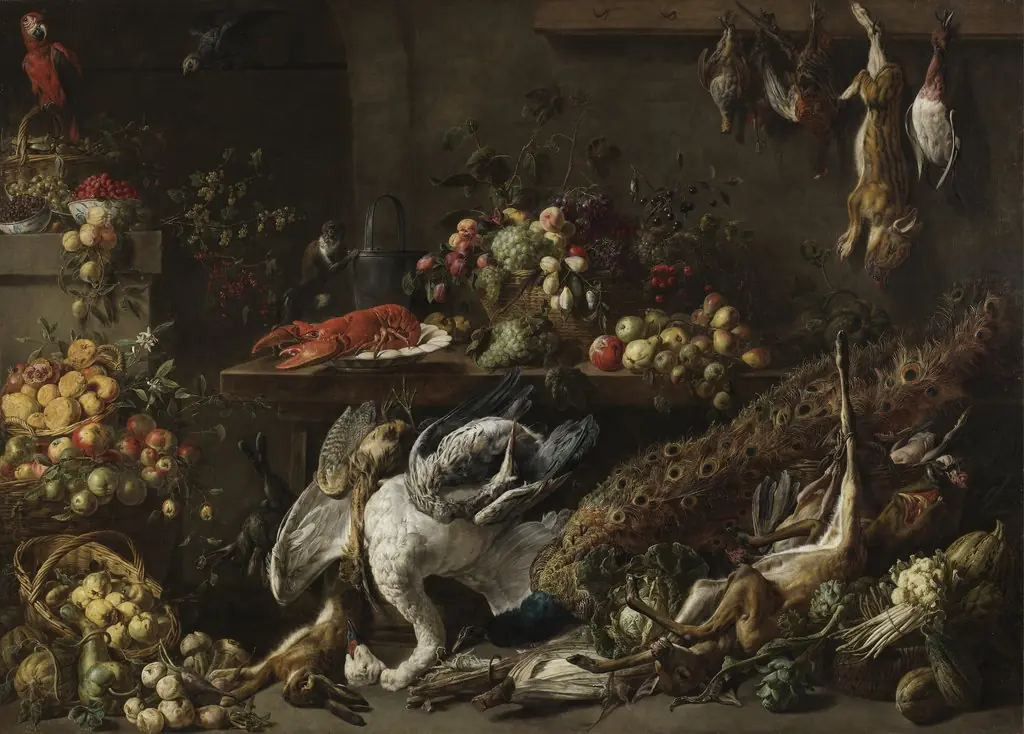
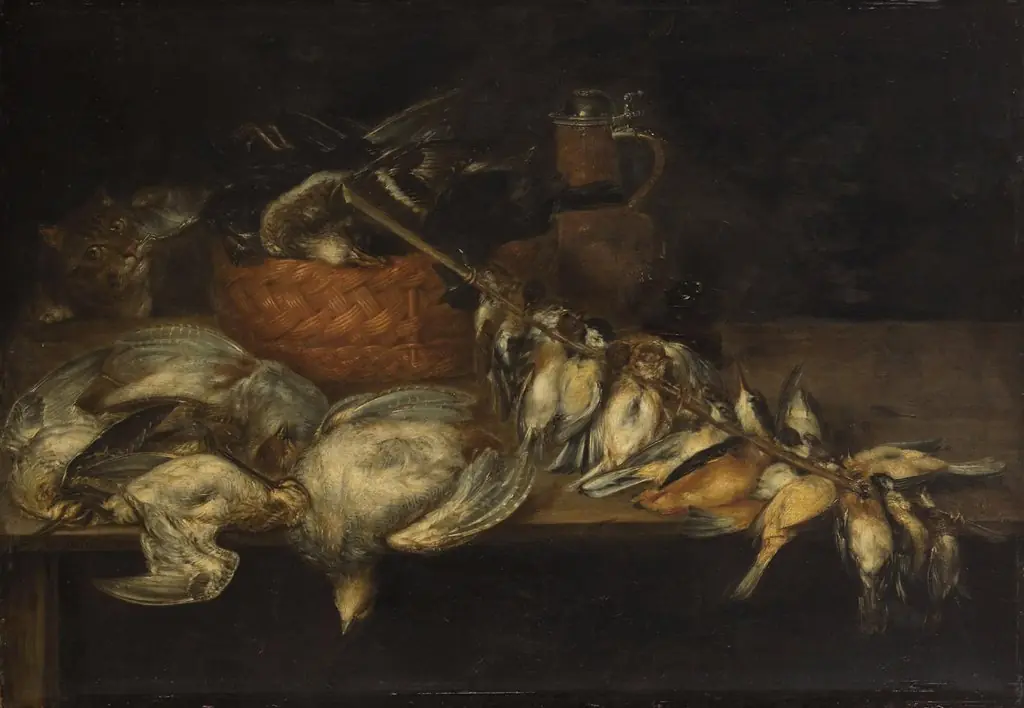
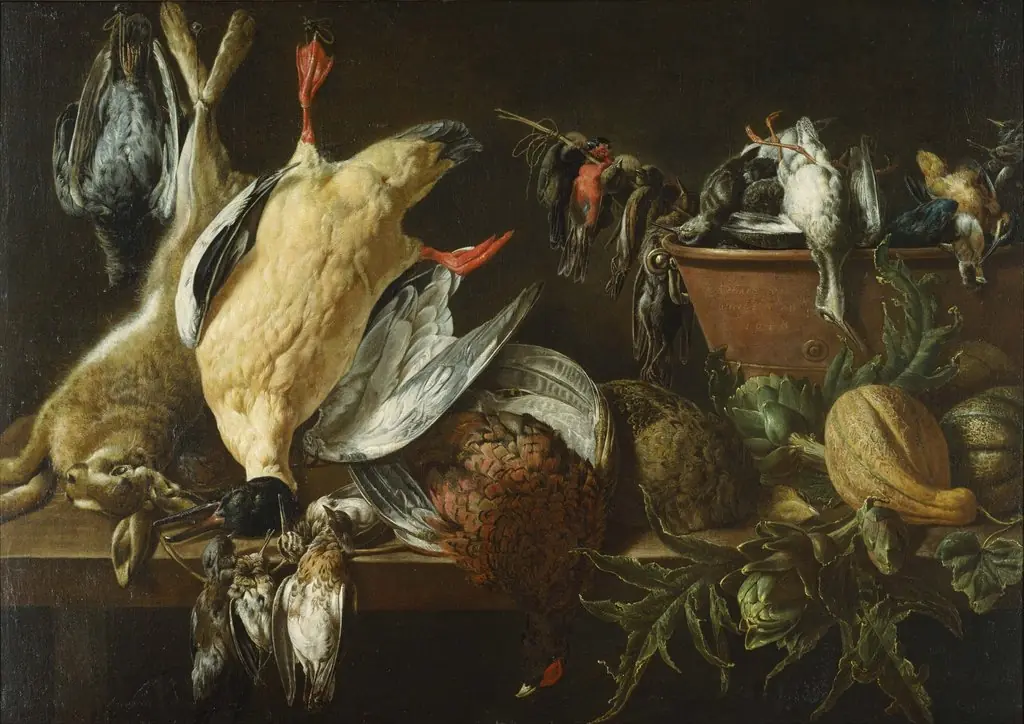
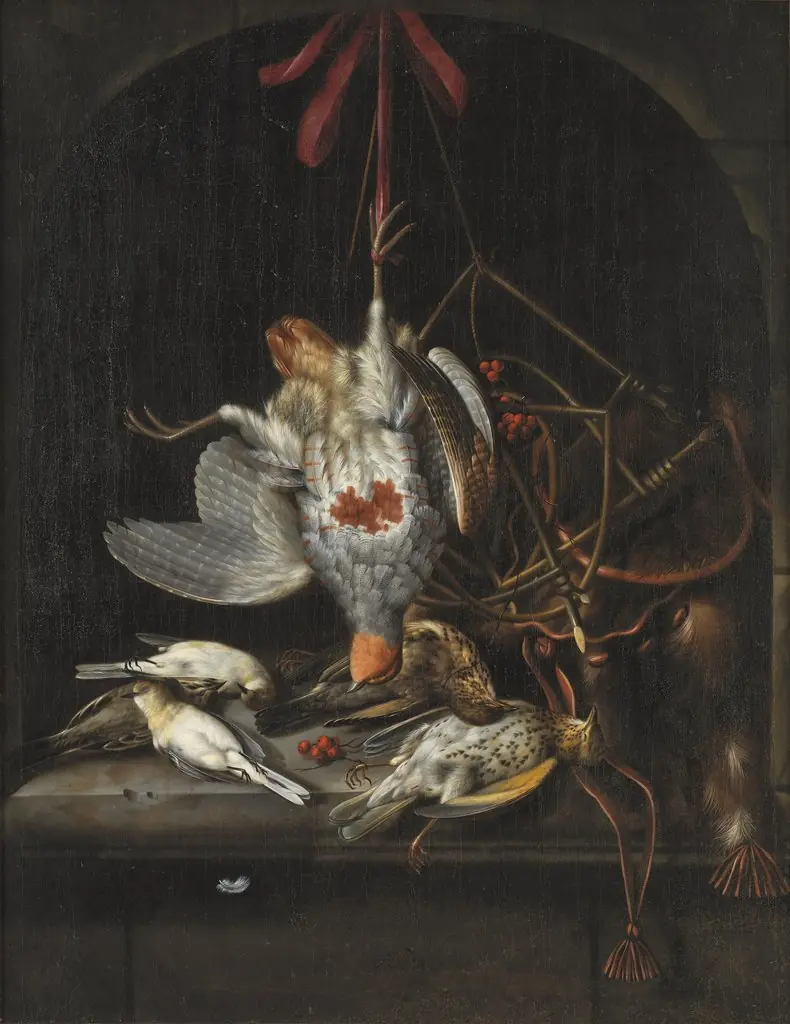
Hare, Spoonbill, and Fish is an unspecified painting by the Baroque artist Unknown. It dates from 1604 and is held in the collection of the Cleveland Museum of Art. The canvas presents a still‑life arrangement of a dead hare, a spoonbill, and two fish resting on a dark tabletop.
About this work
The loose brushwork and warm background suggest an Italian artist from Genoa in the 1600s, but experts haven’t matched it to any known name.
You see a dead hare, a spoonbill bird, and two fish laid out on a dark table.
No one knows who painted it. The loose brushwork and warm background suggest an Italian artist from Genoa in the 1600s, but experts haven’t matched it to any known name. The fish scales almost glisten, painted with quick, wet strokes.
Look up other paintings tagged “italy, possibly genoa, 17th century” to see if anything feels familiar.
Overview
The canvas presents a still‑life arrangement of a dead hare, a spoonbill, and two fish resting on a dark tabletop. The composition is dominated by strong chiaroscuro, with bright highlights contrasting deep shadows, and a warm, reddish ground that recedes behind the objects.
Subject & Meaning
The grouping of game and fish reflects the 17th‑century interest in depicting abundance and the transient nature of life. The inclusion of a spoonbill, an exotic bird, alongside more common game, suggests a collector’s desire to showcase variety and perhaps a symbolic contrast between the terrestrial and aquatic realms.
Technique & Style
Brushwork is loose and fluid, especially evident in the rendering of the fish scales, which appear to catch light through quick, wet strokes. The background’s vague, reddish tone and the handling of paint are characteristic of an Italian approach, favoring atmospheric depth over meticulous detail.
History & Provenance
The work remains unattributed; scholars have examined Dutch and Spanish candidates such as Frans Snyders and Alejandro de Loarte, but stylistic analysis has ruled them out. Current consensus leans toward an Italian origin, possibly a Northern Italian workshop, though no documented artist has been identified.
Context
During the early 1600s, Northern Italian cities like Genoa produced still‑life paintings that combined lavish display with naturalistic observation. The painting’s emphasis on space between objects and dramatic lighting aligns with regional trends of that period, reflecting both market demand for decorative banquet scenes and the influence of Flemish models adapted to Italian taste.
Artist & collection

 Domestic Scene
 Giacomo and Cardinal Marco, investing Andrea, Abbot of San Zeno, with his Benefice
 The Nymph of Fontainebleau
 Portrait of a Woman
 Madonna and Child with Saints in the Enclosed Garden
 Venus and Minerva
 Family Group of Four on Sofa
 Wall painting from Room H of the Villa of P. Fannius Synistor at Boscoreale