Artwork
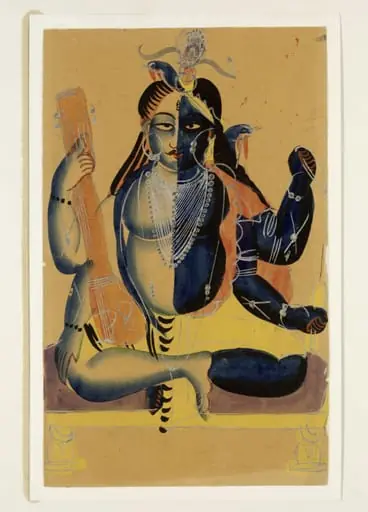
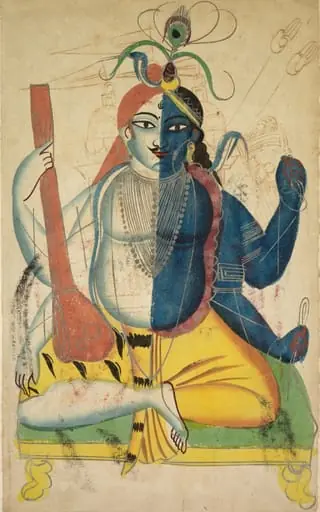
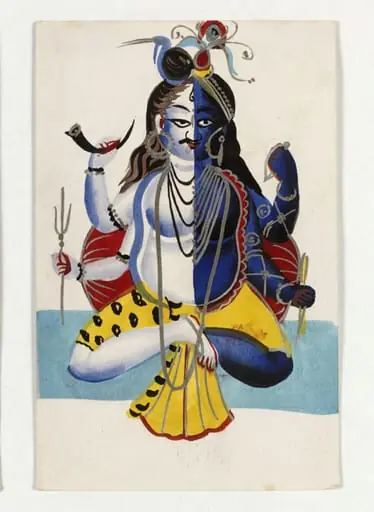
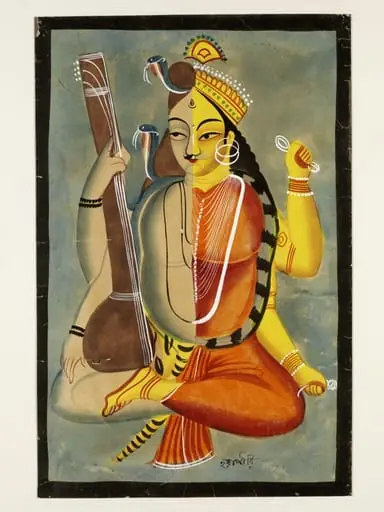
Hari-Hara
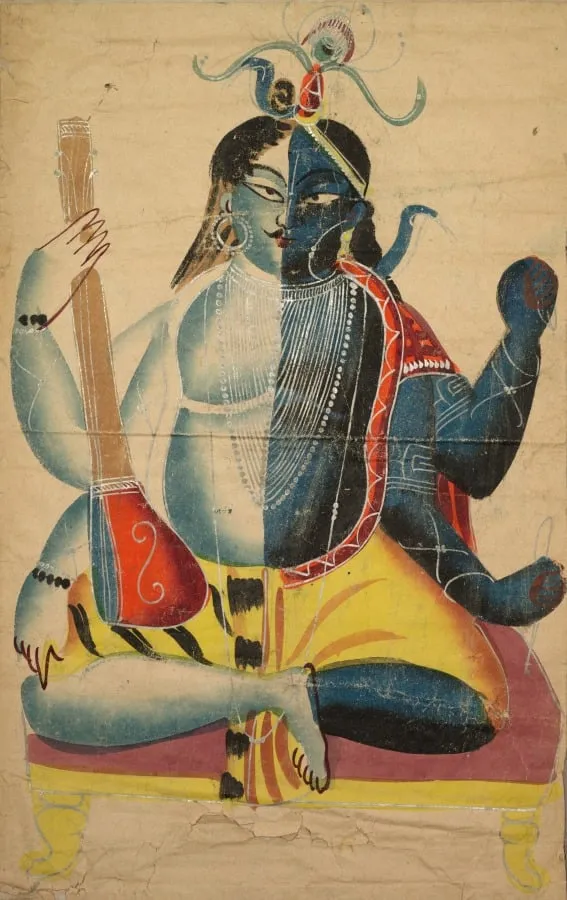
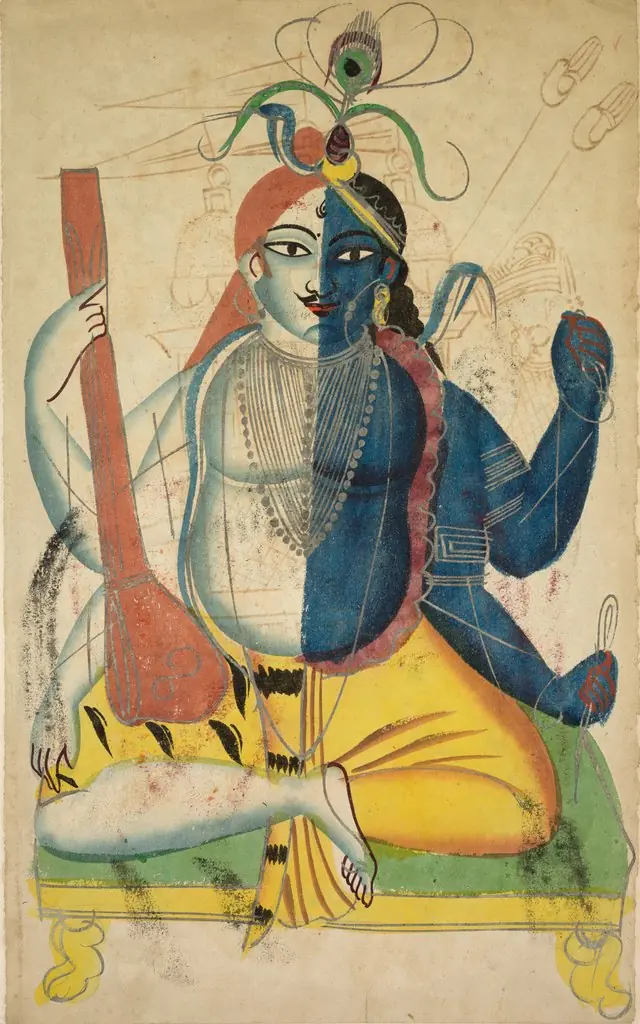
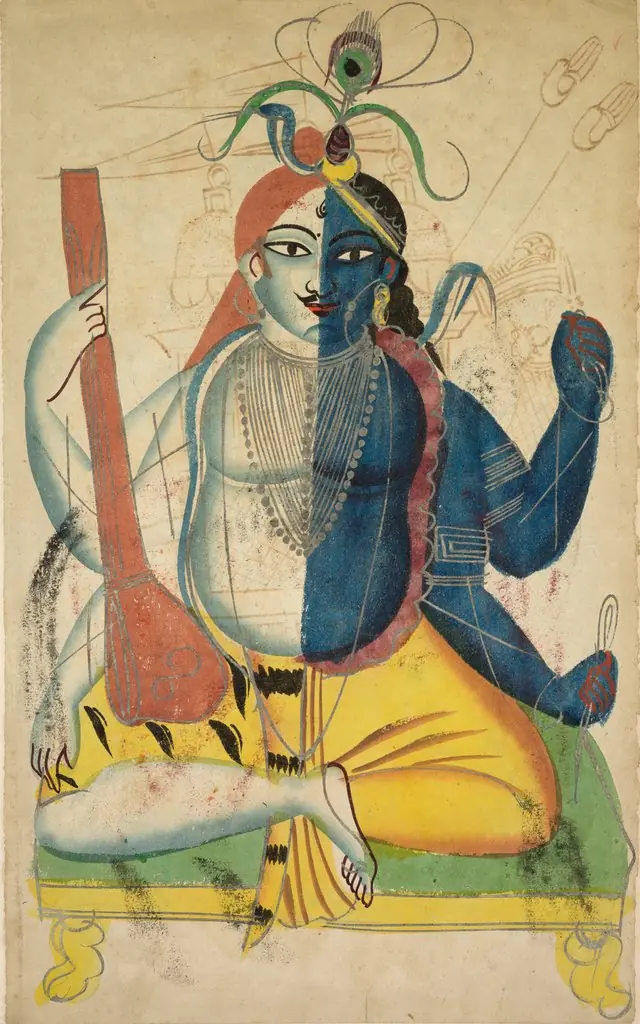
Hari-Hara is an unspecified painting by the Patna School of Painting artist Unknown. It dates from 1890 and is held in the collection of the Cleveland Museum of Art. This painting depicts a composite deity with a human torso and an animal head, rendered in a stylized, non-traditional manner.
About this work
Overview
This painting depicts a composite deity with a human torso and an animal head, rendered in a stylized, non-traditional manner.
This painting depicts a composite deity with a human torso and an animal head, rendered in a stylized, non-traditional manner. The figure sits in meditation, holding a small drum, surrounded by swirling abstract backgrounds in blue and red. The palette is vivid but uneven, suggesting rapid execution. The fusion of human and animal traits, along with simplified forms and flat planes, diverges from classical Indian iconography, pointing toward a modern reinterpretation rooted in folk or regional traditions.
Subject & Meaning
The figure combines elements of Hari (Vishnu) and Hara (Shiva), representing a syncretic divine form common in Hindu syncretism. The drum in hand alludes to cosmic rhythm, while the meditative posture suggests inner stillness. The calm expression and ornamental attire reinforce a benevolent, transcendent presence. Though rooted in theological duality, the depiction prioritizes symbolic resonance over doctrinal precision, reflecting a devotional or popular interpretation rather than scriptural orthodoxy.
Technique & Style
The painting employs flat, unmodulated color fields and bold outlines, avoiding perspective or shading. Brushwork appears spontaneous, with visible inconsistencies in pigment application, suggesting a working method tied to rapid production. The animal head is rendered with stylized simplicity, contrasting with the more defined human limbs. Background swirls lack detail, functioning as energetic voids rather than spatial environments. This aesthetic aligns with vernacular traditions that favor expressive immediacy over refined technique.
History & Provenance
The work bears stylistic hallmarks of Kalighat painting, a 19th-century Bengali tradition that emerged near the Kalighat temple in Kolkata. Artists produced these works on paper for pilgrims and urban buyers, blending religious themes with contemporary social commentary. While traditional Kalighat pieces often featured deities in dynamic or satirical contexts, this painting’s serene tone and abstract background suggest a later, possibly 20th-century adaptation, reflecting evolving tastes and diminished ritual function.
Context
Emerging during a period of colonial urbanization, Kalighat paintings responded to new audiences and commercial demands. Artists adapted traditional iconography to suit market preferences, often simplifying forms and intensifying color. This piece reflects that transition: a sacred subject rendered with the urgency and economy of mass production. Its hybrid style signals a cultural space where religious imagery was reimagined outside temple or scholarly frameworks, becoming part of everyday visual culture.
Legacy
Though not part of canonical religious art, this painting exemplifies how folk traditions preserved and transformed spiritual symbols for modern audiences. Its stylistic choices influenced later Indian modernists who sought indigenous visual languages distinct from Western academic norms. Today, such works are studied as cultural artifacts that reveal the fluidity of religious expression, the impact of urbanization on iconography, and the resilience of folk aesthetics in changing social landscapes.
Artist & collection

 Domestic Scene
 Giacomo and Cardinal Marco, investing Andrea, Abbot of San Zeno, with his Benefice
 The Nymph of Fontainebleau
 Portrait of a Woman
 Madonna and Child with Saints in the Enclosed Garden
 Venus and Minerva
 Family Group of Four on Sofa
 Wall painting from Room H of the Villa of P. Fannius Synistor at Boscoreale