Artwork
Harry Beard Print Collection
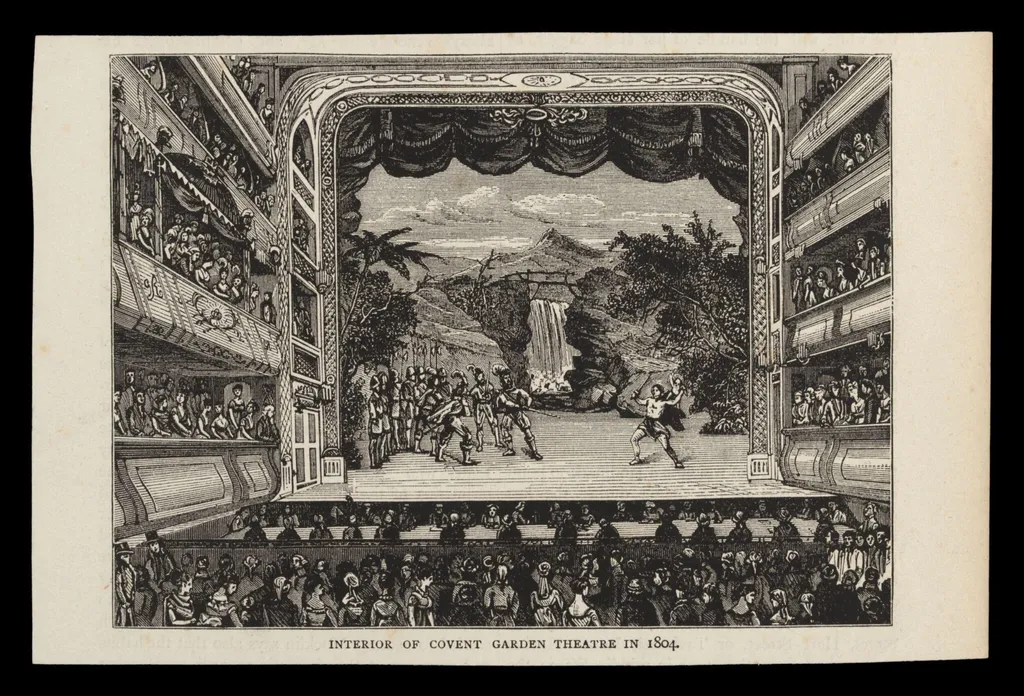
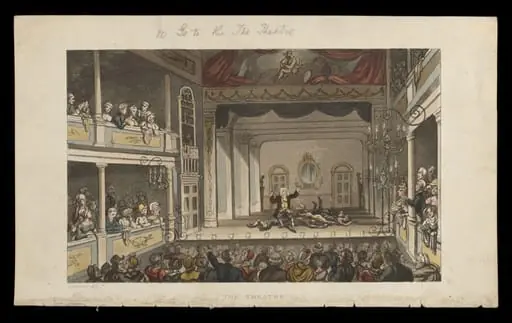
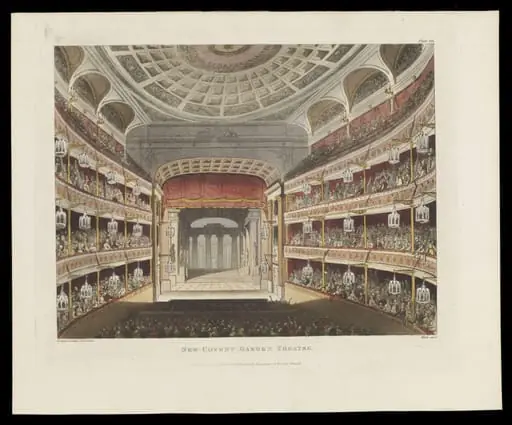
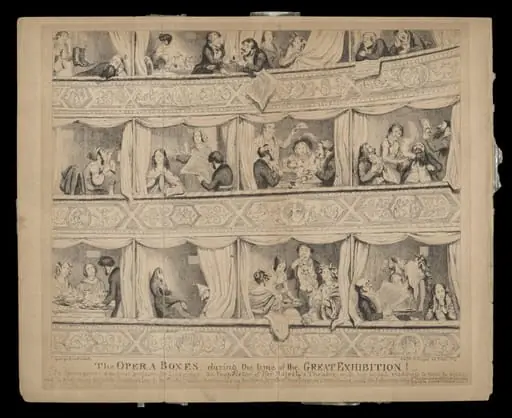
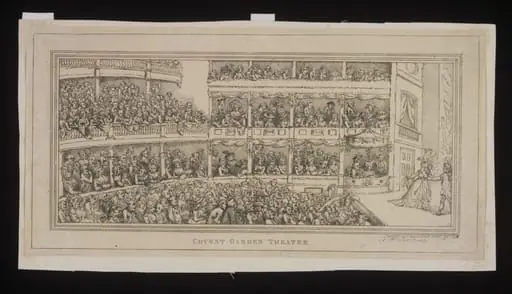
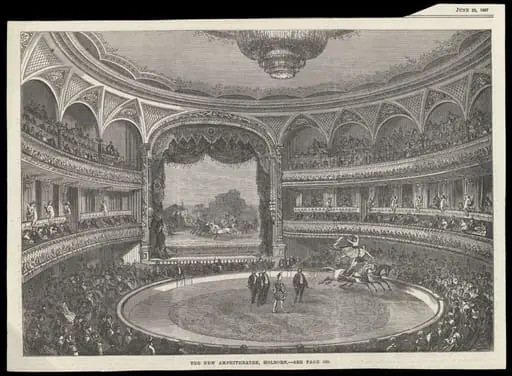
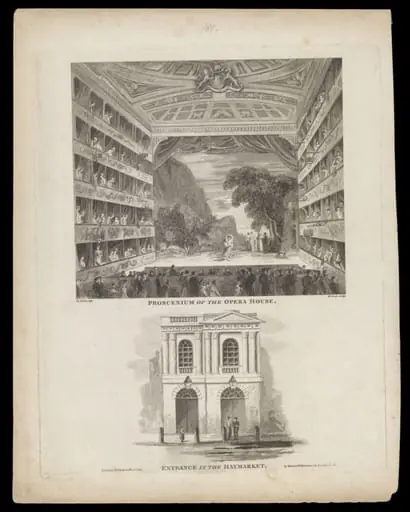
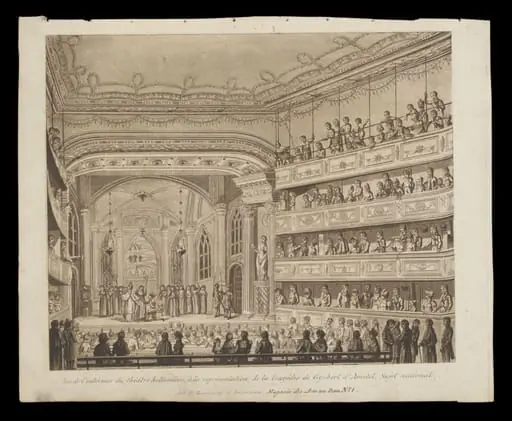
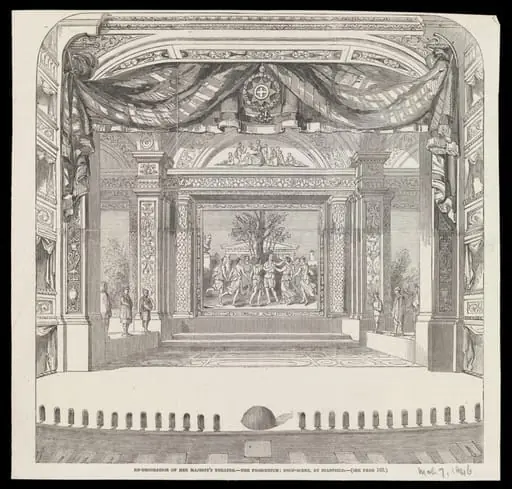
Harry Beard Print Collection is a print by the Romanticist artist Unknown. It dates from 1804 and is held in the collection of the Victoria and Albert Museum. The print portrays the interior of Covent Garden Theatre as it appeared in 1804, captured in a contemporary press illustration.
About this work
The audience looks small from the back, like tiny dots in a big room.
This print shows Covent Garden Theatre’s interior in 1804. Gas footlights glow along the stage edge. Wooden boxes rise in neat rows. The audience looks small from the back, like tiny dots in a big room.
Prints like this were cheap. People bought them to remember nights at the theater. They pasted these in scrapbooks or pinned them up. This one came from a magazine you can’t name now.
Check out the Victoria and Albert Museum’s online prints for more.
Overview
The print portrays the interior of Covent Garden Theatre as it appeared in 1804, captured in a contemporary press illustration. The scene is rendered from a perspective that emphasizes the spacious auditorium, with rows of wooden boxes and a stage illuminated by early gas footlights. The composition offers a snapshot of early nineteenth‑century theatrical architecture and audience arrangement.
Subject & Meaning
The image documents a public entertainment venue at a moment when gas lighting was beginning to replace candles, highlighting the technological shift that altered stage presentation. The diminutive figures of spectators, reduced to specks in the distance, convey the scale of the space and suggest the collective experience of theatre‑going in Regency London.
Technique & Style
Executed as a printed illustration, the work employs line engraving and stippling to delineate architectural details and the soft glow of footlights. The monochrome palette relies on contrast between dark outlines and lighter washes, a common approach in inexpensive prints intended for mass distribution and rapid reproduction.
History & Provenance
Originally reproduced as a press cutting in an unidentified periodical, the print circulated among theatre enthusiasts who collected such images for personal scrapbooks or wall displays. Its survival in a museum collection reflects the broader practice of acquiring ephemera that recorded everyday cultural life in the early 1800s.
Context
Covent Garden Theatre, later renamed the Royal Opera House, was a leading venue for drama and opera in London. The 1804 interior predates major architectural renovations, offering insight into the layout of boxes, pit, and stage before later expansions. The print thus serves as a visual record of the theatre’s pre‑Victorian configuration.
Artist & collection

 Domestic Scene
 Giacomo and Cardinal Marco, investing Andrea, Abbot of San Zeno, with his Benefice
 The Nymph of Fontainebleau
 Portrait of a Woman
 Madonna and Child with Saints in the Enclosed Garden
 Venus and Minerva
 Family Group of Four on Sofa
 Wall painting from Room H of the Villa of P. Fannius Synistor at Boscoreale