Artwork
Hasta
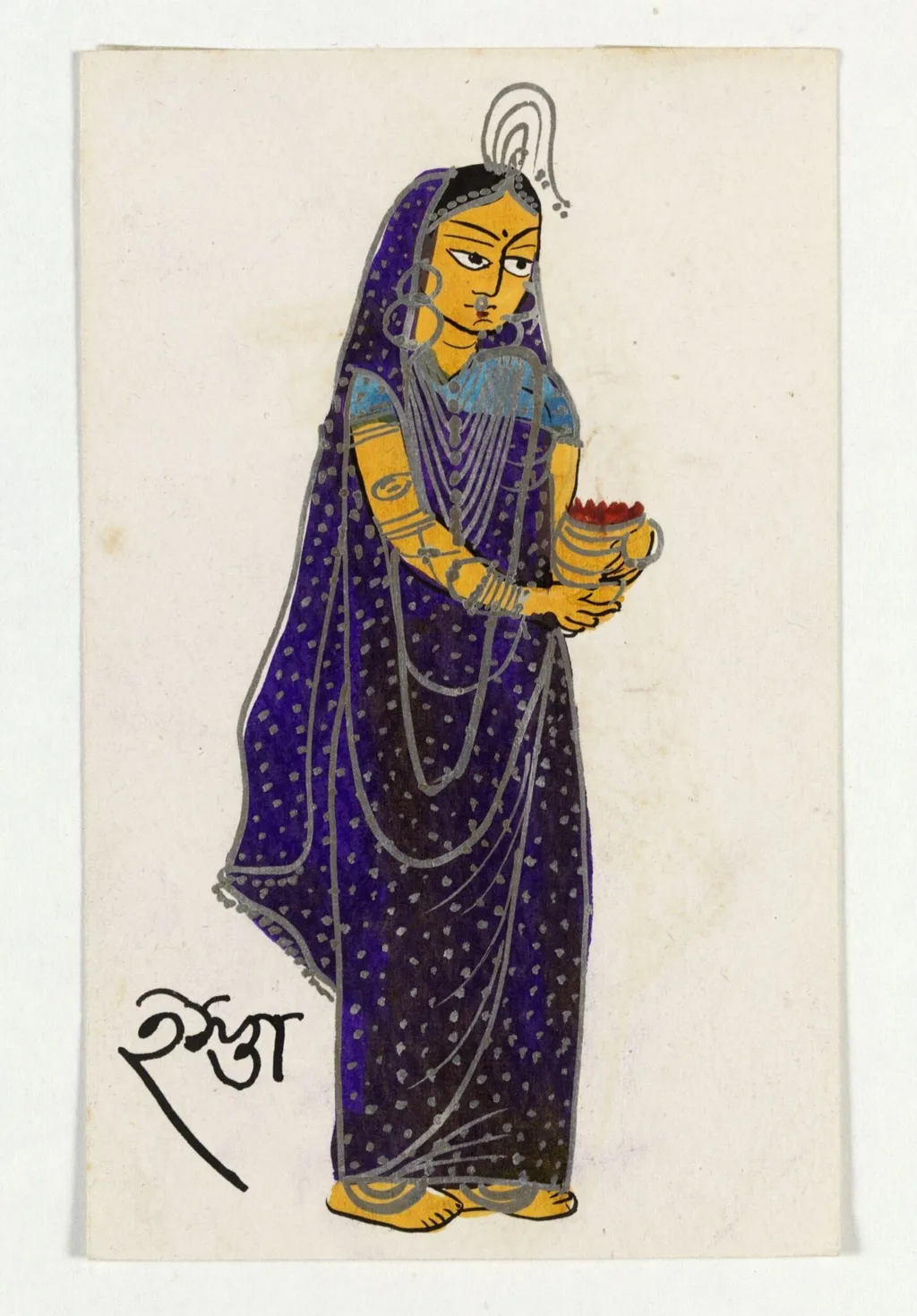
Hasta is a paint painting by the Impressionist artist Unknown. It dates from 1890 and is held in the collection of the Victoria and Albert Museum.
About this work
Overview
Its small scale and intimate presentation suggest it was made for personal or ritual use rather than public display.
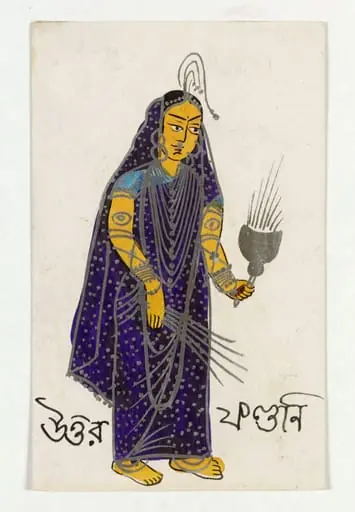
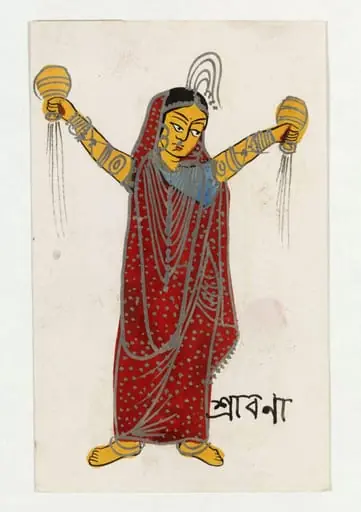
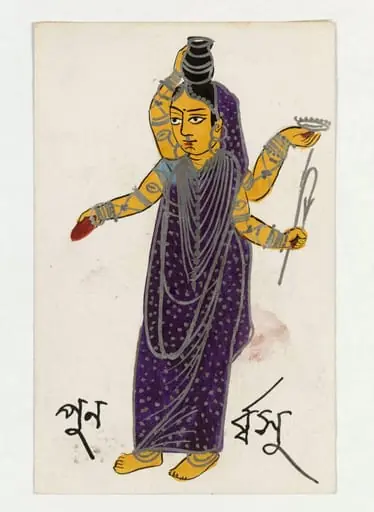
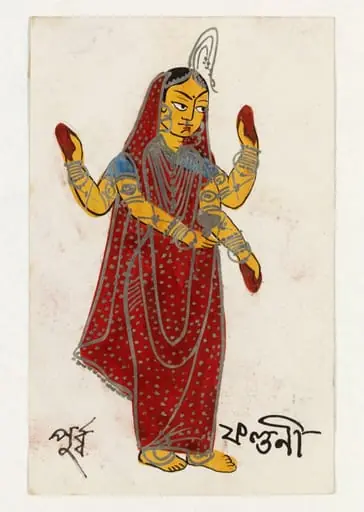
Created in 1890, *Hasta* is a watercolor and tin alloy painting on cardboard by an unidentified artist. It illustrates a figure associated with the thirteenth lunar mansion in Indian astronomical tradition. The work combines delicate pigment with metallic elements, reflecting a fusion of decorative and symbolic intent. Its small scale and intimate presentation suggest it was made for personal or ritual use rather than public display.
Subject & Meaning
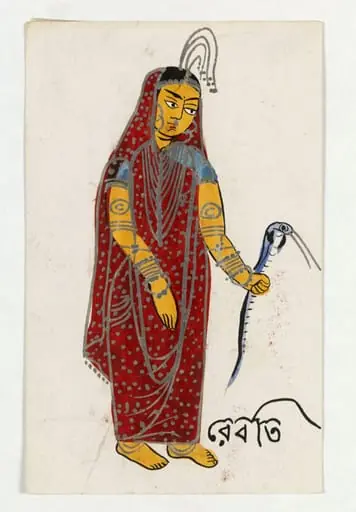
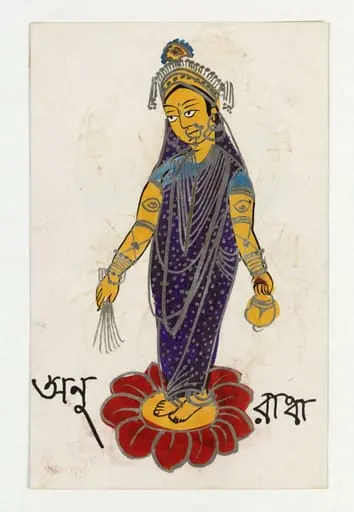
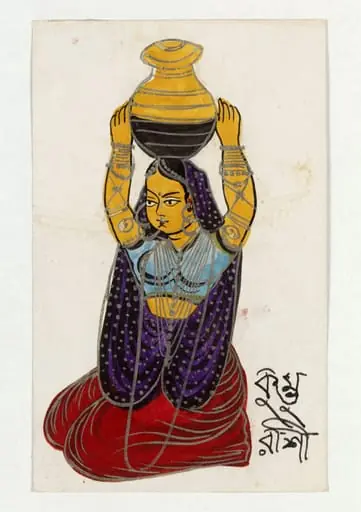
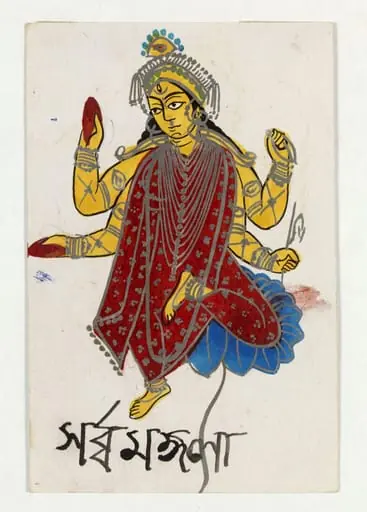
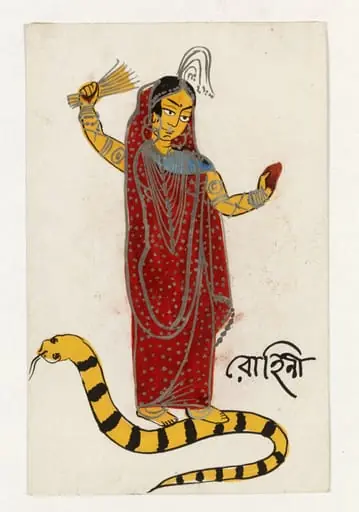
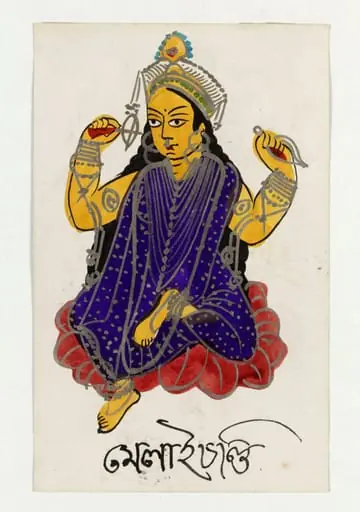
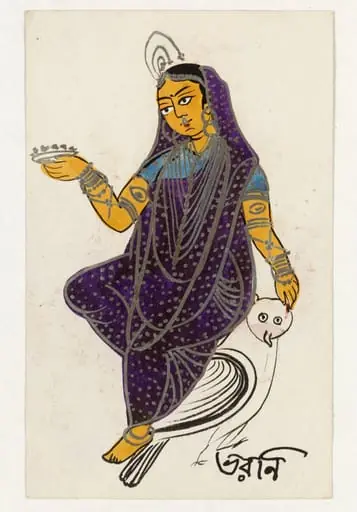
The central figure represents Hasta, a lunar mansion linked to craftsmanship and dexterity in Vedic astrology. She holds a bowl of red flowers, not burning coals as previously described, which may symbolize offerings or the vitality of the constellation. Her composed posture and ornate attire convey dignity and spiritual presence. The imagery aligns with regional iconography where celestial bodies are personified through human forms adorned in traditional dress.
Technique & Style
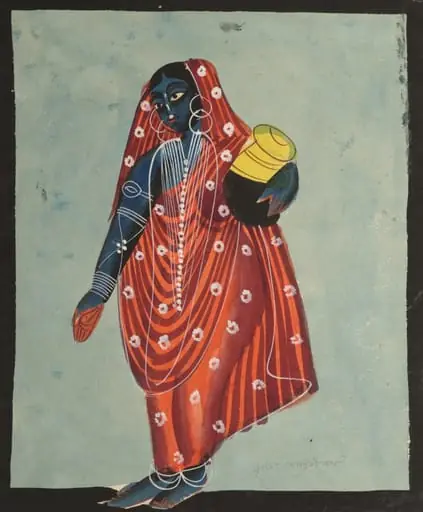
The artist employed watercolor with subtle tin alloy accents to enhance surface luminosity. Bold outlines and saturated hues—especially the gold-dotted blue sari and vivid red blooms—create strong visual contrast against the unadorned background. The rendering is precise yet restrained, emphasizing pattern and form over atmospheric depth. This approach reflects a decorative aesthetic common in illustrated manuscripts and devotional panels of the period.
History & Provenance
The painting’s origin remains undocumented, though its materials and style suggest production in western or central India during the late 19th century. It likely circulated within local artistic or astrological circles before entering institutional collections. Its survival in relatively intact condition indicates careful handling, possibly as a devotional object or pedagogical aid in astronomical studies.
Context
In 19th-century India, lunar mansions were still referenced in almanacs and ritual calendars, particularly in regions with strong traditions of Jyotisha. Artworks like *Hasta* served as visual aids, connecting celestial cycles with daily life. Similar depictions appear in illustrated texts and temple murals, where deities and cosmic forces were rendered in localized dress and symbolism, blending cosmology with cultural identity.
Legacy
Though not widely exhibited, *Hasta* contributes to the understudied corpus of Indian astronomical art. Its preservation offers insight into how abstract celestial concepts were made tangible through material culture. Contemporary scholars reference it in studies of vernacular cosmology, highlighting its role as a quiet but significant bridge between astrology, textile design, and visual tradition in colonial-era India.
Artist & collection

 Domestic Scene
 Giacomo and Cardinal Marco, investing Andrea, Abbot of San Zeno, with his Benefice
 The Nymph of Fontainebleau
 Portrait of a Woman
 Madonna and Child with Saints in the Enclosed Garden
 Venus and Minerva
 Family Group of Four on Sofa
 Wall painting from Room H of the Villa of P. Fannius Synistor at Boscoreale