Artwork
Purvaphalguni
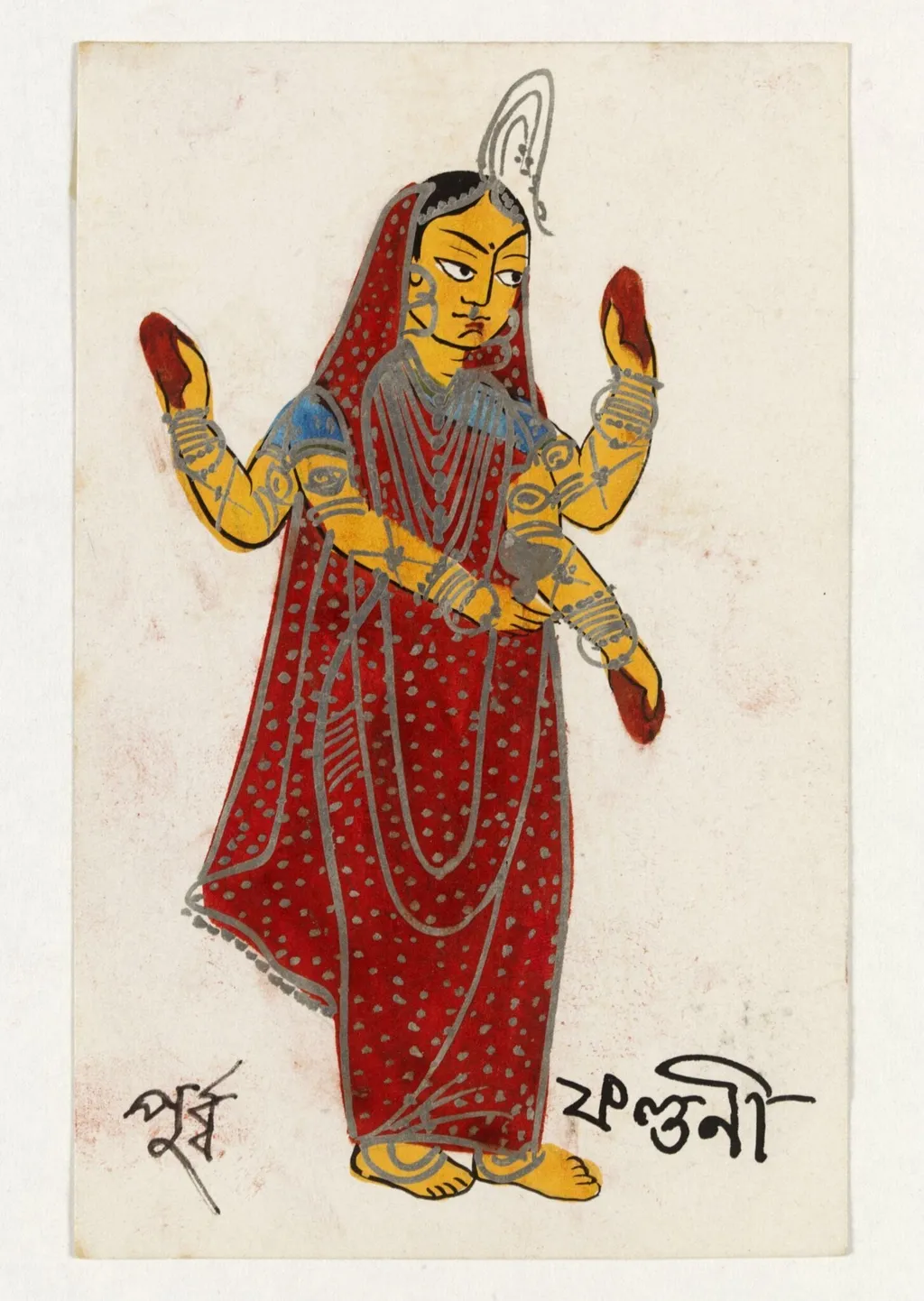
Purvaphalguni is a paint painting by the Impressionist artist Unknown. It dates from 1890 and is held in the collection of the Victoria and Albert Museum. Created in 1890, this work combines watercolour with tin alloy on a cardboard support.
About this work
Overview
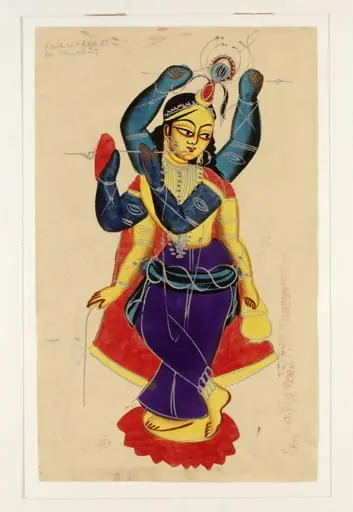
Created in 1890, this work combines watercolour with tin alloy on a cardboard support. It portrays a female figure with four arms, each grasping a cup, an iconographic reference to the astrological sign Purvaphalguni, the eleventh lunar mansion in traditional Indian astronomy.
Subject & Meaning
The central figure, rendered in a vivid red dress patterned with white dots, stands in profile with arms extended, each holding a red object that suggests a ceremonial cup. The composition conveys the attributes of Purvaphalguni, a celestial entity associated with fertility and abundance, linking the visual motif to its astrological significance.
Technique & Style
The artist employed a blend of watercolour pigments and tin alloy pigments, applied to a sturdy cardboard base. The palette is dominated by contrasting reds, yellows, and a deep blue sash, while gold armbands and a yellow headpiece add metallic highlights. The plain background isolates the figure, emphasizing the dynamic pose and the bold chromatic interplay.
Context
Produced at the close of the 19th century, the piece reflects a period of cross‑cultural interest in Indian cosmology among European collectors. Its use of mixed media and the stylized representation of a mythological figure align with contemporary trends in Orientalist art, where exotic subjects were rendered with heightened colour and decorative detail.
Artist & collection

 Domestic Scene
 Giacomo and Cardinal Marco, investing Andrea, Abbot of San Zeno, with his Benefice
 The Nymph of Fontainebleau
 Portrait of a Woman
 Madonna and Child with Saints in the Enclosed Garden
 Venus and Minerva
 Family Group of Four on Sofa
 Wall painting from Room H of the Villa of P. Fannius Synistor at Boscoreale