Artwork
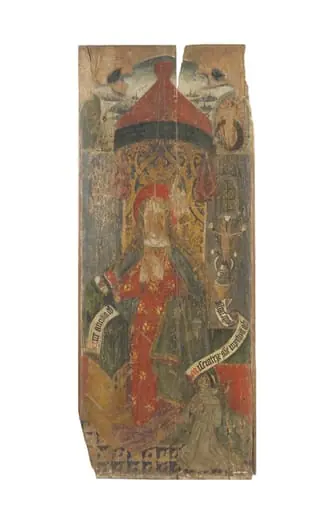
Head of a woman under an arch, full face
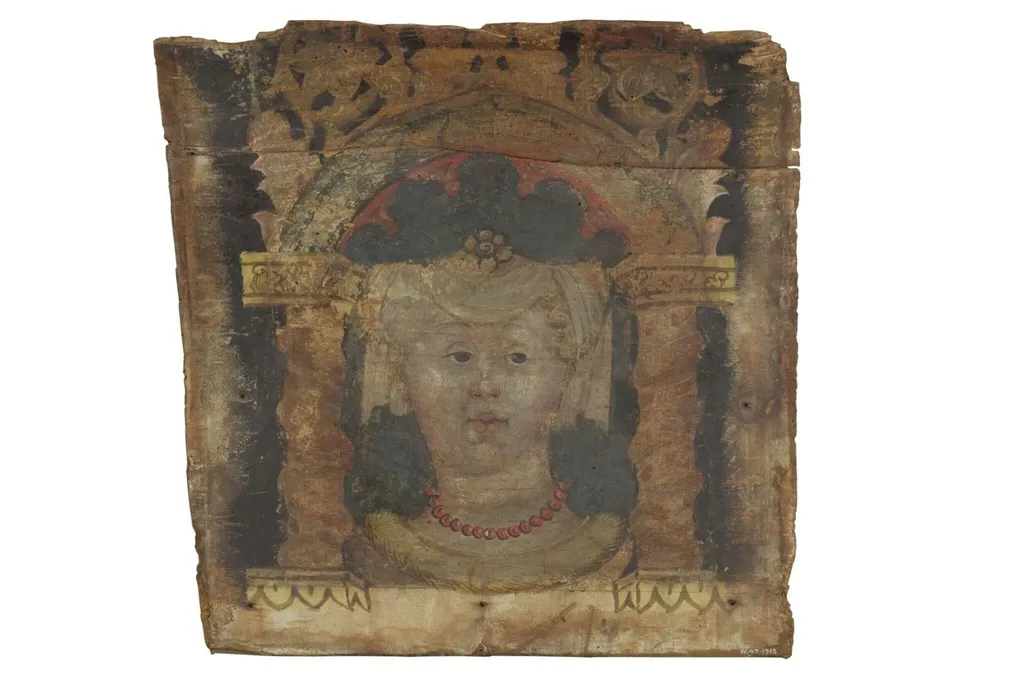
Head of a woman under an arch, full face is a tempera painting by the Early Renaissance artist Unknown. It dates from 1470 and is held in the collection of the Victoria and Albert Museum.
About this work
This painting shows a woman's face under an arch, looking straight at us.
The artist used a style that was popular in the 15th century, with a focus on simple lines and shapes. The woman's face is calm and serene.
To learn more about this style of painting, look up the work of other artists who used the technique: tempera.
Overview
Head of a woman under an arch, full face is a tempera painting, one of four companion panels (W.46-1913 to W.49-1913), likely originating from Cremona, Lombardy.
Subject & Meaning
The subject is a serene, full-face portrait of a woman, framed by an arch, conveying calmness through simple, restrained composition.
Technique & Style
Executed in tempera, the work exhibits characteristic 15th-century simplicity in lines and shapes, aligning with the Cremonese school's traditions.
History & Provenance
Attributed to the Bembo workshop or possibly Bonifacio Bembo, based on similarities with panels in Reggio Emilia and Cremona, though the artist remains uncertain.
Context
Part of a decorative set, possibly for a private palace ceiling, imitating terracotta tile articulation, a common practice in 15th-16th century Cremona under Sforza patronage.
Legacy
Despite fragmentary state, comparable to intact period pieces (e.g., Palazzo Vimercati ceiling), it reflects the transitional artistic era in Cremona, marked by the decline of small workshops.
Artist & collection

 Domestic Scene
 Giacomo and Cardinal Marco, investing Andrea, Abbot of San Zeno, with his Benefice
 The Nymph of Fontainebleau
 Portrait of a Woman
 Madonna and Child with Saints in the Enclosed Garden
 Venus and Minerva
 Family Group of Four on Sofa
 Wall painting from Room H of the Villa of P. Fannius Synistor at Boscoreale
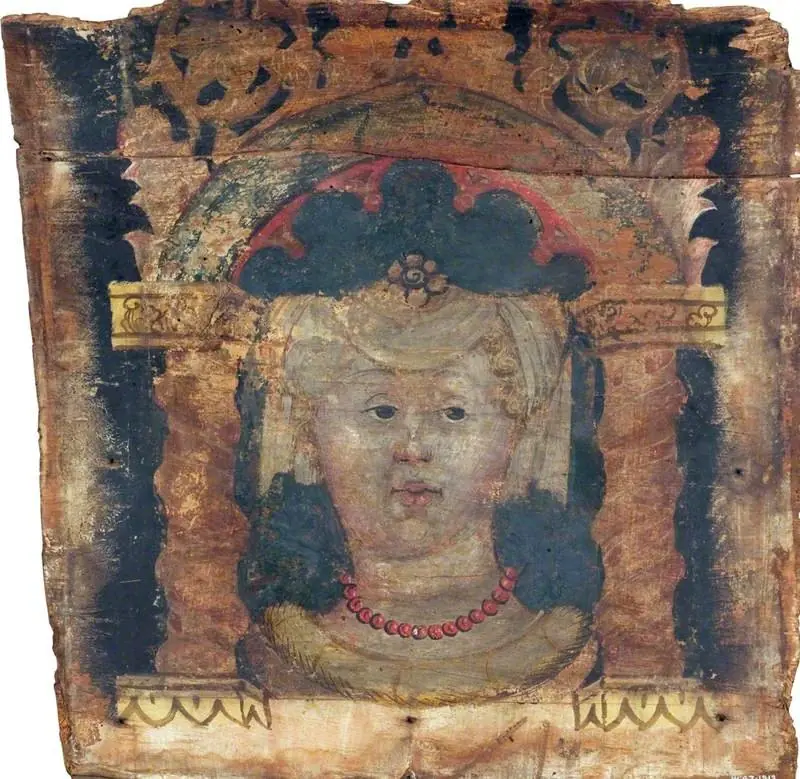 Head of a Woman under an Arch, Full Face (panel from a painted ceiling)
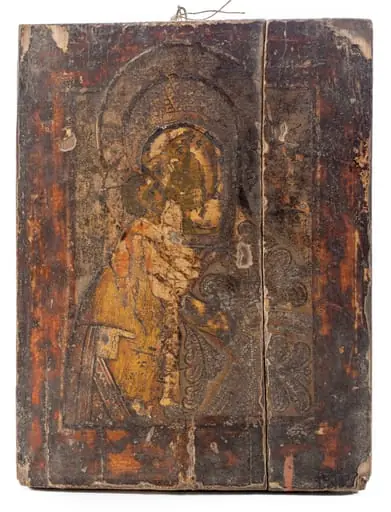 Maica Domnului cu Pruncul Iisus
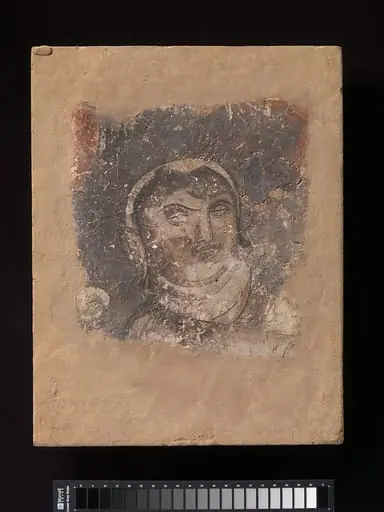 Untitled
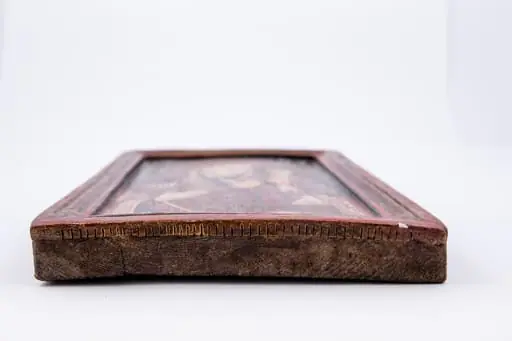 Maica Domnului ține în brațe Pruncul Iisus Hristos, care arată cu mâna dreaptă înspre Maica Domnului, prezentându-ne-o. Maica Domnului este înveșmântată în mantie cu maforion roșu-acajou, cu broderie dantelată pe marginile mânecilor, cu interiorul negru și ciupag brodat auriu-bronziu. Veșmântul este de o eleganță deosebită. Pruncul Iisus Hristos este înveșmântat cu sacos și omofor roșu-acajou, de asemenea, cu interiorul ocru-galben rozaliu, cu coroană și aureolă pe cap. Maica Domnului cu mâna dreaptă ni-L arată pe Mântuitorul Iisus Hristos ca fiind Calea. Adevărul și Viața, este tip Hodighitria. Culorile Maicii Domnului reprezintă noblețea împărătească, suferința monahică și nădejdea bucuriei Învierii. Culorile Mântuitorului reprezintă suferința monahică și patima dureroasă a Jertfei. Fondul icoanei este întunecat, în contrast cu lumina dăruită de chipurile sfinte și veșmintele senine, cu stele crem-gabene. Cromatică: roșu stacojiu, brun, acajou, galben-ocru, brun, bej, alb, negru. Icoana este încadrată și de un chenar decorativ-geometrizant liniar roșu. Inscripția din româno-chirilică se traduce MP IC XC Maica Domnului Iisus Hristos. Icoana este de iconostas. Desenul, cromatica, compoziția, fondul, încadrarea, trăsăturile chipurilor sunt deosebit de frumoase. Icoana este o bijuterie! Este atribuită lui Toader Popovici Zugrav.
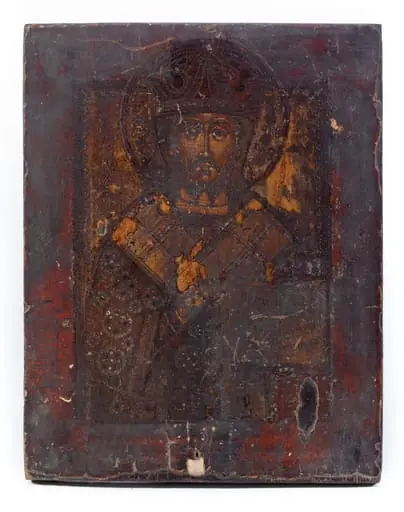 Sfântul Nicolae
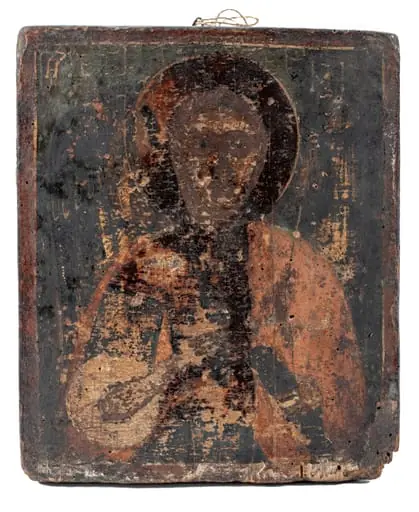 Arhanghelul Mihail
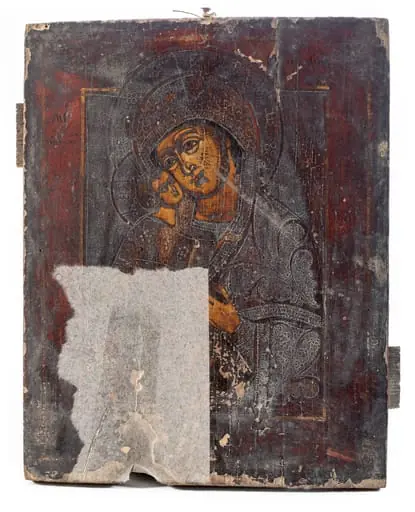 Maica Domnului cu Pruncul
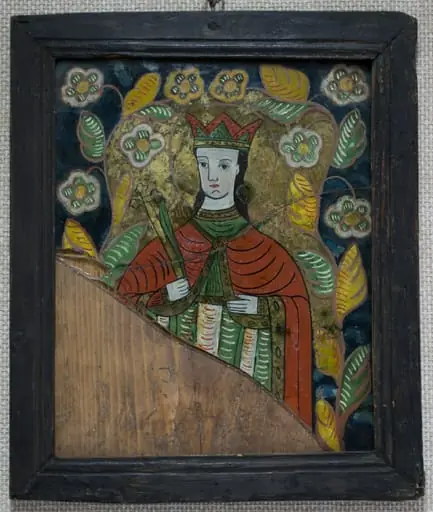 Icoana este pictată "în oglindă", pe un suport de glajă de formă dreptunghiulară în ax vertical.Cuvioasa Parascheva, redată din ușor semiprofil, ține în mâna dreaptă o ramură verde și o cruce. Fața pătrățoasă, expresivă, ochii mari, negri, gura mică, strânsă, părul , lung, negru, lăsat pe spate..Pe cap coroană împărătească. Este înveșmîntată cu o mantie roșie cu galon aurit cu decor geometric. Câmpul este realizat din foiță aurie în interiorul unei arcade formate din două tulpini sinuase de floare. În afara arcadei albastrul oliv creează un contrast surprinzător.Accentul cade pe chipul sfintei, pus în valoare de contrastul alb/negru/auriu. Desenul este simplu, linia fină, precisă, paleta cromatică bogată , culorile vii. Contrastele cromatice creează perspectivă Rama subțire profilată, din lemn de brad, pictată cu cafeniu, Dos din scândură de brad. Aproximativ un sfert din icoană lipsește. Țăranii considerau că sfânta Parascheva păzește de grindină și de dureri de cap.
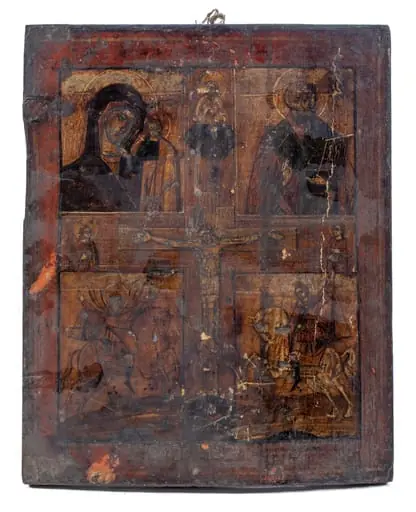 Răstignirea
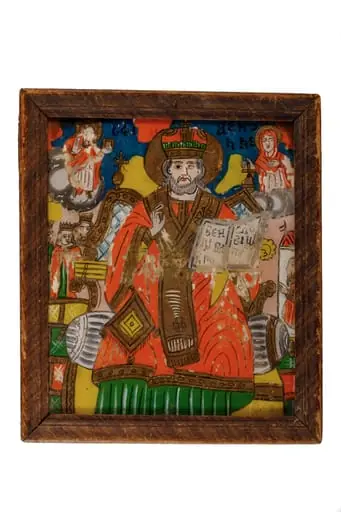 Icoană pictată pe sticlă reprezentând pe Sf. Nicolae. Sfântul este prezentat pe tron, față, bărbat tânăr, plete, barbă scurtă, cu dreapta binecuvântând, iar în stânga ține Evanghelia. Sus este încadrat de Iisus și Maria care îi oferă Evanghelia și omoforul. Stânga, la nivelul brațului, trei personaje în picioare și în dreapta o clădire și o mână (?) întinsă. Omoforul auriu cu cruci se evidențiază pe haina roșie cu linii ce marchează anatomia corpului. Icoana este înrămată.
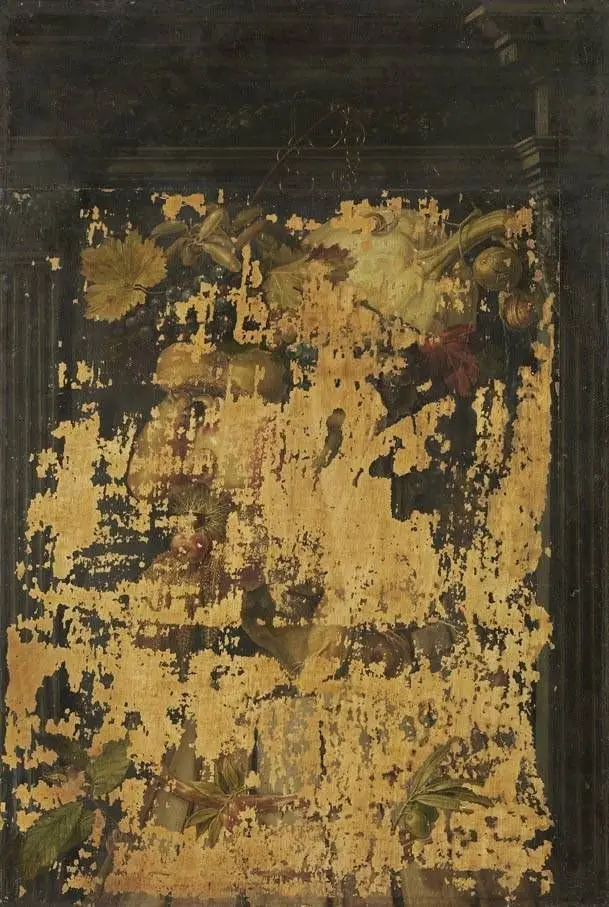 Allegory of Autumn
 The Annunciation