Artwork
The Annunciation
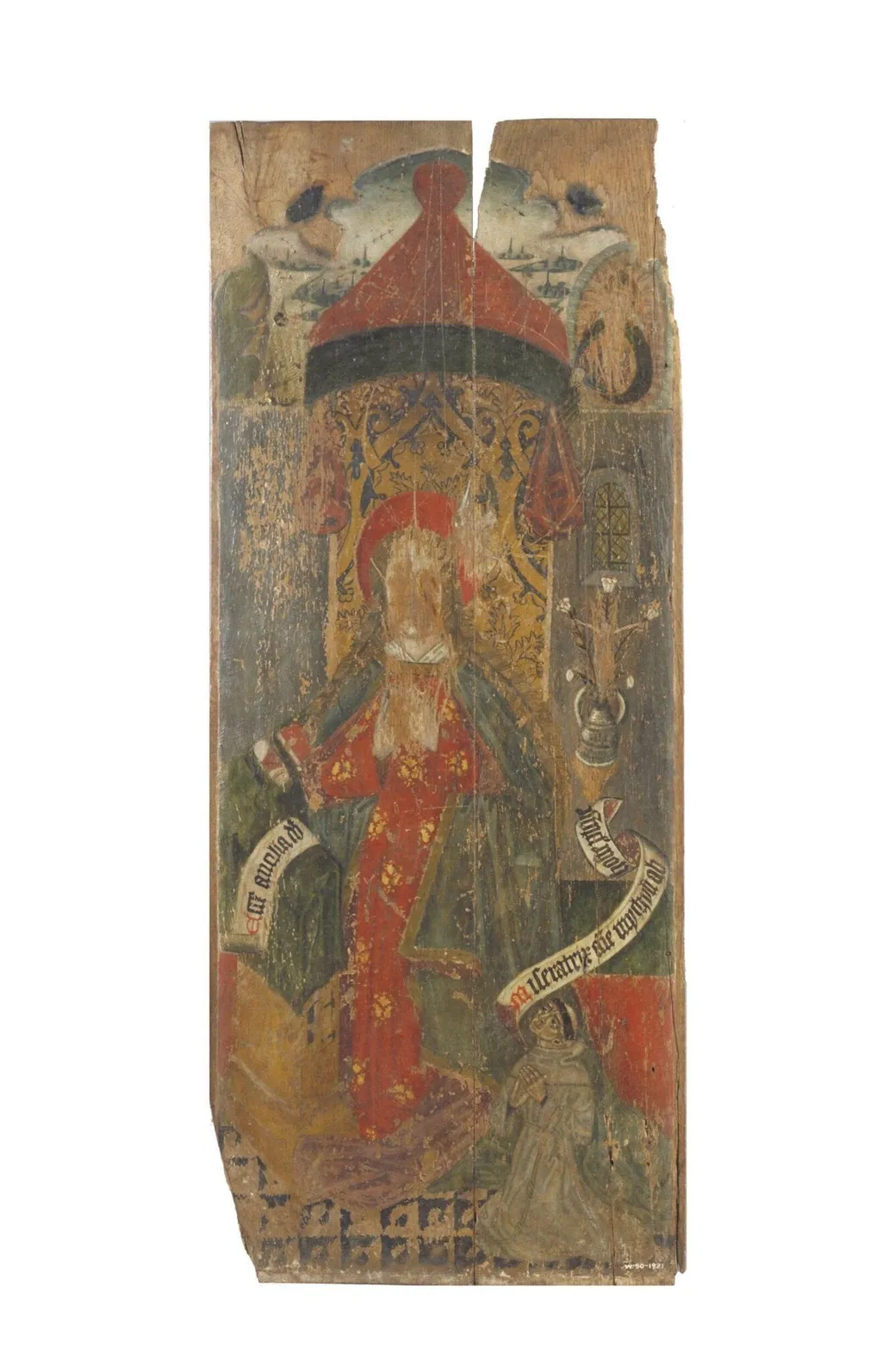
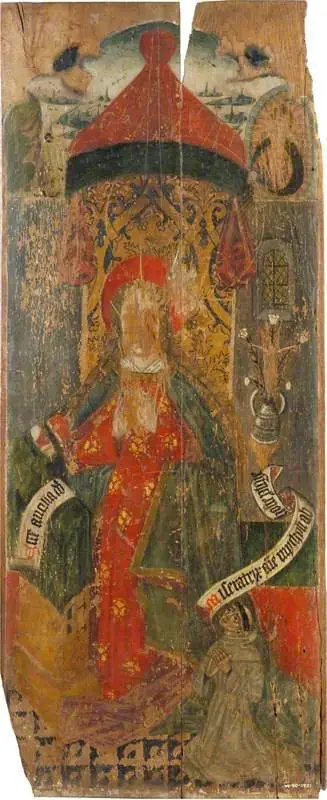
The Annunciation is a paint painting by the Northern Renaissance artist Unknown. It dates from 1480 and is held in the collection of the Victoria and Albert Museum. This painted panel once formed part of a liturgical screen in a church in East Anglia, likely dating to the late 15th century.
About this work
Overview
The composition centers on the Annunciation, with additional symbolic elements and a donor portrait, reflecting both devotional purpose and patronage.
This painted panel once formed part of a liturgical screen in a church in East Anglia, likely dating to the late 15th century. It features richly applied pigments and detailed gilding, characteristic of regional ecclesiastical decoration of the period. The composition centers on the Annunciation, with additional symbolic elements and a donor portrait, reflecting both devotional purpose and patronage. The surface shows signs of deliberate damage, consistent with post-Reformation iconoclasm.
Subject & Meaning
The scene depicts the Angel Gabriel announcing to the Virgin Mary that she will bear Christ. A vase of white lilies beside her symbolizes her purity, while a miniature crucifix nestled among the stems foreshadows Christ’s future sacrifice. The inclusion of a kneeling friar suggests he commissioned the work, possibly as an act of thanksgiving. His presence anchors the sacred moment in the earthly realm of patronage and devotion.
Technique & Style
The panel employs tempera and gold leaf on wood, with meticulous attention to textile textures, floral detail, and architectural framing. The garden beyond the window is rendered with naturalistic precision, contrasting with the stylized figures. Rich reds and blues dominate the palette, while intricate patterns in the Virgin’s robe and the surrounding architecture reflect the ornamental conventions of late medieval English church art.
History & Provenance
The faces and hands of the Virgin and Christ were intentionally defaced following the English Reformation, when Catholic imagery was targeted for destruction. Further damage may have occurred during the Civil War under the orders of the 2nd Earl of Manchester, who directed the cleansing of religious iconography in East Anglian churches. The panel’s survival suggests it was hidden or overlooked, later preserved as a fragment of pre-Reformation worship.
Context
East Anglia was a center of late medieval religious art, where church screens served both structural and devotional roles. Panels like this were integral to parish worship, guiding the faithful through sacred narratives. The presence of donor portraits was common among wealthy clergy or lay patrons seeking spiritual merit. This work reflects the fusion of local artistic traditions with broader European devotional themes.
Legacy
Though altered by centuries of religious upheaval, the panel remains a tangible record of pre-Reformation piety and craftsmanship. Its survival offers insight into the visual culture of English parish churches and the impact of doctrinal change on material heritage. Today, it contributes to scholarly understanding of regional medieval art and the complex history of iconoclasm in England.
Artist & collection

 Domestic Scene
 Giacomo and Cardinal Marco, investing Andrea, Abbot of San Zeno, with his Benefice
 The Nymph of Fontainebleau
 Portrait of a Woman
 Madonna and Child with Saints in the Enclosed Garden
 Venus and Minerva
 Family Group of Four on Sofa
 Wall painting from Room H of the Villa of P. Fannius Synistor at Boscoreale
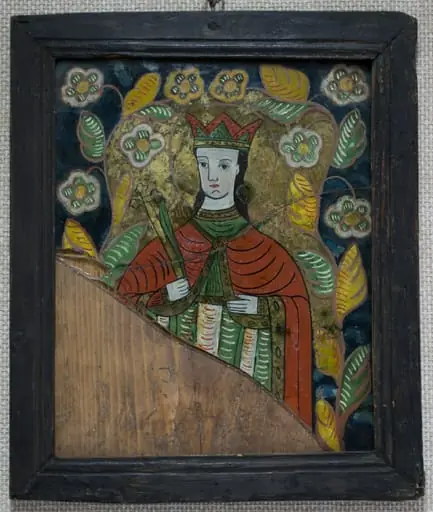 Icoana este pictată "în oglindă", pe un suport de glajă de formă dreptunghiulară în ax vertical.Cuvioasa Parascheva, redată din ușor semiprofil, ține în mâna dreaptă o ramură verde și o cruce. Fața pătrățoasă, expresivă, ochii mari, negri, gura mică, strânsă, părul , lung, negru, lăsat pe spate..Pe cap coroană împărătească. Este înveșmîntată cu o mantie roșie cu galon aurit cu decor geometric. Câmpul este realizat din foiță aurie în interiorul unei arcade formate din două tulpini sinuase de floare. În afara arcadei albastrul oliv creează un contrast surprinzător.Accentul cade pe chipul sfintei, pus în valoare de contrastul alb/negru/auriu. Desenul este simplu, linia fină, precisă, paleta cromatică bogată , culorile vii. Contrastele cromatice creează perspectivă Rama subțire profilată, din lemn de brad, pictată cu cafeniu, Dos din scândură de brad. Aproximativ un sfert din icoană lipsește. Țăranii considerau că sfânta Parascheva păzește de grindină și de dureri de cap.
 The Annunciation
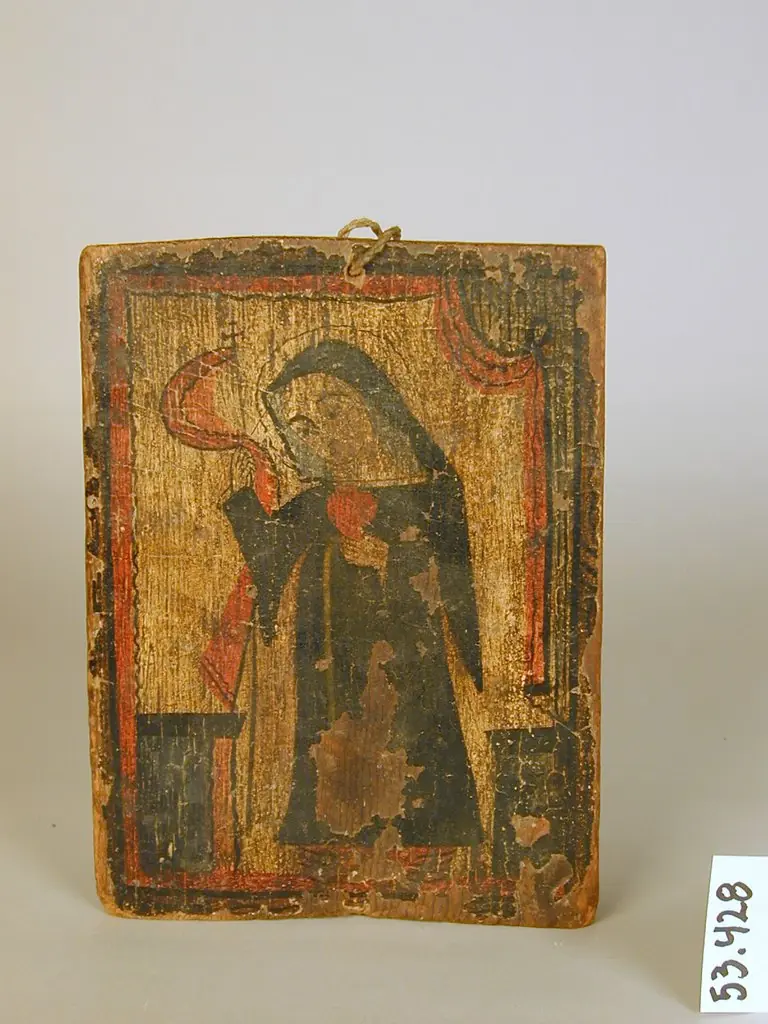
 Saint Blasius
 Saint Gertrude
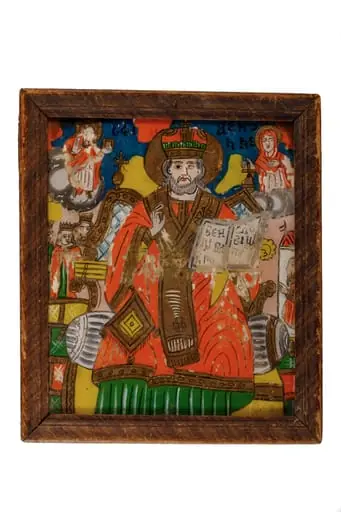 Icoană pictată pe sticlă reprezentând pe Sf. Nicolae. Sfântul este prezentat pe tron, față, bărbat tânăr, plete, barbă scurtă, cu dreapta binecuvântând, iar în stânga ține Evanghelia. Sus este încadrat de Iisus și Maria care îi oferă Evanghelia și omoforul. Stânga, la nivelul brațului, trei personaje în picioare și în dreapta o clădire și o mână (?) întinsă. Omoforul auriu cu cruci se evidențiază pe haina roșie cu linii ce marchează anatomia corpului. Icoana este înrămată.
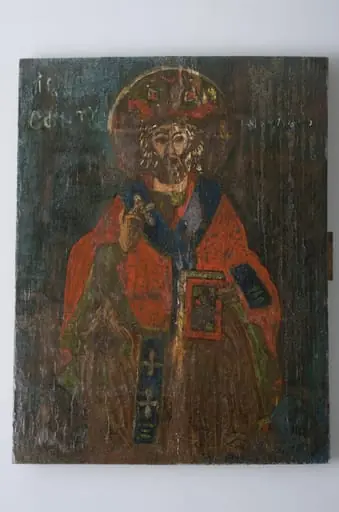 Icoana este pictată pe lemn, reprezentându-l pe Sfântul Nicolae cu veșminte arhierești (felon roșu, omofor albastru și mitră pe cap), ținând Evanghelia închisă cu mâna stângă și binecuvântând cu mâna dreaptă. Cromatică: roșu, albastru, verde, maro închis.
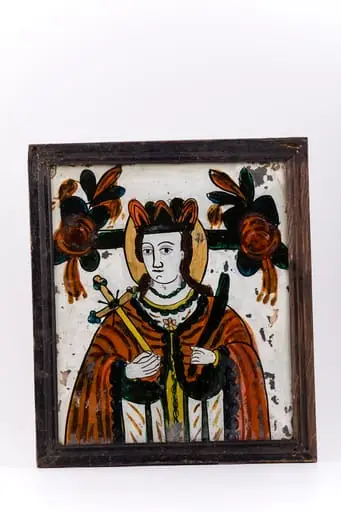 Sfânta Mare Cuvioasă Parascheva de la Iași are crucea în mâna dreaptă, binecuvântând, și o ramură de finic verde, în mâna stângă. Este îmbrăcată în veșmânt roșu vermillon-cărămiziu, cu interiorul căptușit cu verde-mușchi de pădure, verde de China, și brun-acajou. Sacosul este alb-crem cu danteluță și guleraș galben-chihlimbar. Sfânta Cuvioasă are părul negru lung, lăsat pe umeri, coroană roșie cu verde, ca de catifea și aureolă. Fondul icoanei este alb-zinc, cu o traversă în spațiul superior, înconjurându-o pe Sfânta Paraschiva cu doi trandafiri mari și roșii, bogați în frunze, de-a dreapta și de-a stânga Sfintei Cuvioase. Cromatica este armonioasă: roșu vermillon-cărămiziu, alb-zinc, crem-bej, galben-ocru, verde mușchi-de-pădure, verde de China, gri-verzui, bej-crem, bronziu, negru, alb zinc. Icoana este din Nordul Transilvaniei, Nicula.
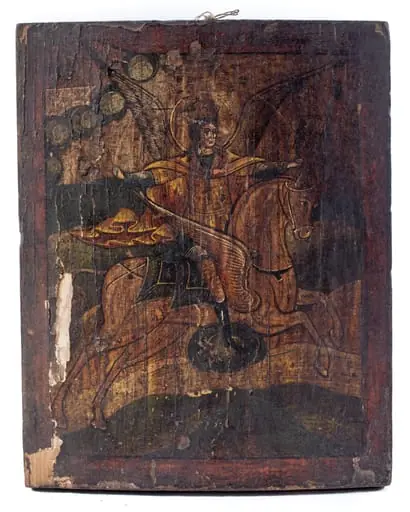 Un sfânt ecvestru
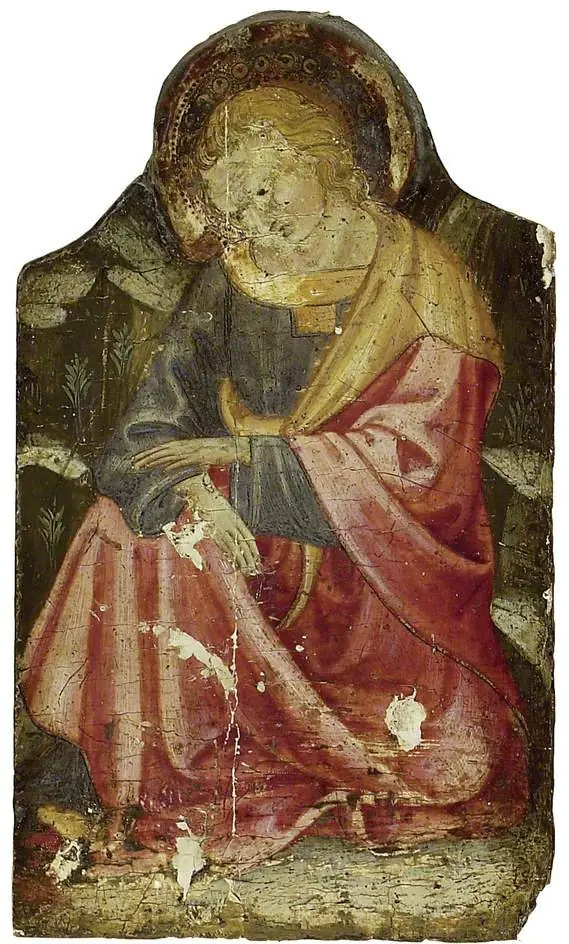 St John the Evangelist
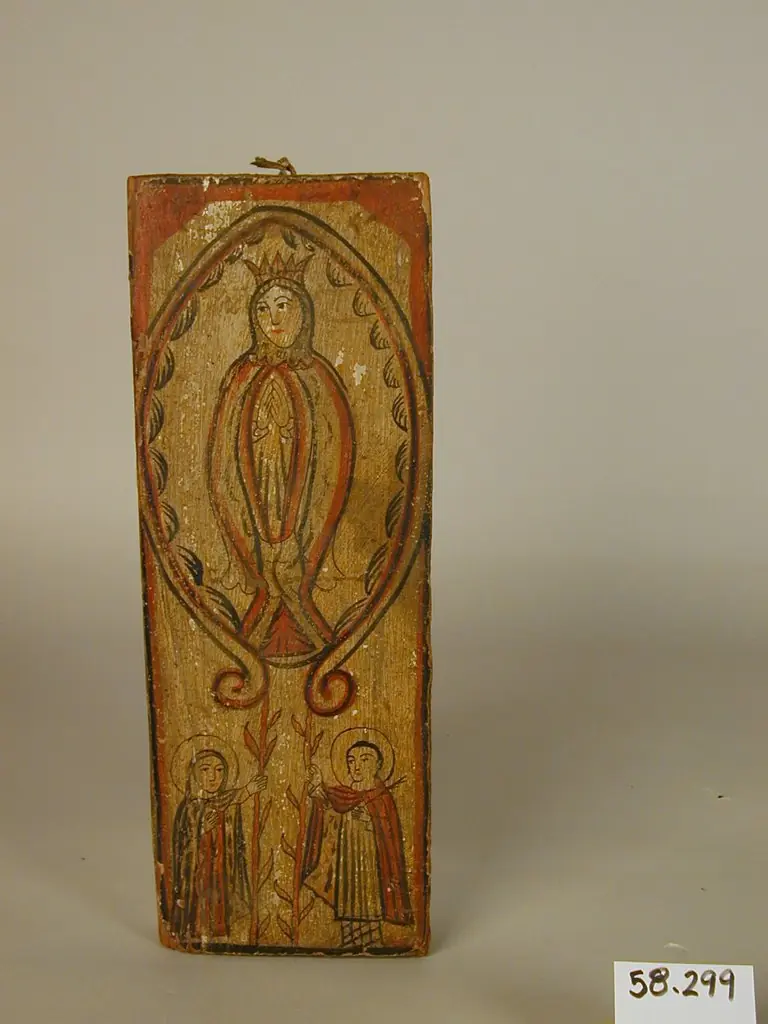 The Virgin Mary and Two Saints
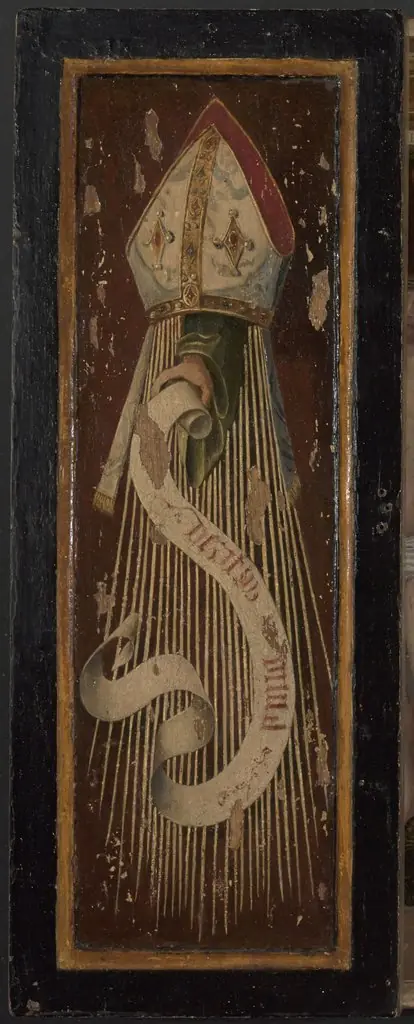 Mitre and Motto of Tongerlo Abbey
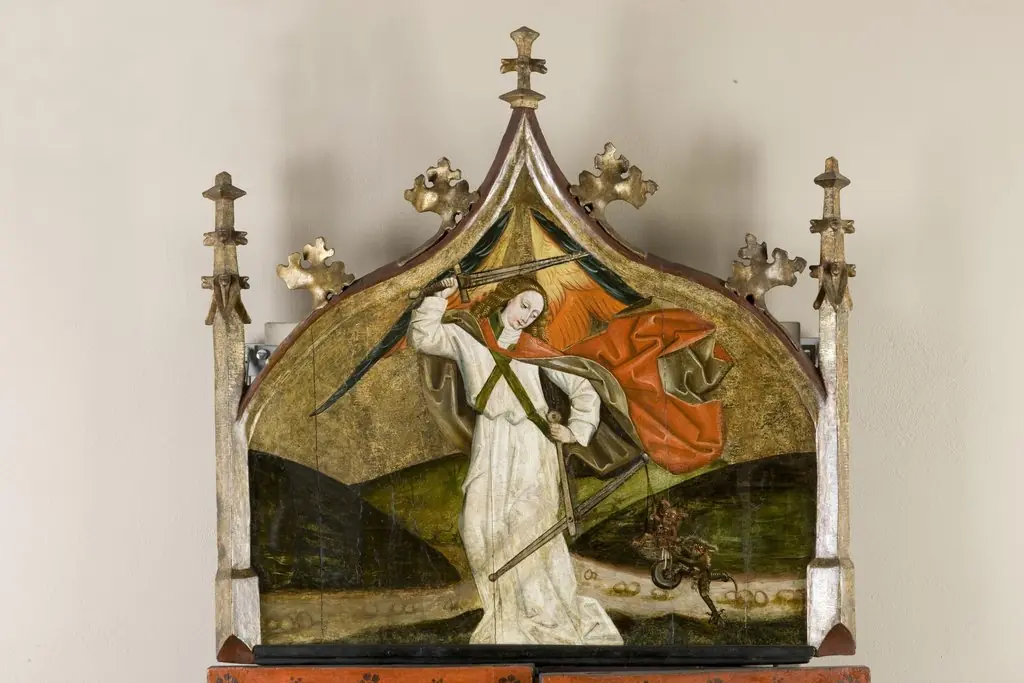 Saint Michael the Archangel. Altar retable from the church in Moszczenica Niżna – finial.