Artwork
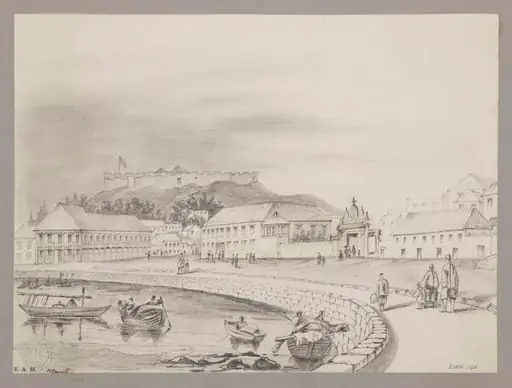
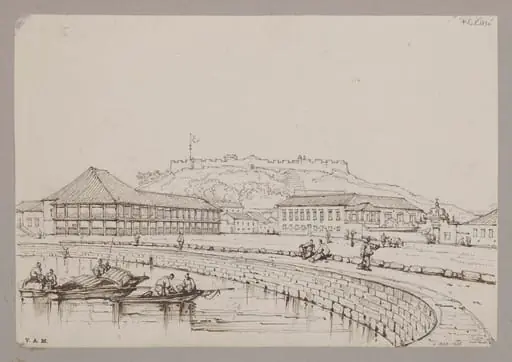
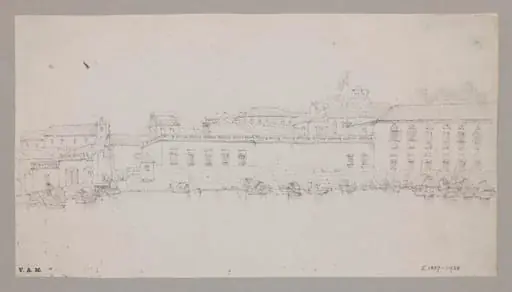
House of Mr. Whiteman ("the forty-pillared house"), Macao
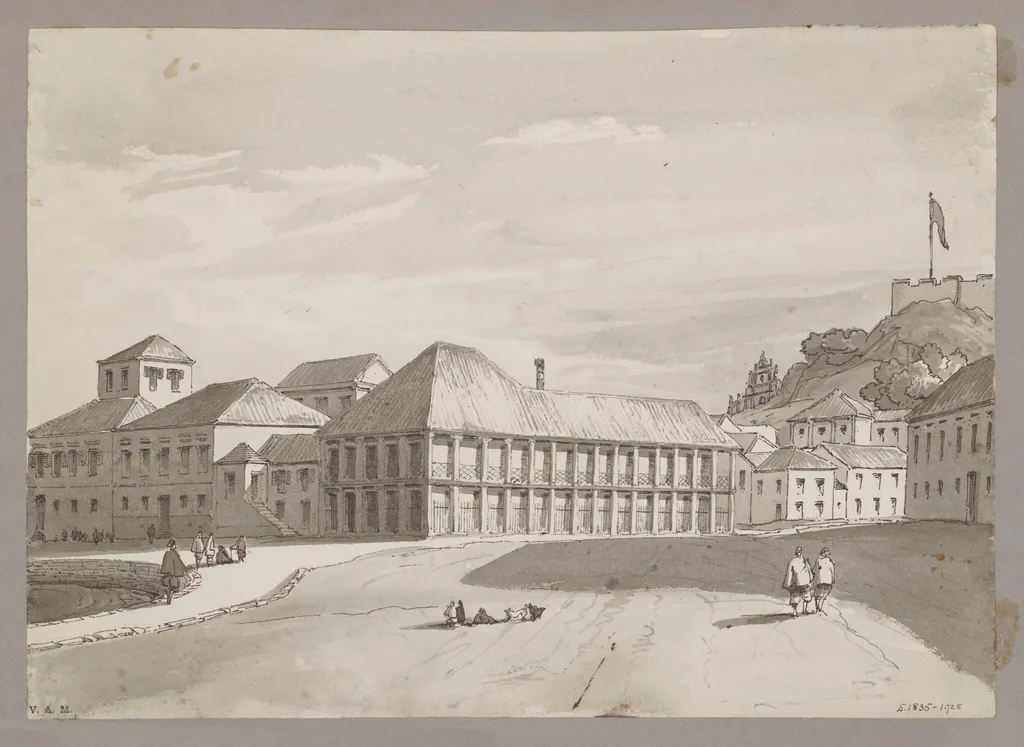
House of Mr. Whiteman ("the forty-pillared house"), Macao is a drawing by the Romanticist artist Unknown. It dates from 19 and is held in the collection of the Victoria and Albert Museum. The drawing depicts the residence of British merchant John Clarmont Whiteman in Macau, famously referred to as the “forty‑pillared house.
About this work
Overview
The drawing depicts the residence of British merchant John Clarmont Whiteman in Macau, famously referred to as the “forty‑pillared house.” Rendered in fine linear detail, the work emphasizes the building’s extensive colonnade and tiled roof, capturing the architectural prominence of the structure within the colonial landscape.
Subject & Meaning
The image records a specific domestic architecture associated with Western expatriates in early 19th‑century Macau, illustrating the blend of European stylistic elements—most notably the row of white pillars—with local building practices. It serves as a visual document of the material culture of British merchants operating in the region.
Technique & Style
Executed in pen and ink, the drawing relies on delicate hatching to convey surface texture and depth. The artist follows the compositional conventions of George Chinnery, whose influence is evident in the balanced perspective and clear delineation of architectural features, typical of expatriate sketching practices of the period.
History & Provenance
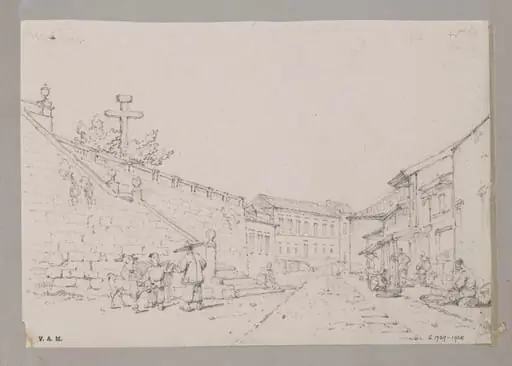
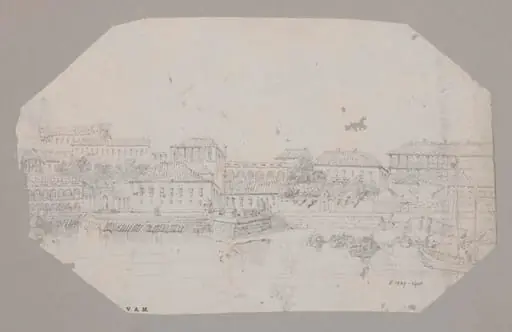
The work was produced by Harriet Daniell, wife of the British trader James Anthony Daniell. Daniell’s rendering is believed to be a copy of an original sketch by George Chinnery, a prolific chronicler of Macau’s scenery. The drawing is catalogued alongside other records of Whiteman’s house (entries E.1833‑1928, E.1834‑1928, E.1836‑1928) and is now held by the Victoria and Albert Museum.
Context
This practice placed Harriet Daniell within a broader community of expatriate artists who emulated Chinnery’s style to document their surroundings.
During the early 1800s, Macau functioned as a key port for British merchants engaged in trade between China and Europe. Western residents often produced sketches of local landmarks, both as personal mementos and as visual reports for audiences back home. This practice placed Harriet Daniell within a broader community of expatriate artists who emulated Chinnery’s style to document their surroundings.
Artist & collection

 Domestic Scene
 Giacomo and Cardinal Marco, investing Andrea, Abbot of San Zeno, with his Benefice
 The Nymph of Fontainebleau
 Portrait of a Woman
 Madonna and Child with Saints in the Enclosed Garden
 Venus and Minerva
 Family Group of Four on Sofa
 Wall painting from Room H of the Villa of P. Fannius Synistor at Boscoreale