Artwork
Icoacafe
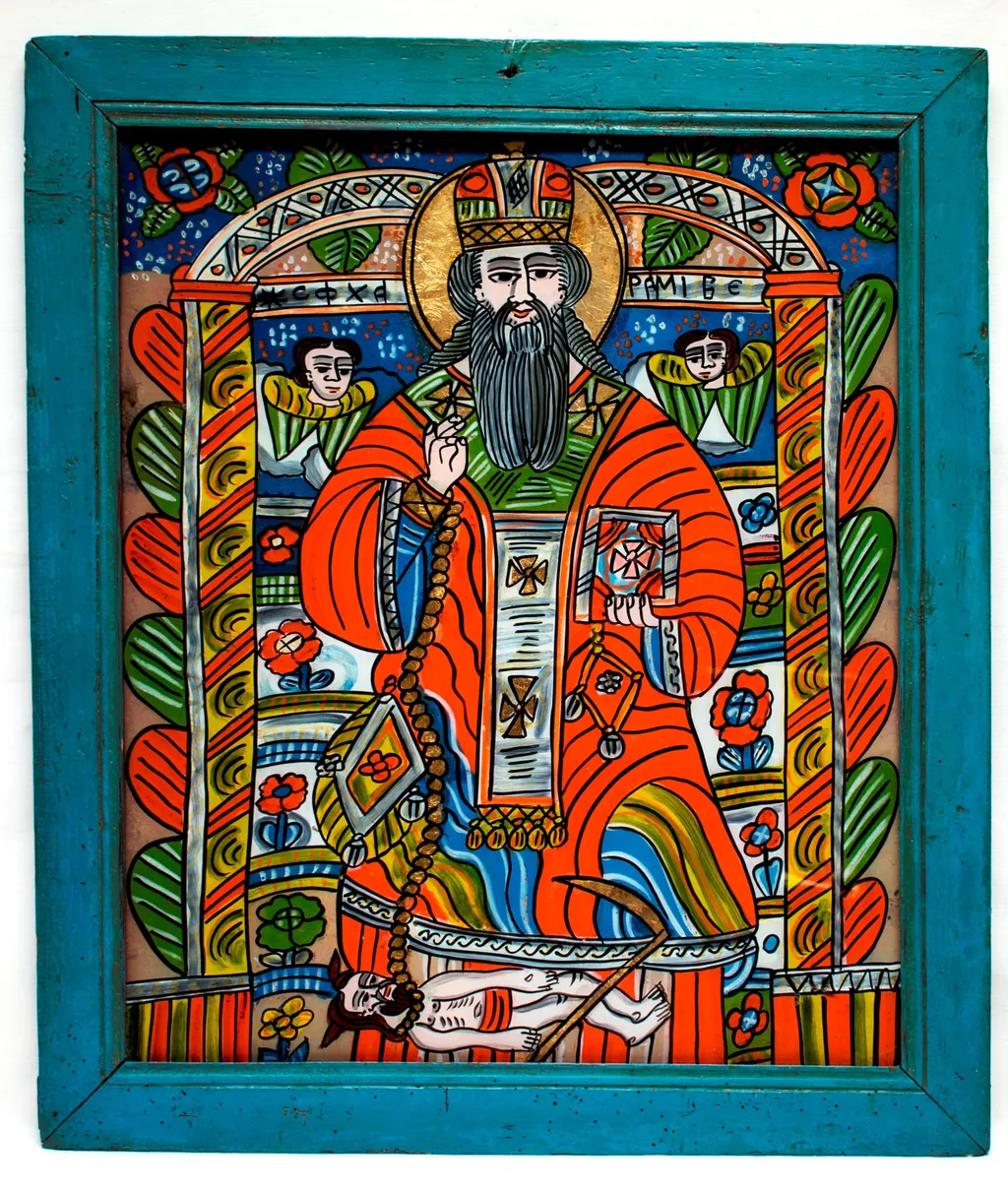
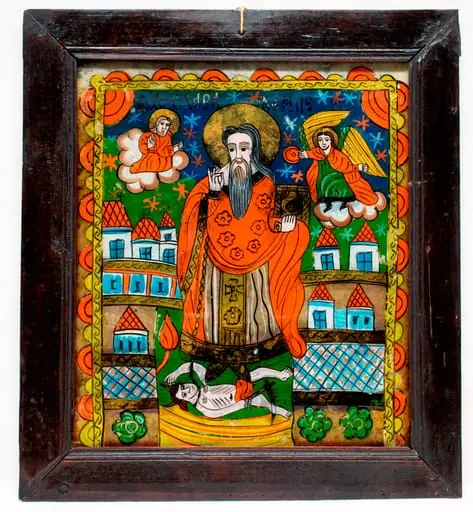
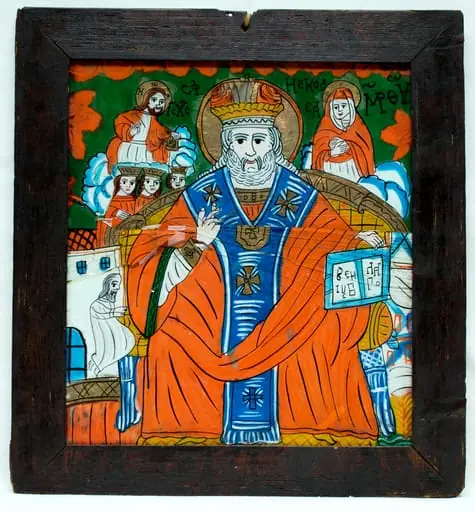
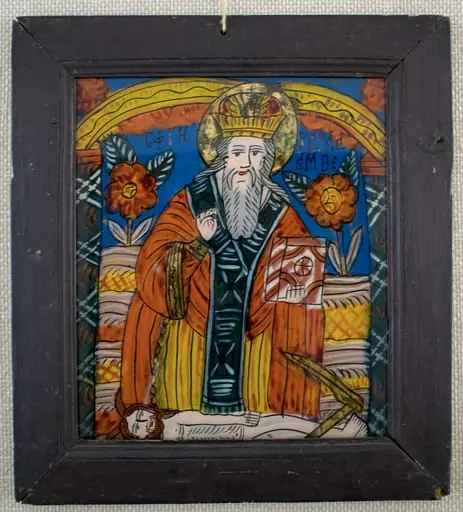
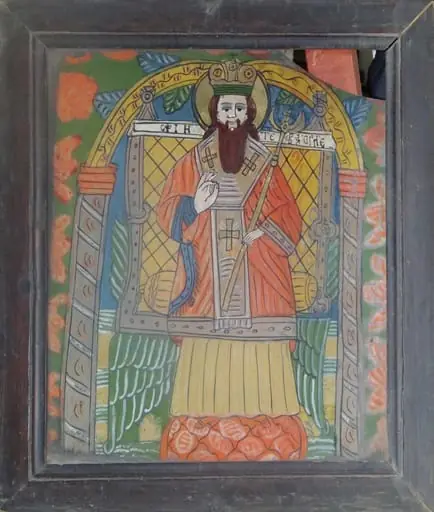
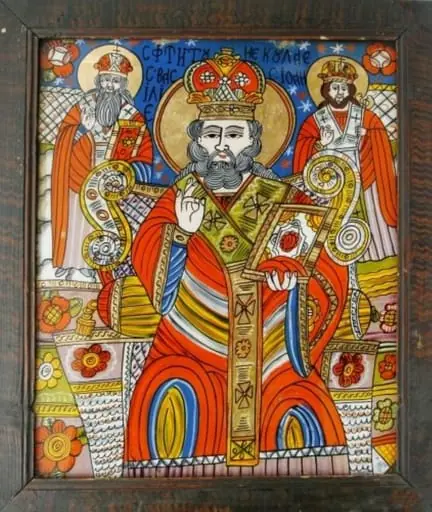
Icoacafe is a drawing by Unknown. It dates from 1850 and is held in the collection of the "Dimitrie Gusti" National Village Museum. This image depicts a central religious figure in vivid red robes, holding a book and a staff, crowned by a golden halo.
About this work
Overview
The background is densely filled with swirling patterns and vibrant hues of green, blue, and red, with delicate floral motifs.
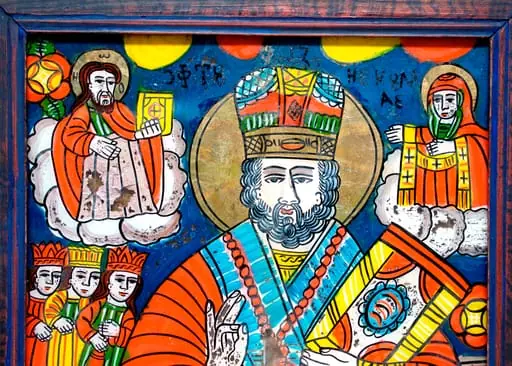
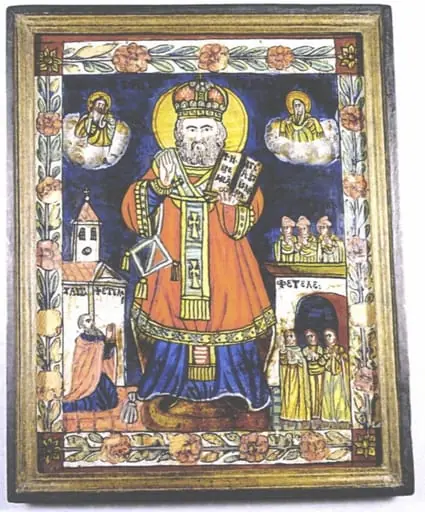
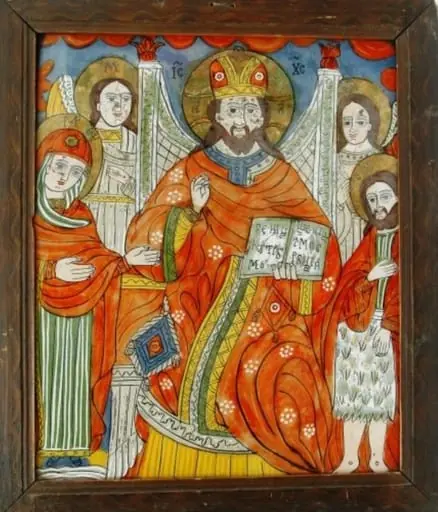
This image depicts a central religious figure in vivid red robes, holding a book and a staff, crowned by a golden halo. Two smaller figures kneel in reverence on either side, their gazes directed upward. The background is densely filled with swirling patterns and vibrant hues of green, blue, and red, with delicate floral motifs. The composition lacks spatial depth, emphasizing flatness and ornamental detail over naturalism.
Subject & Meaning
The central figure, identified by the halo and regal attire, likely represents a saint or holy personage. The book and staff suggest authority and spiritual guidance, while the kneeling figures convey devotion. The arrangement reflects traditional iconography of divine intercession, where supplicants seek favor from a sacred presence, common in devotional imagery of the period.
Technique & Style
Fine, dark linear strokes define the figure’s face and hands, creating subtle texture through cross-hatching. The overall style is deliberately flat, with no attempt at perspective or volumetric modeling. Colors are applied in bold, unmodulated areas, and decorative patterns dominate the background, prioritizing symbolic richness over illusionistic space.
History & Provenance
The work’s origin is undocumented, but its visual language aligns with medieval or early Renaissance devotional panels from regions where flat, ornamental styles persisted alongside emerging naturalism. It may have served as a private altar piece or liturgical object, though its exact provenance remains untraced in available records.
Context
Produced in an era when religious imagery prioritized symbolic clarity over realism, this piece reflects a tradition where pattern and color carried spiritual meaning. Similar works appear in illuminated manuscripts and panel paintings from Southern Europe and the Byzantine sphere, where decorative surface and hierarchical composition reinforced sacred narratives.
Legacy
Though not widely known, the work exemplifies a persistent regional style that resisted Renaissance perspective in favor of symbolic decoration. Its emphasis on line, pattern, and flat color connects it to later folk and liturgical art traditions, preserving an aesthetic that valued spiritual resonance over optical realism.
Artist & collection
Museum
"Dimitrie Gusti" National Village Museum
Continue through works from the same source collection.
 Domestic Scene
 Giacomo and Cardinal Marco, investing Andrea, Abbot of San Zeno, with his Benefice
 The Nymph of Fontainebleau
 Portrait of a Woman
 Madonna and Child with Saints in the Enclosed Garden
 Venus and Minerva
 Family Group of Four on Sofa
 Wall painting from Room H of the Villa of P. Fannius Synistor at Boscoreale