Artwork
Sfântul Ierarh Nicolae (variantă a icoanei Sfânții Trei Ierarhi)
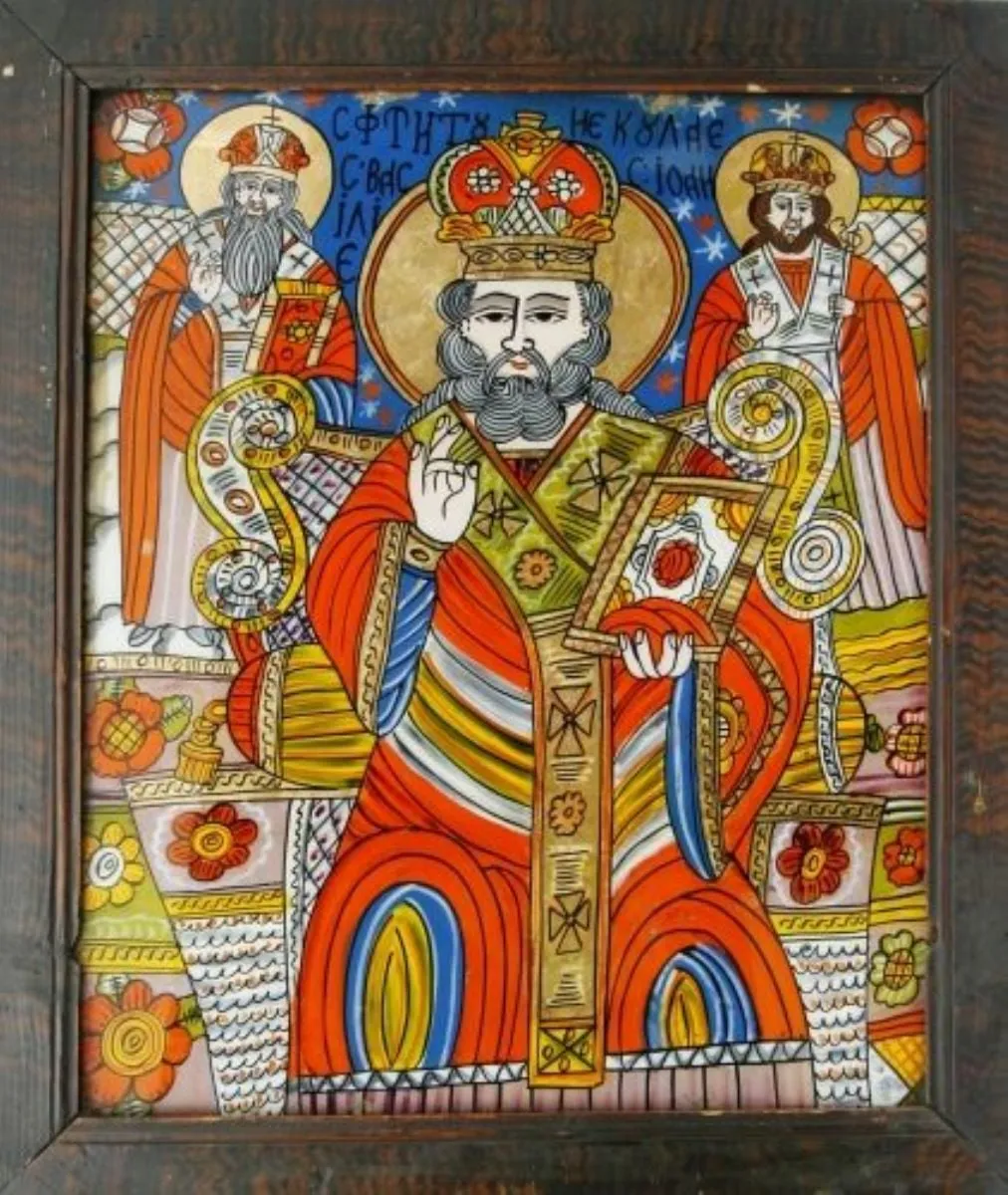
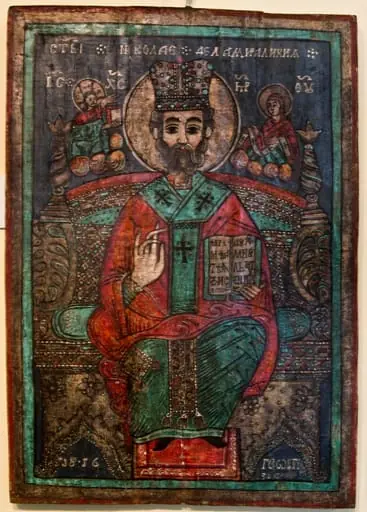
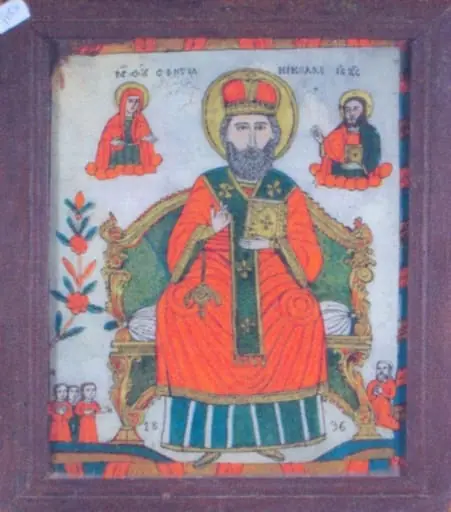
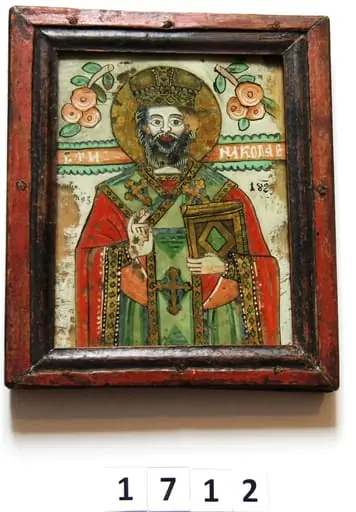
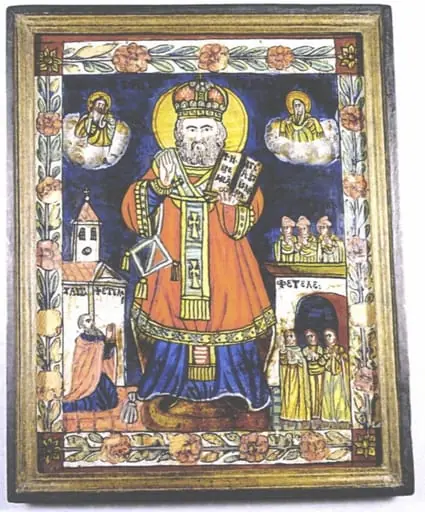
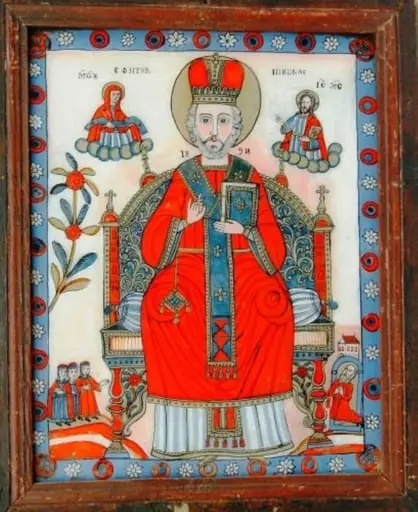
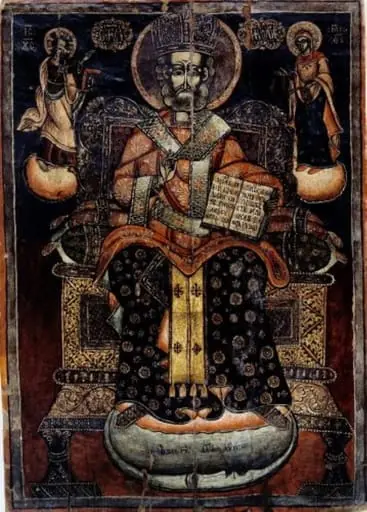
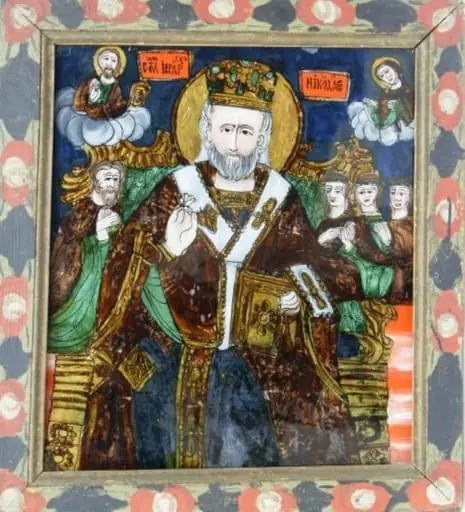
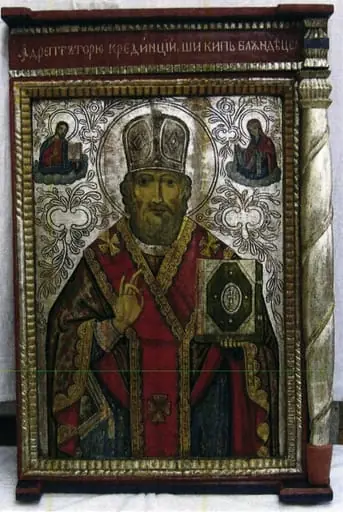
Sfântul Ierarh Nicolae (variantă a icoanei Sfânții Trei Ierarhi) is a drawing by Unknown. It dates from 1850 and is held in the collection of the Romanian Peasant Museum. This icon depicts three holy bishops, traditionally identified as the Three Hierarchs of the Eastern Orthodox Church.
About this work
Overview
This icon depicts three holy bishops, traditionally identified as the Three Hierarchs of the Eastern Orthodox Church. Rendered in a rigid, frontal composition, the figures stand in symmetrical alignment against a luminous blue background adorned with gold stars. Their garments and halos are richly detailed, emphasizing their sacred status through color and ornament rather than naturalistic depth.
Subject & Meaning
The central figure, Saint Nicholas, is distinguished by his elaborate crown and staff, symbols of episcopal authority. Flanking him are Saints Basil the Great and John Chrysostom, each holding a scroll to signify their theological writings. The grouping reflects their collective veneration as pillars of Church doctrine and spiritual leadership in Byzantine tradition.
Technique & Style
The painting follows the Byzantine iconographic convention: flat, frontal poses, lack of chiaroscuro, and stylized facial features. Colors are applied in bold, unmodulated planes—deep reds, royal blues, and gold leaf—creating a luminous, otherworldly effect. Decorative patterns along the border reinforce the sacred space, separating the divine figures from the earthly realm.
History & Provenance
Its stylistic features align with regional Orthodox traditions that preserved Byzantine models while incorporating local decorative elements.
This variant of the Three Hierarchs icon likely originated in the Balkans or Romania during the late medieval period, when devotion to these saints was widespread. Its stylistic features align with regional Orthodox traditions that preserved Byzantine models while incorporating local decorative elements. Exact origins remain undocumented, but similar icons were commonly used in monastic and domestic worship.
Context
In Orthodox liturgical practice, icons of the Three Hierarchs were displayed in churches and homes to honor their roles as teachers and defenders of the faith. Their joint veneration, formalized in the 11th century, reflected theological unity among early Church Fathers. This icon served both devotional and didactic purposes, reinforcing doctrinal authority through visual tradition.
Legacy
The icon’s enduring form influenced later Eastern European religious art, particularly in Moldavia and Wallachia, where stylized hieratic figures remained standard. While artistic trends shifted toward greater naturalism in the 18th century, this icon’s structure persisted in liturgical settings, preserving its symbolic language across centuries of religious practice.
Artist & collection

 Domestic Scene
 Giacomo and Cardinal Marco, investing Andrea, Abbot of San Zeno, with his Benefice
 The Nymph of Fontainebleau
 Portrait of a Woman
 Madonna and Child with Saints in the Enclosed Garden
 Venus and Minerva
 Family Group of Four on Sofa
 Wall painting from Room H of the Villa of P. Fannius Synistor at Boscoreale