Artwork
Icoan in
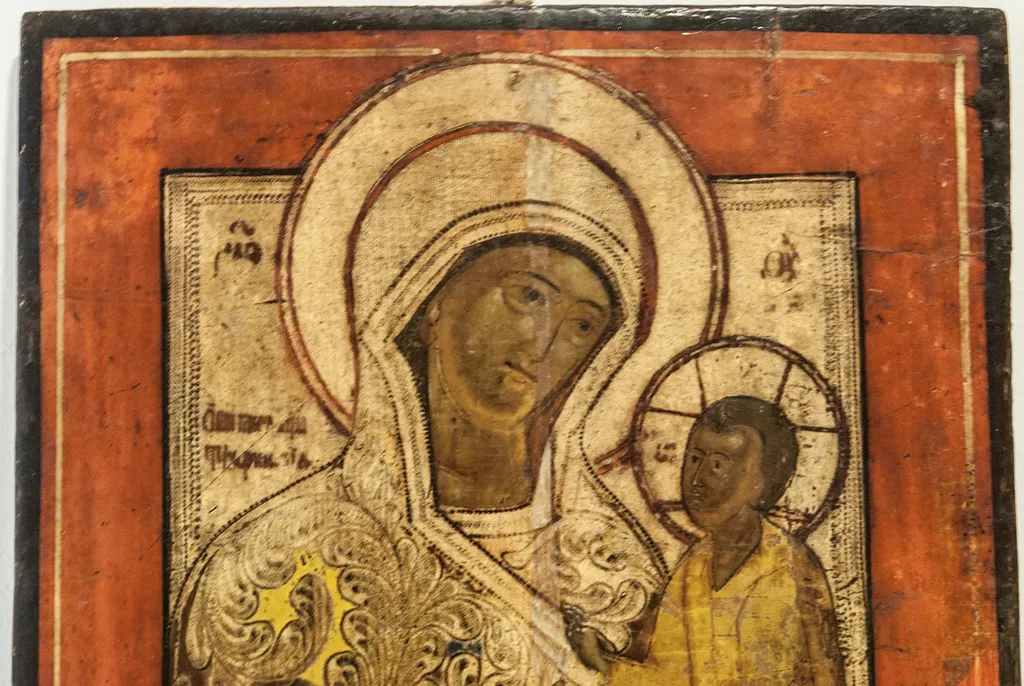
Icoan in is a drawing by Unknown. It dates from 1850 and is held in the collection of the "Dimitrie Gusti" National Village Museum. The composition presents two frontal figures set against a solid red field.
About this work
Overview
The composition presents two frontal figures set against a solid red field. The dominant figure is larger, adorned with a gold halo and a white garment trimmed in gold, while the secondary figure is smaller, bears a modest halo and a yellow robe. Both heads are rendered with minimal facial detail, outlined in dark lines, giving the image a stylized, emblematic quality.
Subject & Meaning
The presence of halos identifies the pair as sacred or saintly icons, a visual shorthand for holiness in religious art. The contrast in size and garment color may suggest a hierarchical relationship, perhaps indicating a principal saint accompanied by a lesser figure or attendant, a common motif in devotional imagery intended to convey reverence and intercession.
Technique & Style
The work relies on flat areas of color and stark outlines, eschewing realistic modeling for a graphic, two-dimensional effect. Simple line work defines the faces, while gold accents on the halo and robe provide a sense of illumination. The red background functions as a unifying field, emphasizing the figures without spatial depth, a style typical of early iconographic panels.
Context
Such icon-like representations were frequently employed in liturgical settings, serving as visual focal points for worship and instruction.
Such icon-like representations were frequently employed in liturgical settings, serving as visual focal points for worship and instruction. The limited palette—red, gold, white, and yellow—reflects traditional color symbolism, with red denoting sacrifice or divinity, gold signifying sanctity, and white representing purity. The image’s formal austerity aligns with conventions of medieval and early post‑Byzantine devotional art.
Artist & collection
Museum
"Dimitrie Gusti" National Village Museum
Continue through works from the same source collection.
 Domestic Scene
 Giacomo and Cardinal Marco, investing Andrea, Abbot of San Zeno, with his Benefice
 The Nymph of Fontainebleau
 Portrait of a Woman
 Madonna and Child with Saints in the Enclosed Garden
 Venus and Minerva
 Family Group of Four on Sofa
 Wall painting from Room H of the Villa of P. Fannius Synistor at Boscoreale
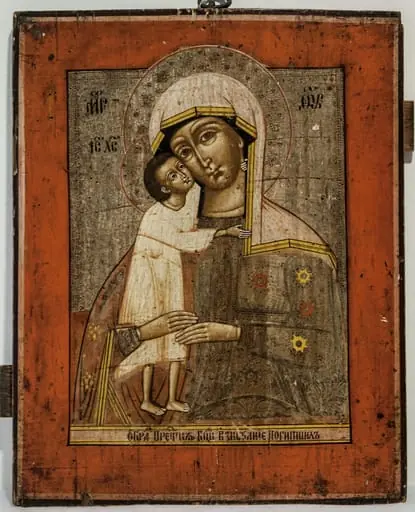 Maica Domnului, tipul Eleusa(dulcea sărutare, Mângâietoarea) îl ține strâns în brațe pe Iisus prunc, în picioare, cu obrazul lipit de cel al Maicii și o mână petrecută pe după gâtul ei. Iisus are nimbul cruciger, marcat cu motive florale punctate, Este înveșmântat într-o tunică 3/4 alb-gălbuie, care lasă să i se vadă picioarele. Maica poartă un maforion alb, bordat cu galben, partea din stânga a veșmântului din foiță metalică, decorată cu motive florale pictate cu roșu și galben, motive fitomorfe și geometrice incizate. În partea dreaptă veșmântul este roșu, decorat cu motive florale de culoare galbenă, foița fiind prezentă doar la mânecă. Nimbul decorat cu motive florale punctate în stratul de foiță metalică, Figurile modelate din culoare (alb, ocru) cu accente grafice fine, albe, sunt specifice icoanei rusești. Cromatica: alb, galben, roșu, auriu, brun, negru, foiță metalică, chenar roșu deschis, mărginit de două linii în nuanțe de roșu deschis și brun.Chenarul interior dublat de două șiruri de cercuri ștanțate în foiță. Inscripția dispusă pe o bandă dreptunghiulară în partea de jops a icoanei : Icoana Preacuratei Fecioare Prevăzând Jertfa (lui Iisus).
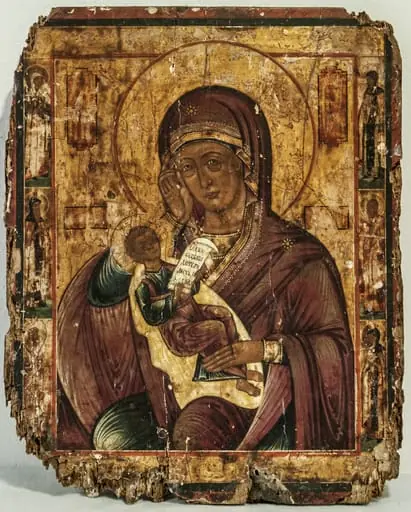 Icoana „Potolește întristările noastre” o înfățișează pe Maica Domnului ținând mâna stângă sub cap, care este ușor înclinat. Aceasta sugerează că Născătoarea de Dumnezeu ascultă lacrimile și rugăciunile tuturor credincioșilor care apelează la ea, în nevoile, necazurile și întristările lor. Cu mâna dreaptă, Fecioara Maria ține Pruncul Iisus. Mântuitorul ține în mâinile Sale un sul desfăcut, pe care sunt înscrise următoarele cuvinte: „Judecați cu dreptate, arătând milă unii față de alții, nu jigniți văduvele și orfanii și nu țineți răutate în inima voastră față de fratele vostru”.Maica este pictată pe fondul foiței aurite, cu o expresie blândă. Înveșmântată cu maforion grena, cu borduri aurite , dublate de o dantelărie fină, albă, pe umeri și frunte stelele întreitei feciorii. Stola verde cu galon lat aurit, la gât și mâneci. Pruncul , culcat în brațele Maicii pe o pânză albă, are o expresie tristă. Picioarele desculțe. Nimb cruciger, cu însemnele consacrate. Nimbul Fecioarei, trasat cu roșu, depășește bordura lată, aurită. Lateral, pe chenar, câte trei sfinți, în picioare. Se poate descifra doar inscripția de pe aureola sfântului Zosim și a sfintei Xenia(stânga). Inscripțiile referitoare la Iisus și Maica Domnului sunt casetate pe fondul aurit. Linia desenului foarte fină, drapajul veșmintelor bogat, cu unele accente de repictare(tușele de alb). Icoana prezintă degradări ale stratului pictural(eroziuni, clacuri, desprinderi, lacune, vernis îmbătrânit) și ale suportului(atac xilofag mai vechi care a fragilizat lemnul)
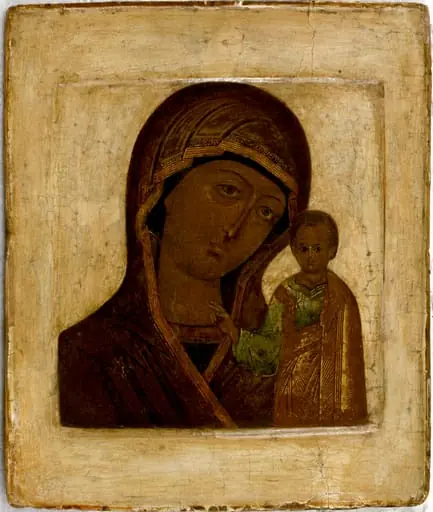 Kazanin Jumalanäiti, venäläinen ikoni
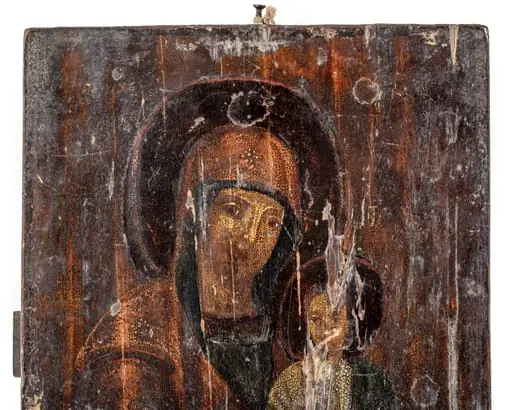 Maica Domnului
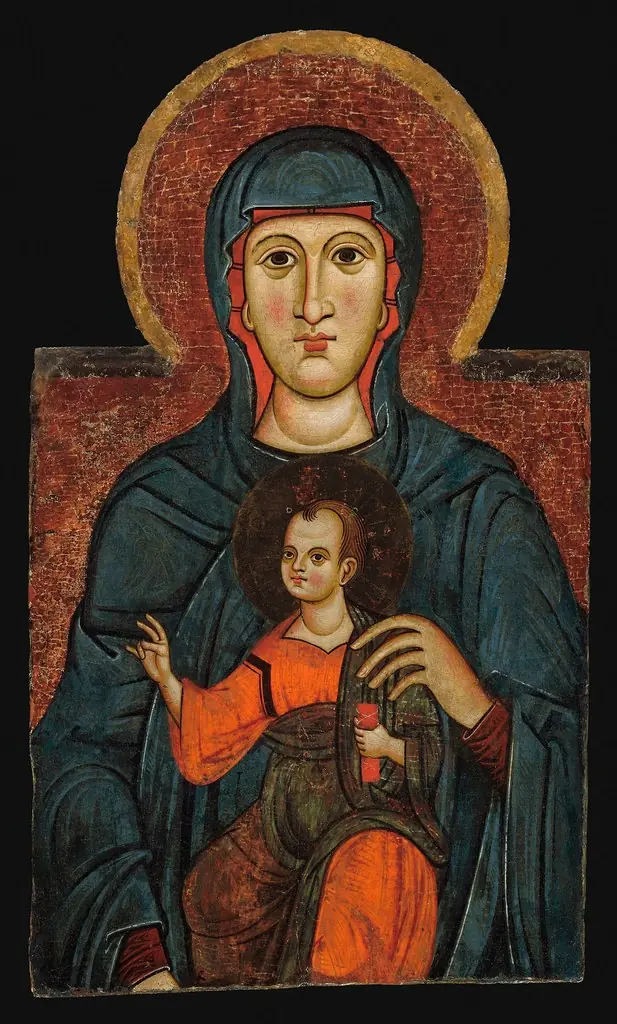 Virgin and Child
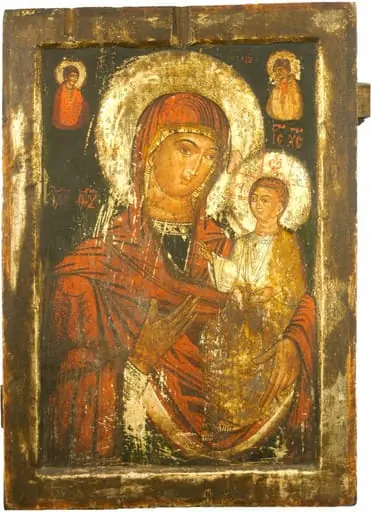 Maica Domnului cu Pruncul
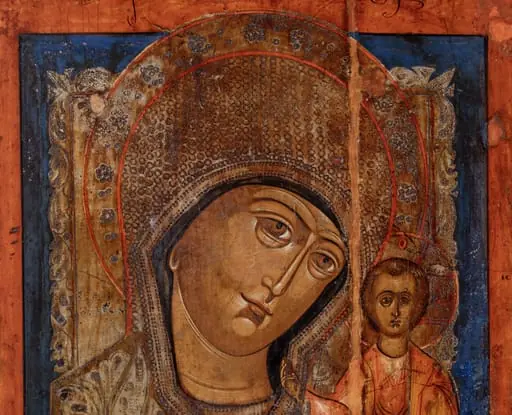 Fecioara cu Iisus
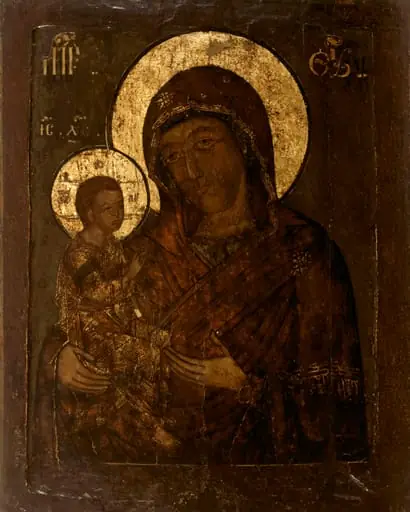 Jerusalemin Jumalanäiti, (Hodigitria), venäläinen ikoni
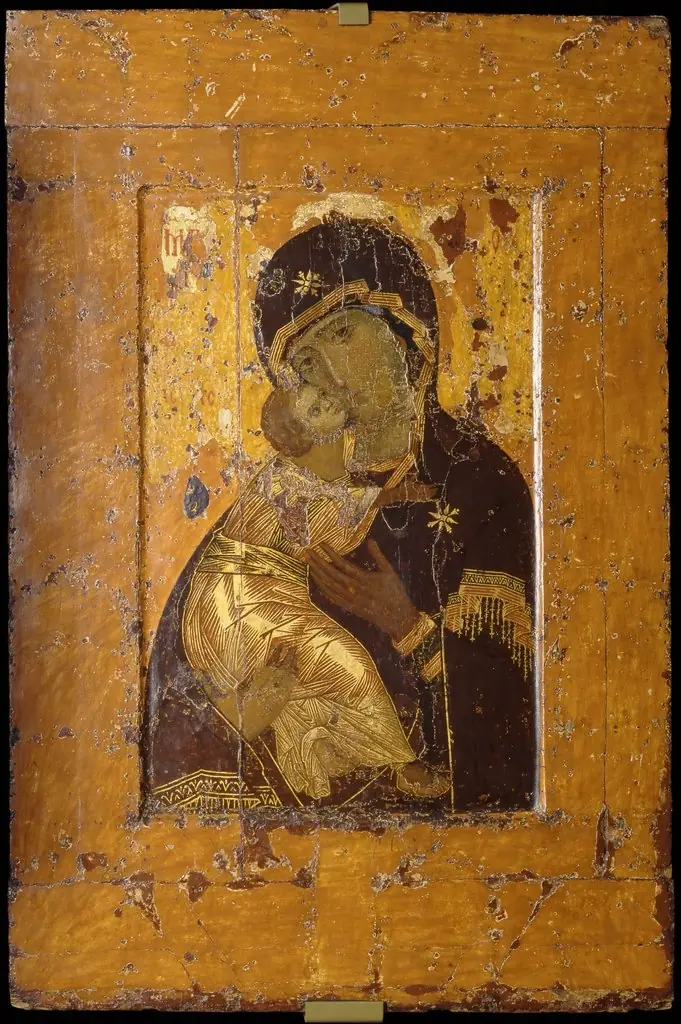 Theotokos of Vladimir
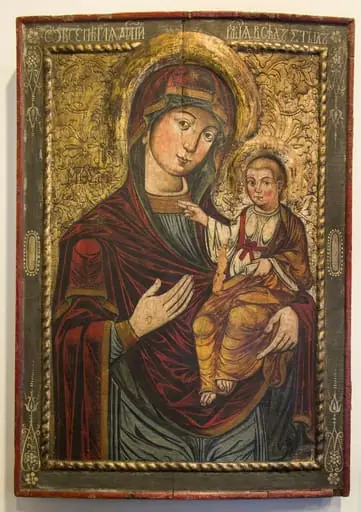 Maica Domnului cu pruncul; Icoană de catapeteasmă; Icoană împărătească