Artwork
Icoană ulei pe lemn, Isus Pantocrator. Icoana este decorată cu reprezentări florale sculptate și policromate. Icoana este îmbrăcată într-un material textil de culoare roșie. Icoană oferită lui Nicolae Ceaușescu de Otto Strobl din Munchen participant la Congresul XI al PCR, noiembrie 1974.
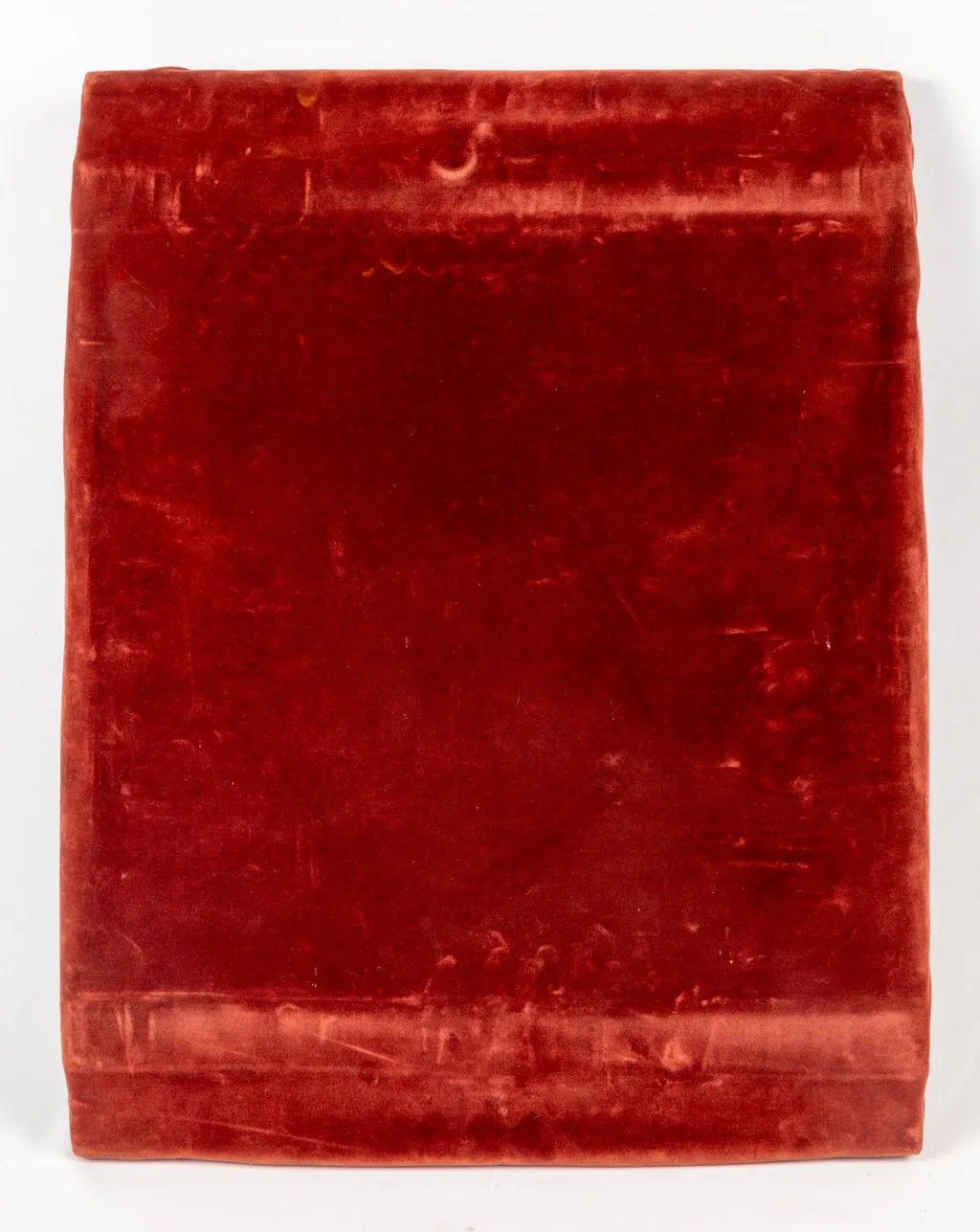
Icoană ulei pe lemn, Isus Pantocrator. Icoana este decorată cu reprezentări florale sculptate și policromate. Icoana este îmbrăcată într-un material textil de culoare roșie. Icoană oferită lui Nicolae Ceaușescu de Otto Strobl din Munchen participant la Congresul XI al PCR, noiembrie 1974. is a drawing by Unknown. It dates from 1850 and is held in the collection of the National Museum of Romanian History. The object is an oil-painted wooden icon depicting the Christ Pantocrator, a central figure in Eastern Christian iconography.
About this work
Overview
The object is an oil-painted wooden icon depicting the Christ Pantocrator, a central figure in Eastern Christian iconography. The panel is overlaid with a red fabric covering, concealing its surface while hinting at underlying decorative elements. The piece measures as a rectangular panel and presents a smooth, slightly textured finish typical of panel icons.
Subject & Meaning
The central image shows Jesus as Pantocrator, a representation of divine authority and universal rulership. This iconographic type emphasizes the theological concept of Christ as the all‑powerful ruler, a motif commonly employed in liturgical contexts to convey spiritual sovereignty.
Technique & Style
The icon was executed in oil on a wooden substrate, a medium that allows for rich coloration and fine detail. Surrounding the central figure are sculpted floral motifs that have been painted in multiple colors, integrating three‑dimensional carving with polychrome surface treatment, a synthesis seen in certain Eastern European devotional objects.
History & Provenance
In November 1974, the icon was presented to Romanian leader Nicolae Ceaușescu by Otto Strobl, a representative from Munich, during the Eleventh Congress of the Romanian Communist Party. The gift reflects a diplomatic exchange occurring within the political framework of the period.
Context
The presentation of a religious icon at a communist party congress illustrates the complex relationship between state ideology and cultural heritage in 1970s Romania. While official policy promoted secularism, the offering of a traditional Christian image underscores the persistence of religious symbolism in diplomatic gestures.
Legacy
Today the icon is part of the Museum of Ethnography’s collection, where it serves as an example of religious art intersecting with political history. Its preservation offers insight into the material culture of the era and the ways in which art objects were employed in statecraft.
Artist & collection

 Domestic Scene
 Giacomo and Cardinal Marco, investing Andrea, Abbot of San Zeno, with his Benefice
 The Nymph of Fontainebleau
 Portrait of a Woman
 Madonna and Child with Saints in the Enclosed Garden
 Venus and Minerva
 Family Group of Four on Sofa
 Wall painting from Room H of the Villa of P. Fannius Synistor at Boscoreale
 Untitled
 Untitled
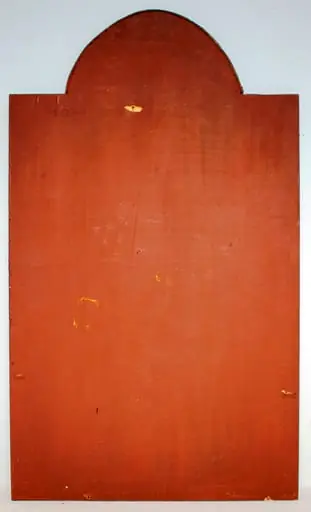 Piesa este o icoană împărătească ce a fost amplasată în biserică, în cadrul iconostasului sau în interiorul unuei troițe. Sunt redați, conform canoanelor bizantine, sfinții împărați Constatin și Elena, în picioare, sub brațele crucii Răstignirii descoperită de împărăteasa Elena la Ierusalim. Cei doi împărați sunt îmbrăcați în veșminte împărătești, cu coroane pe cap. Împăratul tânăr, cu părul castaniu, ondulat, înveșmântat cu mantie roșie decorată cu motive fitomorfe stilizate, tunică bleu cu galon lat, decorat cu motive fitomorfe. În mâna dreaptă ține un sceptru. Împărăteasa poartă mantie verde și tunica roșie, pe sub coroană o eșarfă albă.În mâna stângă ține cuiele Răstignirii. Pe capătul crucii se află inscripția INRI, iar peste brațele orizontale o eșarfă albă pe care este scris textul "Prin acest semn vei învinge", care i s-a revelat împăratului Constantin. Fond bleu închis, cu o linie de chenar albă, subțire, la fel cu inscripția scrisă în partea de sus. Paleta cromatică este variată, dar nu foarte armonioasă, culorile reci. Pictura este realizată de un pictor contemporan cu școală, autorul picturii unor biserici și icoane. Rama este profilată, lată, alcătuită din patru stinghii îmbinate oblic la colțuri, bătută în cuie metalice,culoare brun roșcat. În partea de sus este adăugată o porțiune semicirculară, cu margine din placaj îngust, montat transversal. Pe fondul bleu închis al acesteia este pictat un heruvim cu aripile întinse, chip sobru, cu păr blond, ochi negri, gura roșie. În partea de jos a piesei, două cuie mari de fier cu care era fixată. Face parte din același iconostas sau troiță cu nr. 50546.
 Untitled
 Untitled
 Untitled
 Tema icoanei face parte din ciclul Pascal și înfățișează Pogorârea la Iad a Domnului. În plan central apare reprezentat biruitor Iisus Hristos, ținând în mâna stângă un steag cu cruce, iar cu dreapta îl prinde pe Adam. În dreapta lui Hristos e pictat sfântul Ioan Botezătorul, arătând cu mâna dreaptă spre Mântuitorul. Compoziția e încadrată în partea superioară cu un brâu ornat cu motivul torsadei. Cromatica icoanei se compune din tonuri de roșu vermillon, alb, verde, albastru, maro și gri. Rama icoanei e profilată, băițuită și e formată din îmbinarea a patru baghete de lemn. Sticla este spartă, iar din suport lipsește colțul din stânga-sus și colțul din dreapta-jos.
 Untitled
 Untitled
 Maniera naivă. Sfântul este redat 3/4, din ușor semiprofil, binecuvântînd cu un gest stângaci cu mâna dreaptă, în stânga ținând cartea sfântă.Este redat cu capul descoperit, părul și barba cărunte, trăsăturile feței expresive, ușor stângace, cu atenție acordată unor detalii(ex. albul ochilor) Înveșmântat simplu, cu sacos roșu peste stiharul bleumarin, epitrahil verde cu cruci negre. În jurul capului are aureolă trasată cu un instrument!. Fondul sugerează cerul albastru separat cu o linie închisă de o porțiune roșie cu elemente vegetale?, porțiunea de jos sugerând pământul. Scrisul este dezordonat, studiat parcă. În stânga se află inscripționat anul, iar în dreapta io inscripție cu litere chirilice care ar putea aminti despre "GORGE AL BOINII DIN BROȘTENI?)(posibil comanditarul) Chenar dintr-o linie albă, subțire. Icoana a fost restaurată.