Artwork
Tema icoanei face parte din ciclul Pascal și înfățișează Pogorârea la Iad a Domnului. În plan central apare reprezentat biruitor Iisus Hristos, ținând în mâna stângă un steag cu cruce, iar cu dreapta îl prinde pe Adam. În dreapta lui Hristos e pictat sfântul Ioan Botezătorul, arătând cu mâna dreaptă spre Mântuitorul. Compoziția e încadrată în partea superioară cu un brâu ornat cu motivul torsadei. Cromatica icoanei se compune din tonuri de roșu vermillon, alb, verde, albastru, maro și gri. Rama icoanei e profilată, băițuită și e formată din îmbinarea a patru baghete de lemn. Sticla este spartă, iar din suport lipsește colțul din stânga-sus și colțul din dreapta-jos.
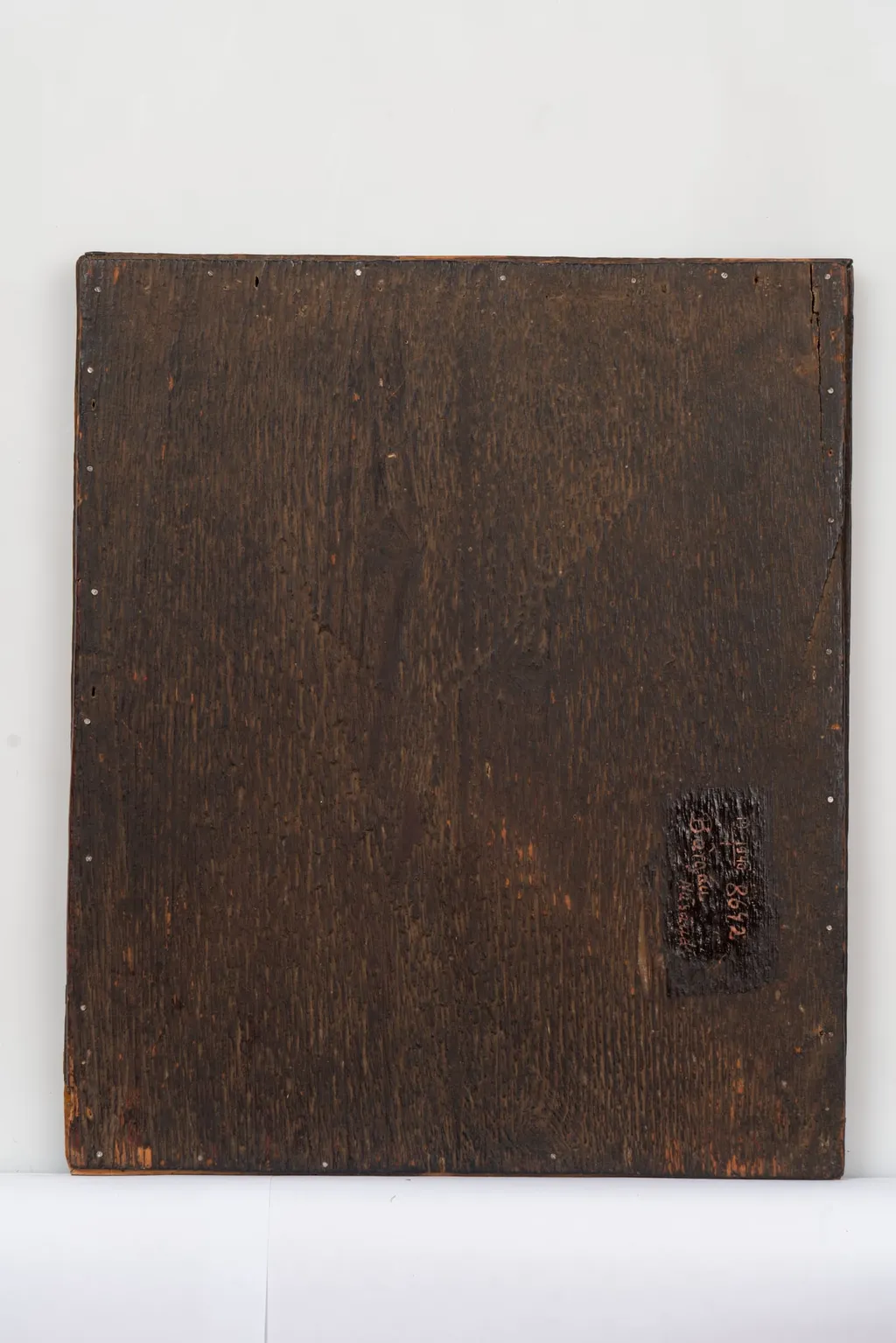
Tema icoanei face parte din ciclul Pascal și înfățișează Pogorârea la Iad a Domnului. În plan central apare reprezentat biruitor Iisus Hristos, ținând în mâna stângă un steag cu cruce, iar cu dreapta îl prinde pe Adam. În dreapta lui Hristos e pictat sfântul Ioan Botezătorul, arătând cu mâna dreaptă spre Mântuitorul. Compoziția e încadrată în partea superioară cu un brâu ornat cu motivul torsadei. Cromatica icoanei se compune din tonuri de roșu vermillon, alb, verde, albastru, maro și gri. Rama icoanei e profilată, băițuită și e formată din îmbinarea a patru baghete de lemn. Sticla este spartă, iar din suport lipsește colțul din stânga-sus și colțul din dreapta-jos. is a drawing by Unknown. It dates from 1850 and is held in the collection of the Ethnographical Museum of Transylvania. The object is a fragmented wooden panel, once part of a religious icon depicting the Harrowing of Hell.
About this work
Overview
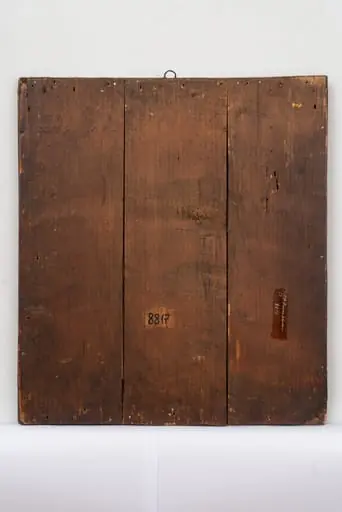
A faint inscription on a small plaque in the lower right hints at its original devotional purpose, though its full context is now lost.
The object is a fragmented wooden panel, once part of a religious icon depicting the Harrowing of Hell. No painted imagery survives—only the bare, weathered wood remains, its surface marked by time, wear, and damage. The frame, composed of four joined wooden strips, is intact but shows signs of aging. A faint inscription on a small plaque in the lower right hints at its original devotional purpose, though its full context is now lost.
Subject & Meaning
The original icon illustrated Christ’s descent into Hades, a key moment in Orthodox theology where He rescues Adam and the righteous dead. Christ, holding a cross-banner and grasping Adam’s hand, was flanked by John the Baptist gesturing toward Him. These figures symbolized divine victory over death and the redemption of humanity. The scene’s theological weight is now only inferable from the surviving frame and plaque, as the image has vanished.
Technique & Style
The panel was likely painted using traditional iconographic methods: tempera on wood, with pigments including vermilion, blue, and green. The frame’s profiled, carved edges suggest craftsmanship typical of regional workshops. Cross-hatching or fine linear detailing may have been used to model forms, though no trace of such technique remains on the surface. The absence of paint leaves only the wood’s natural grain and structural form as evidence of its making.
History & Provenance
The panel’s origin is undocumented, but its form and frame suggest it was produced in a Eastern European Orthodox context, possibly 17th–18th century. Damage to the corners and loss of the painted surface indicate physical trauma, possibly from neglect, fire, or iconoclasm. The surviving plaque, though barely legible, may once have identified the donor or the church where it was displayed, but its inscription offers no definitive clues.
Context
Icons of the Harrowing of Hell were common in Orthodox liturgical settings, often placed above altars or in narthexes to reinforce the promise of resurrection. This panel’s survival as a bare wooden fragment reflects broader historical patterns of religious imagery being destroyed or obscured during periods of political or theological upheaval. Its current state is a silent testament to the fragility of sacred art.
Legacy
Though the image is gone, the panel endures as a physical relic of a lost devotional practice. Its worn surface and incomplete frame invite contemplation of absence and memory in religious art. Scholars may infer its former appearance from comparable icons, but the object itself now speaks through erosion—its history preserved not in color or form, but in the quiet residue of time.
Artist & collection
Museum
Ethnographical Museum of Transylvania
Continue through works from the same source collection.
 Domestic Scene
 Giacomo and Cardinal Marco, investing Andrea, Abbot of San Zeno, with his Benefice
 The Nymph of Fontainebleau
 Portrait of a Woman
 Madonna and Child with Saints in the Enclosed Garden
 Venus and Minerva
 Family Group of Four on Sofa
 Wall painting from Room H of the Villa of P. Fannius Synistor at Boscoreale
 Maica Domnului este pictată în picioare, în partea dreaptă a imaginii, având o atitudine evlavioasă, iar sfântul arhanghel Gavriil, tot în picioare, pictat la aceeași înălțime cu Maica Domnului, în stânga compoziției. Duhul Sfânt, sub forma unui porumbel, se pogoară din slava cerului deasupra Fecioarei Maria. Fondul e decorat cu flori și frunze simple, esențializate. Cromatica icoanei se compune din tonuri de portocaliu, verde, albastru, maro, alb și foiță aurie. Rama icoanei e simplă, băițuită și e formată din îmbinarea a patru baghete de lemn.
 Icoae jo
 Sfântul Nicolae
 Fecioara Maria, dispusă în partea dreaptă a compoziției, este pictată în genunchi, într-o atitudine plină de evlavie. Arhanghelul Gavriil este pictat în picioare, în partea stângă, ținând o floare în mâna stângă, iar cu dreapta binecuvinteză și arată spre slava cerului, de unde Duhul Sfânt, în chip de porumbel, trimite raze spre Maica Domnului. Între cei doi sfinți este pictată o masă pe care stă cartea sfântă închisă, în spatele căreia e un crin. În spatele Maicii Domnului este schițată o clădire. Icoana este pictată integral doar în zona fețelor, a mâinilor, precum și Duhul Sfânt, sub formă de porumbel. În rest, s-au folosit doar laviuri colorate pe un fond de hârtie argintată. Cromatica icoanei se compune din tonuri de roșu, ocru galben, verde, maro. Rama icoanei e profilată, bicromă (latura interioară roșie, iar cea exterioară maronie) și e formată din îmbinarea a patru baghete de lemn.
 Icoana este deosebită, prin tematica iconografică abordată: Încoronarea Maicii Domnului. În centrul icoanei este Maica Domnului Împărăteasă, pe tron arhieresc, cu Pruncul iisus Hristos în brațe. Maica Domnului este îmbrăcată în veșmânt albastru bleumarin, iar Pruncul Iisus Hristos este înveșmântat cu alb-albastru. Pruncul Iisus ține în mână globul pământesc. În dreapta Maicii Domnului este Sfântul Mare Ierarh Nicolae făcător de minuni, îmbrăcat în veșminte arhirești, cu mantie roșie vermillon, mithră, cârjă mitropolitană. În stânga Maicii Domnului este Sfântul Mare Prooroc Ioan Botezătorul și Înaintemergătorul Domnului Iisus Hristos. Sfântul Ioan Botezătorul are și culoarea verde în combinația cromatică a veșmântului. Verdele este culoarea Sfântului Ioan. În registrul superior, sunt Sfinții Arhangheli Mihail și Gavriil, așezând coroana de Împărăteasă a Cerurilor pe capul Maicii Domnului. Aripile Sfinților Îngeri sunt galbene. Se remarcă mandorle de nouri albi-gri, în registrul superior. În registrul inferior, este un postament cărămiziu. Cromatica este armonioasă: roșu vermillon, orange, cărămiziu, galben chihlimbar, albastru ceruleum, cobalt, bleu-ciel, alb, negru, verde de China. Inscripția din româno-chirilică se traduce: IC XC MP Iisus Hristos Maica Domnului Sfântul Nicolae Sf Ioan Botezătorul Pocăiți-vă. Icoana este de Valea Sebeșului.
 Scena Cinei celei de Taină se desfășoară într-un interior sugerat de elemente arhitectonice, coloane, candelabru, candele. În centrul icoanei este Mântuitorul Iisus Hristos binecuvântând mâncarea, la masă, alături de ucenici și apostoli. Cu brațul stâng îl ține lipit de piept pe Ioan cel iubit. Pe masă sunt așezate un potir pentru vin și tacâmuri și farfurioare mici.Personajele au chipurile expresive, veșmintele personajelor și faldurile feței de masă, cât și draperiile sunt pictate cu măiestrie de pictor. Veșmintele sunt predominant roșii. Cromatica este armonioasă și echilibrată, pornindu-se gradual dinspre exterior înspre interior, de la albastru spre alb, ajungându-se la albul luminos al mesei celor dăruite. Compoziția este încadrată de elemente de arhitectură, coloane, arcade, creându-se, astfel, intimitatea Cinei celei de Taină. Totul este concentric, strângându-se în jurul Potirului. Elemente de arhitectură se întrezăresc printre cele 5 coloane. Se întrezărește o cruce formată din axa verticală Potirul și candela și cea orizontală - brațele Îmbrățișării Mântuitorului - Dragostea jertfelnică atotcuprinzătoare. Icoana este a lui Savu Moga, din Arpașu de Sus, Țara Făgărașului. Icoana este datată 1877. Inscripția din româno-chirilică se traduce Cina cea de Taină.
 Untitled