Artwork
Icoana este foarte rară pentru că îl reprezintă pe Sfântul Mare Mucenic Mina, ocrotitorul celor păgubiți. Este îmbrăcat în veșminte preoțești, cu felon roșu vermillon și sacos gri cenușiu-antracit. Are în mâna dreaptă desfășurat un hrisov de cuvânt de înțelepciune și învățătură. Cu mâna stângă arată totodată înspre inima sa, cu închinăciune către toți și înspre cuvintele hrisovului. Fondul icoanei este împărțit în două registre complementare: cerul albastru bleu-ciel senin și câmpul galben luminos de grâu. Întreaga tematică iconografică este încadrată de un chenar decorativ fitomorf, format dintr-o ghirlandă de 7 ruje - trandafiri și bujori în floare. Icoana este din Nicula-Gherla, la interferența celor două centre de pictură. Inscripția din româno-chirilică se traduce Mina.
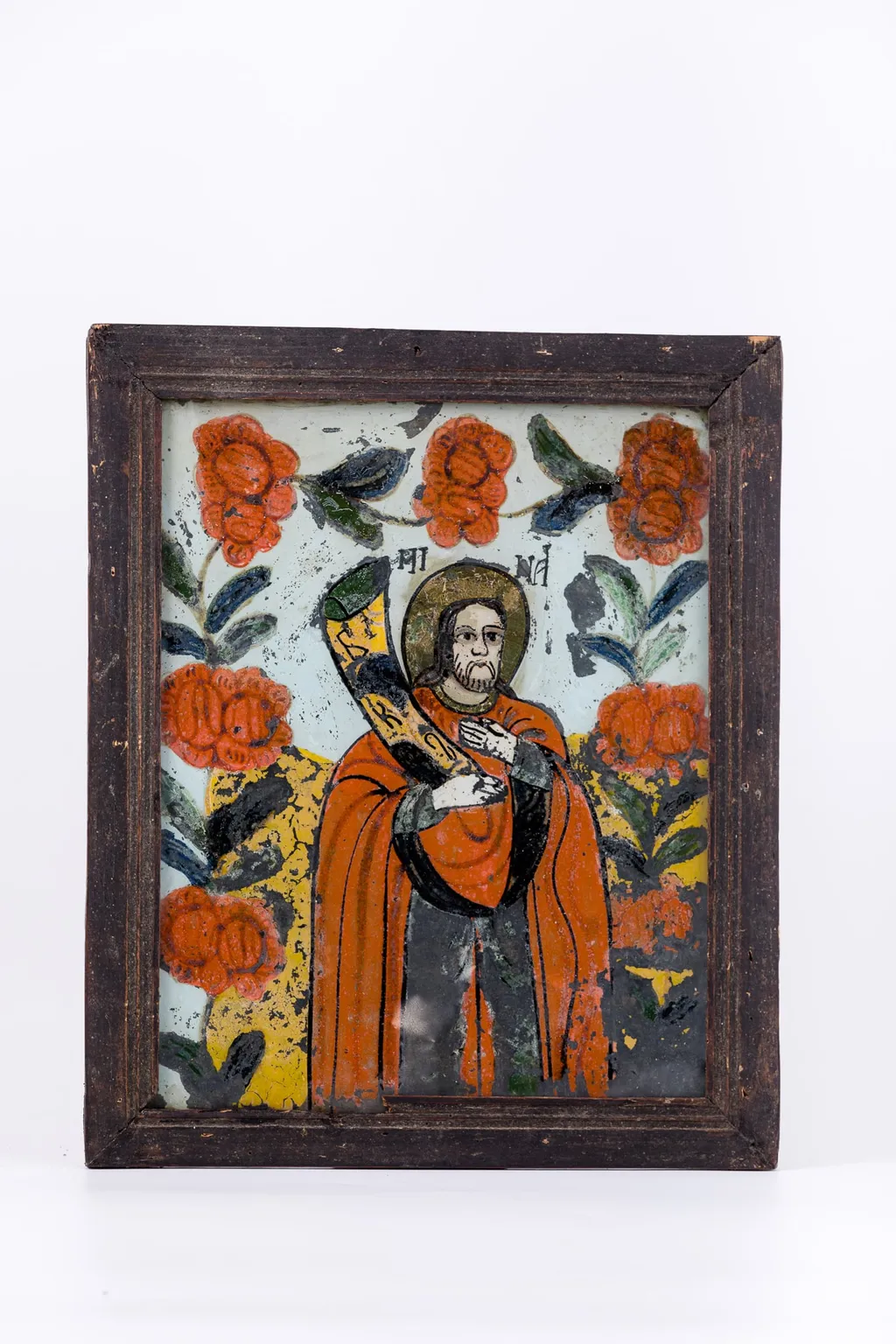
Icoana este foarte rară pentru că îl reprezintă pe Sfântul Mare Mucenic Mina, ocrotitorul celor păgubiți. Este îmbrăcat în veșminte preoțești, cu felon roșu vermillon și sacos gri cenușiu-antracit. Are în mâna dreaptă desfășurat un hrisov de cuvânt de înțelepciune și învățătură. Cu mâna stângă arată totodată înspre inima sa, cu închinăciune către toți și înspre cuvintele hrisovului. Fondul icoanei este împărțit în două registre complementare: cerul albastru bleu-ciel senin și câmpul galben luminos de grâu. Întreaga tematică iconografică este încadrată de un chenar decorativ fitomorf, format dintr-o ghirlandă de 7 ruje - trandafiri și bujori în floare. Icoana este din Nicula-Gherla, la interferența celor două centre de pictură. Inscripția din româno-chirilică se traduce Mina. is a drawing by Unknown. It dates from 1850 and is held in the collection of the ASTRA National Museum Complex.
About this work
Overview
The figure is framed by a floral border of seven roses and buds, emphasizing sacredness through natural ornamentation rather than architectural elements.
This icon depicts Saint Mina, a revered martyr and protector of the afflicted, rendered in a regional style from Nicula-Gherla, where two distinct painting traditions intersect. The composition follows traditional Byzantine conventions with flat, unmodeled colors and symbolic spatial division. The figure is framed by a floral border of seven roses and buds, emphasizing sacredness through natural ornamentation rather than architectural elements.
Subject & Meaning
Saint Mina is portrayed as a spiritual authority, clad in priestly vestments of vermilion and grayish-black, signifying his dual role as monk and intercessor. His right hand holds an unrolled scroll, symbolizing divine wisdom and teaching; his left hand points to his heart, indicating inner devotion and the source of his message. The gesture unites personal piety with public instruction, reinforcing his role as guide to the suffering.
Technique & Style
The icon employs a flat, non-perspectival technique typical of Eastern Orthodox traditions, with bold, unshaded hues and clear outlines. The background divides into a luminous golden wheat field and a serene blue sky, representing earthly sustenance and heavenly grace. The decorative floral border, rendered in stylized roses and buds, functions as both frame and sacred symbol, reinforcing the icon’s ritual function without naturalistic detail.
History & Provenance
Originating from the Nicula-Gherla region, the icon reflects the blending of Transylvanian and Moldavian iconographic practices in the 18th or early 19th century. Its inscription in Romanian Cyrillic identifies the saint as Mina, aligning with local veneration patterns. The work likely served a parish church or private chapel, where its imagery provided both spiritual focus and communal identity through recognizable iconography.
Context
In the religious landscape of Romanian-speaking regions, icons of Saint Mina were especially valued for their association with healing and protection. The choice of wheat and sky as background elements connects the saint to divine provision and eternal peace, common themes in rural devotional art. The floral border, drawn from local botanical motifs, grounds the sacred in familiar natural forms, bridging the divine and the everyday.
Legacy
This icon remains a representative example of regional Orthodox painting that preserved liturgical conventions while incorporating local aesthetic preferences. Its survival offers insight into how saint veneration was visually codified in communities beyond major monastic centers. The persistence of Cyrillic script and traditional iconography underscores the endurance of cultural and religious identity in the face of broader political and linguistic shifts.
Artist & collection

 Domestic Scene
 Giacomo and Cardinal Marco, investing Andrea, Abbot of San Zeno, with his Benefice
 The Nymph of Fontainebleau
 Portrait of a Woman
 Madonna and Child with Saints in the Enclosed Garden
 Venus and Minerva
 Family Group of Four on Sofa
 Wall painting from Room H of the Villa of P. Fannius Synistor at Boscoreale
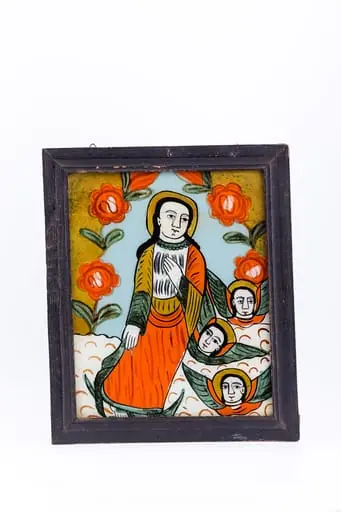 Icoana reprezintă o Sfântă Cuvioasă, împreună cu trei îngeri serafimi și heruvimi. Sfânta este îmbrăcată în veșmânt în combinație de roșu vermillon, orange-ocru, verde-gri, alb. Se observă broderia cămășii interioare. Are mâna stângă ținută în dreptul inimii, în semn de închinăciune. În stânga Sfintei sunt trei îngeri cu aripile verzi-gri, lipiți de poala veșmântului Sfintei, ocrotindu-se reciproc. În registrul inferior, icoana are fondul format din valurile unei mări, alb cu crem-ocru, pe care merg Sfânta și Îngerii. În registrul superior, este cerul albastru bleu-ciel senin, încadrat de lumină de ocru de pe marginile icoanei, pe care este pictată o ghirlandă de ruje, formând un armonios chenar decorativ fitomorf. Icoana este rară, din punctul de vedere al tematicii iconografice abordate. Icoana este de Nicula, având o cromatică armonioasă, caldă și autumnală: roșu vermillon, albastru bleu-ciel, verde-gri, galben-ocru, orange-ocru, bej, crem, alb, negru.
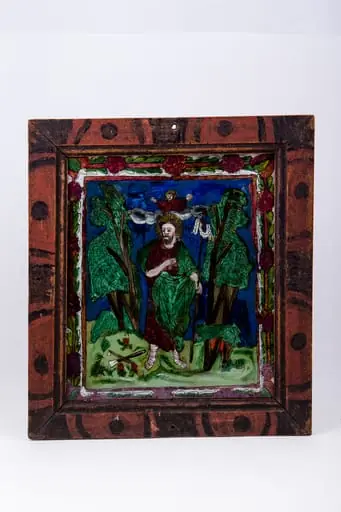 Icoana îi reprezintă împreună pe Sfântul Ioan Botezătorul și Înaintemergătorul Mântuitorului Iisus Hristos și pe Dumnezeu Tatăl. Sfântul Ioan Botezătorul este îmbrăcat într-un himation sau o sarică de păr de cămilă, încins la brâu și cu o mantie de culoare verde, și aripi albastre turcoaz-smarald de înger. Fondul este albastru cu o pădure de copaci verzi, în pustietate. Desenul este foarte sigur și detaliile realizate minuțios, trăsăturile chipurilor fiind foarte expresive și pictate cu măiestrie. Deasupra Sfântului Ioan Botezătorul este Dumnezeu-Tatăl, din deschiderea Cerurilor, cu mâinile ridicate, ocrotind, acoperind și binecuvântând. Cromatica este armonioasă, dar mai rece, și întunecată, specifică picturii Mărginimii Sibiului: verde mușchi de pădure, albastru ceruleum, acajou, brun, stacojiu, alb, negru. Inscipția din româno-chirilică se traduce Sf Ioan IC XC Iisus Hristos.
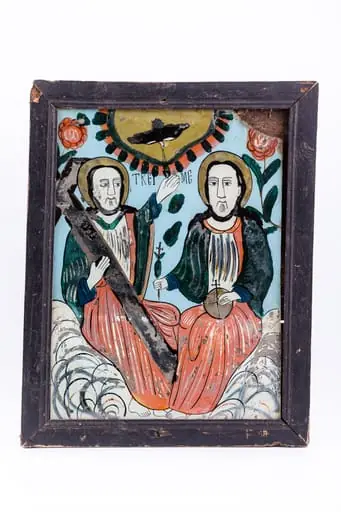 Icoana reprezintă Sfânta Treime. Dumnezeu-Tatăl are globul pământesc, pe genunchi și în mâna dreaptă are o cruce de mână. Dumnezeu-Fiul este alături, ține Crucea pe umărul drept și cu mâna stângă arată înspre Sfântul Duh, Pogorându-se ca un porumbel, astfel reunindu-Se Sfânta Treime. Dumnezeu-Tatăl și Dumnezeu-Fiul sunt îmbrăcați în veșminte în combinație de albastru cobalt, gri cenușiu-antracit și roșu vermillon. Se remarcă desenul fin al broderiei mânecii Tatălui Ceresc. Sfântul Duh se pogoară din miezul galben-solar, deschiderea Cerurilor, cu raze de lumină. Inscripția din româno-chirilică se traduce Treime. În registrul superior, fondul icoanei este cerul albastru bleu-ciel senin, cu câte o rujă - trandafir roșu - în colțurile din stânga și dreapta. În miezul rujelor este semnul zăluței albe, șerpuitoare. În registrul inferior sunt câmpuri de nouri albi-gri, mandorle peste mandorle. Cromatica este luminoasă și armonioasă: roșu vermillon, albastru bleu-ciel, albastru cobalt, alb, gri-antracit, ocru-muștar, alb, negru. Icoana este de Nicula.
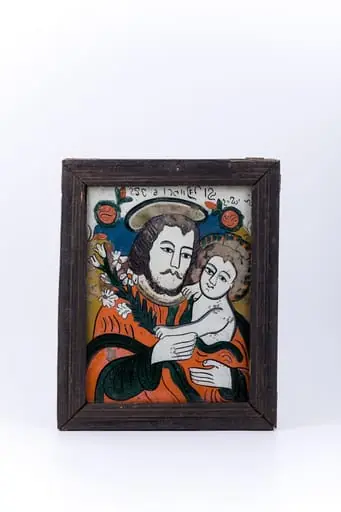 Icoana îi reprezintă pe Sfântul și Dreptul Iosif, Logodnicul PreaCuratei Fecioarei Maria, cu Pruncul Iisus Hristos în brațe. Icoana este mai rară, din punctul de vedere al tematicii compoziționale abordate. Sfântul Iosif este înveșmântat cu un hiton - tunică roșie vermillon, cu mânecile și bordura verde mușchi-de-pădure sau nuanță de China. Pruncul Iisus este dezbrăcat, dar acoperit de veșmântului protector al Sfântului Iosif. În mâna dreaptă Dreptul Iosif Logodnicul ține o ramură de crin, simbolul Fecioriei și a BuneiVestiri. Crinul este ținut împreună cu mânuța Pruncului Sfânt. Aureola Sfântului Iosif este mai aparte, asemenea sfinților catolici. Fondul icoanei este cerul albastru regal, în registrul superior, un câmp luminos de galben-bronziu, în registrele inferior și mediu, pe laterale și un chenar decorativ geometrizant alb-ivoriu. În registrul superior, asemenea unei arcade de boltă, este o ghirlandă de ruje roz - 2 elemente florale. Inscripția din româno-chirilică se traduce Sf Iosif și Iisus. Cromatica este armonioasă și luminos-pastelată: roșu vermillon, verde mușchi-de-pădure, albastru regal, alb-ivoriu, crem, bej, nisipiu, galben-ocru, bronziu, alb, negru. Icoana este din Nordul Transilvaniei, Nicula.
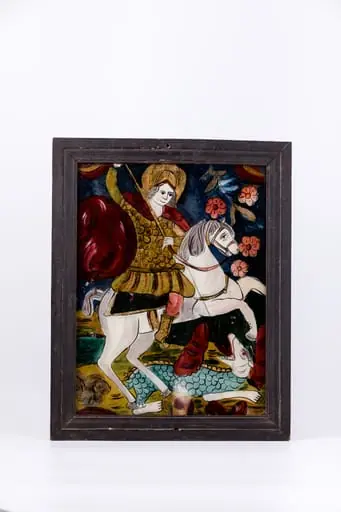 Sfântul Mare Mucenic Gheorghe este așezat călare pe un cal alb cu șa neagră, omorând balaurul alb-albastru-gri cu creastă roșie-acajou, solzi și coadă lungă, cu lancea, pe care o ține cu amândouă mâinile, înfingându-i-o animalului în gâtlej. Fondul este cerul albastru ultramarin bleumarin în registrul superior. În registrul inferior, fondul este brun-ocru și albastru cobalt, cu linii ondulatorii verzi, cele două registre în centrul icoanei ușor întrepătrundu-se. Mantia Sfântulu Mucenic Purtător de Biruință este roșie-vișinie stacojie, având cămașa de cavaler cu zale. Culoarea roșie este caracteristică mucenicilor și martirilor. Cerul albastru este acoperit cu elemente fitomorfe - flori de măr roz-roșii. Icoana, fiind din Mărginimea Sibiului, are desenul mai neglijent, cromatica puternică, fauvistă. Cromatica este armonioasă: roșu vișiniu-stacojiu, albastru, bleu-ultramarin bleumarin, roz, brun, galben-ocru, gri, alb, negru. Icoana este din Mărginimea Sibiului.
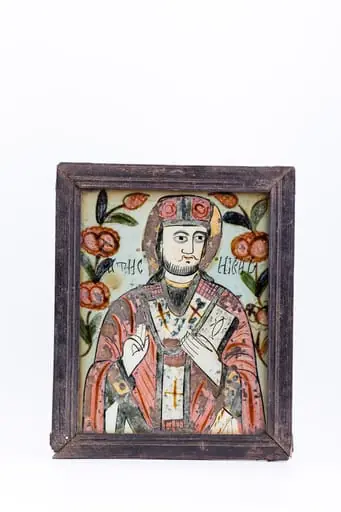 Sfântul Mare Ierarh Nicolae Făcătorul de minuni ține în mâna stângă Sfânta Evanghelie închisă și binecuvântează cu mâna dreaptă. Veșmintele arhierești liturgice ale sfântului ierarh sunt într-o alternanță cromatică de roșu vermillon, verde, ocru și gri-cenușiu antracit, cu broderie galbenă pe margini. Epitrahilul-patrafirul este gri-alburiu cu marginile verzi și trei cruci galben-aurii. Fondul icoanei este albastru bleu-ciel foarte senin. Întreaga compoziție este încadrată în spațiul cerului senin de o ghirlandă de ruje - elemente decorative fitomorfe, 6 trandafiri roșii, cu bobocei și frunze verzi. Icoana este de Nicula, Nordul Transilvaniei. Cromatica este armonioasă, specifică centrului de la Nicula: roșu vermillon, albastru bleu-ciel, galben-ocru-muștar, verde de China, alb, brun, negru, gri. Inscripția din româno-chirilică se traduce Sfântul Nicolae.
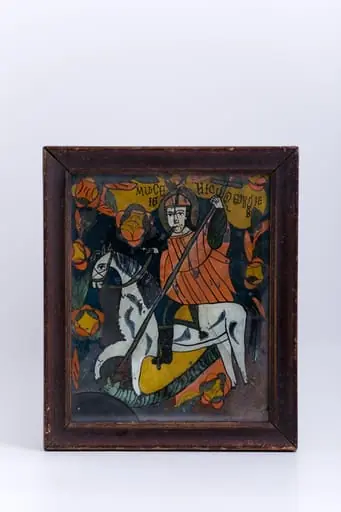 Sfântul Mare Mucenic Gheorghe este așezat călare pe un cal alb acoperit cu elemente de harnașament galbene și verzi și omorând balaurul cu lancea bronzie, pe care o ține în mâna stângă. Balaurul este pictat cu verde smarald-gri și kaki și gri cenușiu-antracit verzui și având corp de reptilă, cu coadă de diavol. Fondul icoanei este cerul albastru ultramarin-bleumarin și galben-chihlimbar în exterior și în cel inferior, în centrul icoanei ușor întrepătrundu-se toate culorile. Tunica Sfântului Mucenic Purtător de Biruință este roșie-vermillon-orange, având pantalonii albaștri-ultramarin. În registrul superior, icoana este încadrată de un chenar decorativ, format dintr-o ghirlandă de 8 ruje orang-galben. Cromatica este armonioasă: roșu vermillon, orange, albastru-regal, cobalt și ceruleum, ocru, galben chihlimbar, verde kaki și smarald, gri antracit, alb și negru. Inscripția din româno-chirilică se traduce Mucenicu Gheorghe. Icoana este din Nordul Transilvaniei, Nicula.