Artwork
Icoana reprezintă Nașterea Mântuitorului Iisus Hristos. Pruncul Iisus, nu este înfășat în scutece, este un copilaș mai măricel, care are în dreapta pe Maica Domnului și pe Dreptul Iosif, logodnicul Fecioarei Maria, iar în stânga cei trei magi, venind cu daruri. În registrul superior este steaua cea călăuzitoare, aducătoare de vestea cea bună. În registrul superior îndepărtat sunt un păstor cu o oiță, căreia îi cântă din fluier și doi îngeri care deschid Cerurile pentru a pătrunde steaua călăuzitoare și aducătoare de veste bună. Este o alternanță cromatică de gri, brun-bronziu, alb, petrol și albastru bleu-ciel. Cerurile sunt deschise. Registrele se întrepătrund armonios. Cromatica este armonioasă: gri, brun-bronziu, alb, petrol și albastru bleu-ciel. Inscripția din româno-chirilică se traduce Nașterea Lui Iisus Hristos ICXC. Icoana este pictată în Laz, Valea Sebeșului. Ceea ce este indedit și deosebit la această icoană este chenarul decorativ geometrizant format dintr-o linie șerpuită albă, împrumutată parcă din icoanele de Nicula, aici având semnificația idee de povestire, scriere, ninsoare.
Icoana reprezintă Nașterea Mântuitorului Iisus Hristos. Pruncul Iisus, nu este înfășat în scutece, este un copilaș mai măricel, care are în dreapta pe Maica Domnului și pe Dreptul Iosif, logodnicul Fecioarei Maria, iar în stânga cei trei magi, venind cu daruri. În registrul superior este steaua cea călăuzitoare, aducătoare de vestea cea bună. În registrul superior îndepărtat sunt un păstor cu o oiță, căreia îi cântă din fluier și doi îngeri care deschid Cerurile pentru a pătrunde steaua călăuzitoare și aducătoare de veste bună. Este o alternanță cromatică de gri, brun-bronziu, alb, petrol și albastru bleu-ciel. Cerurile sunt deschise. Registrele se întrepătrund armonios. Cromatica este armonioasă: gri, brun-bronziu, alb, petrol și albastru bleu-ciel. Inscripția din româno-chirilică se traduce Nașterea Lui Iisus Hristos ICXC. Icoana este pictată în Laz, Valea Sebeșului. Ceea ce este indedit și deosebit la această icoană este chenarul decorativ geometrizant format dintr-o linie șerpuită albă, împrumutată parcă din icoanele de Nicula, aici având semnificația idee de povestire, scriere, ninsoare. is a drawing by Unknown. It dates from 1850 and is held in the collection of the ASTRA National Museum Complex.
About this work
Overview
The icon portrays the Nativity of Jesus, showing a slightly older infant Christ seated between the Virgin Mary on his right and Joseph on the left. To the left of the central group, the three Magi approach bearing gifts, while the upper register features the guiding Star of Bethlehem. Above, a shepherd with a lamb and two angels open the heavens, allowing the star’s light to descend.
Subject & Meaning
The composition emphasizes the divine announcement of Christ’s birth. The presence of the Magi underscores the recognition of the infant by the Gentile world, while the shepherd and angels symbolize the heavenly proclamation. The decorative border, a sinuous white line, evokes a narrative thread, linking the visual story to the tradition of liturgical storytelling.
Technique & Style
Executed in a palette of muted greys, bronze‑brown, white, deep green and sky‑blue, the icon achieves a balanced chromatic harmony. The registers interlock smoothly, and the geometric border draws on motifs found in Nicula icons, suggesting a regional stylistic exchange. The painting’s surface shows the characteristic layering of tempera on wood typical of the Laz area in the Sebeș Valley.
History & Provenance
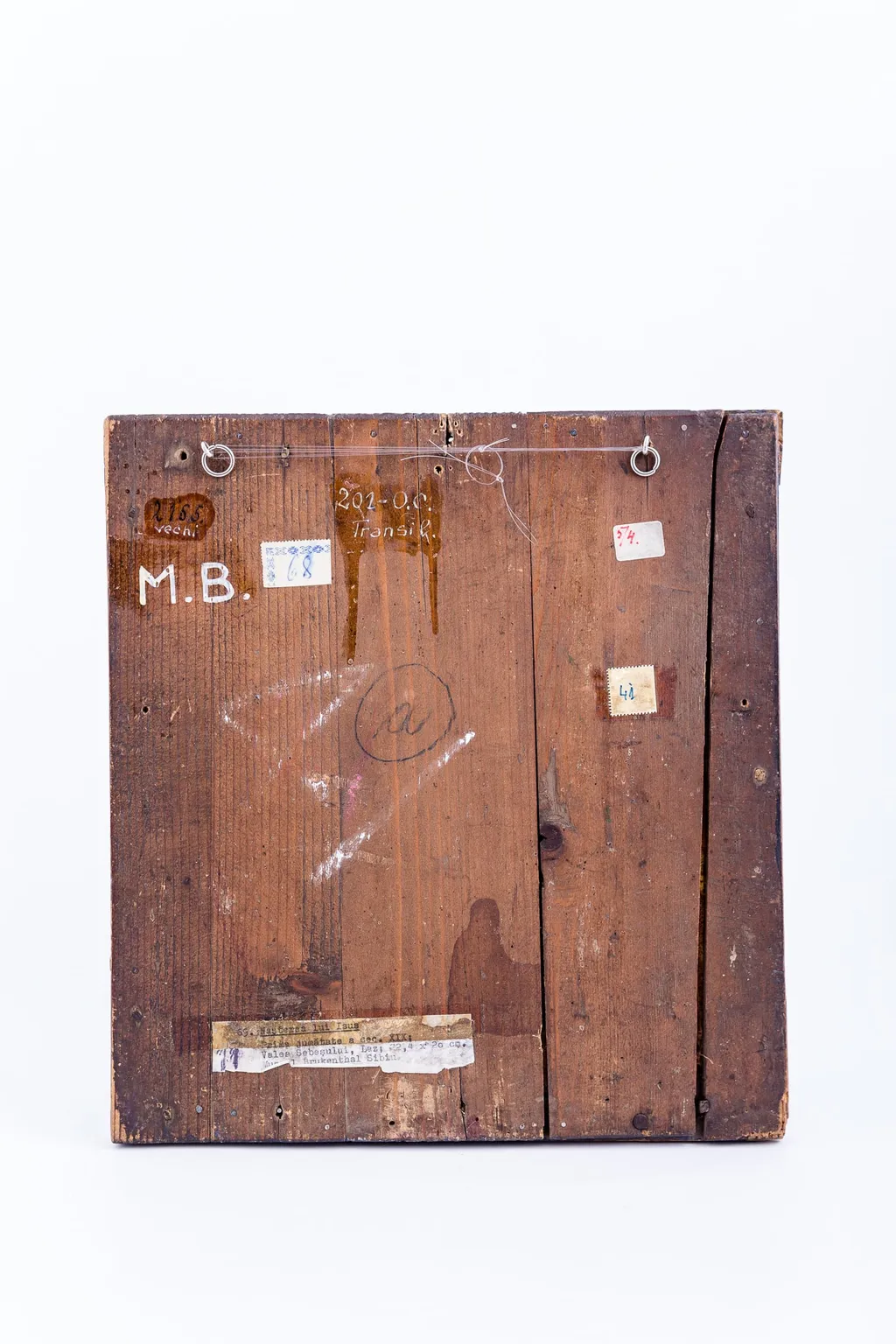
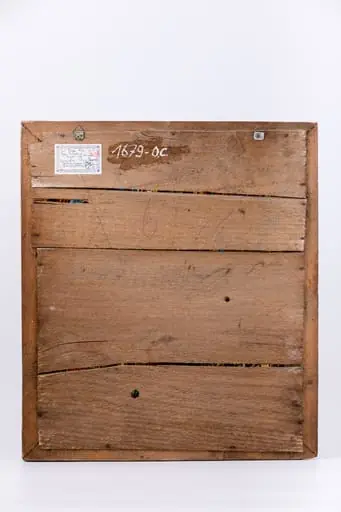
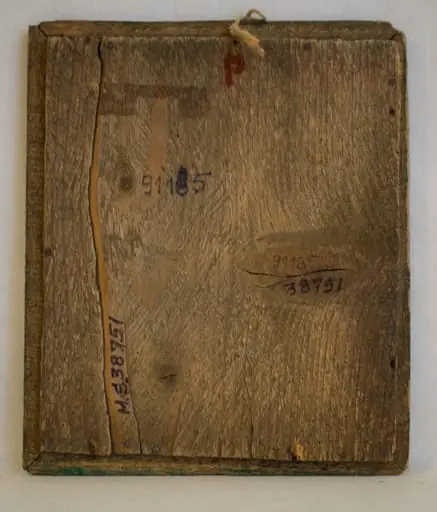
The work originates from Laz, a village in the Sebeș Valley, and bears an inscription in Romanian‑Cyrillic reading “Nașterea Lui Iisus Hristos ICXC.” The back of the panel displays old labels, screws, and multilingual notes, indicating that the piece was once mounted in a liturgical setting and later removed for preservation or study.
Context
Within the Orthodox iconographic tradition, Nativity scenes often feature the infant wrapped in swaddling clothes; this icon deviates by presenting a more mature child, highlighting his humanity. The inclusion of Joseph as the Virgin’s betrothed reflects local devotional practices that emphasize the Holy Family’s earthly ties.
Legacy
The icon’s distinctive border and chromatic scheme illustrate the cross‑regional influences between Transylvanian and Moldavian artistic vocabularies. Its survival, despite wear and the presence of later annotations, provides insight into the devotional objects that circulated in rural Romanian churches during the late medieval period.
Artist & collection

 Domestic Scene
 Giacomo and Cardinal Marco, investing Andrea, Abbot of San Zeno, with his Benefice
 The Nymph of Fontainebleau
 Portrait of a Woman
 Madonna and Child with Saints in the Enclosed Garden
 Venus and Minerva
 Family Group of Four on Sofa
 Wall painting from Room H of the Villa of P. Fannius Synistor at Boscoreale
 Sfântul Mare Ierarh Nicolae Făcătorul de minuni este redat șezând pe tron arhieresc, ținând cu mâna stângă Sfânta Evanghelie pe genuchi și binecuvântând cu mâna dreaptă. Veșmintele arhierești liturgice ale sfântului ierarh sunt într-o alternanță cromatică de roșu vermillon-verde-olive, bej, albastru bleu-ciel-alb. Epitrahilul, patrafirul este olive, cu opt cruci pe el. Poartă mithră și are aureolă. Sfântul ierarh este așezat pe un tron foarte frumos și bogat ornamentat decorativ geometric, în nuanțe de verde olive și bej, sprijindu-și picioarele pe un piedestal de pardoseală de biserică, format dintr-un caroiaj mărunt de alb-negru. Pe tron este și o pernă rulou olive. În registrul superior, deasupra sfântului ierarh, sunt Dumnezeu-Tatăl Binecuvântând și Maica Domnului ocrotind, din două mandorle de nouri rotunzi albi. În cea de-a doua parte a icoanei sunt Sfinții Arhangheli Mihail și Gavriil sunt reprezentați împreună, fiind mai-marii voievozi ai oștilor cerești. Sfântul Arhanghel Mihail, numit slujitorul Legii, are sabia și balanța de măsurat faptele bune și rele, iar Sfântul Arhanghel Gavriil, îngerul aducător de dar și bunavestire, poartă sabia și Potirul. Veșmintele sunt asemănătoare: tunică roșie-vermillon, pantaloni bleu-ciel și aripile de îngeri verzi. Inscripția din româno-chirilică se traduce Sfântul Nicolae IC XC Iisus Hristos MP Maica Domnului Soborul mai-marilor Voievozi Mihail și Gavriil. Fondul icoanei este negru cu micuțe petale de floricele albe, roșii și verzi. Cromatica armonioasă este alcătuită din: negru, roșu-vermillon, verde olive, bej, albastru bleu-ciel, alb. Icoana este de Țara Făgărașului. Se remarcă inscripția foarte frumos scrisă, o caligrafie artistică și estetică. Icoana este pictată de Matei Țimforea Purcărea, din Cârțișoara.
 Tema icoanei face parte din ciclul Pascal și înfățișează Învierea Domnului. În plan central apare reprezentat Iisus Hristos biruitor, deasupra unor nori stilizați, ținând în mâna dreaptă un steag cu cruce, iar cu stânga binecuvintează. În partea stângă a compoziției e pictat un paznic, iar în dreapta apare un înger cu un filacter deschis în mână. Cromatica icoanei se compune din tonuri de roșu vermillon, alb, ocru galben, verde, albastru, negru și gri. Rama icoanei e simplă, băițuită și e formată din îmbinarea a patru baghete de lemn. Sticla este spartă în partea dreaptă.
 Trupul Mântuitorului Iisus Hristos, fiind coborât de pe cruce, este învelit în țesătura giulgiului alb. Maica Domnului împreună cu Sfinții Iosif din Arimateea, Nicodim și patru femei mironosițe aducătoare de mir țin în brațe trupul Mântuitorului. Compozițional se creează astfel o imagine concentrică de corabie, cu Crucea Răstignirii ca și catarg, corabia prefigurând Biserica. Giulgiul și îmbrățișarea celor apropiați, uniți întru dragoste și suferință, reprezintă axa orizontală perpendiculară pe Cruce. Icoana este o oglindă a Nașterii Mântuitorului-giulgiul fiind vechea înfășare in scutecele alb al Pruncului Iisus. În registrul inferior sunt doi îngeri îngenucheați, care susțin Trupul Mântuitorului, învelit în giulgiu. Lateral, stâng-dreapta, crucii sunt prezente soarele și luna, elemente astrale. Compoziția este echilibrată, simetrică și circulară. Cromatica, specifică autoarei Ana Deji, din Făgăraș, este alcătuită din roșu, albastru bleumari ceruleum, alb și negru. Stilul iconăriței Ana Deji se remarcă prin fondul icoanei cu un cer albastru cu stele albe și roșii, pensulațiiile albe și încadrarea tematicii narativ-iconografice într-un chenar din volutele unei draperii-drapaje.Trăsăturile personajelor sunt fin desenate, tristețea și durerea dezvăluindu-se. În inscripție se dezvăluie Mormântul Lui ICXC Iisus Hristos.
 Icoana este mai rară, prin tematica iconografică abordată. Este un prăznicar cu 6 sfinți ierarhi, mucenici, arhidiaconi. Sunt împărțiți în două registre, a câte trei grupuri, înscrise între coloane, pe sub arcade de Biserică. În registrul superior sunt cei trei Ierarhi Vasile cel Mare, Grigorie de Dumnezeu-Cuvântătorul și Ioan Gură-de-Aur. Cei Trei Sfinți Ierarhi Vasile cel Mare, Grigorie de Dumnezeu Cuvântătorul și Ioan Gură-de-Aur slujesc și săvârșesc Sfânta Liturghie împreună. Sunt înveșmântați în veșminte liturgice: sacos albastru ceruleum și roz putred-stacojiu, cu linii albe, felon roșu vermillon-orange, epitrahil ocru-galben și verde-lime cu câte trei-patru cruci negre. Sfinții ierarhi Binecuvântează cu mâna dreaptă și țin în mâna stângă Sfânta Evanghelie închisă. În registrul al doilea, cel inferior, sunt Sfântul Mare Mucenic Dimitrie Izvorâtor de Mir, Sfântul Mare Ierarh Nicolae făcător de minuni și Sfântul Mare Arhidiacon Ștefan. Se remarcă sacosul de zale gri-argintii ale Sfântului Dimitrie, care ține în mâna dreaptă o cădelniță, iar Sfântul Ștefan Binecuvântează cu crucea, pe care o ține în mâna dreaptă. Fondul întregii icoane este cerul albastru cobalt-ceruleum, împodobit cu stele albe și roșii, elemente astrale. Cromatica este luminoasă și armonioasă: verde văratic, verde lime, alb, orange, roșu vermillon, roz-stacojiu, galben-ocru, galben chihlimbar, bej, crem, albastru cobalt și ceruleum, negru. Este o icoană specifică picturii de Țara Oltului, cu un desen fin cu conturul negru și cromatica pastelată. Inscripția din româno-chirilică se traduce Sf Vasile Sf Grigorie Sf Ioan Sf Dimitrie Sf Nicolae Sf Ștefan.
 "Isu
"Isu