Artwork
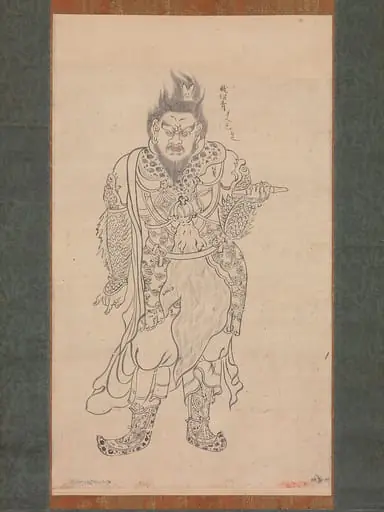
土曜図像|Iconographic Drawing of Saturn
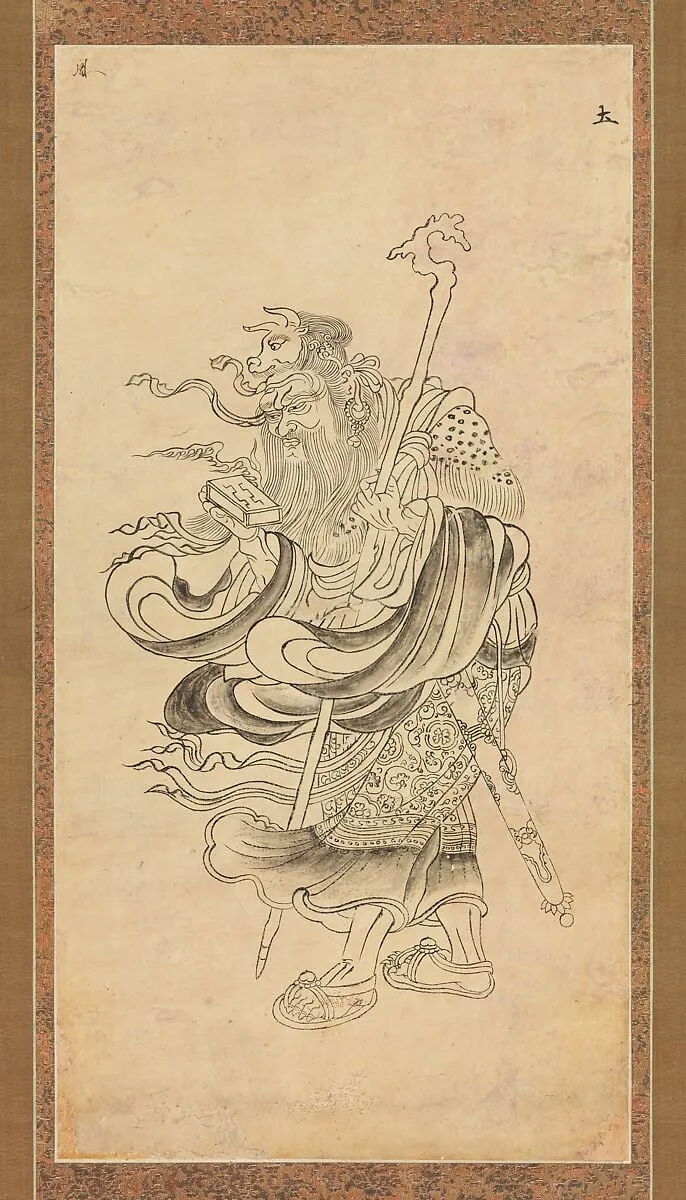
土曜図像|Iconographic Drawing of Saturn is an ink painting. It dates from 1142 and is held in the collection of the Metropolitan Museum of Art.
About this work
Overview
The work, titled “土曜図像|Iconographic Drawing of Saturn,” is a hanging scroll executed in ink and color on paper. It presents a slender, bearded figure with flowing hair, suspended above a knife and a severed infant’s head. The composition lacks any surrounding landscape or interior, focusing attention solely on the central figure and its symbolic accoutrements.
Subject & Meaning
The figure represents Saturn, the Roman deity notorious for devouring his offspring. In this rendition, the god is rendered in the guise of a Japanese monk, merging a classical Western myth with Eastern visual conventions. The knife and infant’s head allude to the mythological act of child‑sacrifice, while the monk’s attire suggests a contemplative, perhaps penitential, dimension.
Technique & Style
Executed with delicate ink lines and muted color washes, the scroll employs a minimalist approach typical of Japanese monochrome painting. The absence of background space creates a floating effect, emphasizing the figure’s ethereality. The use of soft pigments alongside precise line work reflects a synthesis of traditional Japanese brushwork with narrative illustration.
History & Provenance
The piece is catalogued as a painting, though specific details about its creation date, artist, or ownership history are not provided in the source material. Its format as a hanging scroll aligns with Japanese artistic traditions for both religious and secular subjects.
Context
By portraying a Roman god in monastic dress, the work exemplifies a cross‑cultural dialogue, juxtaposing Greco‑Roman mythology with Japanese aesthetic sensibilities. This hybridization invites viewers to reconsider familiar narratives through an unfamiliar visual lens, a practice observed in various periods of East‑West artistic exchange.
Artist & collection