Artwork
Iisus Binecuvântând
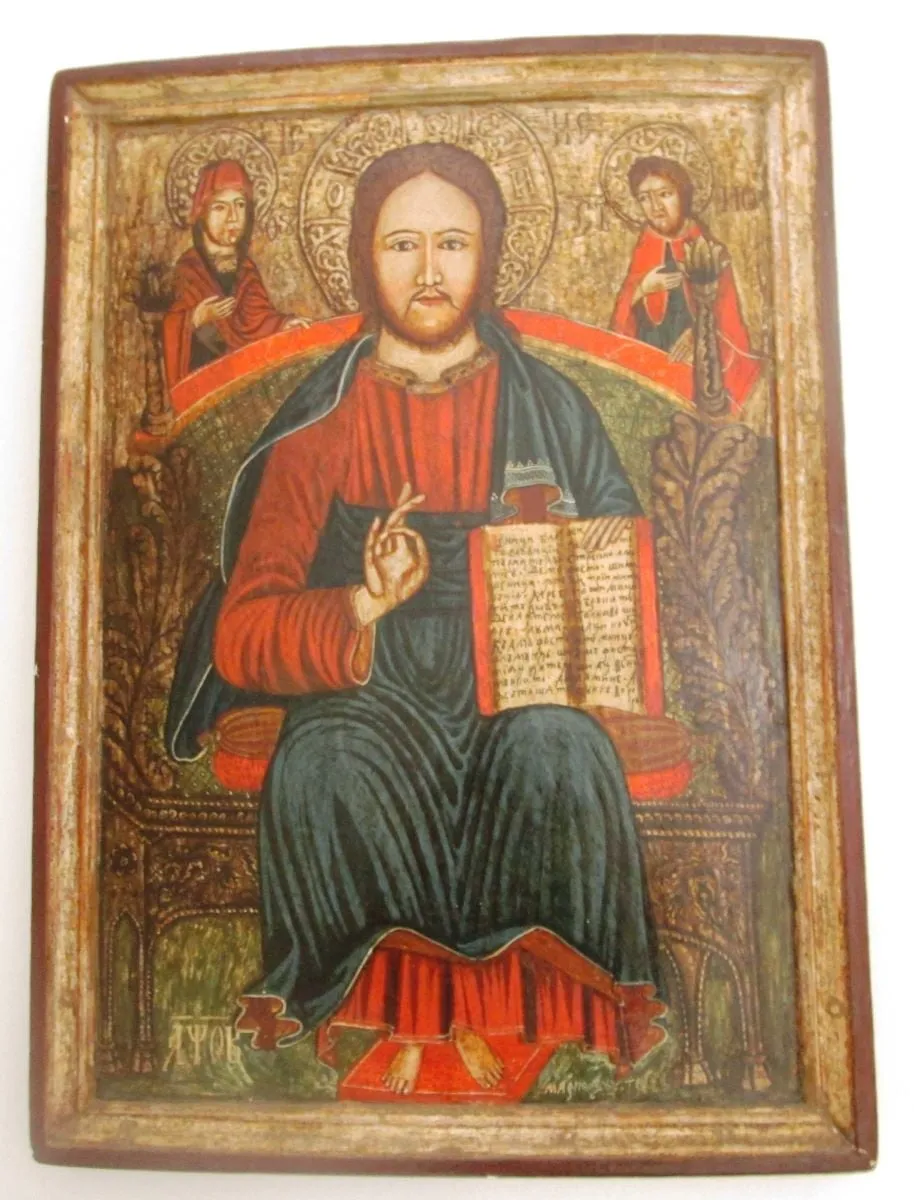
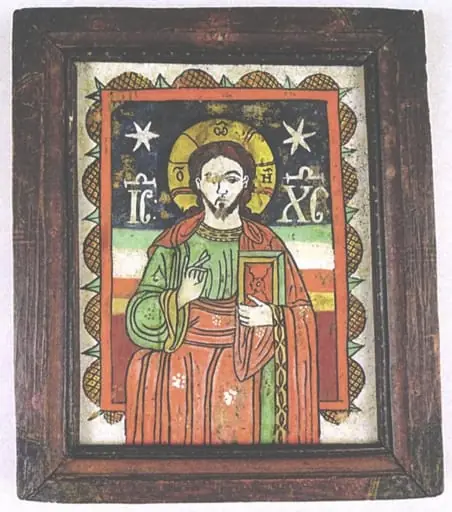
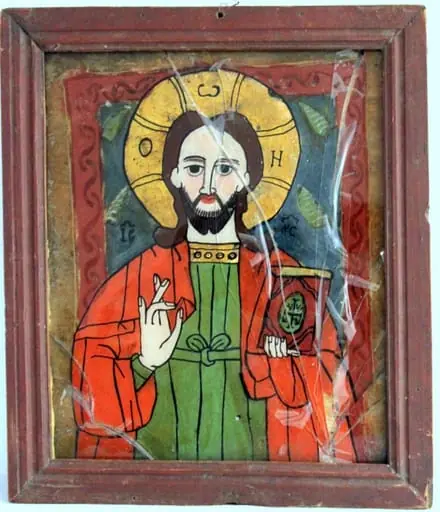
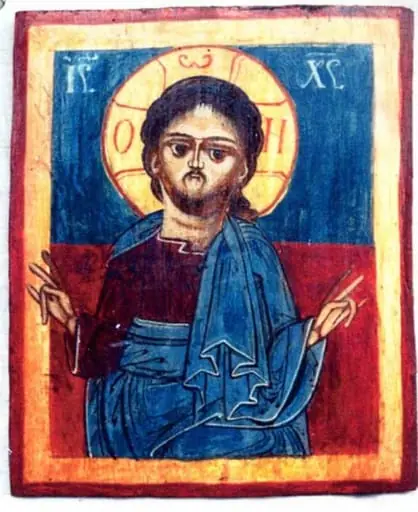
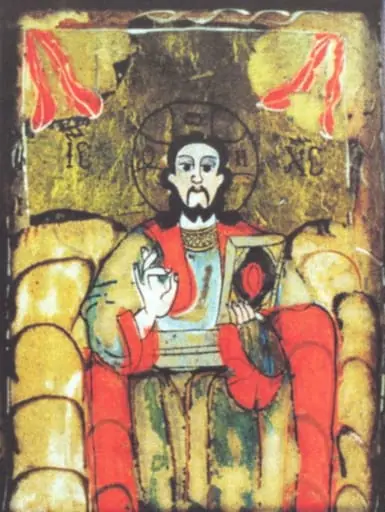
Iisus Binecuvântând is a drawing by Unknown. It dates from 1850 and is held in the collection of the National Museum of Romanian History. This religious image depicts a central figure, likely Christ, in a formal, hieratic pose.
About this work
Overview
The background features intricate gold patterning and stylized foliage, characteristic of devotional art from Eastern Christian traditions.
This religious image depicts a central figure, likely Christ, in a formal, hieratic pose. He is flanked by two attendant figures, each dressed in ornate robes of red, gold, and green. The background features intricate gold patterning and stylized foliage, characteristic of devotional art from Eastern Christian traditions. The composition emphasizes spiritual authority through symmetry and rich surface decoration.
Subject & Meaning
The central figure, identified by his beard and blessing gesture, represents Christ as teacher and divine intercessor. The open book symbolizes sacred scripture and doctrinal authority. The two attendants may be apostles or saints, reinforcing the theme of divine revelation transmitted through the Church. The calm demeanor and formal posture convey timeless spiritual presence rather than narrative action.
Technique & Style
The painting employs flat, non-naturalistic forms with emphasis on decorative detail. Gold leaf creates a luminous background, while richly colored robes contrast against it. Stylized foliage and geometric patterns frame the figures, avoiding perspective in favor of symbolic space. Texture is suggested through fine linear details, possibly including cross-hatching, to define fabric folds and ornamental elements.
History & Provenance
The work originates from a tradition of Eastern Orthodox iconography, likely produced in the Balkans or Romania during the late medieval or early modern period. Its use of gold ground and hierarchical composition aligns with liturgical art intended for private devotion or church altars. Exact origin and artist remain undocumented, as was common for religious works of this era.
Context
Created within a culture where religious imagery served as a bridge between the earthly and divine, this piece reflects theological priorities over naturalism. Gold backgrounds signified heavenly light, while specific color codes denoted sacred roles. Such images were not merely decorative but functional, aiding prayer and reinforcing doctrinal teachings in communities with limited literacy.
Legacy
This type of iconography influenced later religious art in Eastern Europe, preserving compositional conventions well into the 19th century. Though later movements favored realism, such works remained in use in Orthodox churches, valued for their continuity with ancient liturgical practice. Today, they are studied as cultural artifacts embodying spiritual aesthetics distinct from Western Renaissance ideals.
Artist & collection

 Domestic Scene
 Giacomo and Cardinal Marco, investing Andrea, Abbot of San Zeno, with his Benefice
 The Nymph of Fontainebleau
 Portrait of a Woman
 Madonna and Child with Saints in the Enclosed Garden
 Venus and Minerva
 Family Group of Four on Sofa
 Wall painting from Room H of the Villa of P. Fannius Synistor at Boscoreale