Artwork
Iisus Hristos binecuvântând
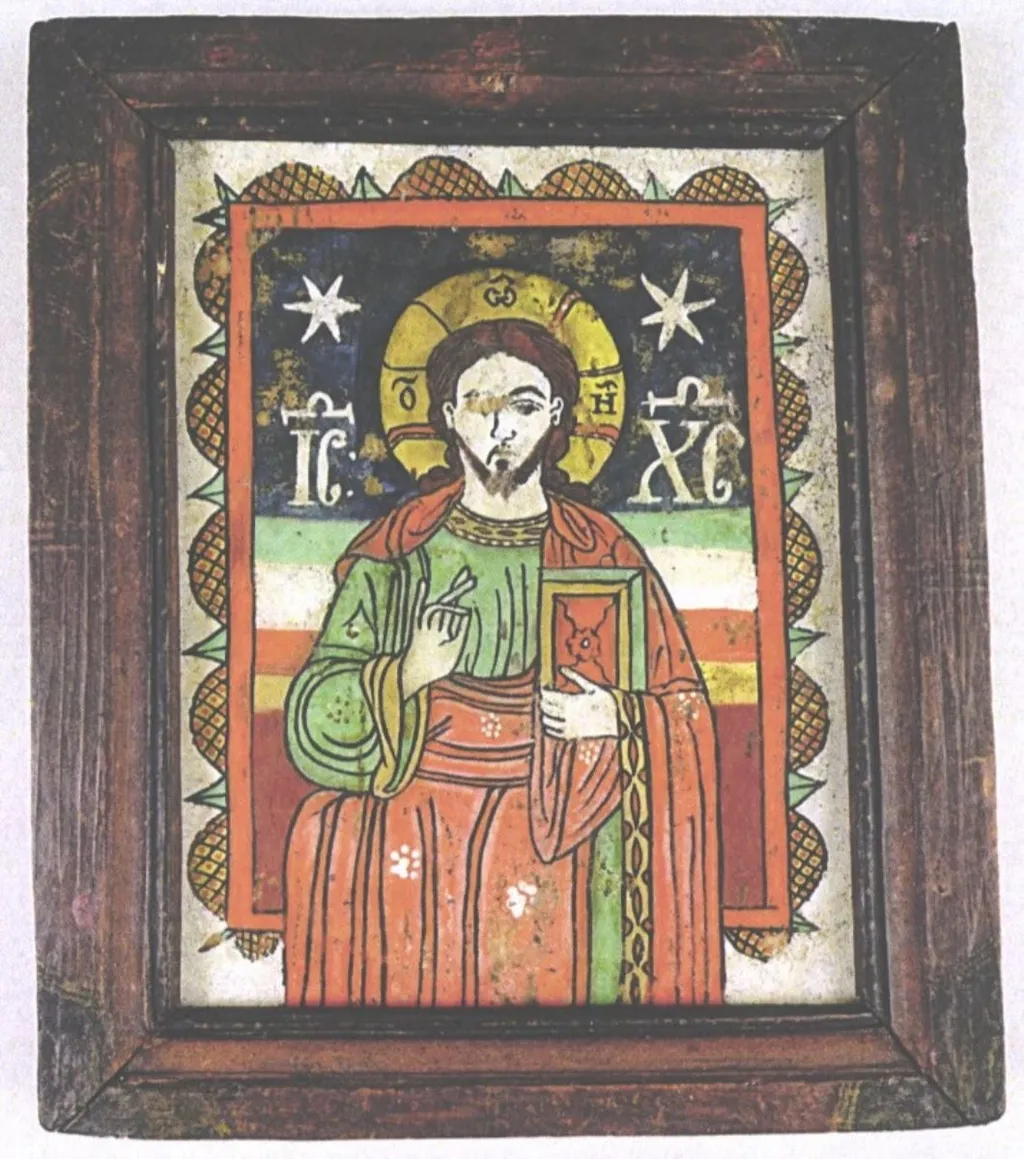
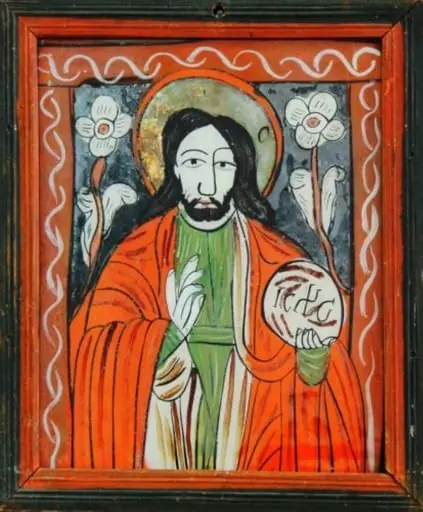
Iisus Hristos binecuvântând is a drawing by Unknown. It dates from 1850 and is held in the collection of the Ethnographical Museum of Transylvania.
About this work
Overview
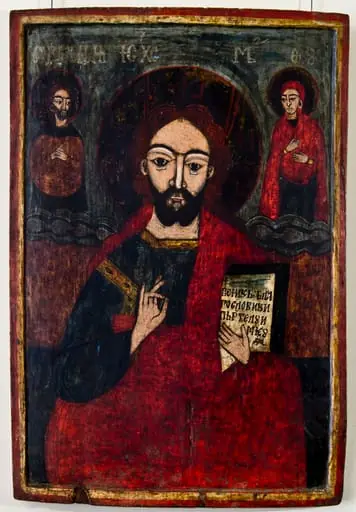
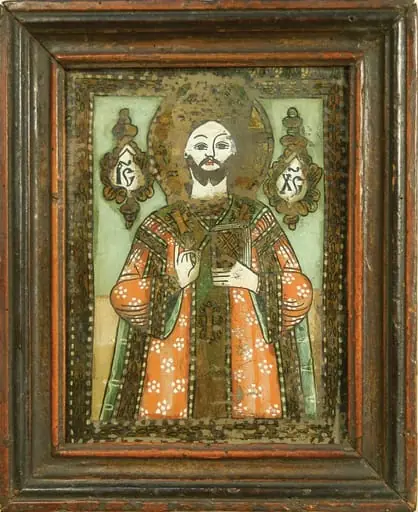
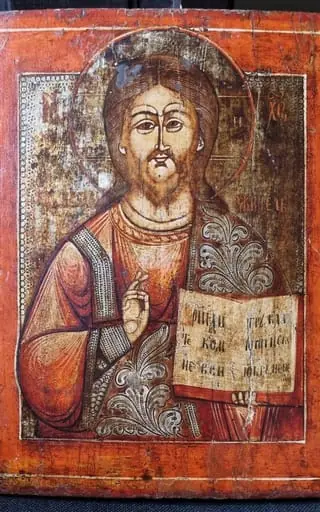
This religious image depicts Christ in a traditional Byzantine iconographic style, rendered with flat, unmodulated colors and strong black outlines.
This religious image depicts Christ in a traditional Byzantine iconographic style, rendered with flat, unmodulated colors and strong black outlines. The composition is austere, emphasizing symbolic presence over naturalism. The figure stands against a minimal celestial background, with two stars and religious emblems suggesting divine authority. The worn frame indicates prolonged liturgical use, reinforcing its function as an object of veneration rather than decorative art.
Subject & Meaning
The figure is Christ blessing with one hand while holding a closed book, likely the Gospels, symbolizing divine teaching and judgment. The halo signifies holiness, while the scales and cross in the background allude to divine justice and redemption. The solemn expression and formal posture reflect theological gravity, aligning with Eastern Orthodox traditions that prioritize spiritual truth over emotional expression.
Technique & Style
The painting employs flat areas of color—red and green robes—without shading or perspective, characteristic of medieval icon painting. Bold, unbroken outlines define forms, creating a sense of permanence and clarity. The lack of depth and stylized rendering align with liturgical conventions that prioritize symbolic legibility over realism, inviting contemplation rather than illusion.
History & Provenance
The artwork’s aged frame and stylistic features suggest it originates from a region with strong Eastern Orthodox traditions, possibly the Balkans or Romania, between the 15th and 18th centuries. Its survival with original framing implies continuous use in a domestic or ecclesiastical setting. The wear on the frame points to repeated handling during prayer or ritual, underscoring its role in daily devotion.
Context
This image belongs to a broader tradition of Orthodox icons produced for private or communal worship, often created by monastic artisans following strict compositional rules. Such icons were not merely artworks but believed conduits of the sacred, used in prayer and feast-day observances. The inclusion of scales and cross reflects theological themes common in regional iconography of the period.
Legacy
The work exemplifies enduring liturgical aesthetics that resisted Renaissance naturalism, preserving medieval visual language within Orthodox communities. Its stylistic choices influenced later folk iconography and remain referenced in contemporary religious art. Though not widely known outside regional traditions, it represents a continuous, unbroken practice of sacred image-making spanning centuries.
Artist & collection
Museum
Ethnographical Museum of Transylvania
Continue through works from the same source collection.
 Domestic Scene
 Giacomo and Cardinal Marco, investing Andrea, Abbot of San Zeno, with his Benefice
 The Nymph of Fontainebleau
 Portrait of a Woman
 Madonna and Child with Saints in the Enclosed Garden
 Venus and Minerva
 Family Group of Four on Sofa
 Wall painting from Room H of the Villa of P. Fannius Synistor at Boscoreale