Artwork
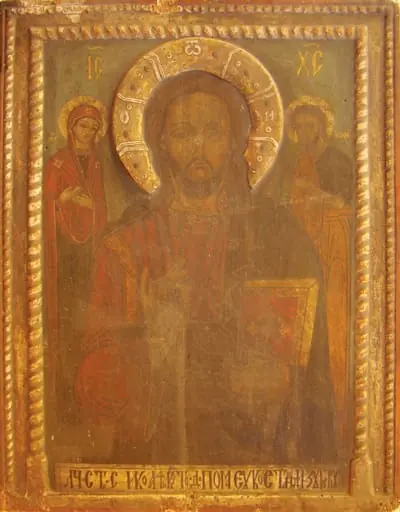
Isus Hristos Pantocrator
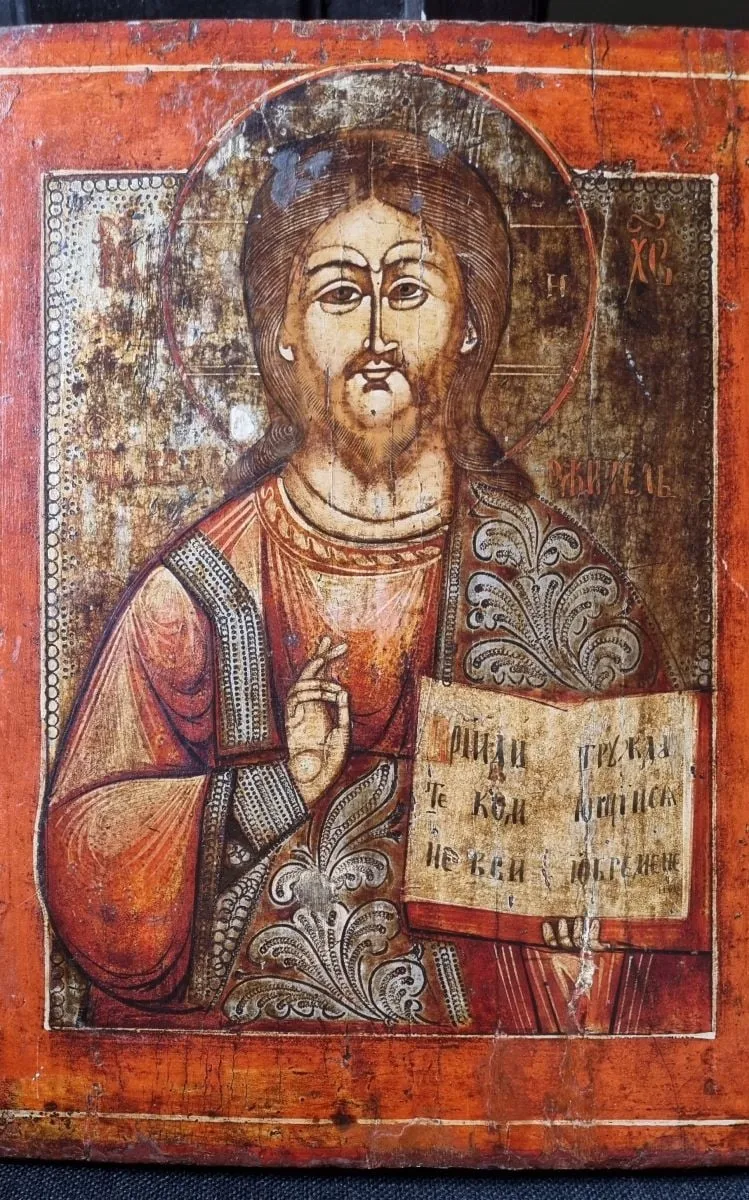
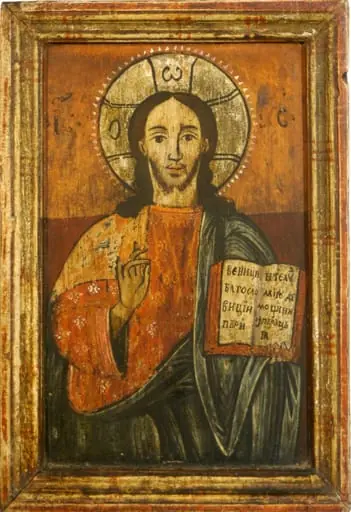
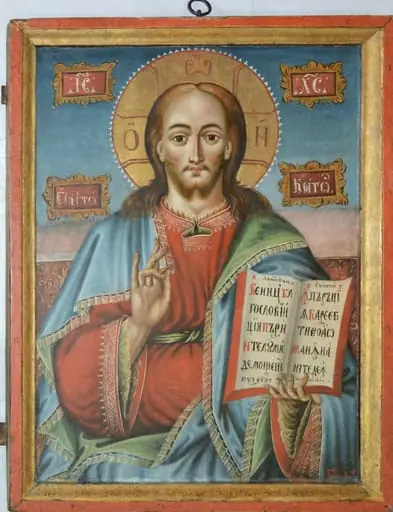
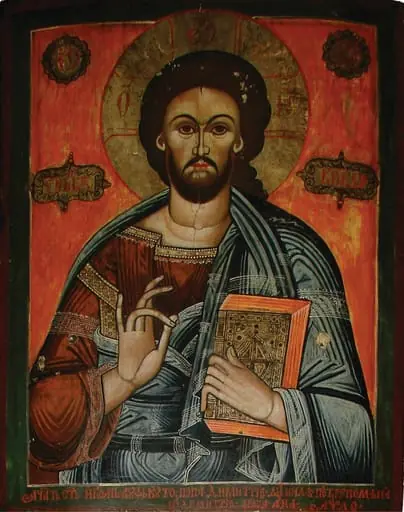
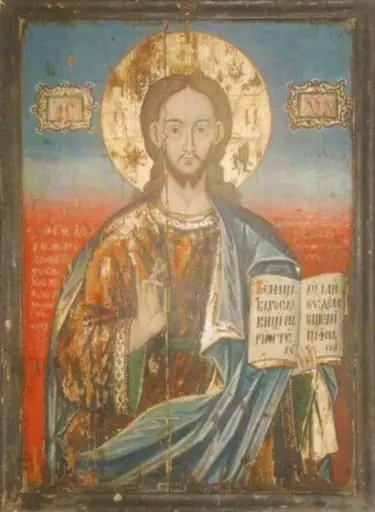
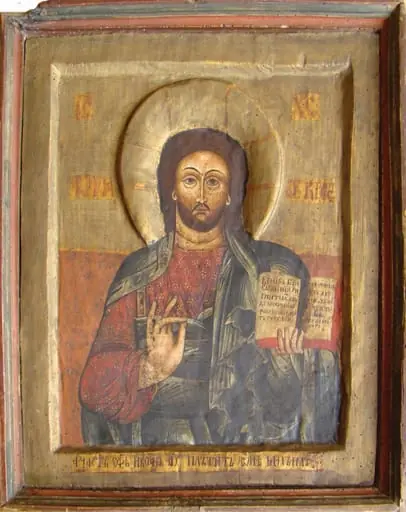
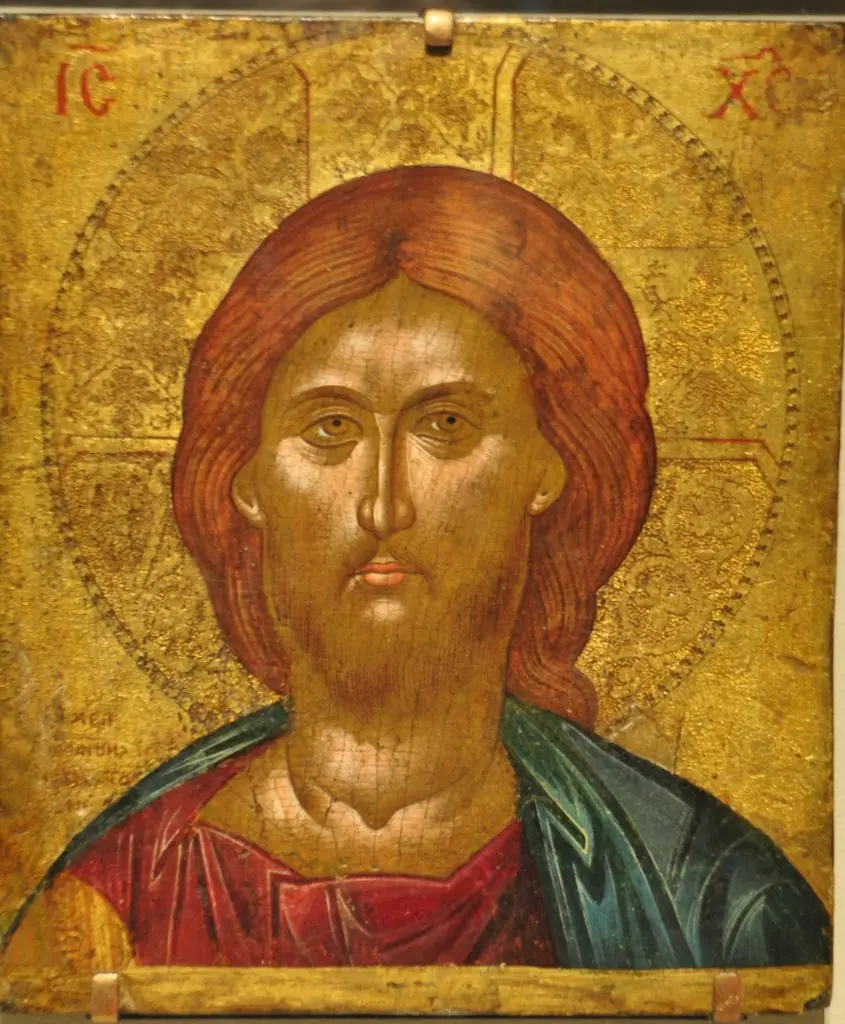
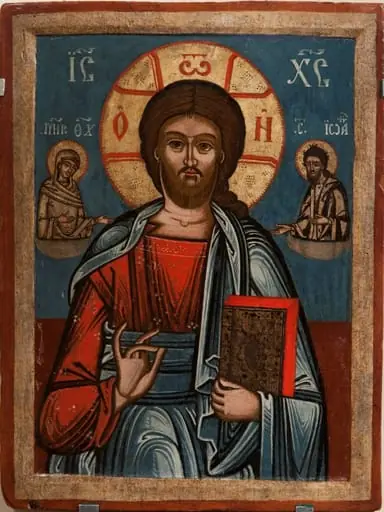
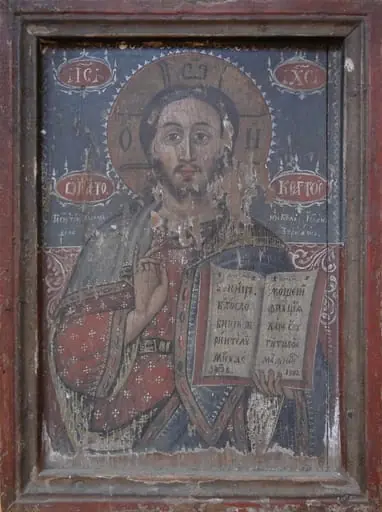
Isus Hristos Pantocrator is a drawing by Unknown. It dates from 1850 and is held in the collection of the George Enescu National Museum. This religious image depicts Christ Pantocrator, a traditional Byzantine representation of Christ as ruler of all.
About this work
Overview
Rendered in tempera on wood, the figure is set against a gold-leaf background, typical of Eastern Orthodox iconography.
This religious image depicts Christ Pantocrator, a traditional Byzantine representation of Christ as ruler of all. Rendered in tempera on wood, the figure is set against a gold-leaf background, typical of Eastern Orthodox iconography. The surface shows signs of age, with paint wear revealing underlying layers, yet the gold remains luminous. The composition follows strict liturgical conventions, emphasizing spiritual presence over naturalism.
Subject & Meaning
Christ is portrayed with a solemn expression, beard, and short dark hair, conforming to established iconographic norms. His right hand is raised in blessing, the index and middle fingers extended to signify the dual nature of Christ—divine and human. The scroll he holds contains scriptural text in Greek, affirming his authority. The rigid frontal pose invites veneration rather than interaction, reinforcing his role as judge and sovereign.
Technique & Style
The painting employs flat, two-dimensional modeling with no shading to suggest volume, consistent with Byzantine aesthetic principles. Facial features are rendered with precise, restrained lines. Gold leaf, applied over a raised gesso ground, creates a luminous halo around the figure. The robe’s intricate patterns and the scroll’s lettering are executed with fine brushwork, while stippling may have been used to suggest texture in fabric and hair.
History & Provenance
The work likely originated in the Byzantine Empire between the 10th and 14th centuries, a period when such icons were mass-produced for churches and private devotion. Its survival suggests it was carefully preserved, possibly in a monastic setting. The wear on the paint indicates prolonged exposure to incense, candle smoke, and ritual handling, common in liturgical use over centuries.
Context
Icons like this were central to Orthodox Christian worship, serving as windows to the divine. They were not decorative but functional, used in prayer and processions. The gold background symbolized heavenly space, while the rigid style reflected theological priorities: eternal truth over temporal realism. Similar images adorned church apses and home shrines across the Eastern Mediterranean.
Legacy
This icon exemplifies a visual language that endured for centuries, influencing religious art from Russia to the Balkans. Its formal consistency across regions and time underscores the importance of tradition in Orthodox spirituality. Though later Western art moved toward naturalism, such icons remained unchanged, preserving their theological message through disciplined repetition and reverence for established forms.
Artist & collection
 Domestic Scene
 Giacomo and Cardinal Marco, investing Andrea, Abbot of San Zeno, with his Benefice
 The Nymph of Fontainebleau
 Portrait of a Woman
 Madonna and Child with Saints in the Enclosed Garden
 Venus and Minerva
 Family Group of Four on Sofa
 Wall painting from Room H of the Villa of P. Fannius Synistor at Boscoreale