Artwork
Iisus Hristos Mare Invățător, Mica Deisis
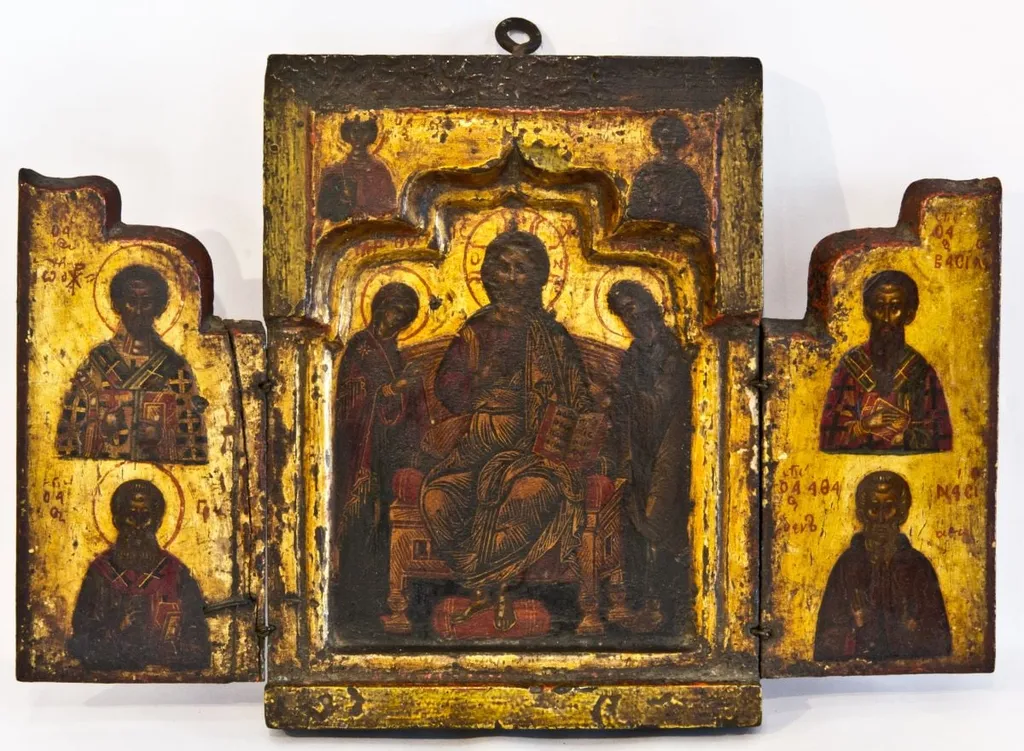
Iisus Hristos Mare Invățător, Mica Deisis is a drawing by Unknown. It dates from 1850 and is held in the collection of the National Museum of Art of Romania. The work is a painted wooden panel depicting a central figure of Christ seated, flanked by smaller attendant figures.
About this work
Overview
The work is a painted wooden panel depicting a central figure of Christ seated, flanked by smaller attendant figures. The composition is framed by a gold‑leaf background, with faded reds and dark outlines that have suffered wear and cracking over time. The overall appearance is that of a traditional Eastern Christian icon, characterized by solemn expressions and haloed heads.
Subject & Meaning
At the heart of the image is Christ presented as the Great Teacher, a motif common in Byzantine devotional art. The surrounding figures form a miniature Deesis, a tableau in which saints or angels intercede before the divine, underscoring themes of intercession and reverence within the liturgical context.
Technique & Style
Executed in tempera on a wooden substrate, the panel employs the flat, linear modeling typical of medieval iconography. Gold leaf provides a luminous backdrop, while the limited palette of reds and earth tones creates a restrained visual hierarchy. The surface shows characteristic cracking of the paint layer, indicating age and the natural aging of the medium.
History & Provenance
The panel originates from a tradition of Romanian Orthodox iconography, where the title "Iisus Hristos Mare Invățător, Mica Deisis" reflects local linguistic usage. While specific provenance details are scarce, such works were commonly produced for church interiors or private chapels during the late medieval period.
Context
Icons of this type served both didactic and devotional functions, presenting theological concepts in a visual form accessible to congregants. The Deesis arrangement links Christ with intercessors, reinforcing the belief in a celestial hierarchy that mediates prayers to the divine.
Legacy
Although modest in scale, the panel exemplifies the continuity of Eastern Christian artistic conventions into the Romanian sphere. Its preservation, despite material deterioration, offers insight into regional variations of the broader Byzantine iconographic tradition.
Artist & collection

 Domestic Scene
 Giacomo and Cardinal Marco, investing Andrea, Abbot of San Zeno, with his Benefice
 The Nymph of Fontainebleau
 Portrait of a Woman
 Madonna and Child with Saints in the Enclosed Garden
 Venus and Minerva
 Family Group of Four on Sofa
 Wall painting from Room H of the Villa of P. Fannius Synistor at Boscoreale
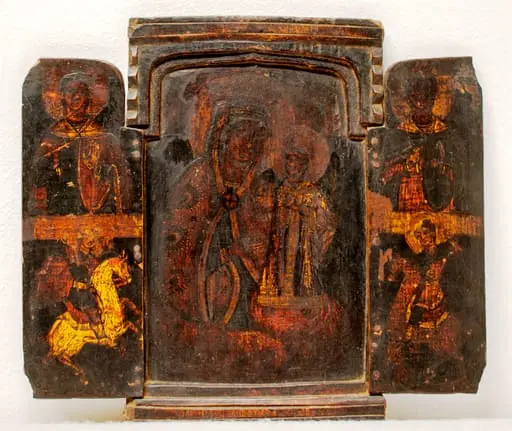 Pe panoul central este reprezentată Maica Domnului Hodighitria(Călăuzitoarea). Pruncul stă în picioare, amândoi fiind înveșmântați în straie împărătești. Maica ține Pruncul cu mâna stângă, cu dreapta arată către El. Voleul stâng, jumătatea inferioară - Sfântul Gheorghe călare pe cal alb. Înveșmântat în costum românesc de oștean medieval, mantie roșie. Calul cu picioarele din față ridicate, harnașament de culoare roșie. Deasupra e posibil să fie tot sfântul Gheorghe, în stânga ținând crucea, cu dreapta face gestul păcii, al liniștii.(prin analogie cu 34530). Simetric, pe latura dreaptă a tripticului se află jos, Sf. Dumitru, călare pe cal roșu, în poziție asemănătoare cu a SF. Gheorghe, iar sus probabil tot el, în altă ipostază iconografică(analogie) . Veșmintele au culorile inversate(tunica roșie -dreapta, albastru-stânga, mantie roșu -stânga, albastru - dreapta), la fel la sfinții războinici, probabil în legătură cu reprezentarea populară a timpului. Inițial, tripticul se închidea, dovadă inscripția care se continuă pe cele două uși. Ulterior a fost fixat cu cuie de fier, iar prinderea se făcea cu o sfoară legată de două cuie bătute pe cant.
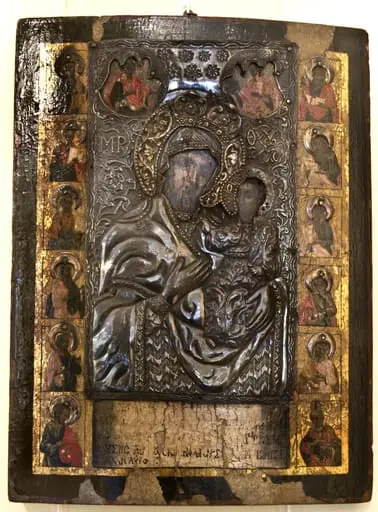 Maica Domnului cu Pruncul; Icoană ferecată
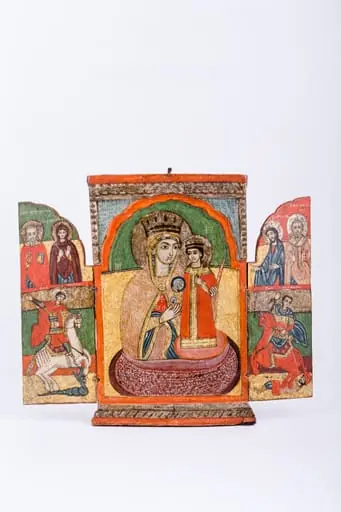 Icoana este un triptic - ansamblu de trei panouri pictate, unite prin conținut tematic iconografic comun și prin balamalele, prin care fețele laterale se închid de cea centrală. Tripticul este asemenea unei cărți sau ferestre, deschise-închise. Având stabilitate icoana centrală, tripticul poate avea valoarea de altar zburător. Tema centrală, care dă și titlul întregului ansamblu este Maica Domnului ține în brațe Pruncul Iisus Hristos, care Binecuvântează cu mâna dreaptă și ține globul pământesc cu crucea. Mântuitorul stă în picioare pe genunchii Maicii Domnului. Maica Domnului este înveșmântată în mantie cu maforion gălbui-crem-bej cu interiorul verde-roșu și ciupag auriu, are coroană și aureolă. Pruncul Iisus Hristos este înveșmântat în roșu sângeriu, cu bordură dantelată aurie, cu aureolă. Fondul icoanei este galben, în registrul inferior și verde în registrul superior. Icoana este încadrată de un chenar orange, portocaliu și un chenar crestat, basorelief, motivul funiei, de culoarea naturală a lemnului. În tematica fețelor laterale sunt reprezentați Sfântul Mare Mucenic Gheorghe purtător de biruință, Sfântul Mare Mucenic Dimitrie izvorâtor de mir, Sfânta Mare Cuvioasă Parascheva, Sfântul Ioan Botezătorul și doi sfinți ierarhi. Ușițe tripticului închizânduse, se realizează o imagine boltită, asemenea unor uși de biserică, pe care este inscripția în româno-chirilică: IC XC NIKA Iisus Hristos Biruiește! Cromatică: roșu vermillon, roșu-portocaliu, galben, verde, acajou, stacojiu, brun, bej,olive, auriu, negru. Inscripția pe icoana centrală, din româno-chirilică se traduce MP IC XC Maica Domnului Iisus Hristos.
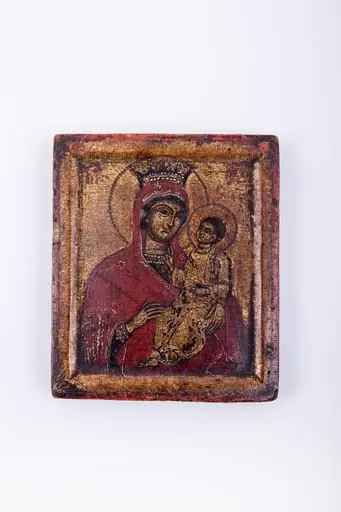 Maica Domnului ține în brațe Pruncul Iisus Hristos, înveșmântat în sacos bej-auriu. Pruncul arată cu mâna dreaptă înspre Maică arătându-ne-O și Maica arată către Prunc arătându-ni-L ca fiind calea, adevărul și viața, Este o icoană de tip Hodighitria. Maica Domnului este înveșmântată în mantie cu maforion roșu vermillon cu interiorul și ciupag negru, cu mărgețule albe, ca la coronița de Împărăteasă. Fondul icoanei este deschis-auriu-bronziu, luminos, dar foița aurie este deteriorată. Chipurile și trăsăturile fețelor sunt luminoase prin privire, atitudine și aureole. Cromatica este caldă și luminoasă: roșu-vermillon, galben-ocru, brun, bej, negru. Rama icoanei este realizată din aceeași bucată de lemn cu icoana însăși, este reliefat-sculpturată, basorelierf crestat, realizându-se o trecere ușoară de la icoană la ramă. Inscripția din româno-chirilică se traduce IC XC MP Iisus Hristos Maica Domnului.
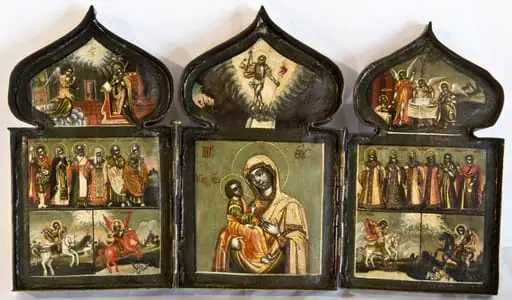 Maica Domnului cu Pruncul; Triptic
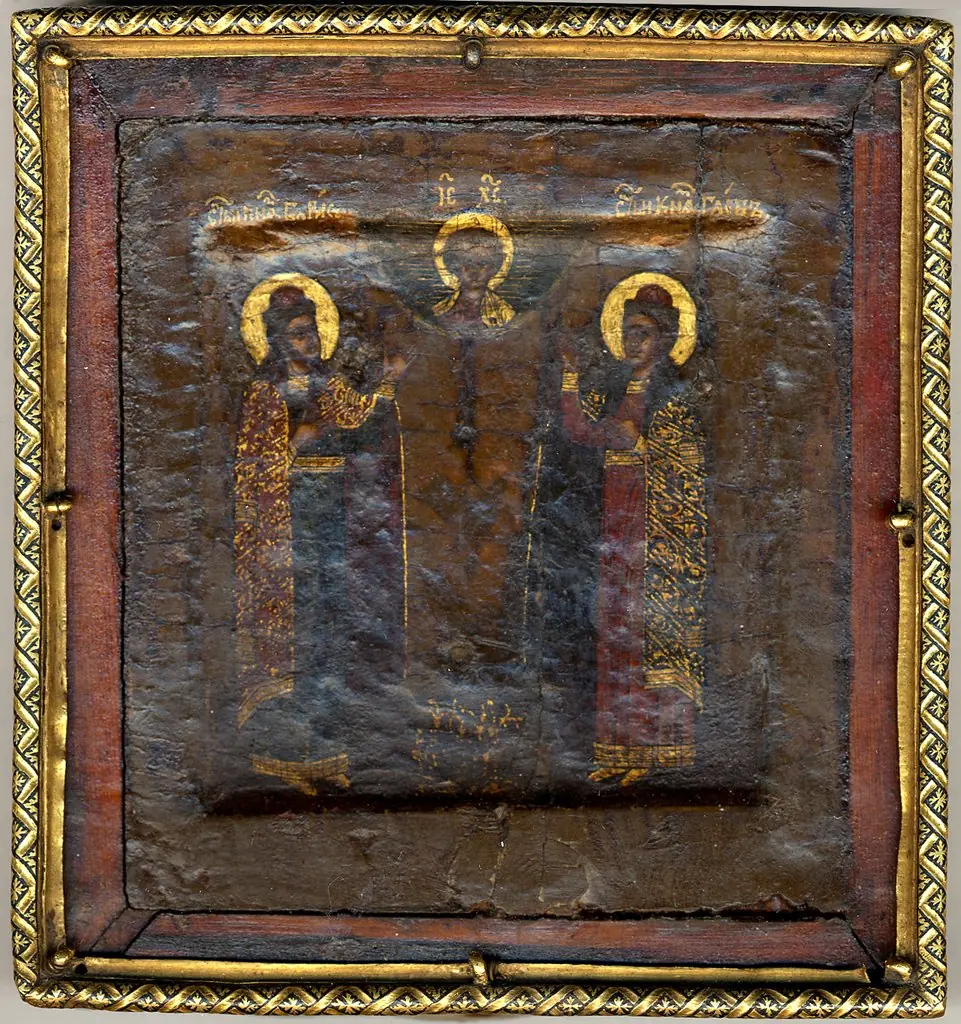 The Christ Child with Saints Boris and Gleb
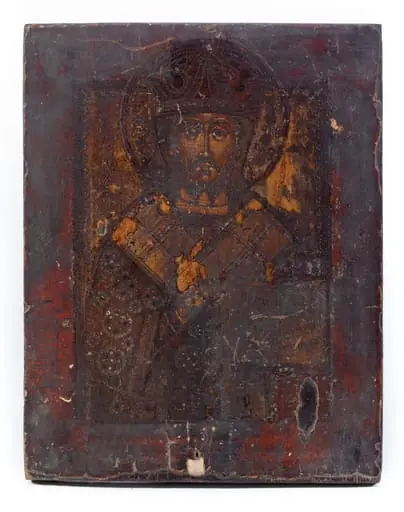 Sfântul Nicolae
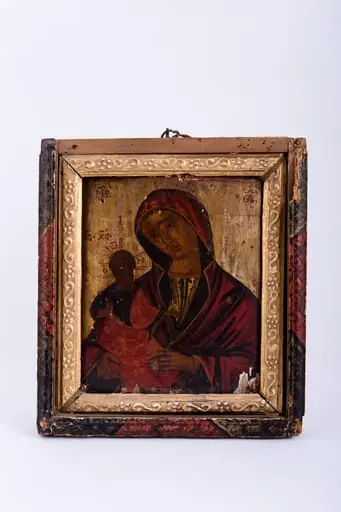 Maica Domnului ține în brațe Pruncul Iisus Hristos, care Binecuvântează cu mâna dreaptă și ține globul pământesc cu crucea, la dimensiune foarte mică, asemenea unui măr. Maica Domnului este înveșmântată în mantie cu maforion roșu stacojiu cu interiorul negru și ciupag auriu. Pruncul Iisus Hristos este înveșmântat în roșu sângeriu și negru interior, cu aureolă. Culorile Maicii Domnului reprezintă noblețea împărătească, suferința monahică și nădejdea bucuriei Învierii. Culorile Mântuitorului reprezintă suferința monahică și patima dureroasă a Jertfei. Fondul icoanei este auriu bizantin. Chipurile și trăsăturile fețelor sunt brune, întunecate cromatic, dar luminoase prin privire, atitudine și aureole. Cromatică: roșu stacojiu, roșu, brun, bej, auriu, negru. Inscripția din româno-chirilică se traduce MP IC XC Maica Domnului Iisus Hristos. Icoana este încadrată de o ramă dublă: interior, aurie, exterior, bicoloră - roșu, maro.
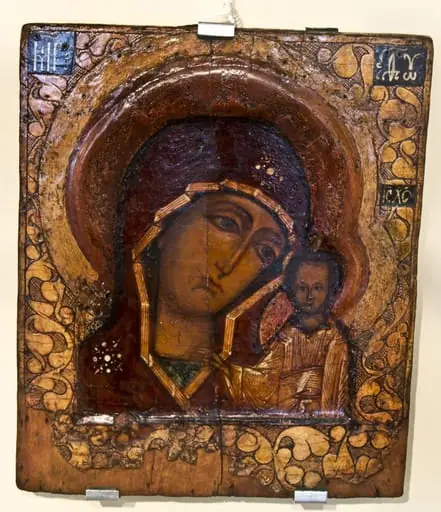 Maica Domnului cu pruncul Kazanskaia, Madona Neagră
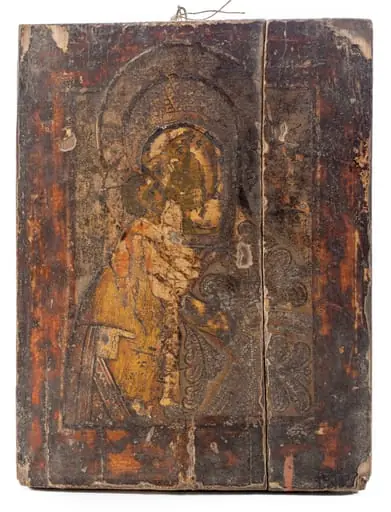 Maica Domnului cu Pruncul Iisus