Artwork
Iisus Hristos mare învățător
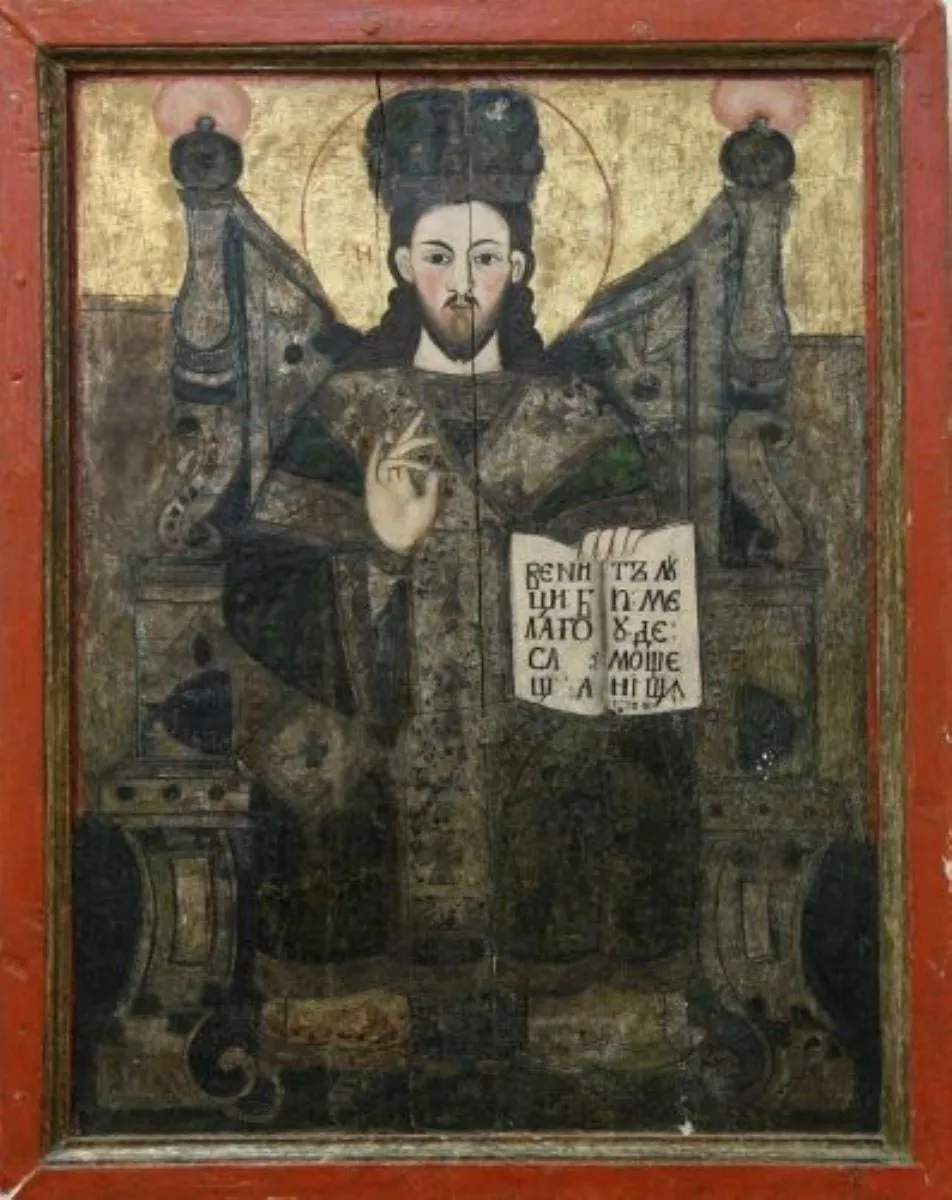
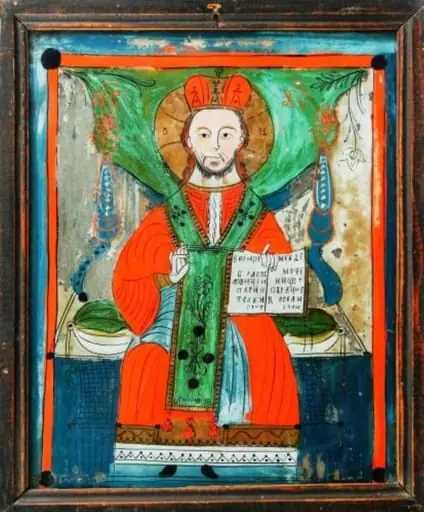
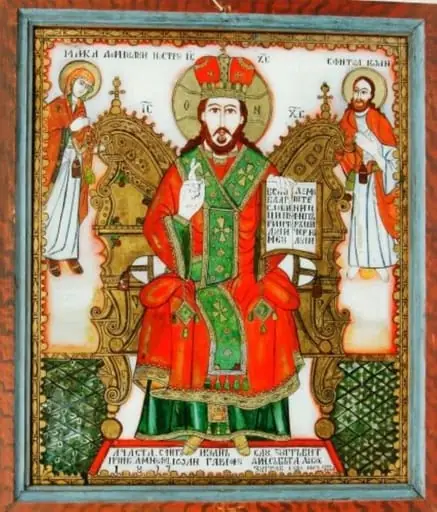
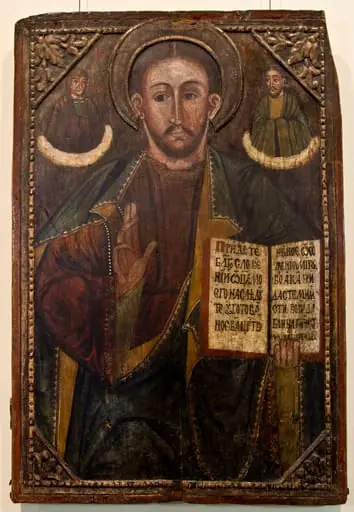
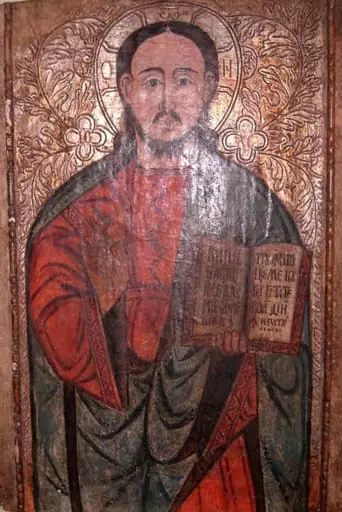
Iisus Hristos mare învățător is a drawing by the Romanticist artist Unknown. It dates from 1758 and is held in the collection of the Romanian Peasant Museum. This image depicts Jesus Christ as a solemn teacher, rendered in a formal, stylized manner typical of religious iconography.
About this work
Overview
This image depicts Jesus Christ as a solemn teacher, rendered in a formal, stylized manner typical of religious iconography.
This image depicts Jesus Christ as a solemn teacher, rendered in a formal, stylized manner typical of religious iconography. The figure is centered against a golden background, with architectural columns framing the composition. His attire includes a dark robe adorned with gold detailing and a tall, pointed headdress, reinforcing his authority. A scroll in his hand bears inscriptions in an archaic script, emphasizing his role as a transmitter of sacred knowledge.
Subject & Meaning
The portrayal presents Christ not as a savior in suffering, but as a learned master, aligned with traditions of Byzantine and Eastern Orthodox iconography. The scroll symbolizes divine teaching, while the halo-like glow signifies spiritual presence. The formal posture and austere expression convey wisdom and solemnity, inviting contemplation rather than emotional engagement, consistent with liturgical imagery designed for veneration.
Technique & Style
The composition employs flat, non-naturalistic space and stylized forms, typical of medieval religious art. Gold leaf creates a luminous background, separating the sacred figure from the earthly realm. Detailed patterns on the robe and columns suggest craftsmanship over realism. Shading is achieved through controlled line work, possibly cross-hatching, to define folds and volume without perspective or chiaroscuro.
History & Provenance
The style and iconography suggest origins in the Eastern Christian tradition, likely from the Byzantine or post-Byzantine period. Similar depictions were common in icons produced for churches or private devotion across the Balkans and Anatolia. Exact provenance is unrecorded, but the formal conventions point to a workshop tradition rather than a single artist, with patterns passed through generations of icon painters.
Context
In medieval Christian communities, such images served as focal points for prayer and instruction. The depiction of Christ as a teacher reflected theological emphasis on his role as Logos, the divine Word. The use of gold, columns, and hieratic posture aligned with imperial and ecclesiastical visual language, reinforcing the connection between spiritual and earthly authority in a time when church and state were closely intertwined.
Legacy
This type of Christological image influenced religious art across Eastern Europe for centuries. Its formal rigidity and symbolic elements persisted even as Western art moved toward naturalism. Today, such works are studied as cultural artifacts that reveal how faith was visually encoded, offering insight into devotional practices and the transmission of theological ideas through imagery rather than text.
Artist & collection

 Domestic Scene
 Giacomo and Cardinal Marco, investing Andrea, Abbot of San Zeno, with his Benefice
 The Nymph of Fontainebleau
 Portrait of a Woman
 Madonna and Child with Saints in the Enclosed Garden
 Venus and Minerva
 Family Group of Four on Sofa
 Wall painting from Room H of the Villa of P. Fannius Synistor at Boscoreale