Artwork
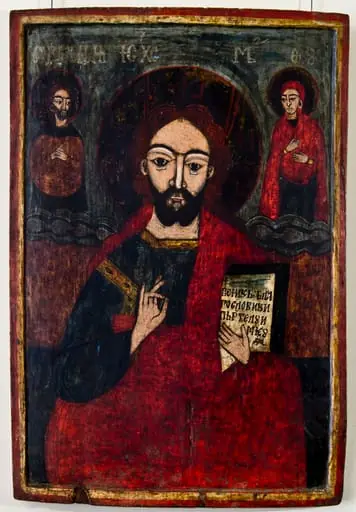
Iisus Hristos mare învățător, Mica Deisis; Icoană împărătescă; Icoană de catapeteasmă
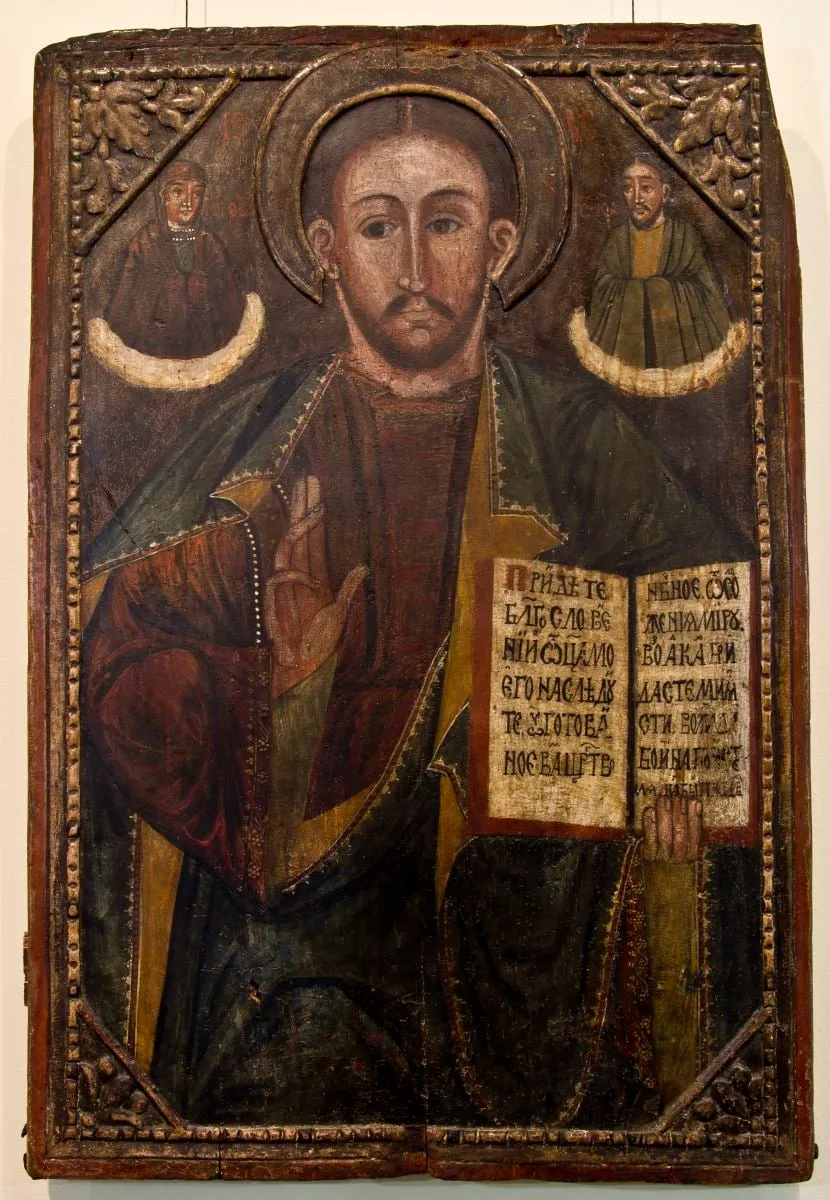
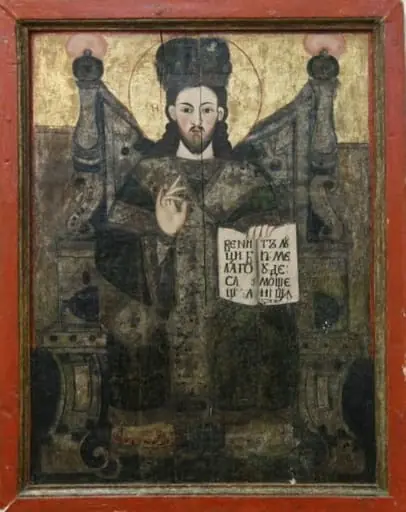
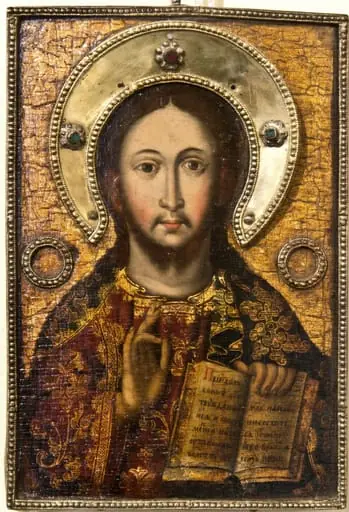
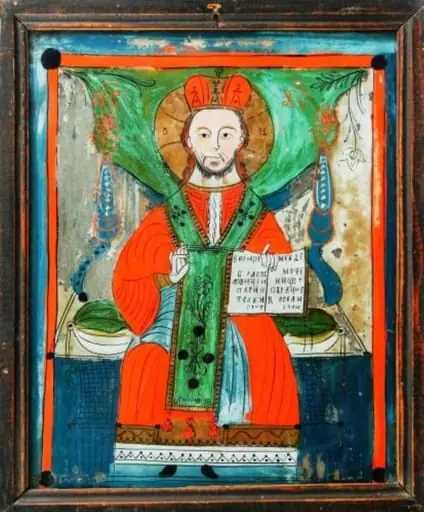
Iisus Hristos mare învățător, Mica Deisis; Icoană împărătescă; Icoană de catapeteasmă is a drawing by Unknown. It dates from 1850 and is held in the collection of the National Museum of Art of Romania. This icon depicts Christ Pantocrator, a traditional Eastern Orthodox representation of Christ as ruler and teacher.
About this work
Overview
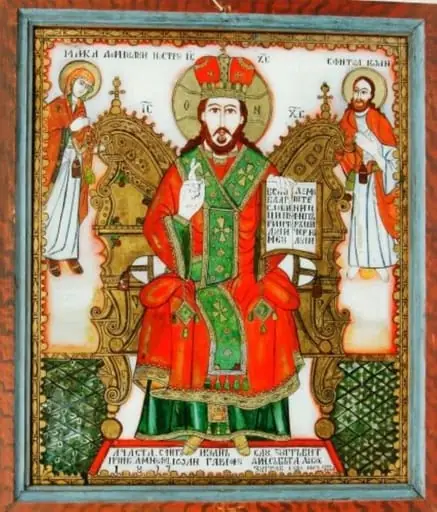
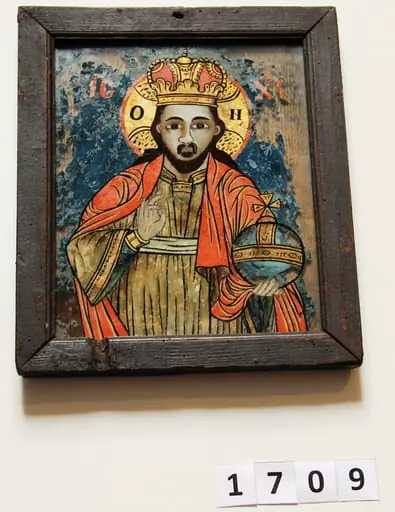
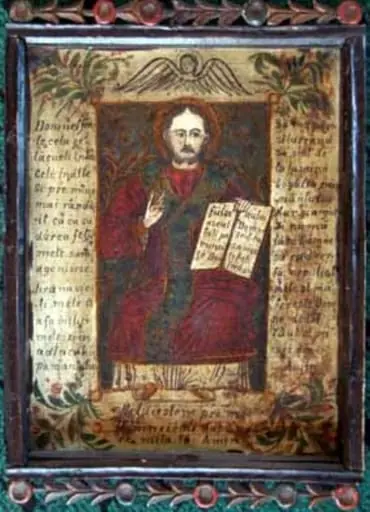
This icon depicts Christ Pantocrator, a traditional Eastern Orthodox representation of Christ as ruler and teacher. Rendered in the imperial icon style, it features a solemn, frontal figure with a gold halo, set against a luminous gold ground. The composition emphasizes divine authority through symmetry and restrained color, characteristic of Byzantine devotional art.
Subject & Meaning
Christ is shown holding an open Gospel book, symbolizing his role as divine teacher and source of sacred law. The direct gaze and composed expression convey both judgment and mercy. Flanking figures, likely the Virgin Mary and John the Baptist, serve as intercessors, reinforcing the Deisis theme common in liturgical screens where supplication and divine grace intersect.
Technique & Style
The painting employs tempera on wood, with gold leaf halos and backgrounds to signify the divine realm. Robes are rendered in deep red and green, using layered pigments for richness. Facial features are stylized rather than naturalistic, following canonical forms that prioritize spiritual presence over individual likeness. Inscriptions in archaic script enhance the sacred character of the text.
History & Provenance
As a catapetasma icon, this work was likely designed for use in the templon screen of a church, separating the nave from the sanctuary.
As a catapetasma icon, this work was likely designed for use in the templon screen of a church, separating the nave from the sanctuary. Its imperial style suggests commissioning by a wealthy patron or ecclesiastical institution, possibly in the Balkans or Anatolia during the late medieval period. Exact origins remain undocumented, but its form aligns with regional traditions of the 13th to 15th centuries.
Context
This icon belongs to a broader tradition of Byzantine religious imagery that emphasized theological clarity over aesthetic innovation. Used in liturgical settings, such icons functioned as aids to prayer and visual theology. The Deisis composition, with Christ flanked by intercessors, was standard in Eastern Christian worship spaces, reinforcing the hierarchy of divine and saintly mediation.
Legacy
The icon’s formal language influenced later Orthodox iconography across Eastern Europe. Though stylistically conservative, its enduring presence in church architecture reflects a continuous liturgical need for visual representations of Christ’s authority. Collections such as the Museum of Ethnography preserve similar works, offering insight into the devotional practices of pre-modern Christian communities.
Artist & collection

 Domestic Scene
 Giacomo and Cardinal Marco, investing Andrea, Abbot of San Zeno, with his Benefice
 The Nymph of Fontainebleau
 Portrait of a Woman
 Madonna and Child with Saints in the Enclosed Garden
 Venus and Minerva
 Family Group of Four on Sofa
 Wall painting from Room H of the Villa of P. Fannius Synistor at Boscoreale