Artwork
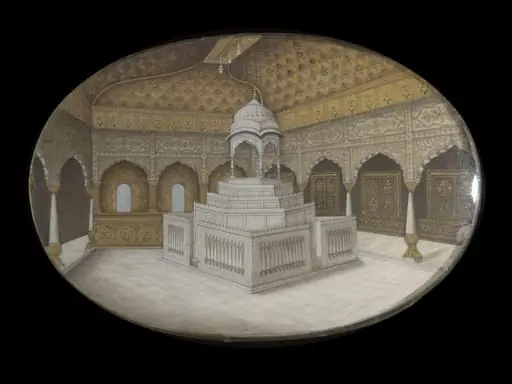
Interior of a Mughal Palace.
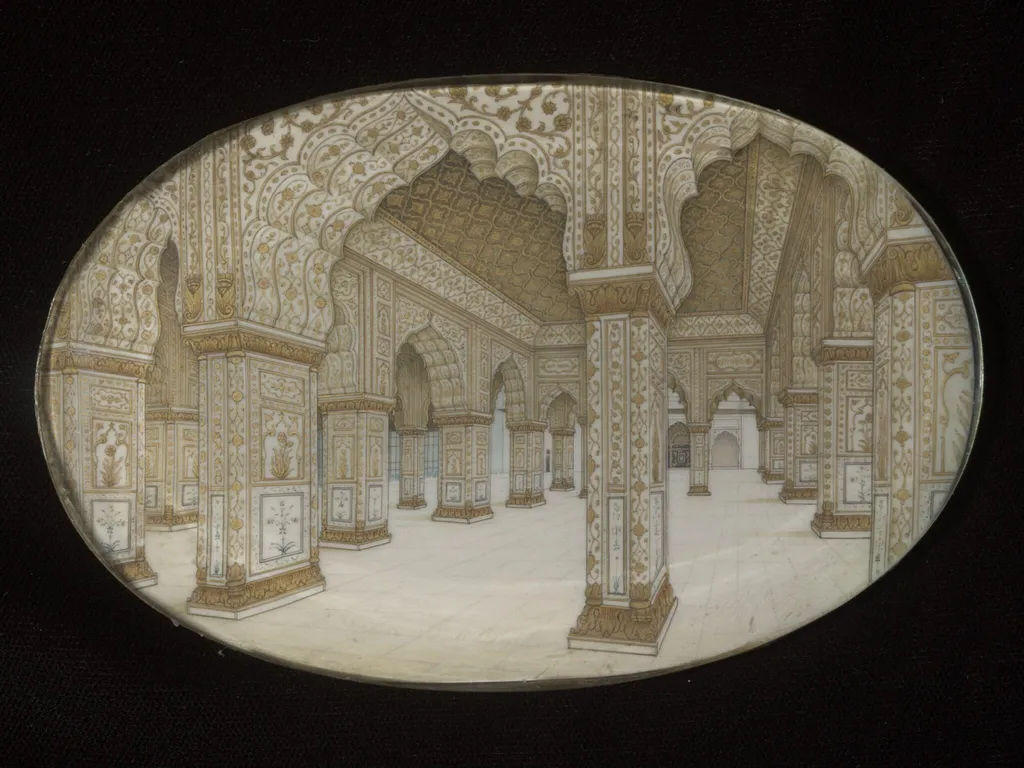
Interior of a Mughal Palace. is a paint painting by the Mughal Painting artist Unknown. It dates from 1900 and is held in the collection of the Victoria and Albert Museum. This painting depicts an interior space within a Mughal palace, characterized by expansive architecture and ornate detailing.
About this work
Overview
Tall pillars and arched openings frame the composition, while the ceiling and walls display finely rendered decorative motifs.
This painting depicts an interior space within a Mughal palace, characterized by expansive architecture and ornate detailing. Tall pillars and arched openings frame the composition, while the ceiling and walls display finely rendered decorative motifs. The absence of figures emphasizes the grandeur of the architecture itself, suggesting a space designed for ceremonial or administrative functions rather than daily use.
Subject & Meaning
The empty chamber conveys a sense of dignified stillness, implying its role as a venue for courtly gatherings or state affairs. The richness of the surface decoration—geometric patterns, floral inlays, and possibly calligraphic elements—serves as a visual assertion of imperial authority and cultural refinement. The space is not merely architectural but symbolic, reflecting the power and sophistication of the Mughal court.
Technique & Style
Executed in a meticulous miniature style, the painting employs fine brushwork and layered pigments to render intricate surface patterns with precision. Perspective is flattened, consistent with Indo-Persian traditions, prioritizing decorative detail over spatial realism. The use of gold and vibrant mineral pigments enhances the opulence of the setting, while the even lighting avoids shadows, maintaining clarity across all surfaces.
History & Provenance
The work likely originates from a Mughal atelier in the late 16th or early 17th century, produced under imperial patronage. Such paintings were often compiled into albums for courtly appreciation or diplomatic gifts. Its current location in the Victoria and Albert Museum suggests it entered Western collections during the colonial period, possibly through acquisition or transfer from Indian royal holdings.
Context
This interior scene aligns with a broader tradition of Mughal court painting that documented architecture, rituals, and elite life. Similar depictions appear in illustrated manuscripts and album pages commissioned by emperors like Akbar and Jahangir. These works functioned as both records and assertions of imperial identity, blending Persian aesthetics with Indian craftsmanship to project a unified courtly culture.
Legacy
The painting contributes to the historical record of Mughal architectural aesthetics and artistic patronage. It informs modern understanding of how space was conceptualized in imperial settings, influencing later studies of South Asian visual culture. Its preservation in a major museum ensures continued scholarly access, offering insight into the intersection of art, power, and environment in early modern India.
Artist & collection

 Domestic Scene
 Giacomo and Cardinal Marco, investing Andrea, Abbot of San Zeno, with his Benefice
 The Nymph of Fontainebleau
 Portrait of a Woman
 Madonna and Child with Saints in the Enclosed Garden
 Venus and Minerva
 Family Group of Four on Sofa
 Wall painting from Room H of the Villa of P. Fannius Synistor at Boscoreale