Artwork
One of four drawings of Mughal architecture.
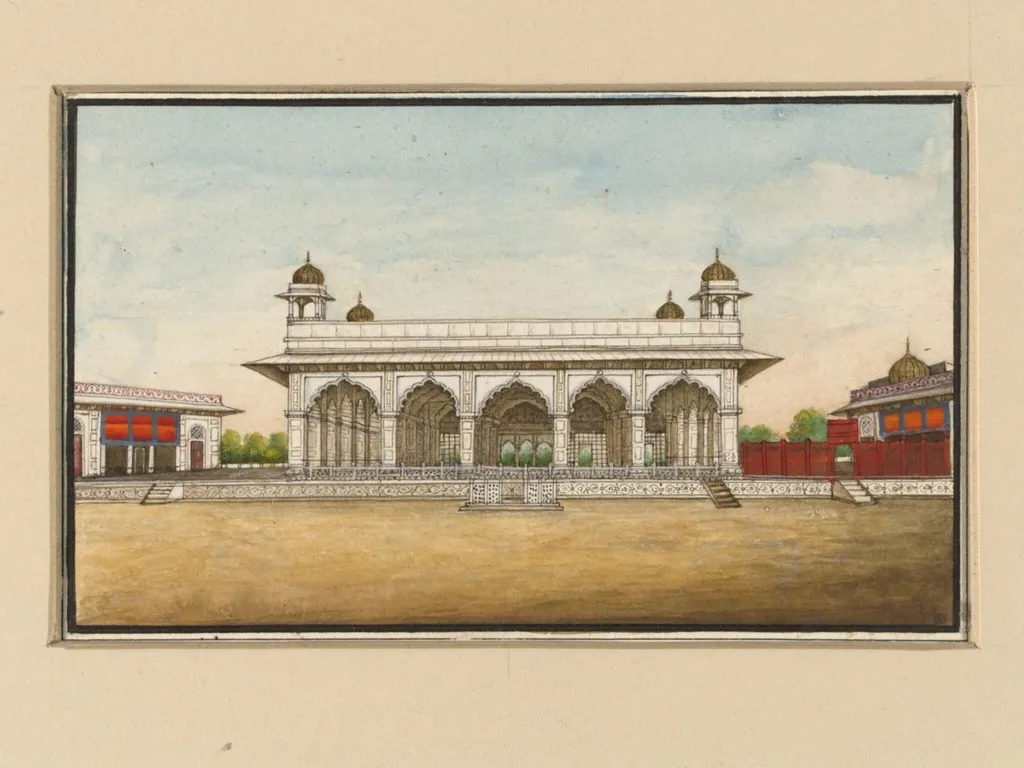
One of four drawings of Mughal architecture. is a paint painting by the Mughal Painting artist Mazhar Ali Khan. It dates from 1840 and is held in the collection of the Victoria and Albert Museum.
About this work
His style mixes Mughal details with European shading he learned from British artists.
This drawing shows a tall Mughal tower with delicate arches and pointed domes. It’s one of four views of royal buildings, drawn around 1840. Soft colors and fine lines make the stonework look almost real.
The artist, Mazhar Ali Khan, worked in India under British rule. His style mixes Mughal details with European shading he learned from British artists. You can see this in how light gently fades on the domes.
Try looking up his other Mughal views at the Victoria and Albert Museum.
Overview
Created around 1840, this drawing is one of four architectural views produced by Mazhar Ali Khan, a Delhi-based artist active during the decline of Mughal patronage. Commissioned by Sir Thomas Metcalfe for his personal album, the Delhi Book, the series documents Mughal monuments with precision. The works reflect a hybrid aesthetic shaped by both indigenous traditions and the observational methods introduced by British colonial figures.
Subject & Meaning
The drawing depicts a prominent Mughal tower characterized by slender arches and pointed domes, likely part of a royal complex in Delhi. Rather than idealizing the structures, the artist presents them as documented landmarks, emphasizing their physical presence over symbolic grandeur. This approach aligns with the colonial interest in cataloging India’s built heritage, transforming architecture into a subject of record rather than reverence.
Technique & Style
Mazhar Ali Khan employed fine ink lines and muted washes to render stone surfaces with subtle gradations of light. The soft fading of tones across domes and minarets reveals European-influenced chiaroscuro, adapted to Mughal decorative forms. The delicate handling of texture and scale suggests close observation, blending the precision of topographical drawing with the ornamental sensitivity of local artistic practice.
History & Provenance
The four drawings were assembled by Sir Thomas Metcalfe, a British administrator and collector, as part of his Delhi Book, a visual record of Delhi’s monuments. After his death, the album entered the collection of the Victoria and Albert Museum, where it remains today. These works represent a transitional moment in Indian art, made for a Western audience yet executed by an Indian artist trained in Mughal conventions.
Context
Produced during the mid-19th century, these drawings emerged as Mughal imperial patronage waned and British colonial authority expanded. Artists like Khan adapted their skills to meet new demands: accurate depiction for administrative and antiquarian purposes. The resulting style—known as Company painting—reflected a cultural negotiation, where local aesthetics were reshaped to satisfy foreign expectations of documentation.
Legacy
Mazhar Ali Khan’s architectural drawings serve as valuable historical records of Delhi’s monuments before extensive 19th-century alterations. They illustrate how Indian artists navigated shifting patronage systems, integrating European techniques without abandoning indigenous visual languages. Today, the series stands as a quiet testament to the complex interplay of observation, adaptation, and cultural exchange under colonial rule.
Artist & collection
Artist
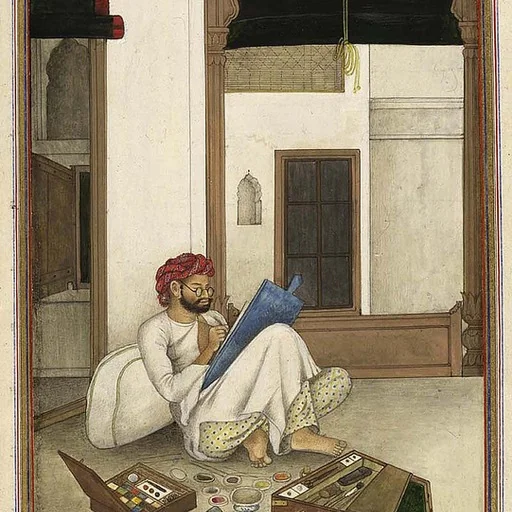
Mazhar Ali Khan was a late-Mughal era, 19th century painter from Delhi, working in the Company style of post-Mughal painting under Western influence.

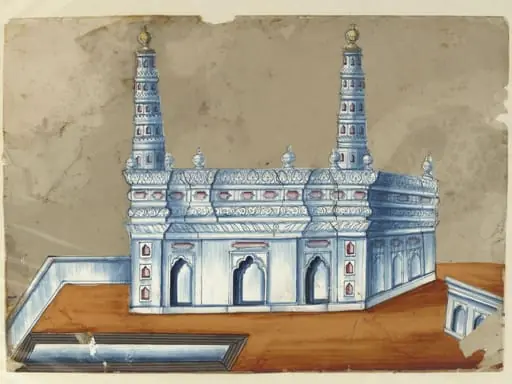 One of seven paintings of unidentified Muslim buildings in South India.
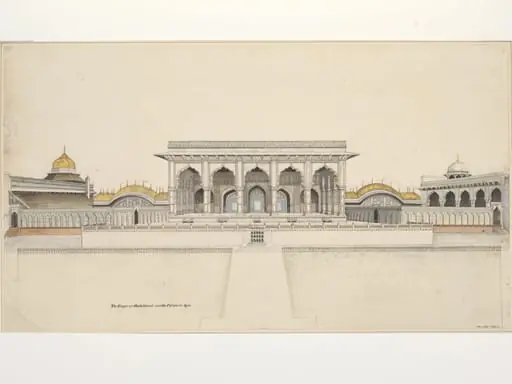 Elevation of the facade of the Khas Mahal, private apartments, Agra Fort, with the adjoining golden pavilions
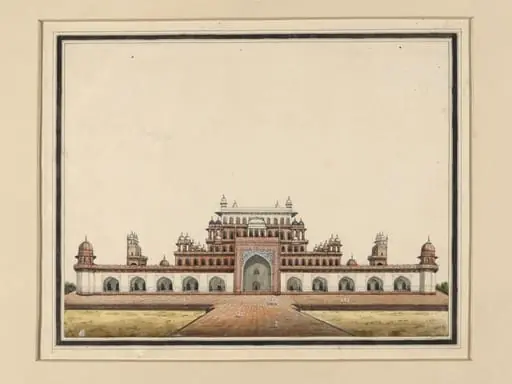
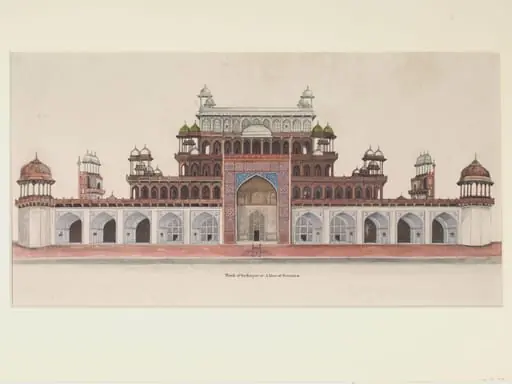 Elevation of the front of the mausoleum of the Emperor Akbar at Sikandra near Agra
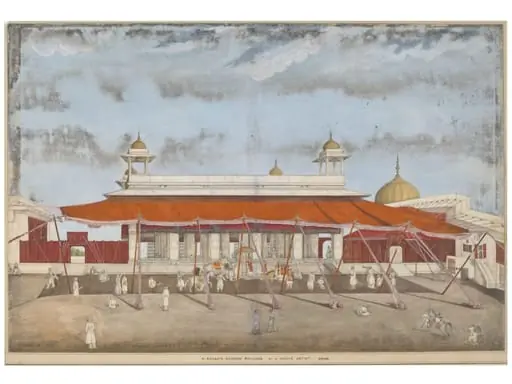 The Diwan-i Khas or Private Hall of Audience, Delhi.
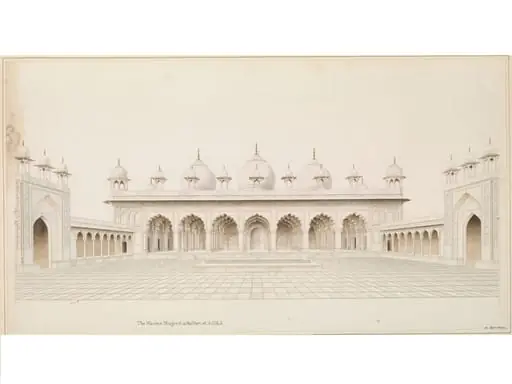 Elevation of the Moti Masjid (Pearl Mosque), Agra
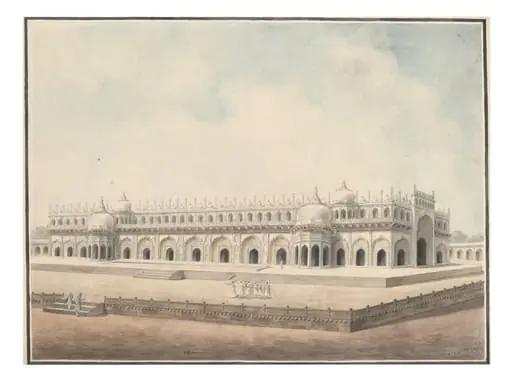 The Imambara, Lucknow
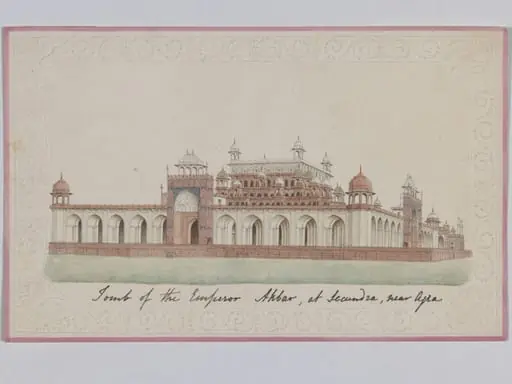 Akbar's mausoleum, Sikandra
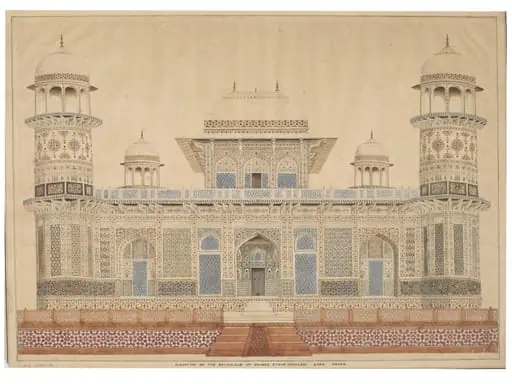 Mausoleum of Itimad ud-Daula.
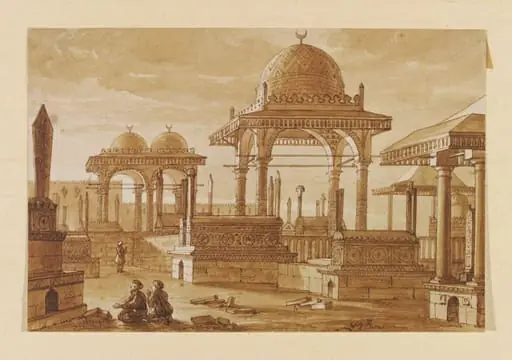 Part of the City of Tombs at Cairo