Artwork
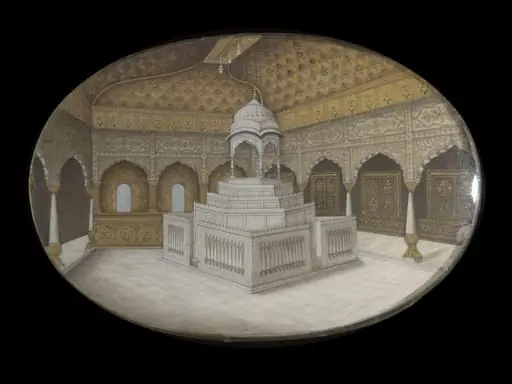
Interior of the Tomb Chamber, Taj Mahal, Agra
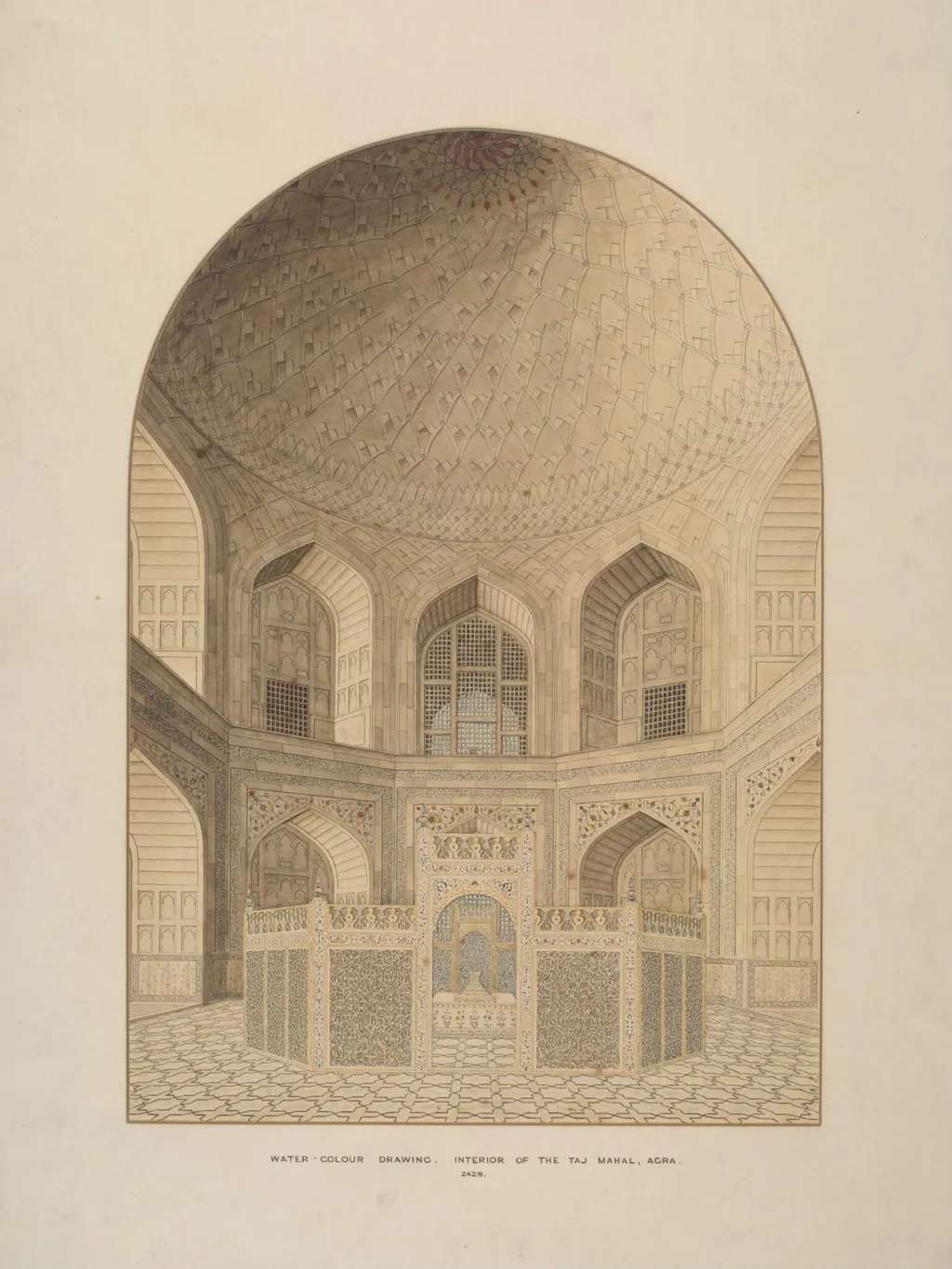
Interior of the Tomb Chamber, Taj Mahal, Agra is a paint painting by the Romanticist artist Unknown. It dates from 1820 and is held in the collection of the Victoria and Albert Museum.
About this work
Overview
A central cenotaph, delicately detailed with a pointed canopy, stands alone in the empty space, reinforcing the solemnity of the site.
This painting captures the interior of the tomb chamber at the Taj Mahal in Agra, focusing on the spatial harmony and refined ornamentation of Mughal architecture. The composition emphasizes the vast, quiet interior, framed by repeated arches and high windows that channel natural light. A central cenotaph, delicately detailed with a pointed canopy, stands alone in the empty space, reinforcing the solemnity of the site.
Subject & Meaning
The subject is the inner sanctum of the Taj Mahal, designed as a memorial to Mumtaz Mahal. The empty chamber, save for the cenotaph, evokes absence and reverence. The absence of figures directs attention to the architecture itself as the true monument — a silent testament to loss, devotion, and the permanence of stone and craftsmanship over human presence.
Technique & Style
Rendered in precise detail, the painting employs fine line work and subtle tonal gradations to convey the texture of carved marble and inlaid stone. Light is carefully modeled to suggest the play of sunlight through arched openings, enhancing the sense of depth. The style leans toward topographical accuracy, prioritizing architectural fidelity over expressive flourish, aligning with 19th-century documentary traditions in Indian painting.
History & Provenance
Created during the British colonial period, this work likely originated from an artist commissioned to document Mughal monuments for European audiences. It reflects the growing interest in India’s architectural heritage among colonial officials and travelers. While the exact artist and date remain unconfirmed, its style suggests production in the early to mid-1800s, possibly in Agra or Calcutta.
Context
The painting emerges from a period when European and Indian artists collaborated to record India’s historic sites. Unlike Romanticism’s emotional landscapes, this work favors observation over idealization. It aligns with the broader colonial project of cataloging indigenous architecture, often for scholarly or administrative purposes, rather than aesthetic celebration.
Legacy
As a visual record, the painting contributes to the historical documentation of the Taj Mahal’s interior before modern conservation efforts. It preserves details of ornamentation and spatial arrangement that may have altered over time. Today, it serves as an archival reference, offering insight into how 19th-century viewers perceived and interpreted Mughal architecture through the lens of documentation.
Artist & collection

 Domestic Scene
 Giacomo and Cardinal Marco, investing Andrea, Abbot of San Zeno, with his Benefice
 The Nymph of Fontainebleau
 Portrait of a Woman
 Madonna and Child with Saints in the Enclosed Garden
 Venus and Minerva
 Family Group of Four on Sofa
 Wall painting from Room H of the Villa of P. Fannius Synistor at Boscoreale
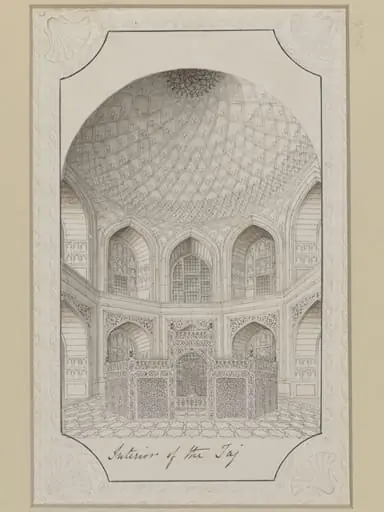 Interior of the Taj Mahal, Agra.
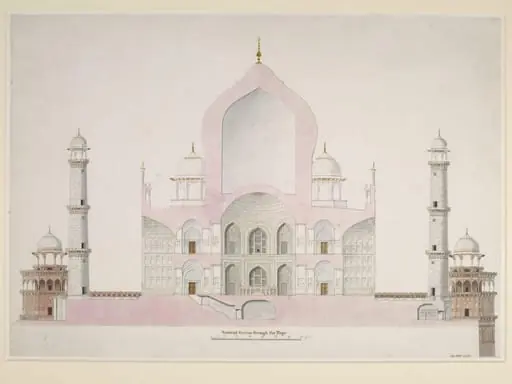 Vertical Section through the Tage
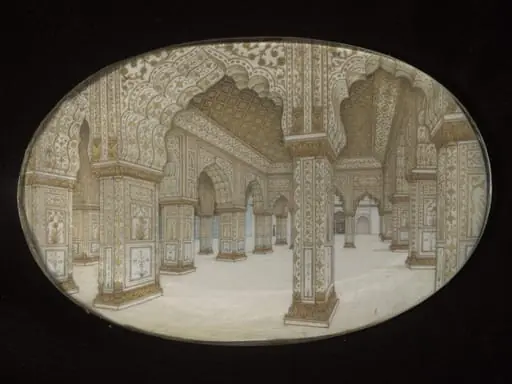 Interior of a Mughal Palace.
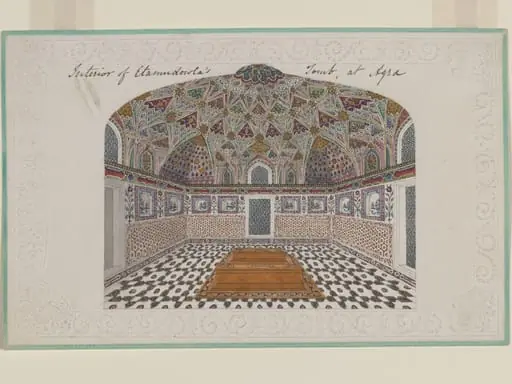 Interior of Tomb of Itimad ud-Daula.
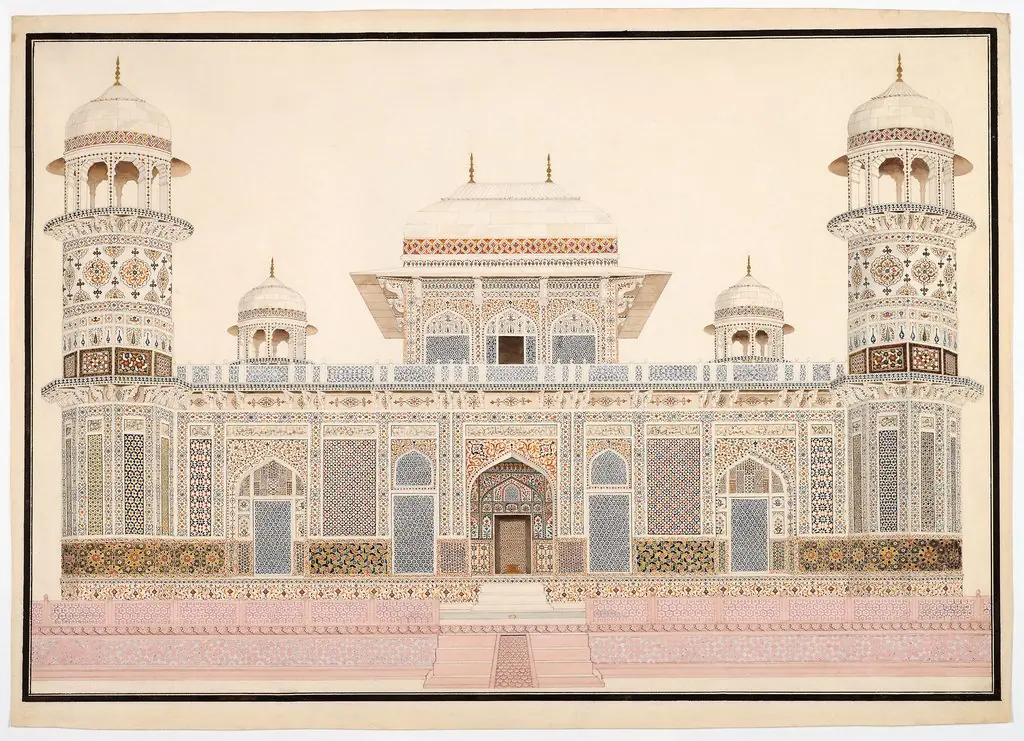 I'timad-ud-Daula's Tomb at Agra
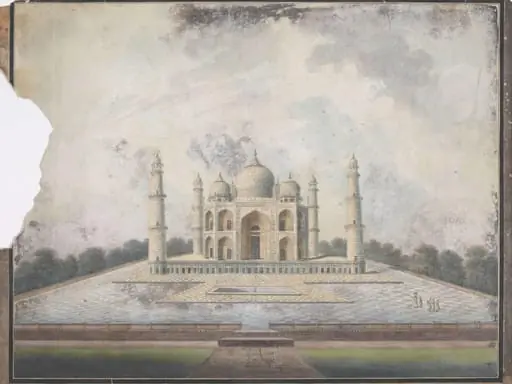 The Taj Mahal, Agra
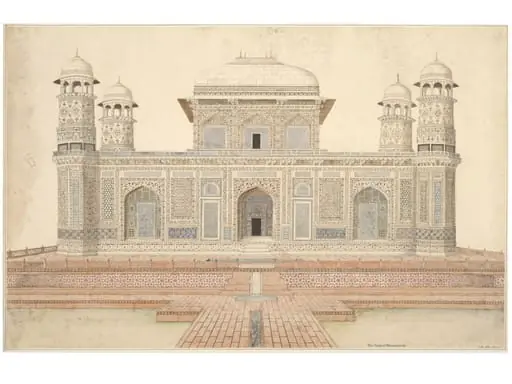 The facade of the tomb of I'timad ad-daula and his wife Asmat Begum, Agra.
 A Mughal tomb.
 Elevation of the great gateway of the garden court of the Taj Mahal.