Artwork
Interior with a man reading and a woman spinning yarn
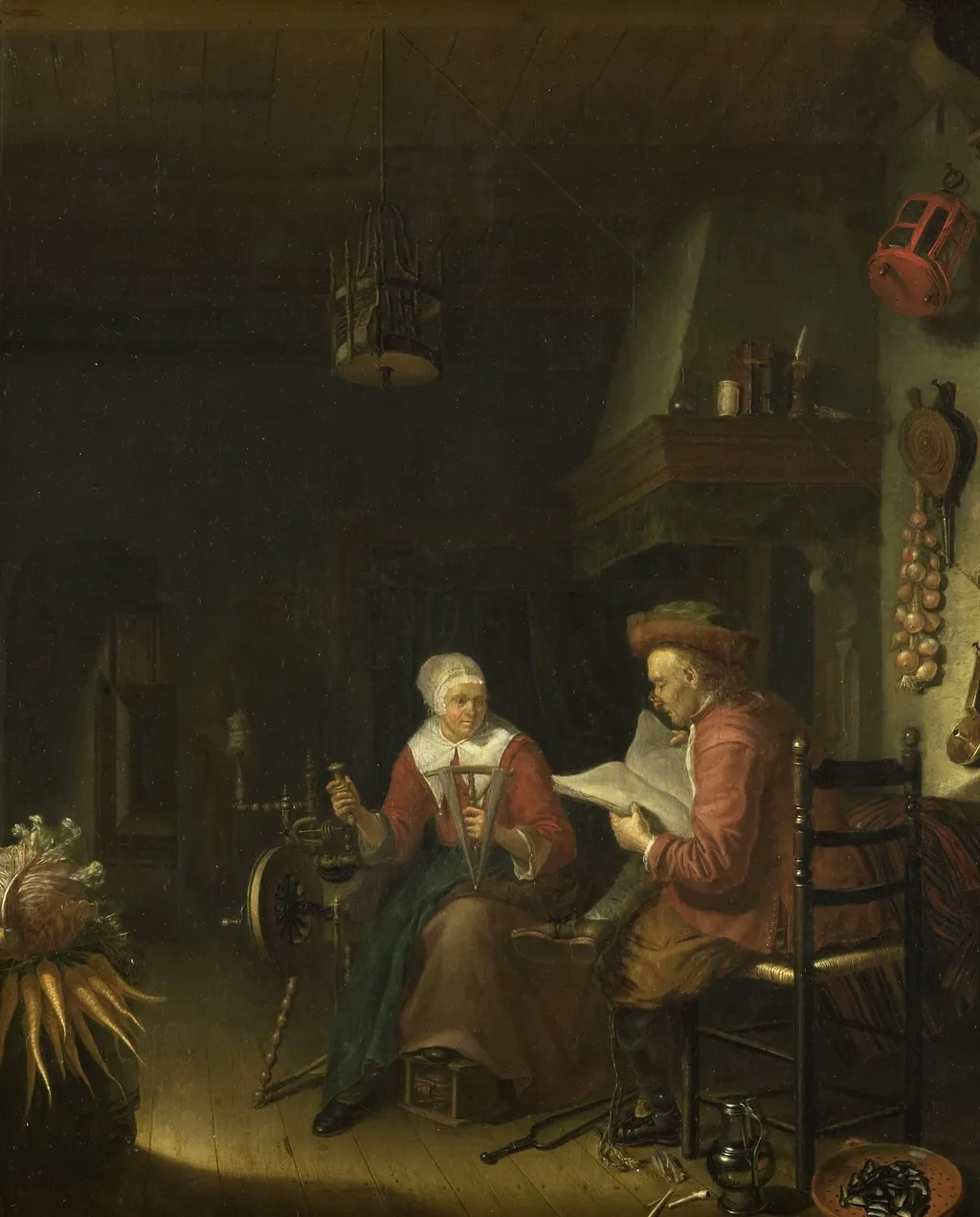
Interior with a man reading and a woman spinning yarn is an unspecified painting by the Dutch Golden Age artist Unknown. It dates from 1668 and is held in the collection of the Rijksmuseum. This undated oil painting captures a quiet domestic interior in 17th-century Holland.
About this work
Overview
The artist remains unidentified, but the composition reflects the observational precision common in Dutch genre scenes of the period.
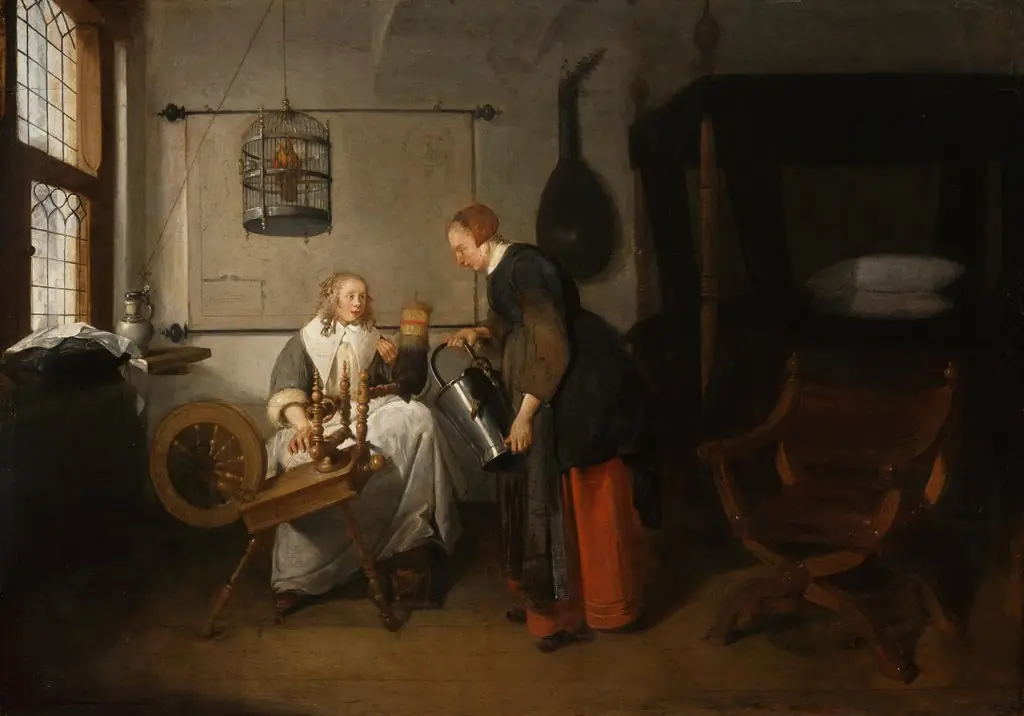
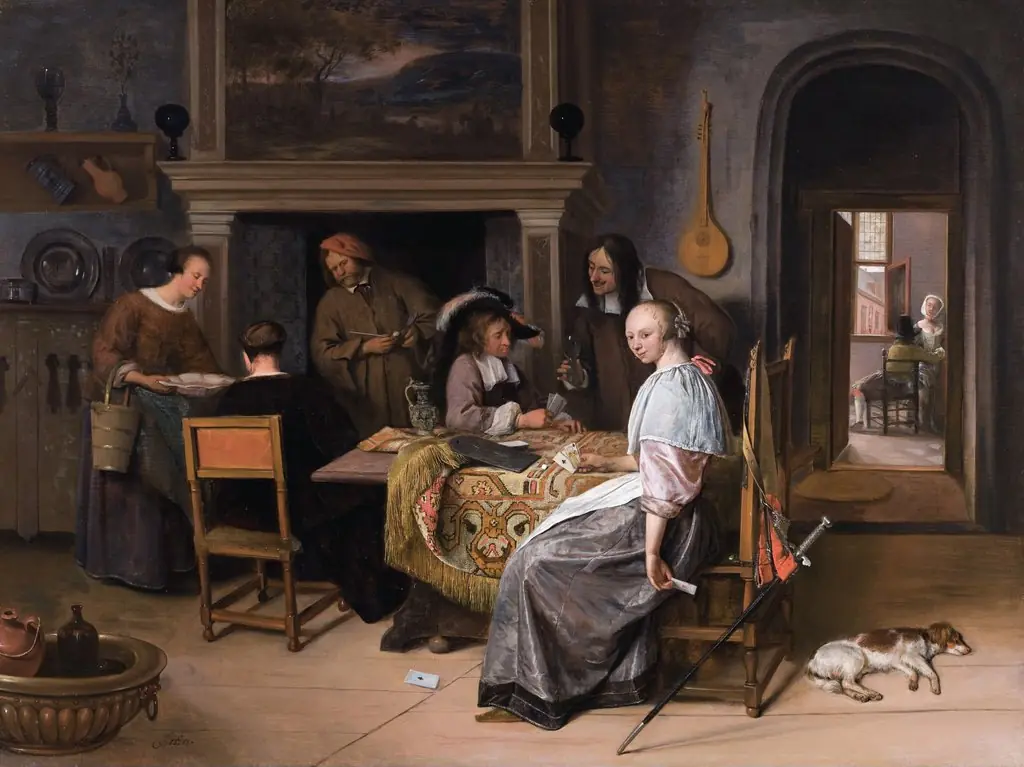
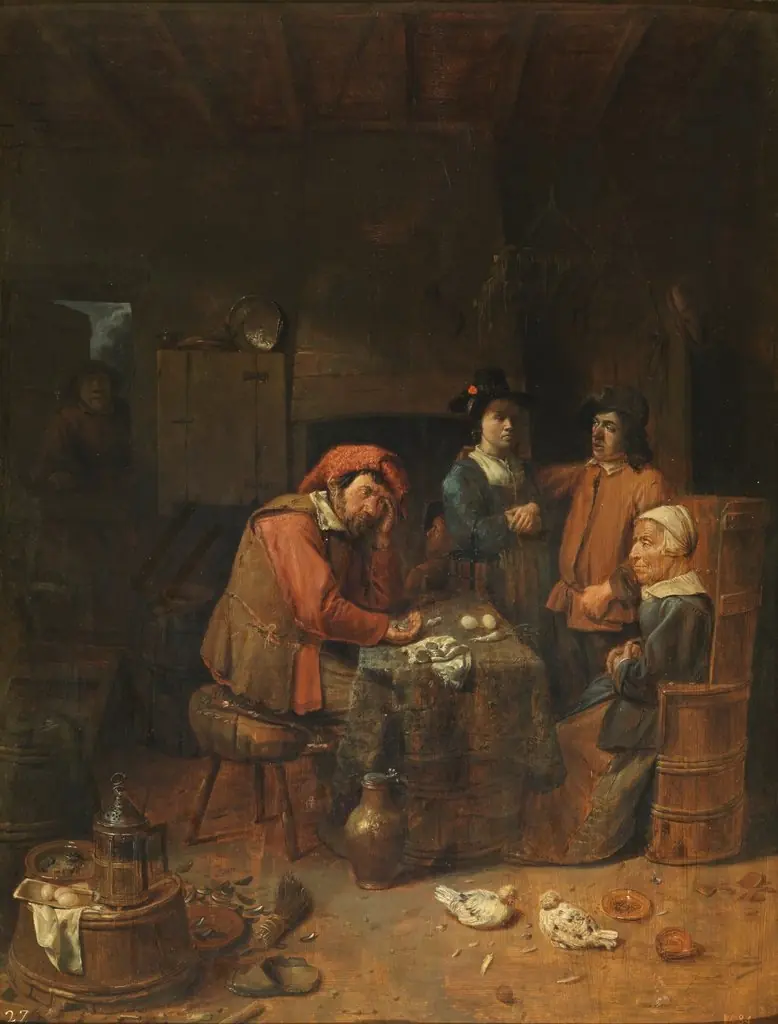
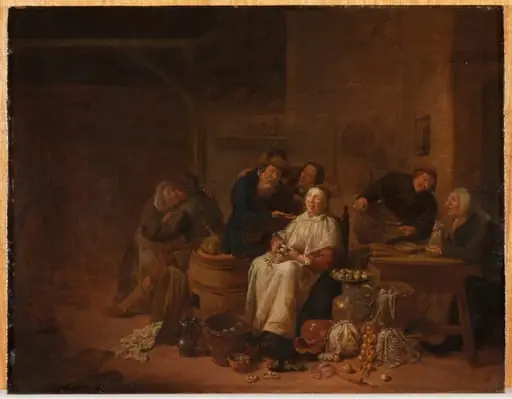
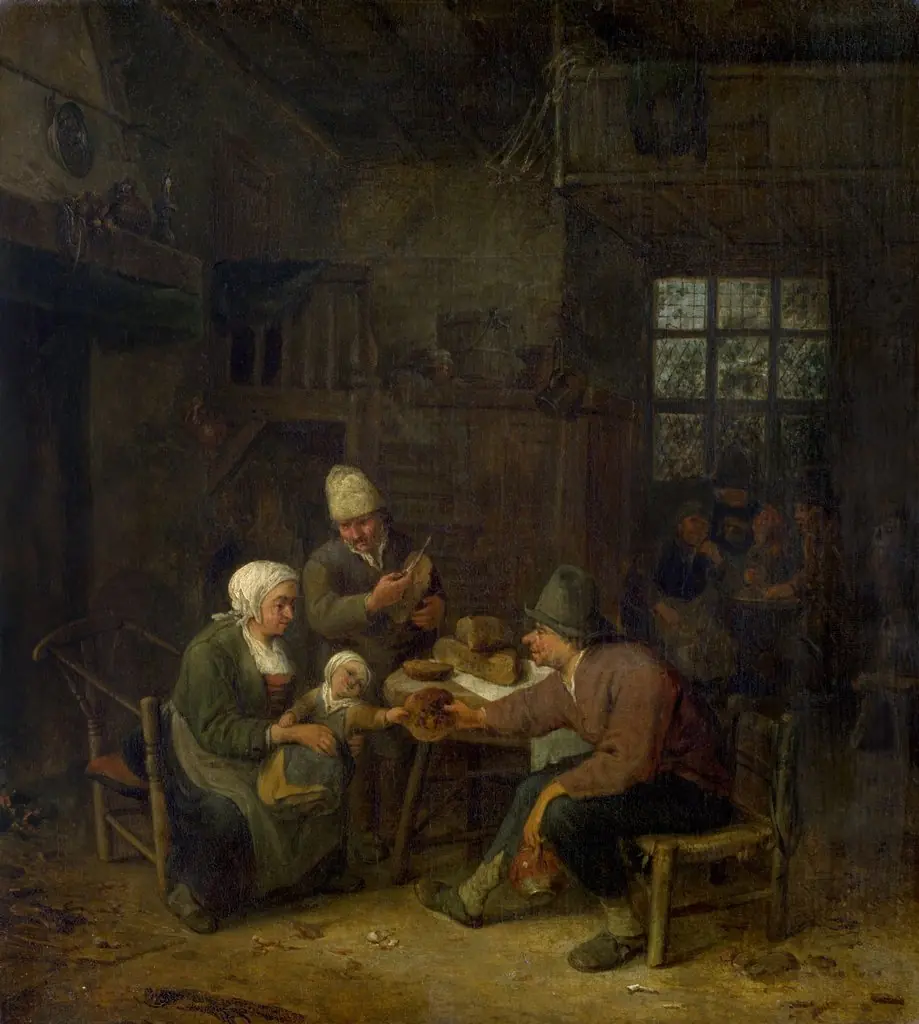
This undated oil painting captures a quiet domestic interior in 17th-century Holland. A man reads with a book open on his lap while a woman spins yarn at a spinning wheel nearby. Everyday objects—mussels in a strainer, a pipe, a jug, hanging vegetables, a birdcage, and lighting tools—are arranged with deliberate care, suggesting a moment of stillness amid routine labor. The artist remains unidentified, but the composition reflects the observational precision common in Dutch genre scenes of the period.
Subject & Meaning
The scene portrays a quiet partnership between reading and handwork, possibly symbolizing the balance of intellect and domestic duty. The man’s book implies literacy and leisure, while the woman’s spinning connects to economic contribution and daily rhythm. Objects like mussels and vegetables hint at household provisioning, and the birdcage may suggest containment or domestic harmony. No overt narrative is given; instead, meaning emerges through the accumulation of ordinary details.
Technique & Style
The painting employs subtle tonal gradations and restrained lighting to render textures with quiet realism. Brushwork is precise but unobtrusive, allowing surfaces—wood, wool, ceramic, and metal—to register with tactile clarity. The composition is tightly framed, drawing attention to the interplay between figures and their surroundings. Shadows are soft, and colors are muted, reinforcing the calm, intimate atmosphere without theatricality.
History & Provenance
The painting has been held by the Rijksmuseum since at least the 19th century, though its earlier ownership is undocumented. It lacks a signature or date, and no contemporary records link it to a known artist. Its survival and preservation suggest it was valued early as a representative example of Dutch interior scenes, even without a named creator. Its attribution remains stylistic, based on parallels with contemporaries like Pieter de Hooch or Jan Vermeer.
Context
Created during the Dutch Golden Age, the work reflects a cultural shift toward valuing domestic life as worthy of artistic attention. Unlike religious or mythological subjects, this scene elevates the mundane—spinning, eating, reading—as meaningful. Such interiors were popular among urban middle-class patrons who saw their own lives reflected in these quiet, orderly spaces, affirming values of diligence, modesty, and familial harmony.
Legacy
Though unsigned, the painting endures as a representative example of Dutch genre painting’s capacity to convey depth through restraint. It contributes to broader scholarly understanding of how everyday objects carried symbolic weight in 17th-century households. Its presence in the Rijksmuseum continues to inform public and academic engagement with the quiet poetry of domestic life in early modern Europe.
Artist & collection

 Domestic Scene
 Giacomo and Cardinal Marco, investing Andrea, Abbot of San Zeno, with his Benefice
 The Nymph of Fontainebleau
 Portrait of a Woman
 Madonna and Child with Saints in the Enclosed Garden
 Venus and Minerva
 Family Group of Four on Sofa
 Wall painting from Room H of the Villa of P. Fannius Synistor at Boscoreale