Artwork
Intrarea în biserică a Maicii Domnului; Icoană de catapeteasmă
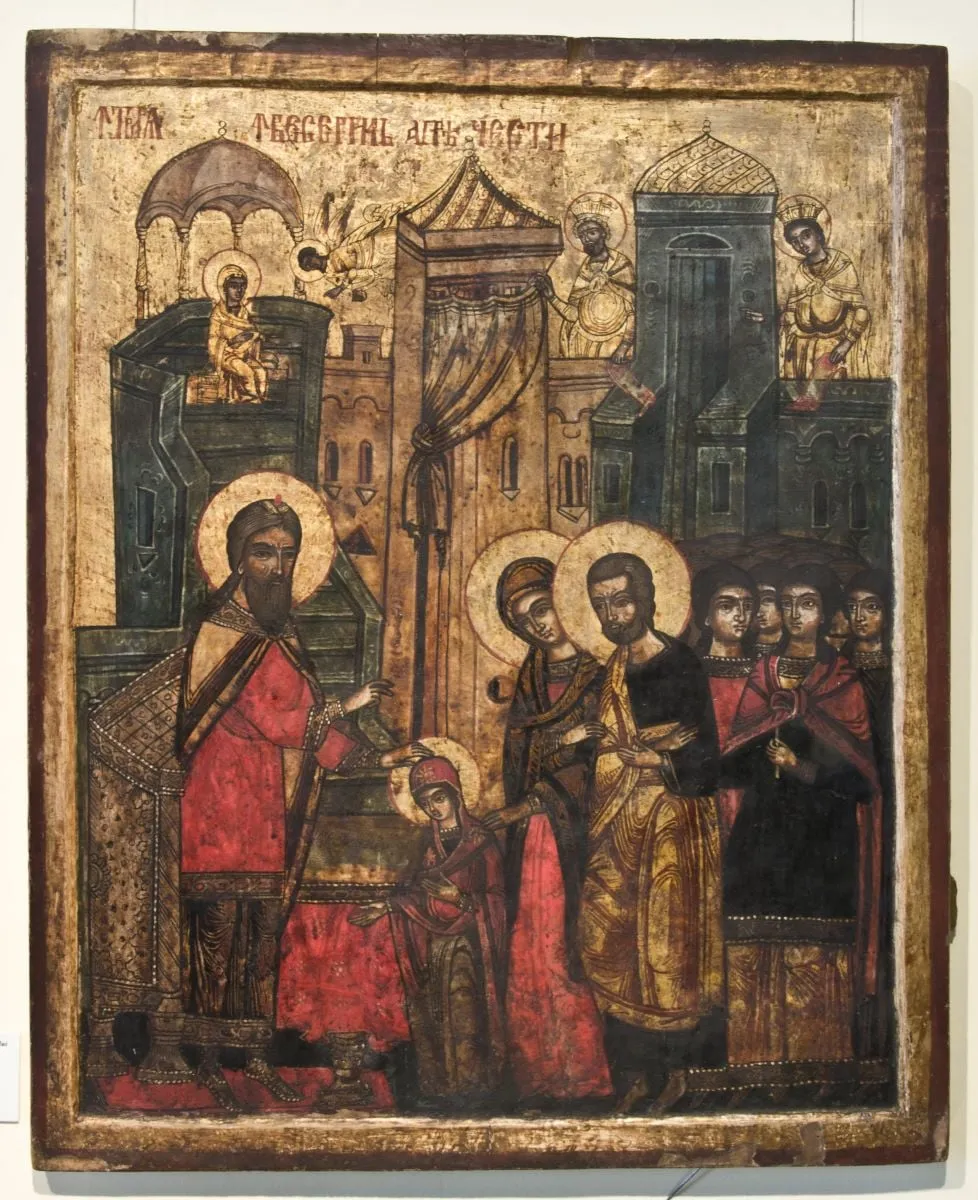
Intrarea în biserică a Maicii Domnului; Icoană de catapeteasmă is a drawing by Unknown. It dates from 1850 and is held in the collection of the National Museum of Art of Romania.
About this work
Overview
The composition centers on hierarchical figures arranged before a stylized temple structure, their identities marked by halos and inscriptions.
This icon depicts the Entry of the Theotokos into the Temple, a scene from apocryphal tradition where the Virgin Mary, as a child, is presented to the priests in Jerusalem’s Temple. Rendered on a wooden panel, it follows the Byzantine tradition of religious imagery, emphasizing spiritual presence over naturalistic detail. The composition centers on hierarchical figures arranged before a stylized temple structure, their identities marked by halos and inscriptions.
Subject & Meaning
The scene illustrates Mary’s dedication to divine service, symbolizing her purity and preordained role in salvation history. Priests in ceremonial robes receive her, while angels and temple attendants observe from above. The halos and gold background signify sacredness, distinguishing the figures as holy actors in a divine narrative. The inscription above identifies the event, anchoring the image in liturgical memory.
Technique & Style
The painting employs tempera on wood with extensive gold leafing for backgrounds and halos, typical of Eastern Orthodox iconography. Figures are rendered with elongated proportions and frontal poses, prioritizing symbolic presence over anatomical realism. Facial expressions are serene and static, reinforcing contemplative reverence. Cross-hatching in drapery suggests volume without perspective, adhering to traditional iconographic conventions.
History & Provenance
The icon originates from the Byzantine or post-Byzantine period, likely produced in a monastic workshop in the Balkans or Anatolia. Its style aligns with 14th- to 16th-century traditions, though precise provenance remains undocumented. It was likely used in liturgical settings, either as part of an iconostasis or for private devotion, before entering a collection in the modern era.
Context
This image reflects the theological emphasis on Mary’s sanctity in Eastern Christianity, where her childhood presentation was celebrated as a prefiguration of Christ’s entry into the world. Icons like this were central to worship, serving as visual prayers and teaching tools for largely illiterate congregations. The architectural setting, though stylized, evokes the Temple of Solomon as a sacred space bridging earthly and divine realms.
Legacy
The icon preserves a visual language that endured for centuries across Orthodox communities, influencing later regional styles in Romania, Serbia, and Russia. Its adherence to established forms underscores the tradition’s emphasis on continuity and fidelity to sacred precedent. Though no longer used liturgically in many contexts, it remains a key artifact in understanding the spiritual aesthetics of Eastern Christian devotion.
Artist & collection

 Domestic Scene
 Giacomo and Cardinal Marco, investing Andrea, Abbot of San Zeno, with his Benefice
 The Nymph of Fontainebleau
 Portrait of a Woman
 Madonna and Child with Saints in the Enclosed Garden
 Venus and Minerva
 Family Group of Four on Sofa
 Wall painting from Room H of the Villa of P. Fannius Synistor at Boscoreale
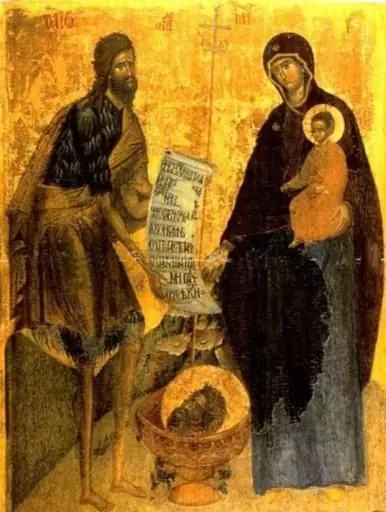 Sfântul Ioan Botezătorul și Maica Domnului cu Pruncul
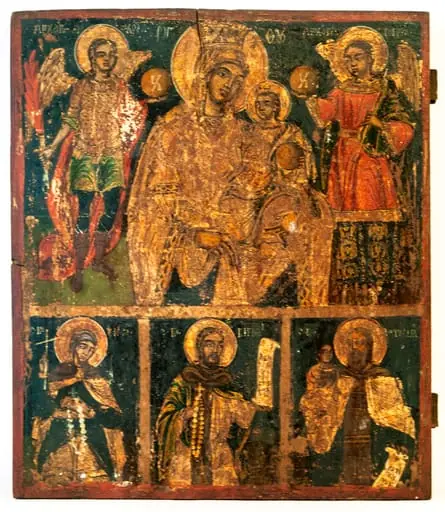 Icoașat
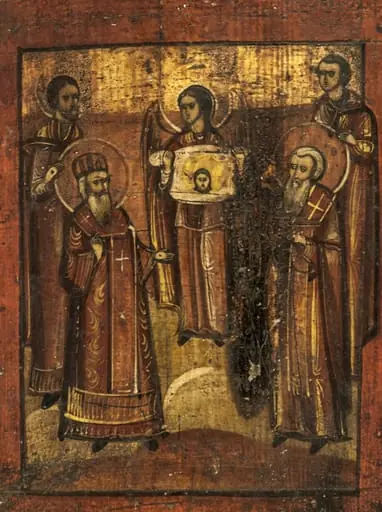 Sfânta Mahramă este, conform sfintei Tradiții, cea mai veche icoană a lui Hristos, nefăcută de mâna omului. Sfântul Ioan Damaschin(filozof, teolog și iconograf din sec VIII) descrie originea acesteia în Dogmatica ortodoxă: Se știe din tradiție că pe când Avgar era regele Edessei, a trimnis un pictor să picteze chipul Domnului, dar din pricină că pictorul nu a putut să -l picteze din cauza luminii strălucitoare a feței, Domnul Însuși , punând haina pe obrazul Lui dumnezeiesc și de viață făcător, s-a imprimat pe haină chipul Lui și astfel a trimis-o lui Avgar, care îl dorea. Deși inscripțiile nu mai ajută la identificarea exactă a momentului ilustrat, icoana ilustrează momentul în care sfânta Mahramă este adusă regelui Avgar. Un înger plasat în centrul compoziției arată mahrama cu chipul lui Iisus înconjurat de nimbul cruciger. De o parte și de alta, plasați simetric, un episcop și un preot în vârstă, binecuvântând, în spatele lor regele, în pandant un personaj fără nimb, toți privind către chipul lui Hristos imprimat pe țesătură. Conform unei legende, chipul lui Hristos s-a imprimat și pe mahrama cu care Veronica i-a șters chipul în timpul patimilor. Compoziția este narativă, echilibrată, chipurile expresive. Cromatica specifică icoanelor de tip krasnushka, tonuri de pământ în combinație cu fondul foiței aurii(fond -1/4 superior). Bordura brun roșcată, lată, delimitat prin linii negre.Icoana prezintă urme de arsură.
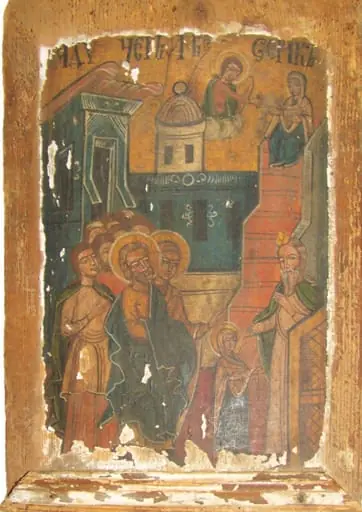 Intrarea în biserică a Maicii Domnului
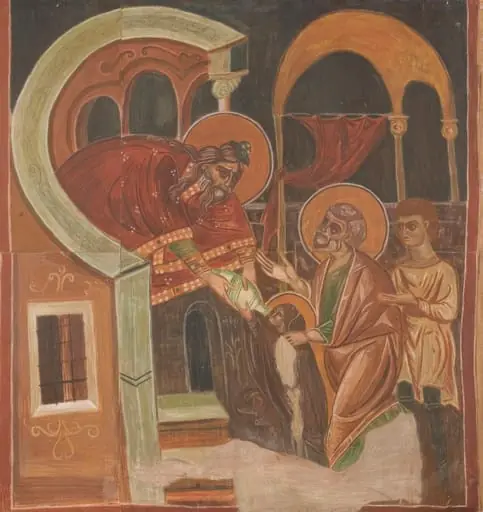 The control water
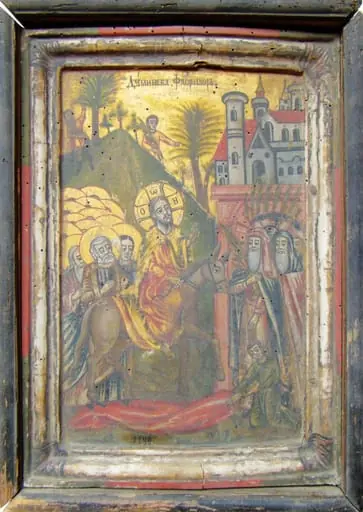 Duminica Floriilor
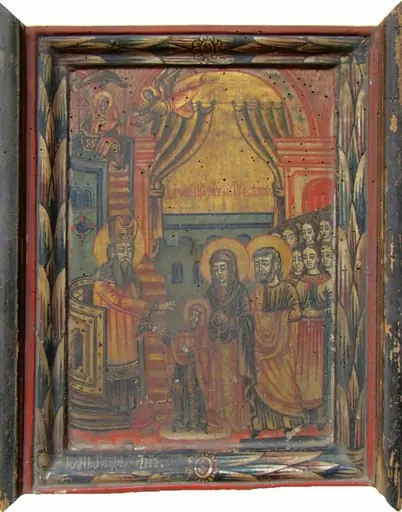 Intrarea în biserică a Maicii Domnului
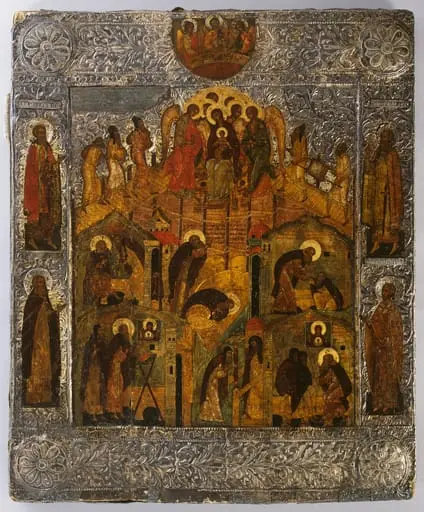 Neitsyt Marian ilmestyminen pyhittäjä Aleksanteri Syväriläiselle kirkon perustuksella
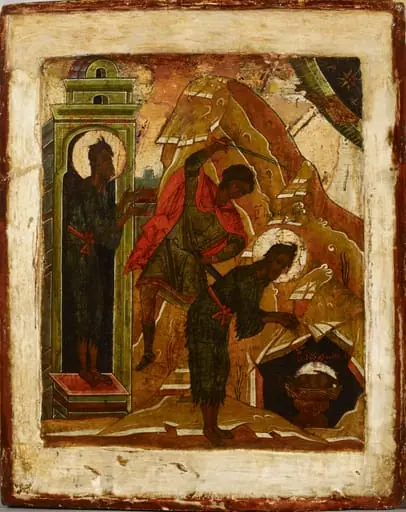 Johannes Kastajan mestaus, venäläinen ikoni