Artwork
Isus Pantocrator
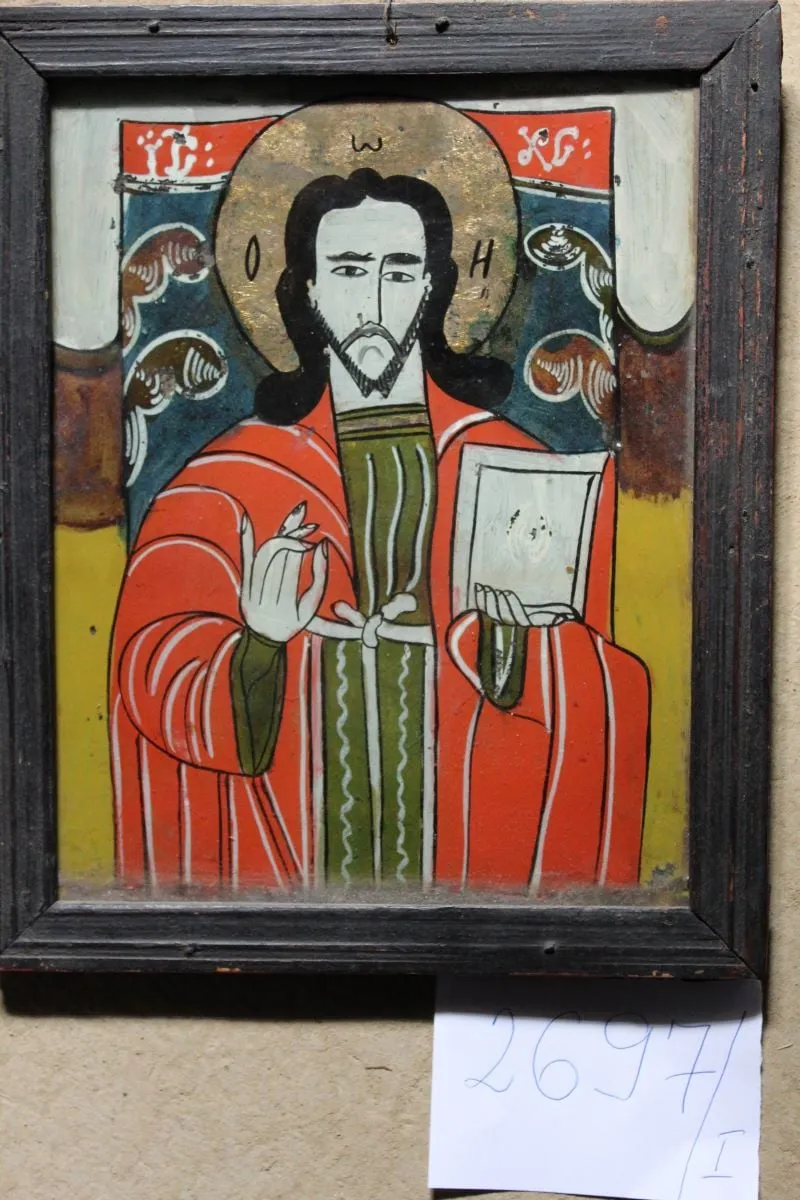
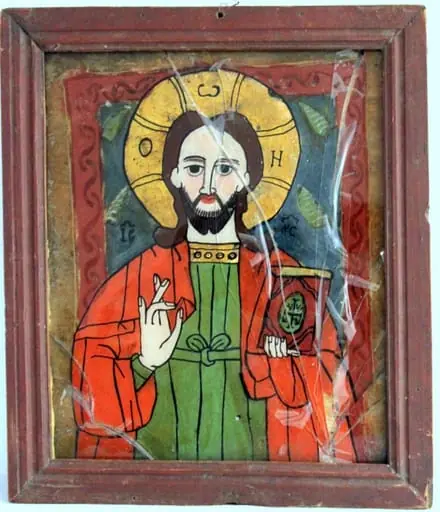
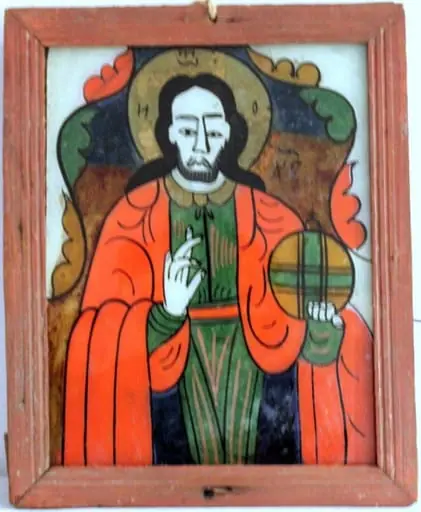
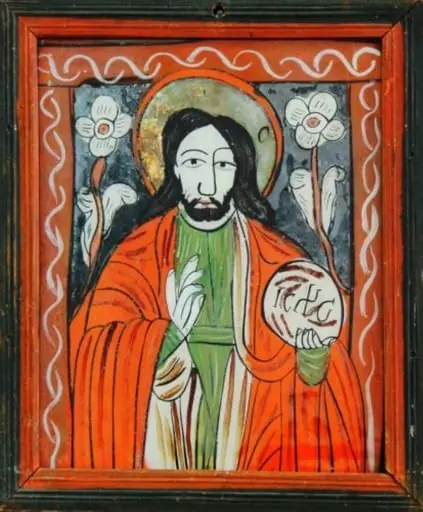
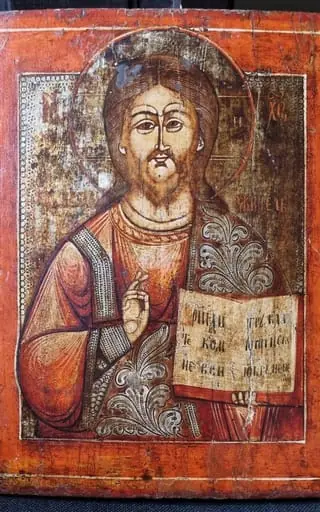
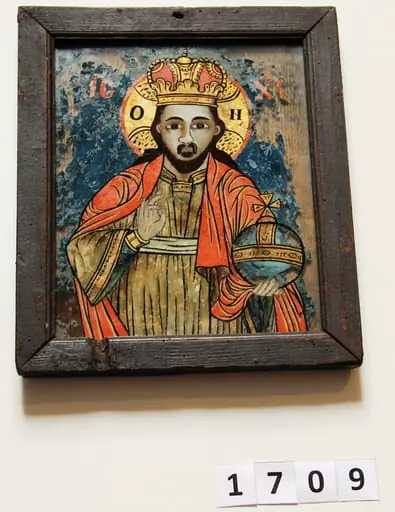
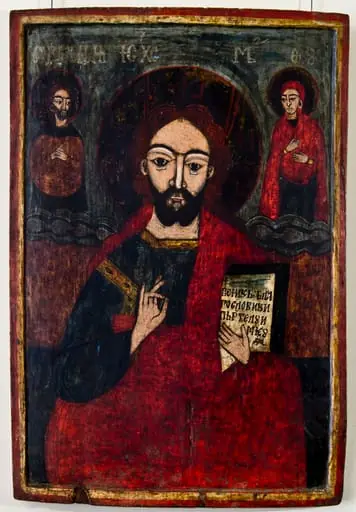
Isus Pantocrator is a drawing by Unknown. It dates from 1850 and is held in the collection of the Bistrita-Năsăud Museum Complex. This image depicts Christ Pantocrator, a traditional representation of Christ as ruler of all.
About this work
Overview
The composition follows established Byzantine conventions, prioritizing spiritual authority over anatomical accuracy.
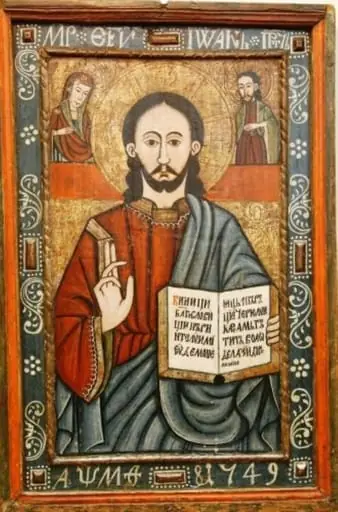
This image depicts Christ Pantocrator, a traditional representation of Christ as ruler of all. Rendered in a flat, non-naturalistic style, the figure is set against a luminous background of blue and gold. Bold, unmodulated colors and minimal detail emphasize symbolic presence over physical realism. The composition follows established Byzantine conventions, prioritizing spiritual authority over anatomical accuracy.
Subject & Meaning
Christ is shown holding a closed book, likely the Gospels, symbolizing divine wisdom, while his right hand is raised in a gesture of blessing. The gold halo signifies holiness, and the stern, frontal gaze conveys omniscience and judgment. The stylized features and rigid posture reflect theological intent: to present Christ not as a historical figure but as eternal and transcendent.
Technique & Style
The image employs flat, unshaded color fields with no attempt at chiaroscuro or perspective. Facial features are simplified, lacking depth or individual expression. Outlines are clear, and decorative elements like gold leaf patterns frame the figure. This approach aligns with early Christian and Byzantine iconography, where clarity and sacred symbolism outweigh naturalistic detail.
History & Provenance
Though exact origins are unrecorded, the style and iconography suggest a Byzantine or post-Byzantine origin, likely from the medieval period. Such images were commonly used in religious settings, especially in churches and monasteries, as objects of veneration. The use of gold and red pigments indicates it was produced for a liturgical context, possibly as part of an iconostasis.
Context
This image belongs to a broader tradition of Eastern Christian icon painting, where visual rules were codified to convey theological truths. Unlike Western art, which increasingly embraced realism, Byzantine icons maintained symbolic forms to express divine presence. The inclusion of Greek letters and geometric patterns around the figure reinforces its liturgical function and connection to sacred texts.
Legacy
The enduring use of this iconographic type across Orthodox Christian communities demonstrates its lasting theological resonance. Even as artistic styles evolved, the Pantocrator image remained a standard in religious art, influencing later traditions in Eastern Europe and the Balkans. Its formal simplicity continues to serve as a model for devotional imagery rooted in spiritual rather than aesthetic goals.
Artist & collection
 Domestic Scene
 Giacomo and Cardinal Marco, investing Andrea, Abbot of San Zeno, with his Benefice
 The Nymph of Fontainebleau
 Portrait of a Woman
 Madonna and Child with Saints in the Enclosed Garden
 Venus and Minerva
 Family Group of Four on Sofa
 Wall painting from Room H of the Villa of P. Fannius Synistor at Boscoreale