Artwork
Jacob and Laban with Rachel and Leah (recto); Sketch of Two Men and Other Various Figures (verso)
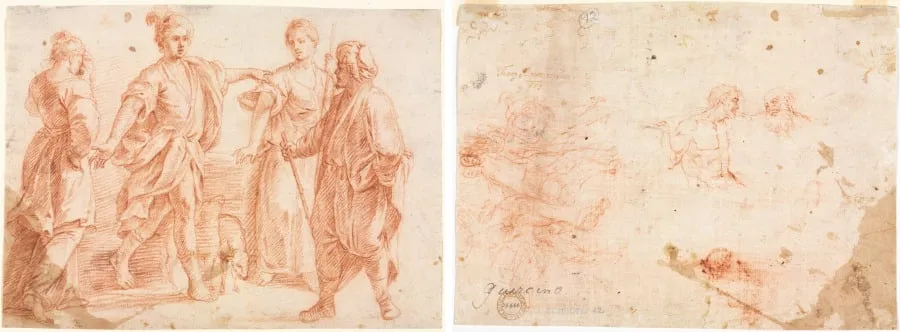
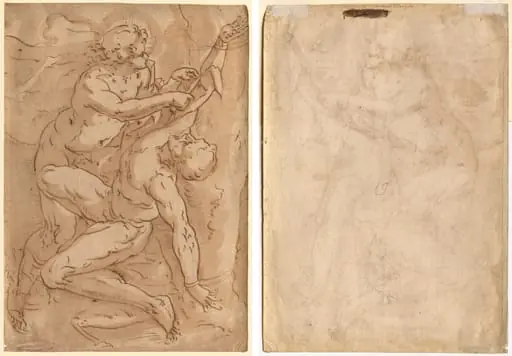
Jacob and Laban with Rachel and Leah (recto); Sketch of Two Men and Other Various Figures (verso) is a drawing by the Baroque artist Unknown. It dates from 1604 and is held in the collection of the Cleveland Museum of Art.
About this work
Overview
The warm, aged paper and soft, smudged lines indicate a rapid, unpolished approach, as if the artist was exploring forms rather than producing a finished work.
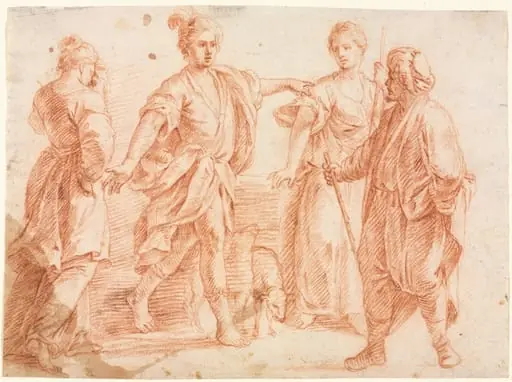
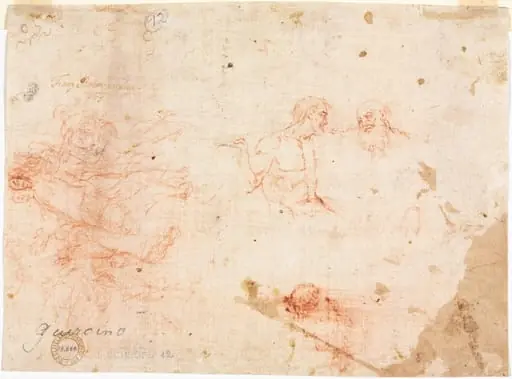
This double-sided drawing captures a biblical moment on the front, with Jacob, Laban, Rachel, and Leah grouped in a loose, spontaneous composition. The verso bears fragmented figure studies, suggesting the artist used the paper as a working surface. The warm, aged paper and soft, smudged lines indicate a rapid, unpolished approach, as if the artist was exploring forms rather than producing a finished work.
Subject & Meaning
The scene depicts Jacob’s encounter with Laban and his daughters, Rachel and Leah, as described in Genesis. The women’s shared handling of a barrel may reference the water jar from the biblical narrative, symbolizing domestic labor or the beginning of Jacob’s service to Laban. The figures’ proximity and unposed stance suggest a moment of quiet transition, not grand ceremony, emphasizing human interaction over narrative drama.
Technique & Style
The drawing employs light, fluid lines with subtle smudging to suggest volume and movement. The artist avoided sharp contours, favoring a tactile, immediate quality. The unfinished areas and overlapping strokes reveal a process of discovery, not resolution. The warm tone of the paper enhances the softness of the graphite or chalk, reinforcing the sense of a fleeting observation rather than a formal composition.
History & Provenance
The drawing’s origin is tied to an artist who routinely reused paper for preliminary studies. Its survival suggests it was preserved not as a finished work but as part of a personal sketchbook or archive. No documented ownership before the 19th century exists, and its current location reflects institutional acquisition from a private collection, likely in the late 1800s or early 1900s.
Context
During the period this was made, artists often used the reverse of sheets for informal sketches, treating paper as a tool rather than a final surface. This practice was common among draftsmen refining compositions or testing gestures. The presence of unrefined figures on the verso aligns with contemporaneous studio habits, where spontaneity and repetition served as pathways to formal development.
Legacy
Though unsigned and undated, the drawing exemplifies how preparatory work contributed to Renaissance and Mannerist figure studies. Its unpolished nature offers insight into the artist’s thought process, contrasting with polished finished works. Today, such sketches are valued for their honesty, revealing the quiet labor behind more resolved compositions.
Artist & collection

 Domestic Scene
 Giacomo and Cardinal Marco, investing Andrea, Abbot of San Zeno, with his Benefice
 The Nymph of Fontainebleau
 Portrait of a Woman
 Madonna and Child with Saints in the Enclosed Garden
 Venus and Minerva
 Family Group of Four on Sofa
 Wall painting from Room H of the Villa of P. Fannius Synistor at Boscoreale
 Jacob and Laban with Rachel and Leah (recto)
 Joseph and Child (recto); Fragment of Two Figures (verso)
 Sketch of Two Men and Other Various Figures (verso)
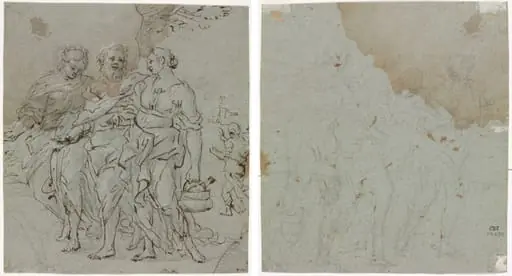 Lot and His Daughters (recto); Sketch for Lot and His Daughters (verso)
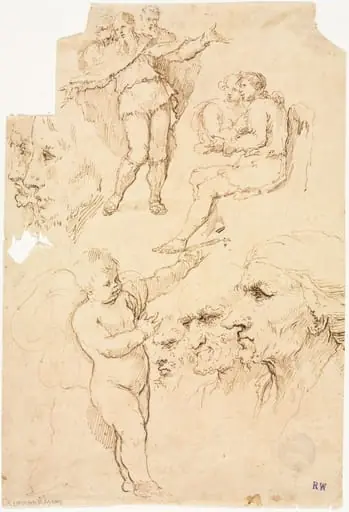 Sketches of Heads and Figures
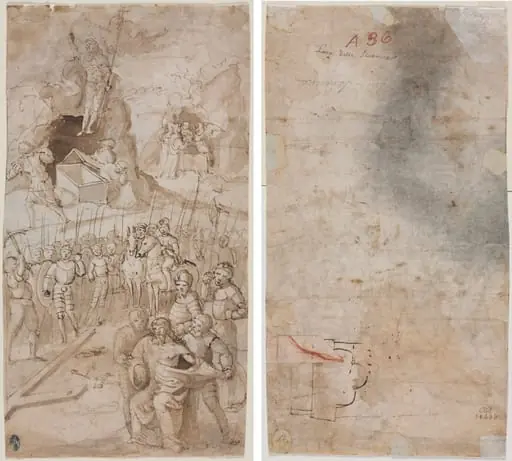 Three Scenes from the Passion of Christ (recto); Architectural Sketch (verso)
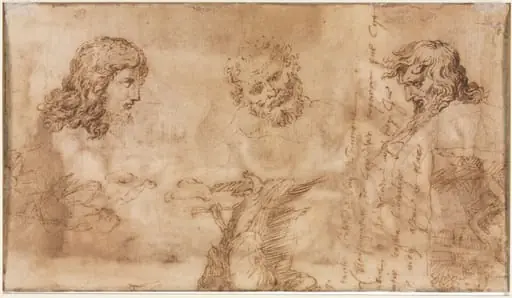 Three Heads and Other Sketches (verso)
 Apollo Flaying Marsyas (recto); Two Sketches of a Mother and Child (verso)