Artwork
John Philip Kemble as Hamlet
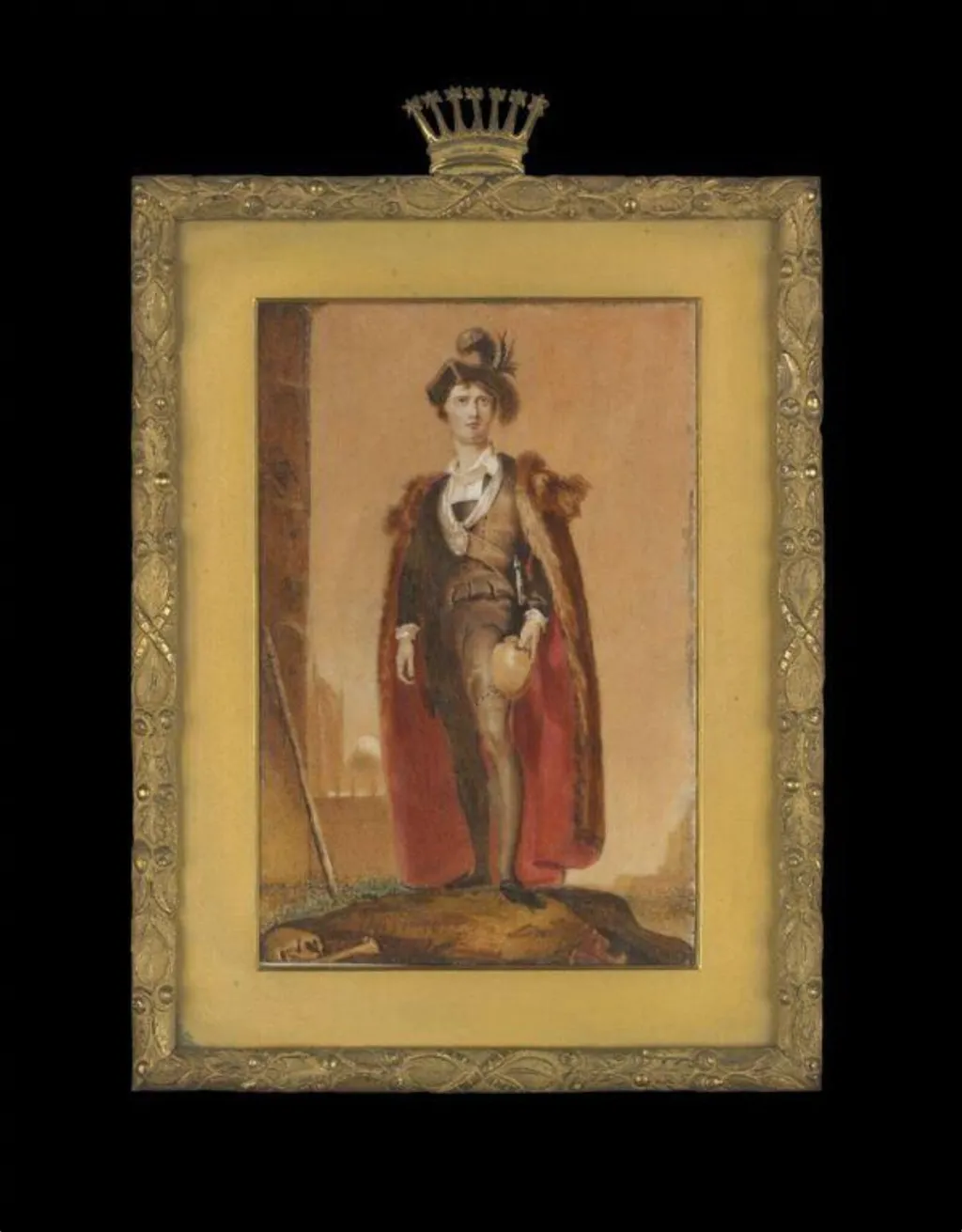
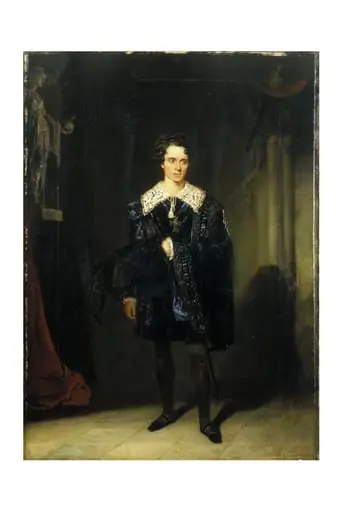
John Philip Kemble as Hamlet is a paint painting by Unknown. It dates from 1850 and is held in the collection of the Victoria and Albert Museum. The work is a mid‑19th‑century portrait painting that presents the celebrated actor John Philip Kemble in costume as Hamlet.
About this work
He wears a black hat adorned with feathers and stands on a rug, with a sword leaning against a wall behind him.
This painting depicts a man dressed in a brown suit and a red cape, holding a skull in his right hand. He wears a black hat adorned with feathers and stands on a rug, with a sword leaning against a wall behind him.
The man's attire and the skull he holds suggest that he is portraying a character from a play, possibly Hamlet. The painting's style and the man's costume are reminiscent of the early 19th century.
If you're interested in learning more about the artist's use of chiaroscuro, a technique that uses strong contrasts between light and dark to create a sense of volume and depth, you can explore the works of other artists who have mastered this technique.
Overview
The work is a mid‑19th‑century portrait painting that presents the celebrated actor John Philip Kemble in costume as Hamlet. Executed circa 1850 by an unidentified hand, the canvas captures the theatrical figure in a dramatic pose, emphasizing his role in Shakespeare’s tragedy.
Subject & Meaning
Kemble is shown holding a skull, a direct reference to the famous “Alas, poor Yorick” moment in Hamlet. The inclusion of the prop underscores the play’s meditation on mortality and the actor’s embodiment of the prince’s existential crisis.
Technique & Style
The composition employs strong contrasts of light and shadow, lending a three‑dimensional quality to the figure and his surroundings. The brown suit, red cape, and feathered black hat are rendered with a level of detail that reflects early‑19th‑century costume painting, while the chiaroscuro effect enhances the somber mood.
History & Provenance
Created around 1850, the painting’s origin remains obscure, with no documented artist attribution. Its association with Kemble, a leading stage figure of the period, suggests it may have been commissioned for a theatrical collection or private patron interested in commemorating the actor’s iconic performance.
Context
During the early 1800s, portraiture of actors in character was a popular means of celebrating theatrical achievements. This work fits within that tradition, aligning with contemporary visual culture that honored performers by depicting them in signature roles, thereby linking visual art and the stage.
Artist & collection

 Domestic Scene
 Giacomo and Cardinal Marco, investing Andrea, Abbot of San Zeno, with his Benefice
 The Nymph of Fontainebleau
 Portrait of a Woman
 Madonna and Child with Saints in the Enclosed Garden
 Venus and Minerva
 Family Group of Four on Sofa
 Wall painting from Room H of the Villa of P. Fannius Synistor at Boscoreale
 Mr. Elliston as Duke Aranza
 Catinca Stavilă-Kogălniceanu
 Le Bailarin ( Don Mariano Camprubi )
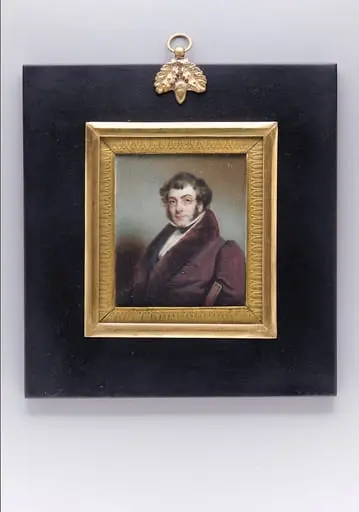 Frederick Gore King
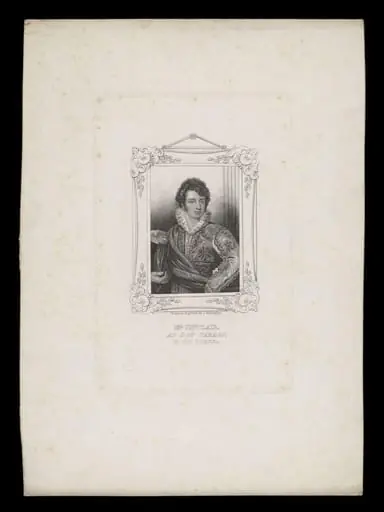 H Beard Print Collection
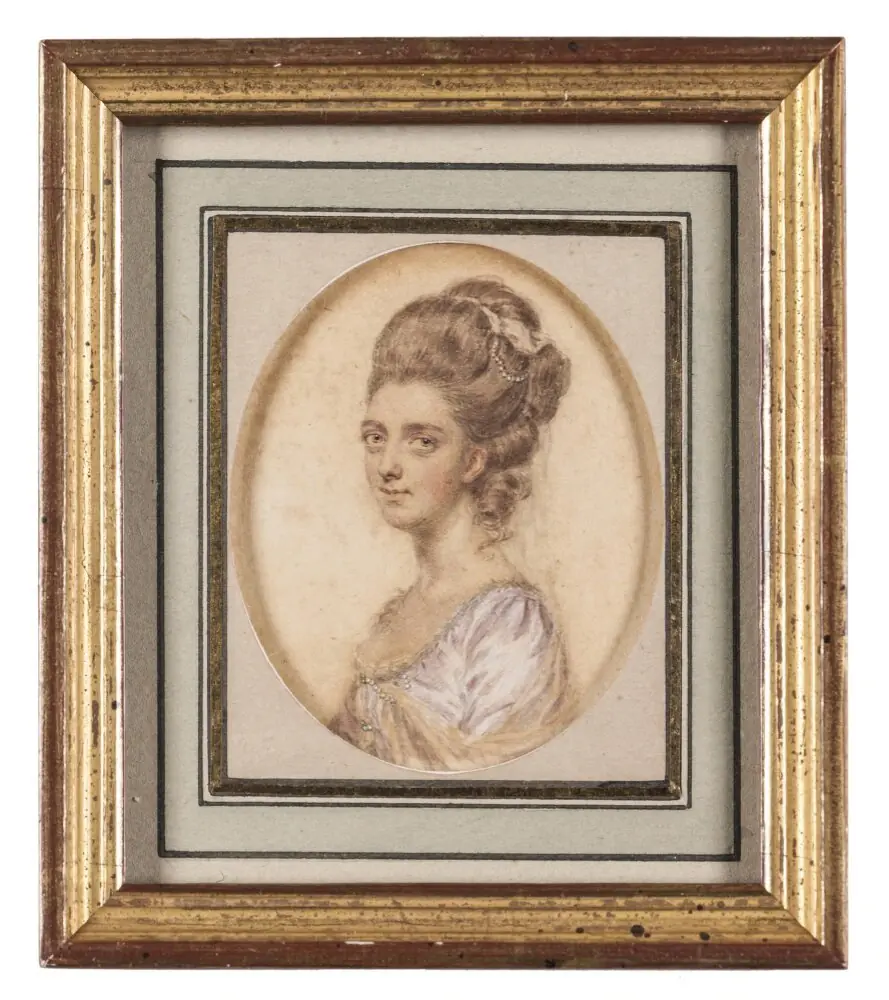 Mrs Berresford
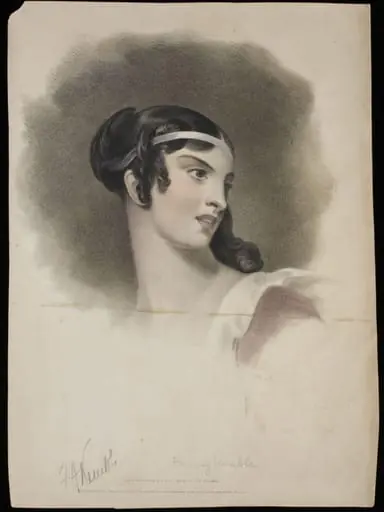 H Beard Print Collection
 Untitled
 Elizabeth Seton (1804-1827), stiftsjungfru, sondotter till Alexander Baron Seton
 H Beard Print Collection
 Guy Little Theatrical Photograph
 Charles Kean as Hamlet in <i>Hamlet</i> by William Shakespeare