Artwork
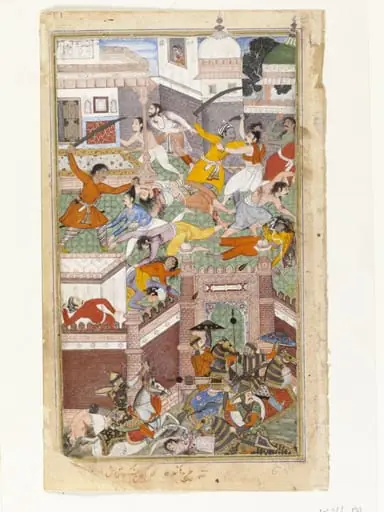
Kali and Devi attack, from a Devi Mahatmya
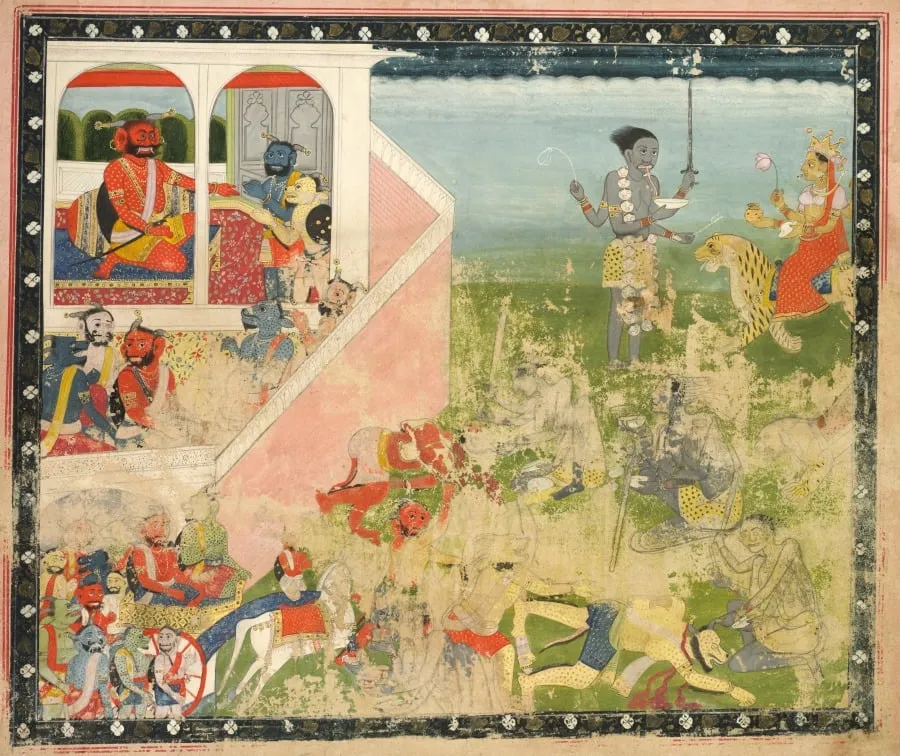
Kali and Devi attack, from a Devi Mahatmya is an unspecified painting by the Mughal Painting artist Unknown. It dates from 1840 and is held in the collection of the Cleveland Museum of Art. This painting illustrates a scene from the Devi Mahatmya, a Hindu text celebrating the goddess Durga’s victories over demons.
About this work
Overview
This painting illustrates a scene from the Devi Mahatmya, a Hindu text celebrating the goddess Durga’s victories over demons.
This painting illustrates a scene from the Devi Mahatmya, a Hindu text celebrating the goddess Durga’s victories over demons. Rendered in subdued tones of green, blue, and red, it depicts a dynamic confrontation between divine and demonic forces. The composition layers figures across foreground and background, with architectural elements framing the upper left. The scene conveys spiritual conflict through crowded, active figures rather than idealized forms.
Subject & Meaning
The painting captures the goddess Kali and Devi in battle against demonic armies, symbolizing the triumph of cosmic order over chaos. Figures on horseback and foot engage in combat, while weapons and shields suggest violent struggle. The white structure with arched windows in the upper left may represent a celestial realm, where divine beings observe the earthly battle. The imagery reinforces the theological theme of divine intervention in human affairs.
Technique & Style
The work employs flat planes of color and minimal perspective, typical of regional Indian manuscript painting traditions. Figures are stylized rather than naturalistic, with attention to symbolic gestures and arrangement over anatomical accuracy. The muted palette and linear detail reflect the conventions of pre-colonial Pahari or Rajasthani schools, not European Romanticism, despite superficial similarities in emotional intensity.
History & Provenance
This image likely originated as a folio in a illustrated manuscript of the Devi Mahatmya, produced in northern India during the 18th or early 19th century. Such manuscripts were commissioned by royal or religious patrons for ritual use or devotional study. Its survival suggests it was carefully preserved, possibly within a temple or aristocratic collection, before entering modern institutional holdings.
Context
Created during a period of flourishing devotional art in northern India, the painting reflects the widespread worship of the goddess Durga as a protector and destroyer of evil. Regional courts supported illustrated texts that combined literary tradition with visual storytelling. Unlike European Romanticism, this work’s emotional power derives from religious narrative, not individual expression or nature worship.
Legacy
As part of a broader tradition of illustrated Hindu scriptures, this painting contributes to the continuity of visual theology in South Asia. It preserves iconographic conventions that remain recognizable in contemporary devotional art. While not widely known outside specialized collections, it remains a vital example of how sacred texts were made tangible through image, sustaining belief across generations.
Artist & collection

 Domestic Scene
 Giacomo and Cardinal Marco, investing Andrea, Abbot of San Zeno, with his Benefice
 The Nymph of Fontainebleau
 Portrait of a Woman
 Madonna and Child with Saints in the Enclosed Garden
 Venus and Minerva
 Family Group of Four on Sofa
 Wall painting from Room H of the Villa of P. Fannius Synistor at Boscoreale
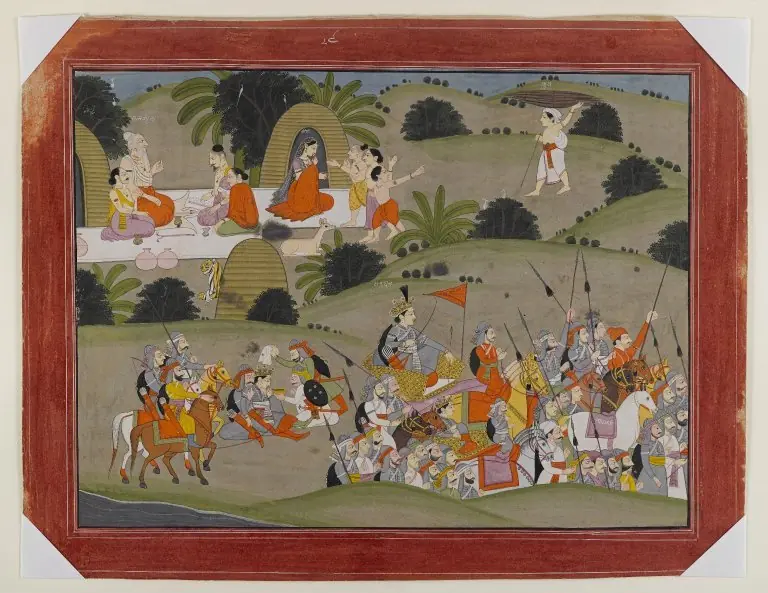 Battle between Lava and Rama's brother, Shatrughna, near the hermitage of Valmiki
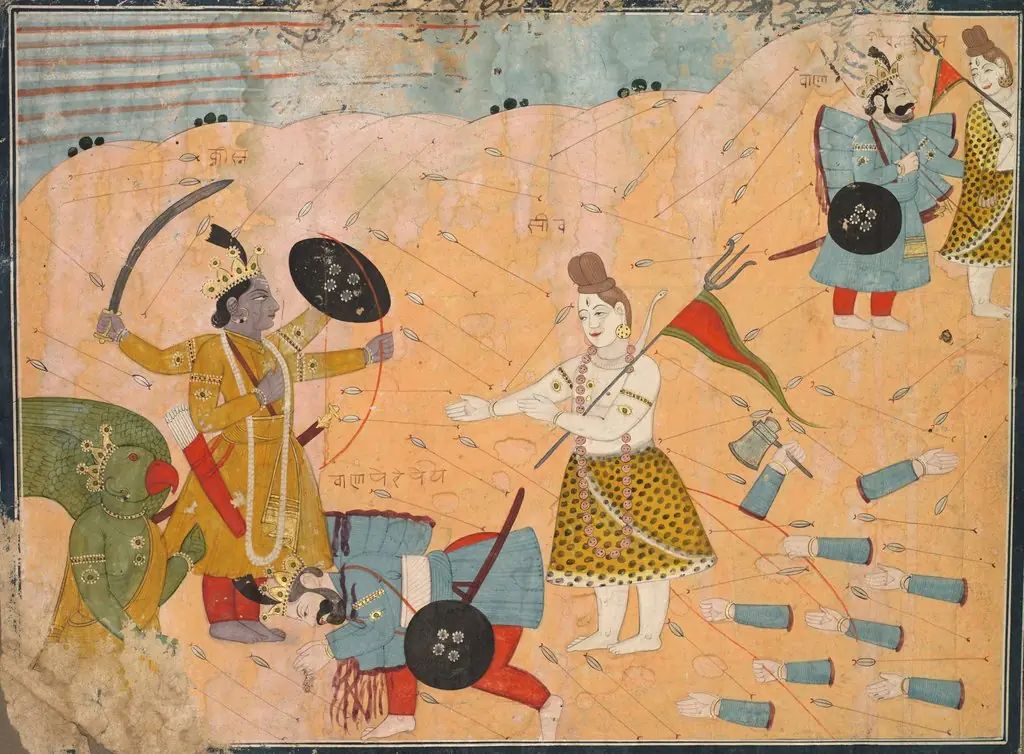 Shiva Intercedes for Vanasura: Scene from the Aniruddha Usha Section of Krishna Lila
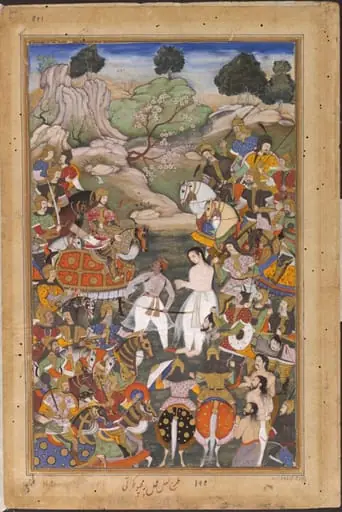 Daud Shah
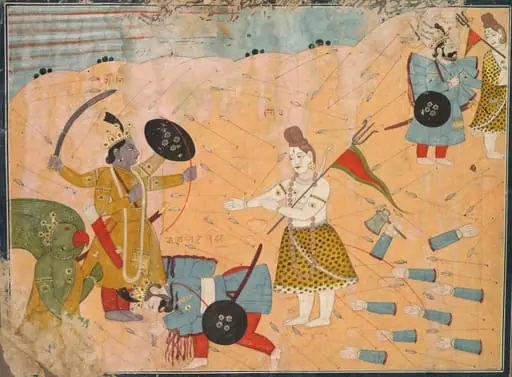 Shiva intercedes for King Bana, from an Usha-Aniruddha
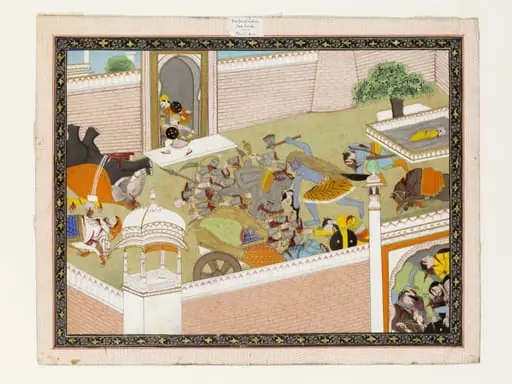 Vishnu as Parasurama
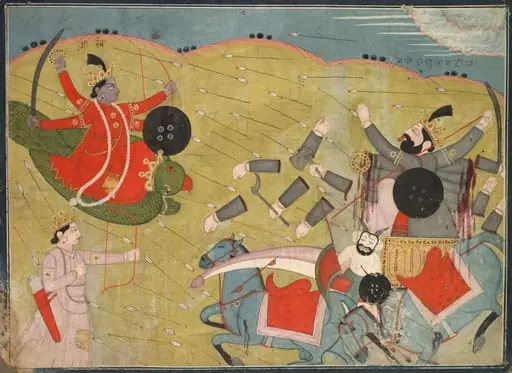 Krishna vanquishing King Bana, from an Usha-Aniruddha
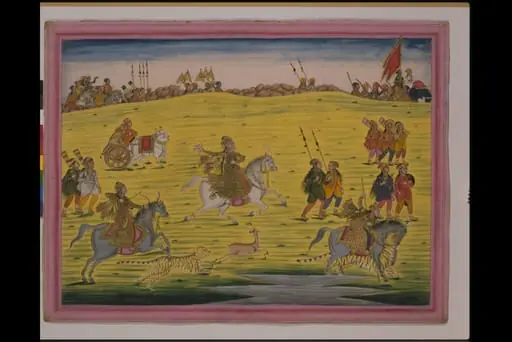 Chand Bibi, with two court ladies
 Untitled
 Four Princes in Procession Visit a Sage, page from a copy of the Ramayana
 Kali Standing on Shiva (verso), from a Kalighat album