Artwork
Daud Shah
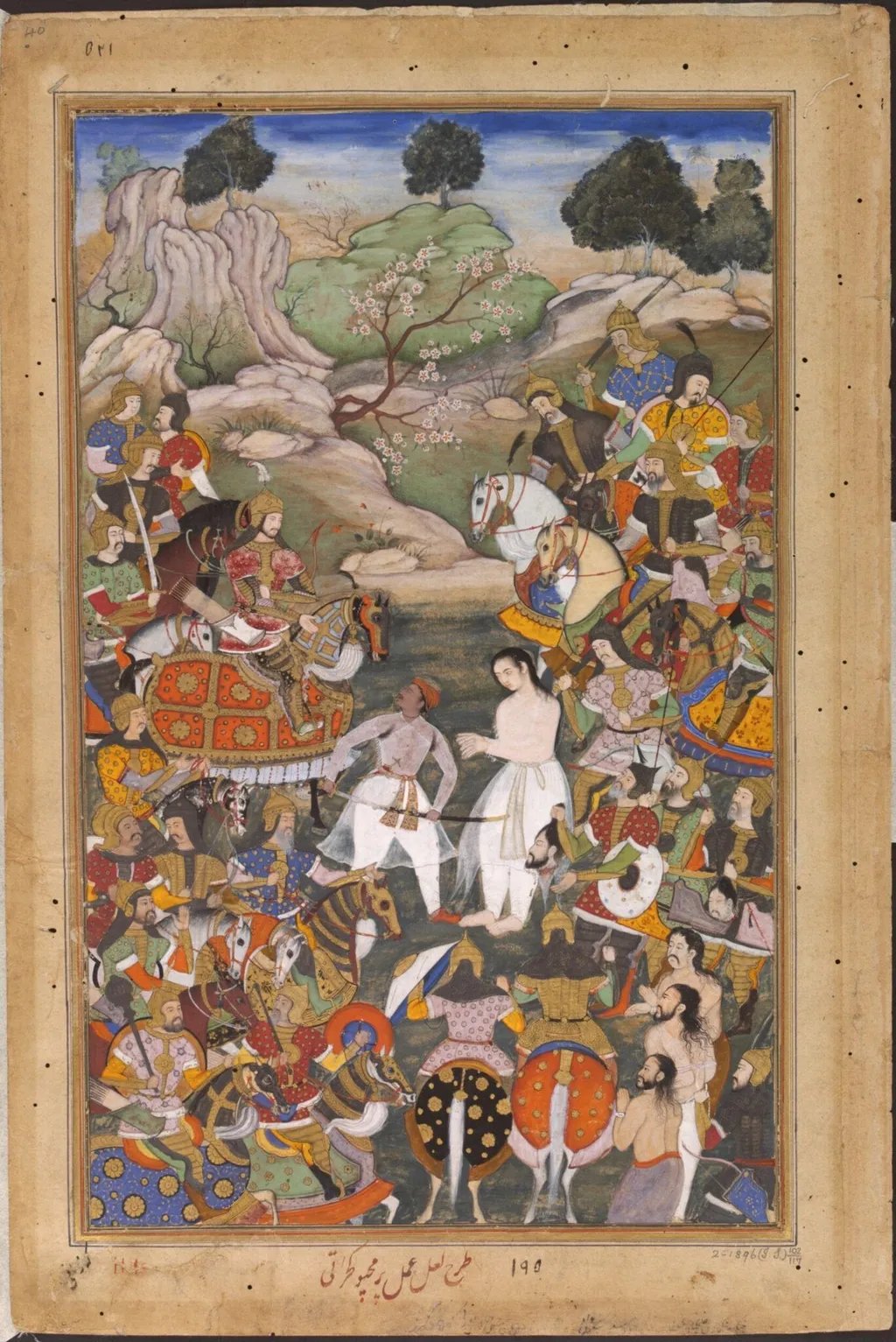
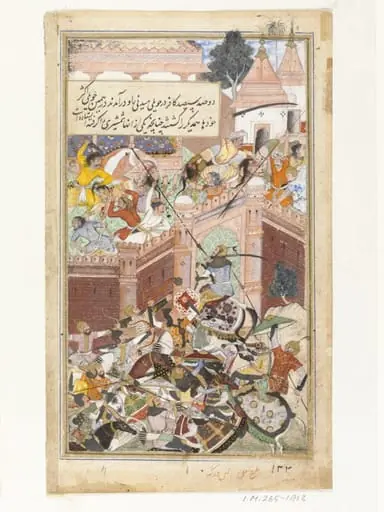
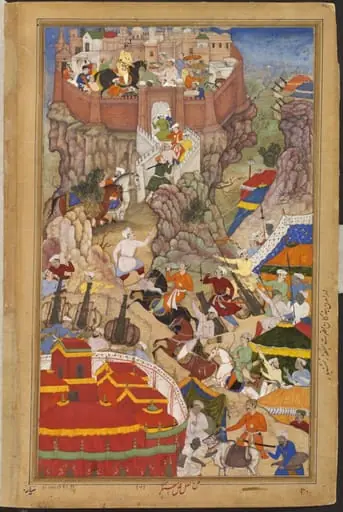
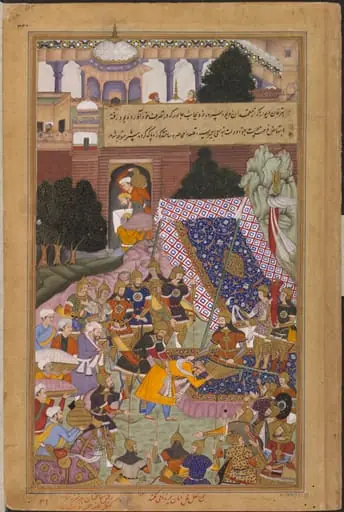
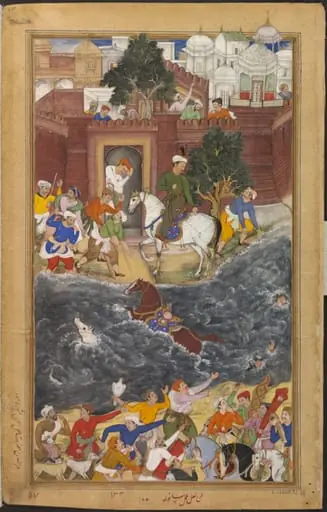
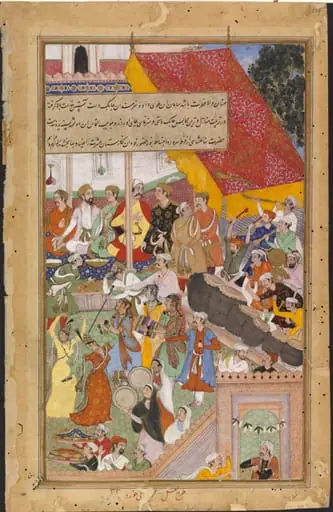
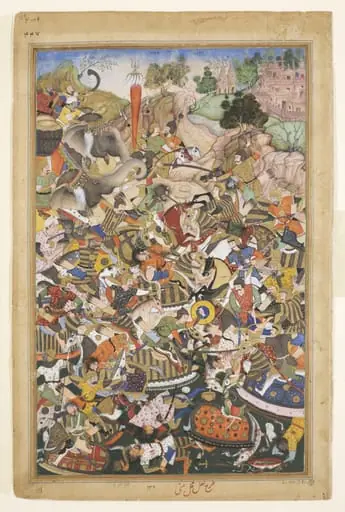
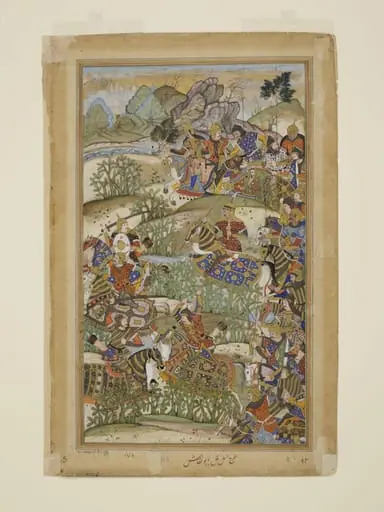
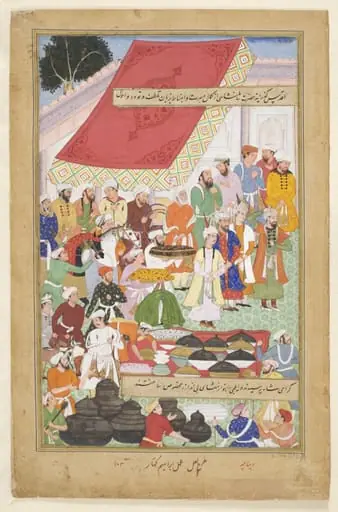
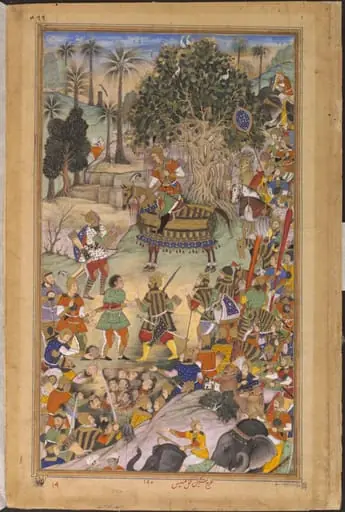
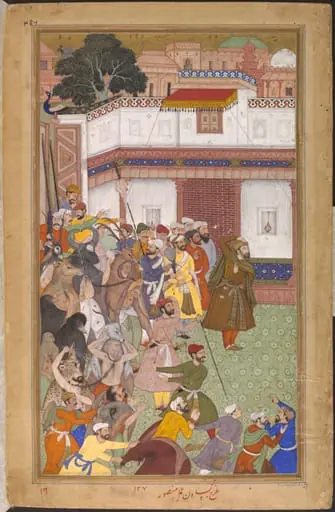
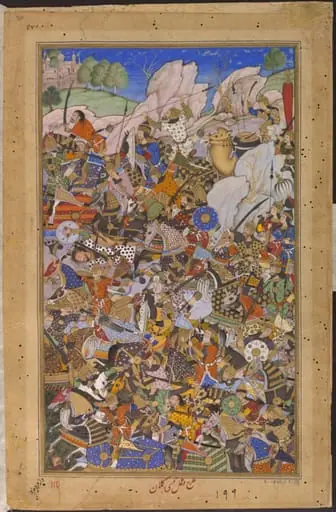
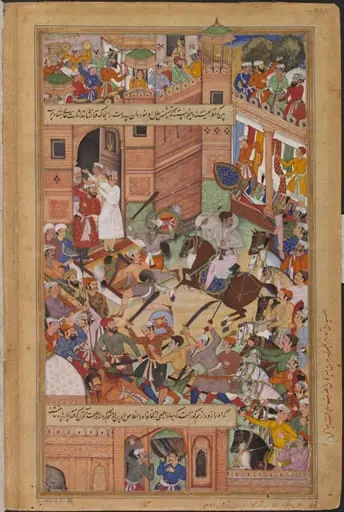
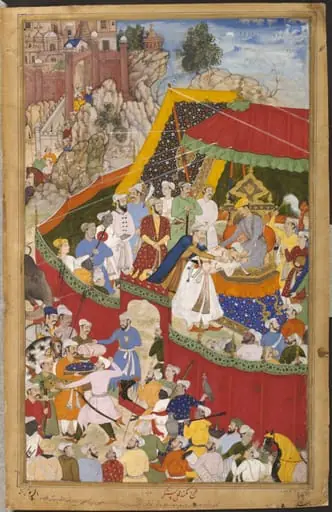
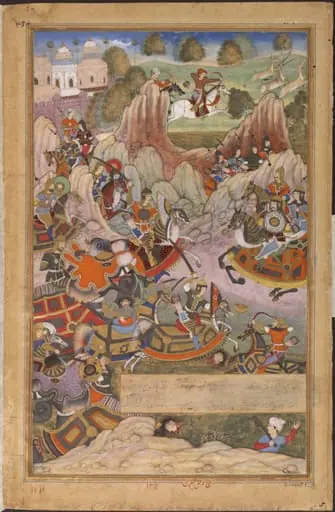
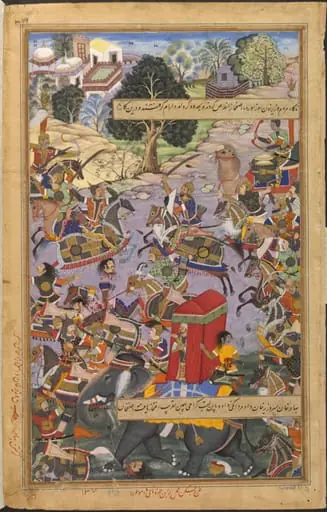
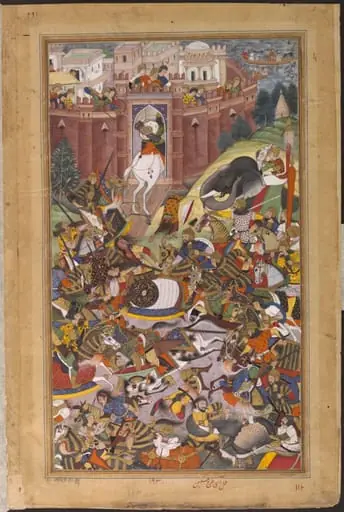
Daud Shah is a paint painting by the Mughal Painting artist La'l. It dates from 1592 and is held in the collection of the Victoria and Albert Museum. This painting is one of many illustrations created for the Akbarnama, the official chronicle of Emperor Akbar’s reign.
About this work
Overview
The work was produced by two artists: La’l composed the overall scene, while Premjiv Gujarati refined the finer details.
This painting is one of many illustrations created for the Akbarnama, the official chronicle of Emperor Akbar’s reign. Executed around 1592–1595, it depicts the capture of Daud Shah, the defeated ruler of Bengal. The work was produced by two artists: La’l composed the overall scene, while Premjiv Gujarati refined the finer details. It belongs to a rare early illustrated manuscript commissioned directly by the Mughal court, now held by the V&A.
Subject & Meaning
The scene captures the moment Daud Shah, bound and central, is subdued by Mughal forces after his defeat. His elaborate attire contrasts with the military precision of his captors, emphasizing his fall from sovereignty. The image serves not merely as documentation but as a visual assertion of Mughal authority, reinforcing Akbar’s legitimacy as ruler through the depiction of conquered rivals. The composition avoids glorification, instead presenting the event with restrained solemnity.
Technique & Style
The painting reflects the refined synthesis of Persian, Indian, and early European influences characteristic of Mughal court art. La’l’s composition employs balanced spatial organization, while Premjiv Gujarati’s detailing includes subtle modeling of fabric and armor. Though not using European sfumato explicitly, the work shows a sensitivity to gradations of light and texture, particularly in the rendering of textiles and horse trappings, suggesting an evolving naturalism in Mughal illustration.
History & Provenance
The manuscript was compiled under Akbar’s patronage between 1590 and 1596, with illustrations completed shortly after. It remained in imperial hands, passing from Akbar to his son Jahangir and later to Shah Jahan. After centuries in the Mughal library, it entered private collection through Major General John Clarke during his service in Oudh. His widow, Frances Clarke, sold it to the V&A in 1896, preserving its lineage from imperial court to public museum.
Context
The Akbarnama was conceived as a state-sponsored historical record, blending political narrative with visual propaganda. Its illustrations were produced by a select group of artists named in Abu’l Fazl’s A’in-i Akbari, underscoring their official status. This painting’s inclusion of artist signatures in red ink confirms its status as a royal commission, distinguishing it from later, more commercial copies. The project reflected Akbar’s broader cultural ambitions to document and legitimize his rule through art and literature.
Legacy
As one of the earliest illustrated versions of the Akbarnama, this painting exemplifies the formative phase of Mughal manuscript painting. Its collaborative execution and precise documentation set a precedent for later imperial projects. Though the full manuscript is dispersed, surviving folios like this one remain vital for understanding the intersection of power, historiography, and artistic practice in late 16th-century India.
Artist & collection
Artist
Lal (La'l) sometimes called Lal wa Sarjangal is a town and the administrative center of Lal wa Sarjangal District, Ghor province in central Afghanistan.