Artwork
Kalki
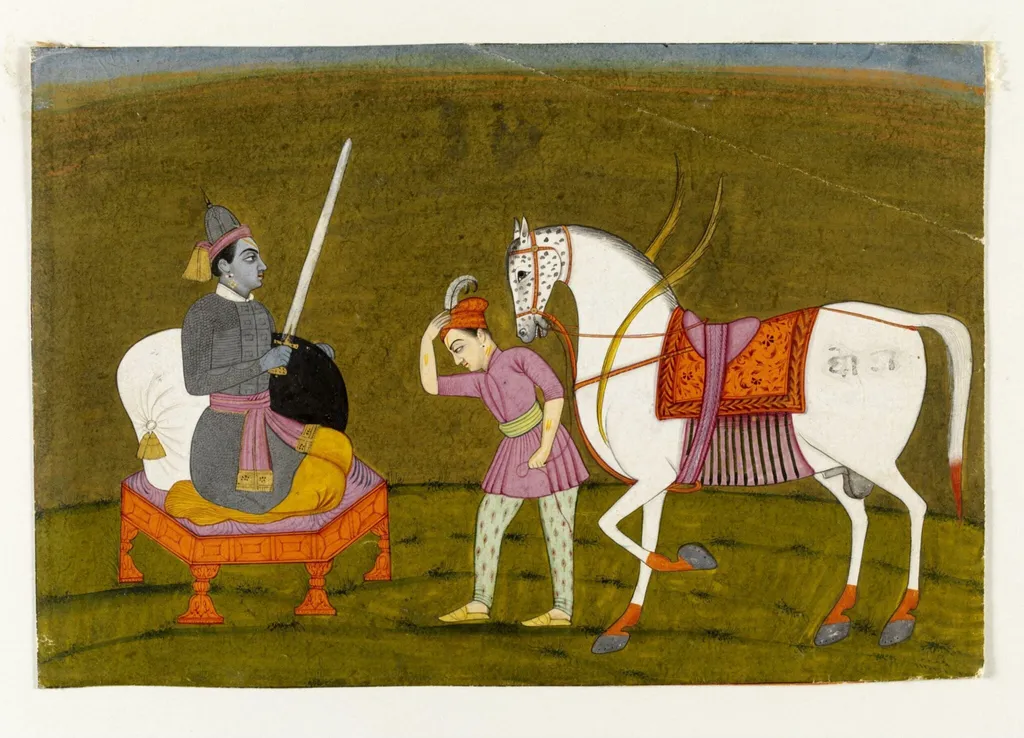
Kalki is a paint painting by the Rococo painting artist Unknown. It dates from 1750 and is held in the collection of the Victoria and Albert Museum.
About this work
Overview
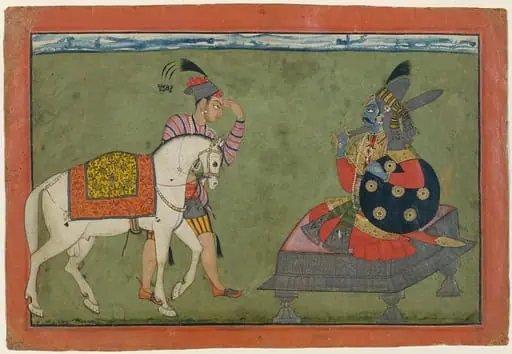
This 18th-century Indian painting, created around 1750, depicts Kalki, the tenth incarnation of the Hindu deity Vishnu. Executed in opaque watercolour and gold on paper, the work captures a serene moment preceding Kalki's destined battle against evil.
Subject & Meaning
The scene portrays Kalki (as Vishnu) seated, armed with a sword, alongside a groom and the white horse that symbolizes Kalki's mount. The composition conveys the impending departure of Kalki on his mission to vanquish wickedness, imbued with a sense of calm resolve.
Technique & Style
The painting features opaque watercolour and gold accents on paper, characteristic of Indian miniature traditions of the time. Vibrant, flat areas of colour (notably orange, pink, green, and blue) and meticulous details (such as the horse's red saddle) demonstrate the artist's skill in this medium.
History & Provenance
The painting is dated to circa 1750. Its current location is the Victoria and Albert Museum, though specific details of its creation, artist, or pre-museum ownership are not provided in the available information.
Context
Created during a period of flourishing Indian miniature painting, this work reflects the artistic and religious practices of 18th-century India, blending mythological narrative with aesthetic traditions.
Legacy
As part of the Victoria and Albert Museum's collection, the painting contributes to the understanding and appreciation of Indian art and Hindu mythology for global audiences, though its individual impact or influence on later art movements is not specifically highlighted in the provided context.
Artist & collection

 Domestic Scene
 Giacomo and Cardinal Marco, investing Andrea, Abbot of San Zeno, with his Benefice
 The Nymph of Fontainebleau
 Portrait of a Woman
 Madonna and Child with Saints in the Enclosed Garden
 Venus and Minerva
 Family Group of Four on Sofa
 Wall painting from Room H of the Villa of P. Fannius Synistor at Boscoreale
 Untitled
 Untitled
 Akrura Rides toward Dwarka, page from the large Basohli Bhagavata Purana
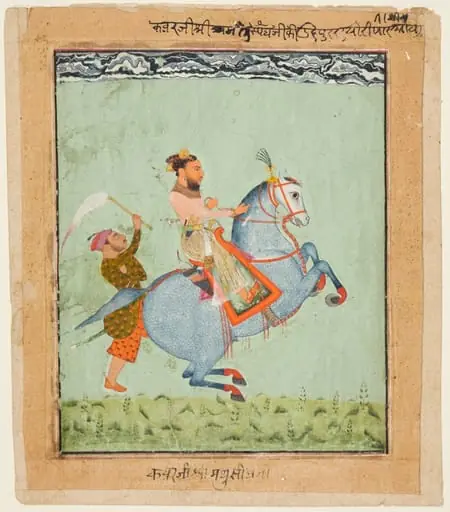 Prince Mathu Singh of Jatoli on a Blue Horse Riding to Udaipur
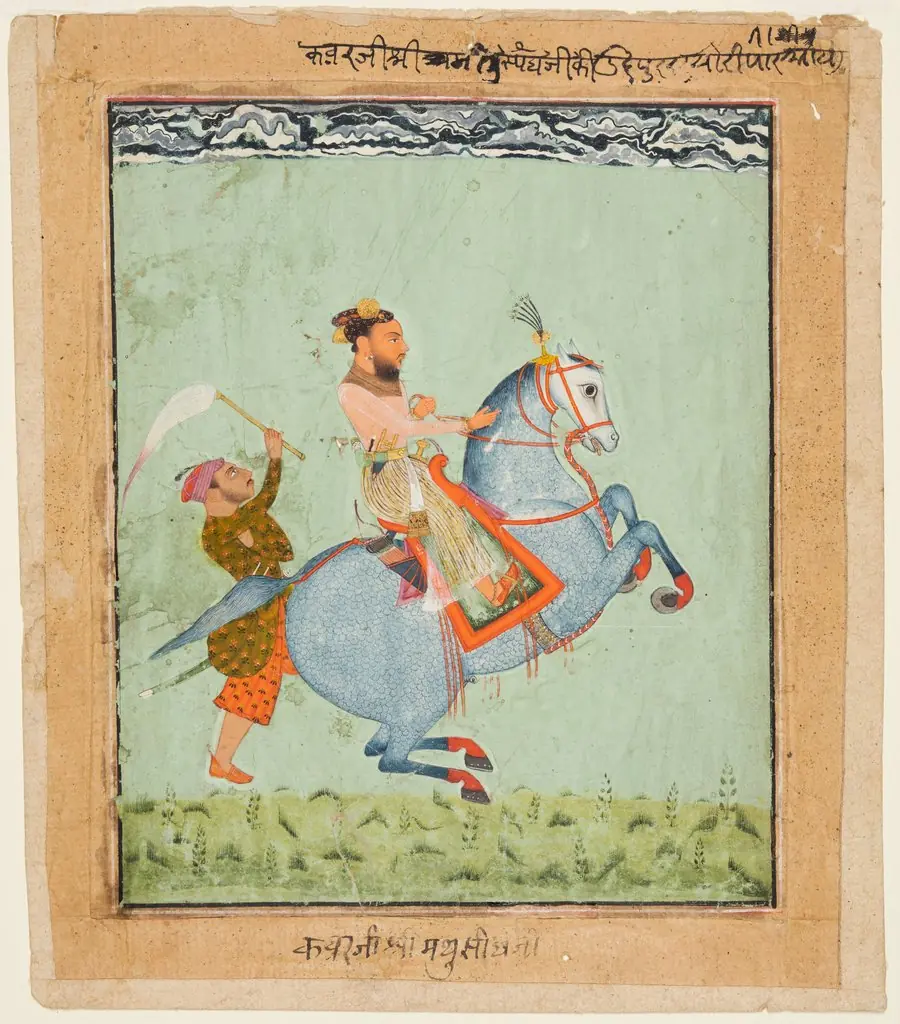 Prince Mathu Singh of Jatoli on a Blue Horse Riding to Udaipur
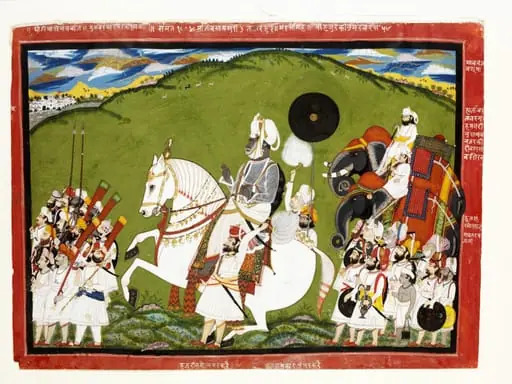 Padam Singh
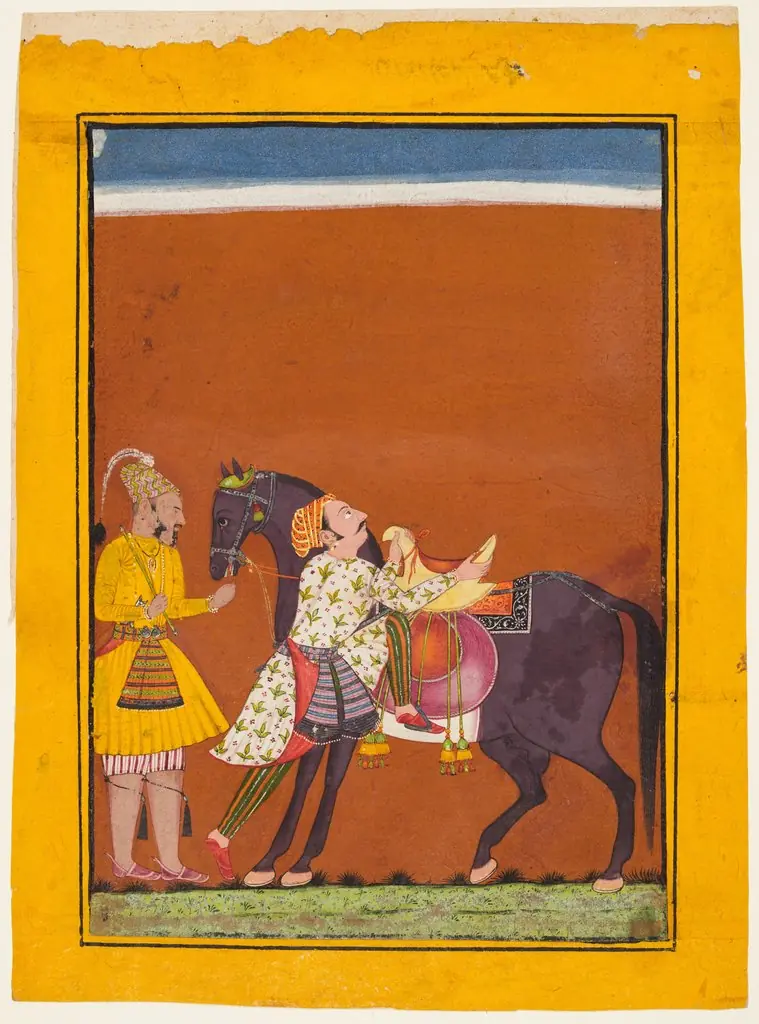 A Warrior Mounting a Held Horse: Saindhava Ragaputra of Shri, from a Chamba Ragamala
 Rukma, Krishna and Rukmini
 Untitled
 Kaksi haahkaa