Artwork
Kamadeva and Shiva
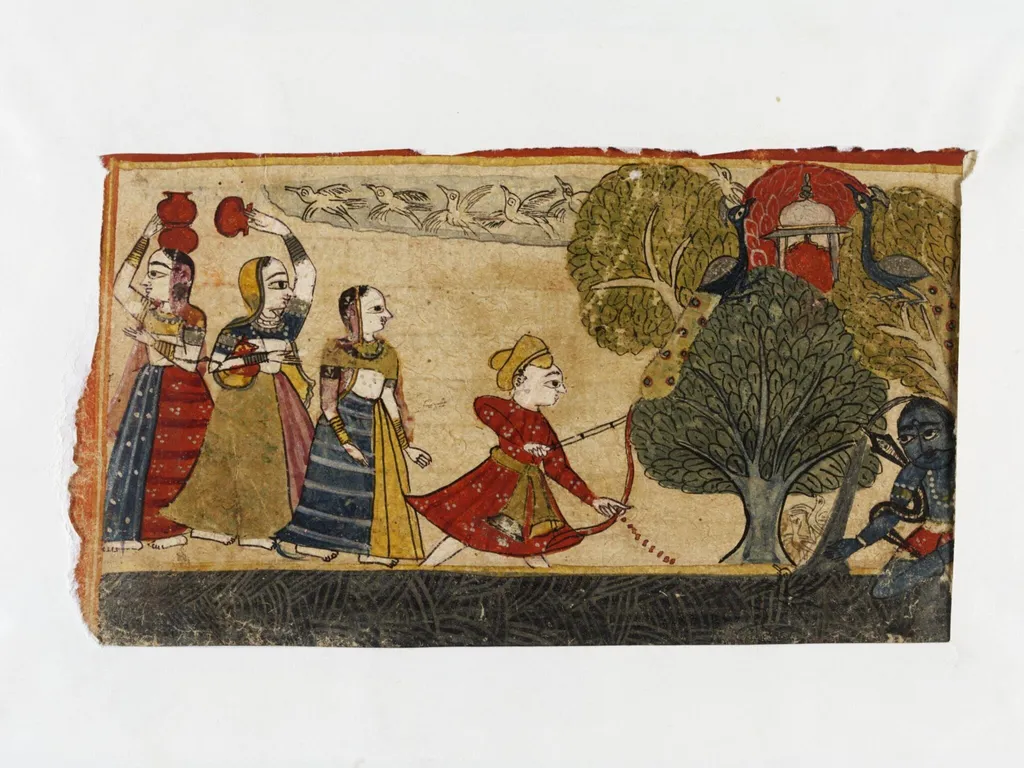
Kamadeva and Shiva is a paint painting by Unknown. It dates from 1750 and is held in the collection of the Victoria and Albert Museum. The work is an opaque watercolor on paper dating to roughly 1750.
About this work
Overview
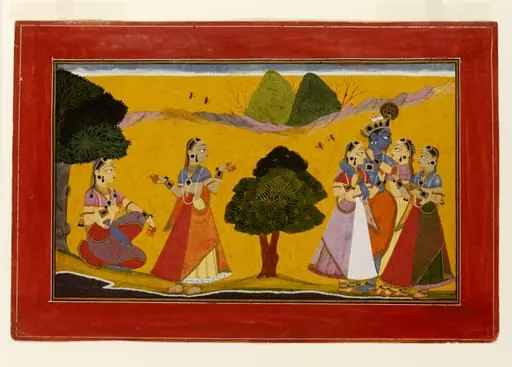
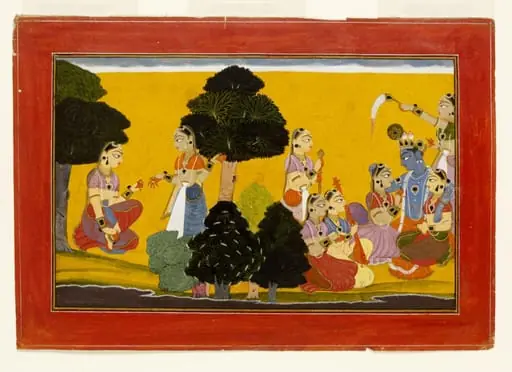
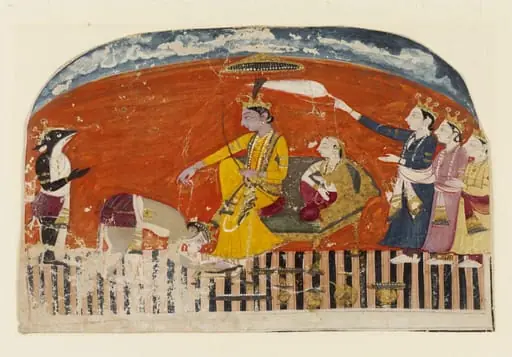
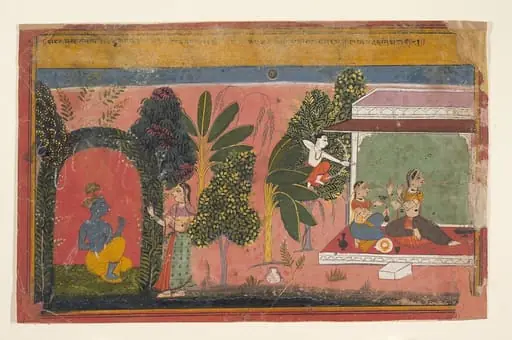
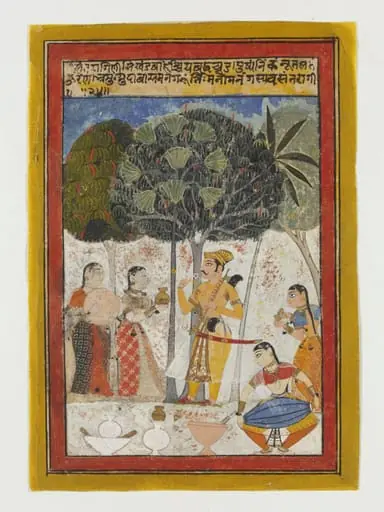
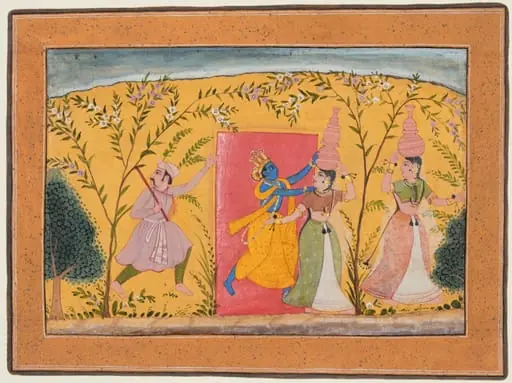
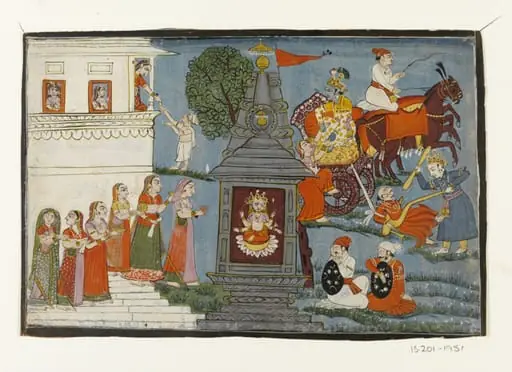
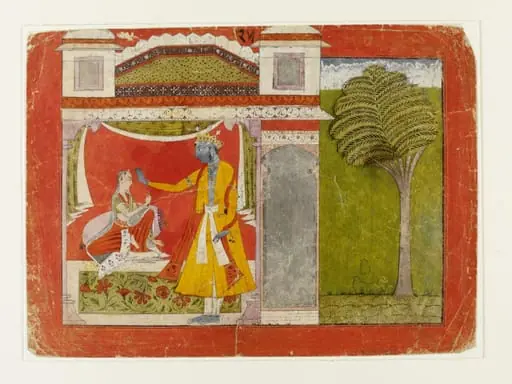
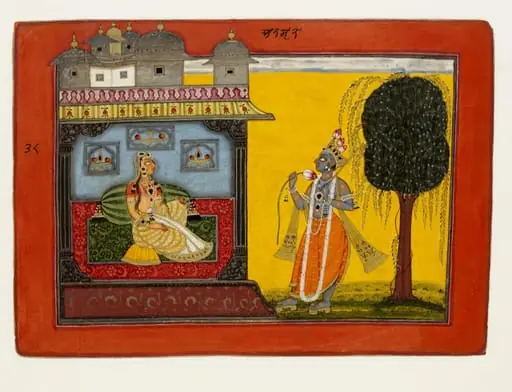
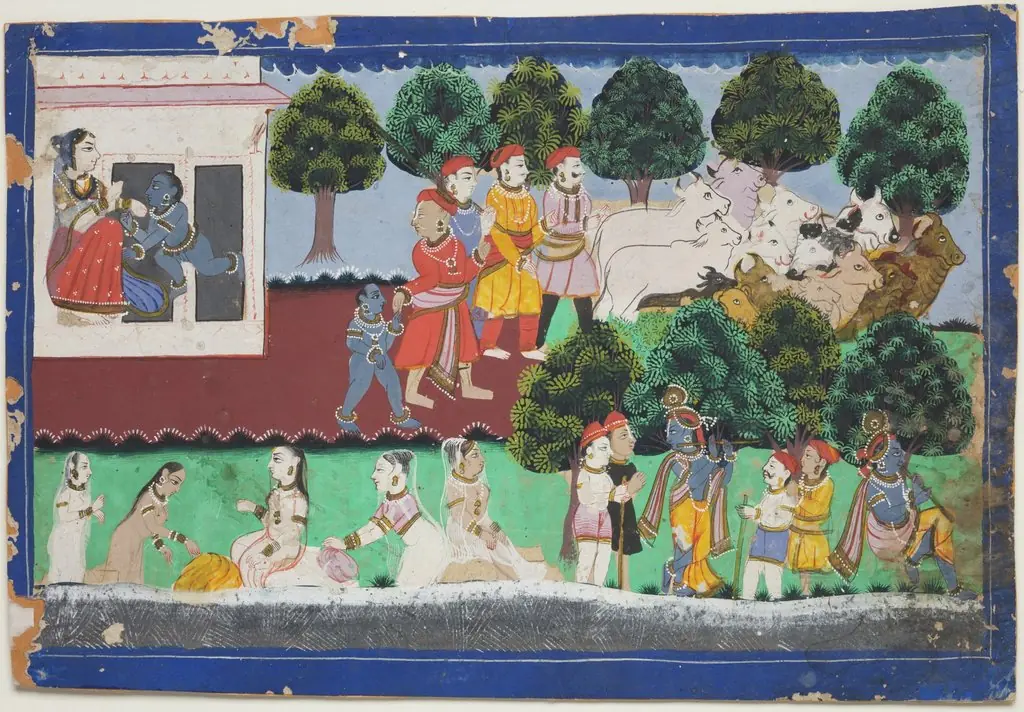
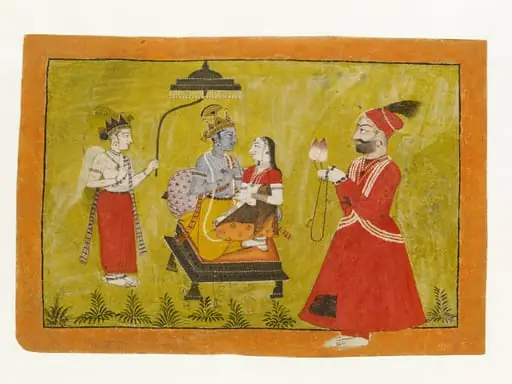
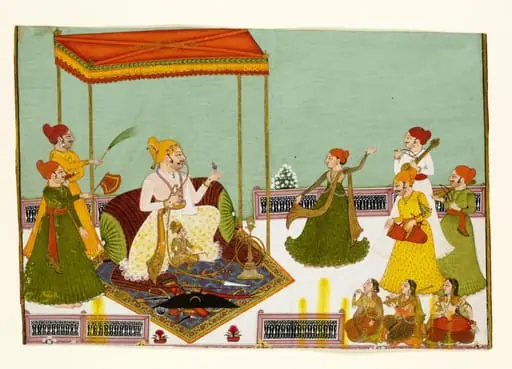
The work is an opaque watercolor on paper dating to roughly 1750. It portrays a mythological encounter in which the god of love, Kamadeva, approaches the ascetic Shiva, who is shown kneeling beside a river. The composition is rendered in flat, vivid hues with a decorative border featuring birds and red vessels.
Subject & Meaning
Kamadeva, identifiable by his bow, advances toward Shiva, a dark‑skinned figure seated near a deer, a traditional symbol of the god’s renunciation. Three female attendants flank Kamadeva, two bearing water jars, suggesting a ritual context. The scene captures the moment before the famed episode in which Shiva burns the love god’s desire.
Technique & Style
Executed in opaque watercolor, the painting employs a fluid, illustrative approach typical of mid‑18th‑century Indian court art. Colors are bold yet have softened with age, giving the surface a faded cloth appearance. The figures are outlined in flat planes, and the background is simplified to a building, trees, and a decorative border, emphasizing narrative over spatial depth.
History & Provenance
Created around 1750, the piece likely originated in a regional workshop serving devotional or courtly patrons interested in Hindu mythological themes. Its later ownership trail is undocumented, but the medium and stylistic traits align it with other Indian watercolor productions of the period.
Context
The depiction draws on the well‑known legend of Kamadeva’s attempt to awaken Shiva’s desire, a story frequently illustrated in Indian art to explore themes of love, asceticism, and divine intervention. The inclusion of attendants with water vessels reflects ritual purity, while the river setting underscores the myth’s natural backdrop.
Artist & collection

 Domestic Scene
 Giacomo and Cardinal Marco, investing Andrea, Abbot of San Zeno, with his Benefice
 The Nymph of Fontainebleau
 Portrait of a Woman
 Madonna and Child with Saints in the Enclosed Garden
 Venus and Minerva
 Family Group of Four on Sofa
 Wall painting from Room H of the Villa of P. Fannius Synistor at Boscoreale