Artwork
Radha and Krishna
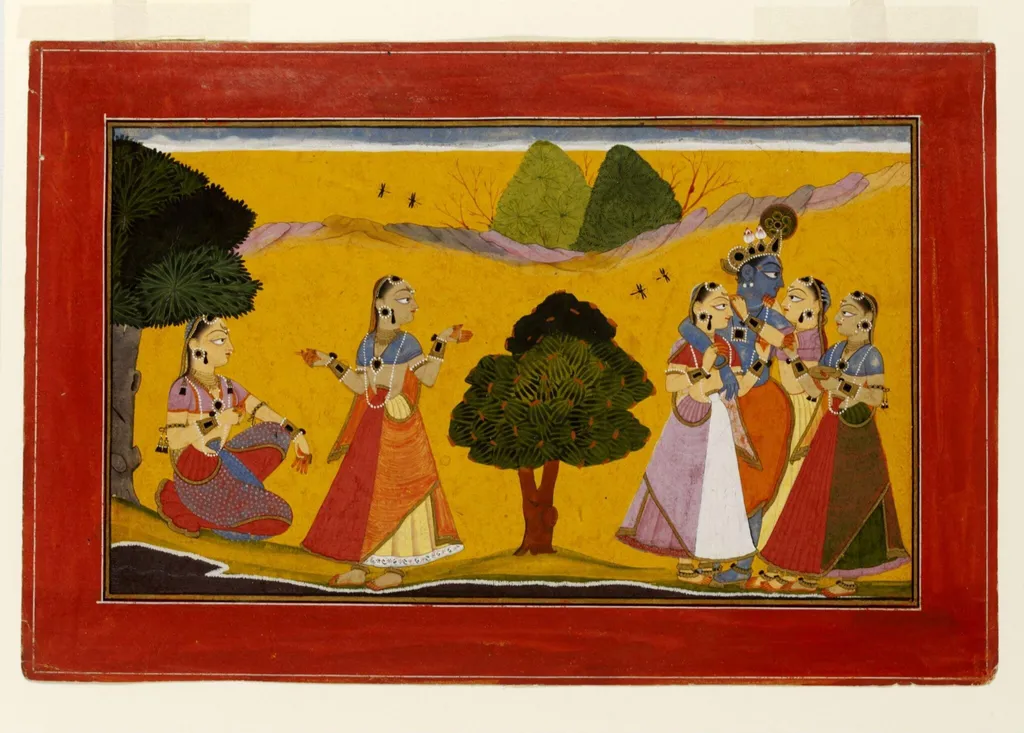
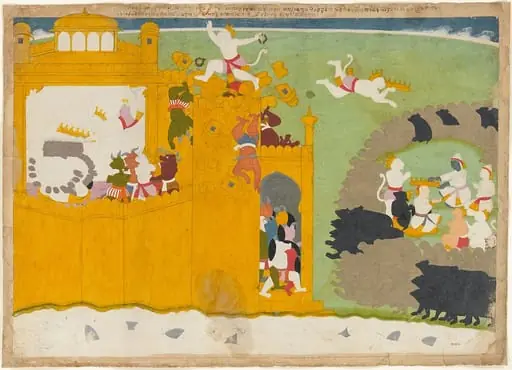
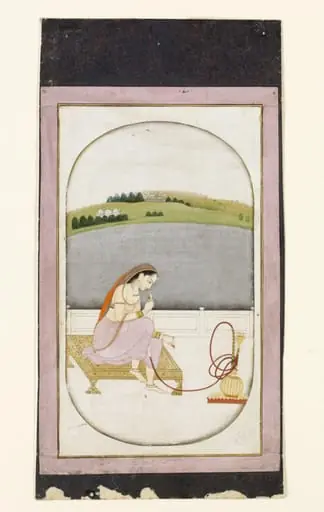
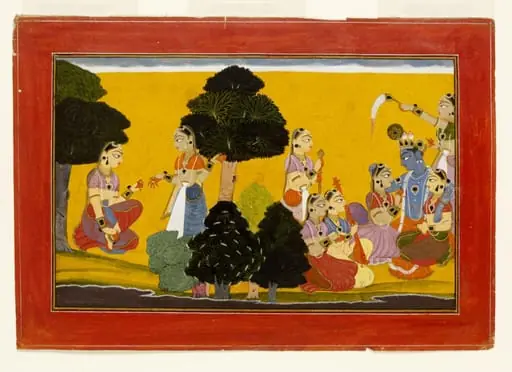
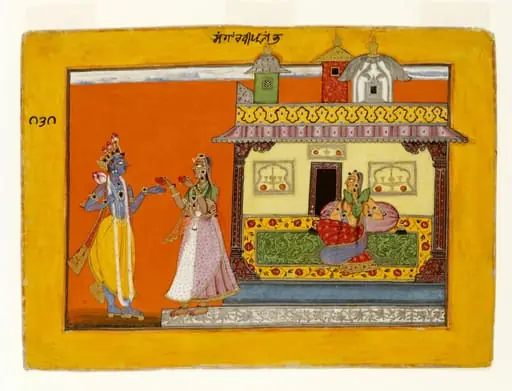
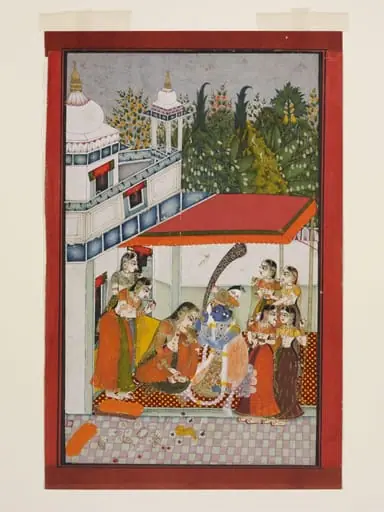
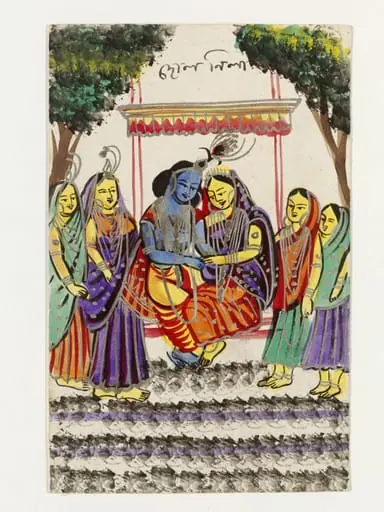
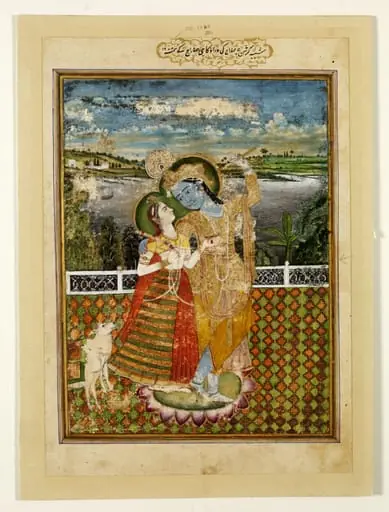
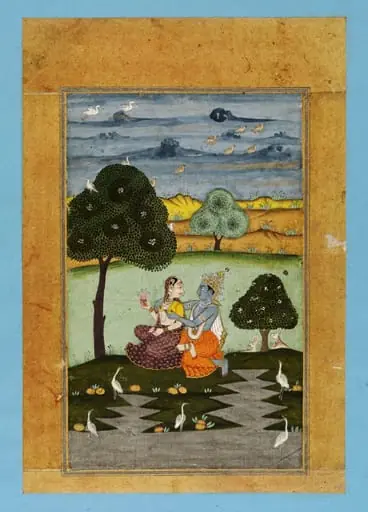
Radha and Krishna is a paint painting by the Baroque artist Manaku. It dates from 1732 and is held in the collection of the Victoria and Albert Museum. This 18th-century Indian painting depicts a scene from the Gita Govinda, a narrative of Krishna's youth.
About this work
Overview
This 18th-century Indian painting depicts a scene from the Gita Govinda, a narrative of Krishna's youth. Radha and Krishna are the central figures, set amidst a spring backdrop with swarming bees.
Subject & Meaning
The painting illustrates a moment where Radha is informed of Krishna's interactions with the gopis. This scene is part of a larger illustrated series of the Gita Govinda, exploring themes of love and devotion.
Technique & Style
The work features innovative materiality, incorporating iridescent green beetle wing-case fragments to represent jewels. The style is characteristic of the Guler school, with possible influences of chiaroscuro, though this specific technique's presence is suggested for further investigation.
History & Provenance
Commissioned in 1730 for a female patron, likely named Malini, the painting is attributed to Manaku, a prominent artist from the Guler family of painters, who worked across various courts in the Punjab Hills.
Context
Created within the broader artistic output of the Guler school in the Punjab Hills, this piece reflects the patronage dynamics of the time, notably highlighting a female patron's influence on the artwork's creation.
Legacy
As part of Manaku's oeuvre and the Guler family's artistic legacy, the painting contributes to the understanding of 18th-century Indian art, particularly the illustration of religious texts for private patrons.
Artist & collection