Artwork
Kanada Raga
Kanada Raga is a paint painting by the Baroque artist Unknown. It dates from 1700 and is held in the collection of the Victoria and Albert Museum.
About this work
Overview
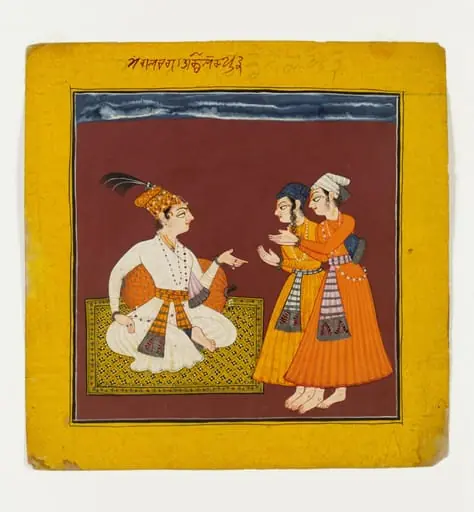
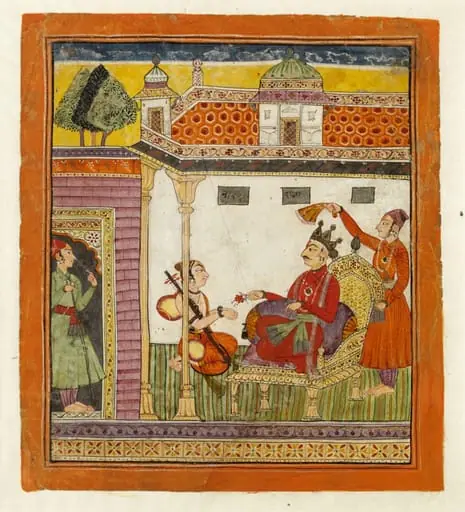
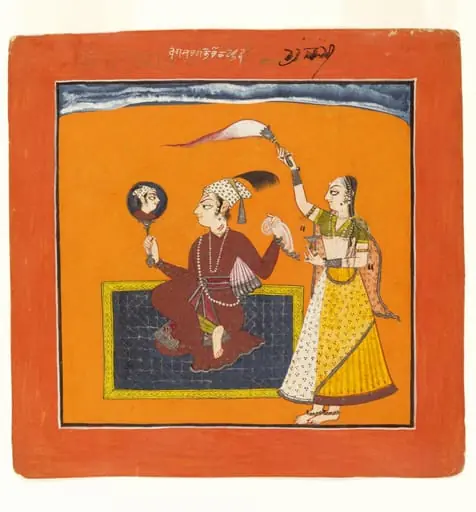
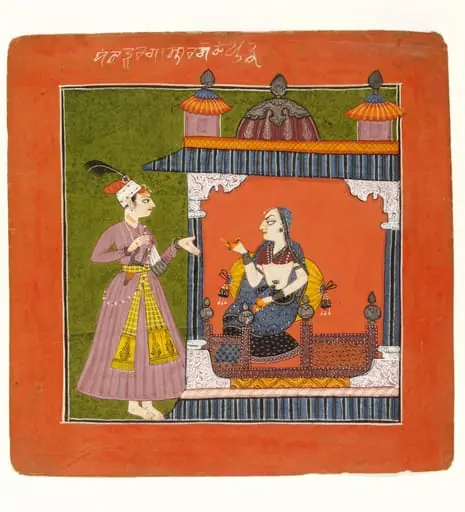
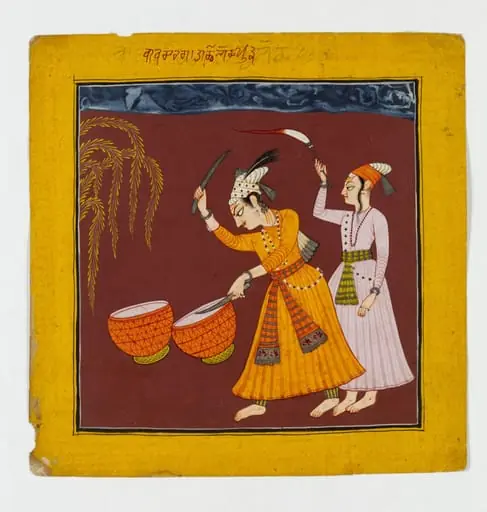
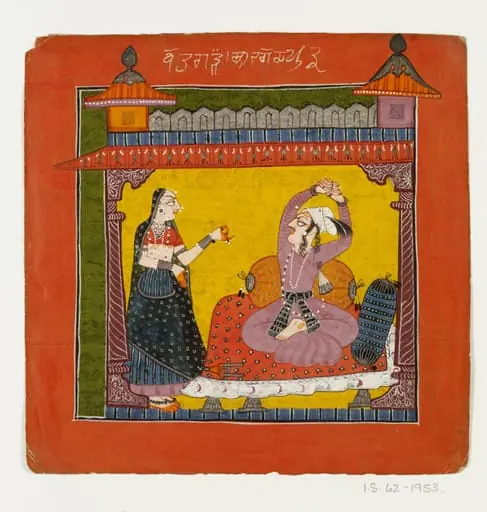
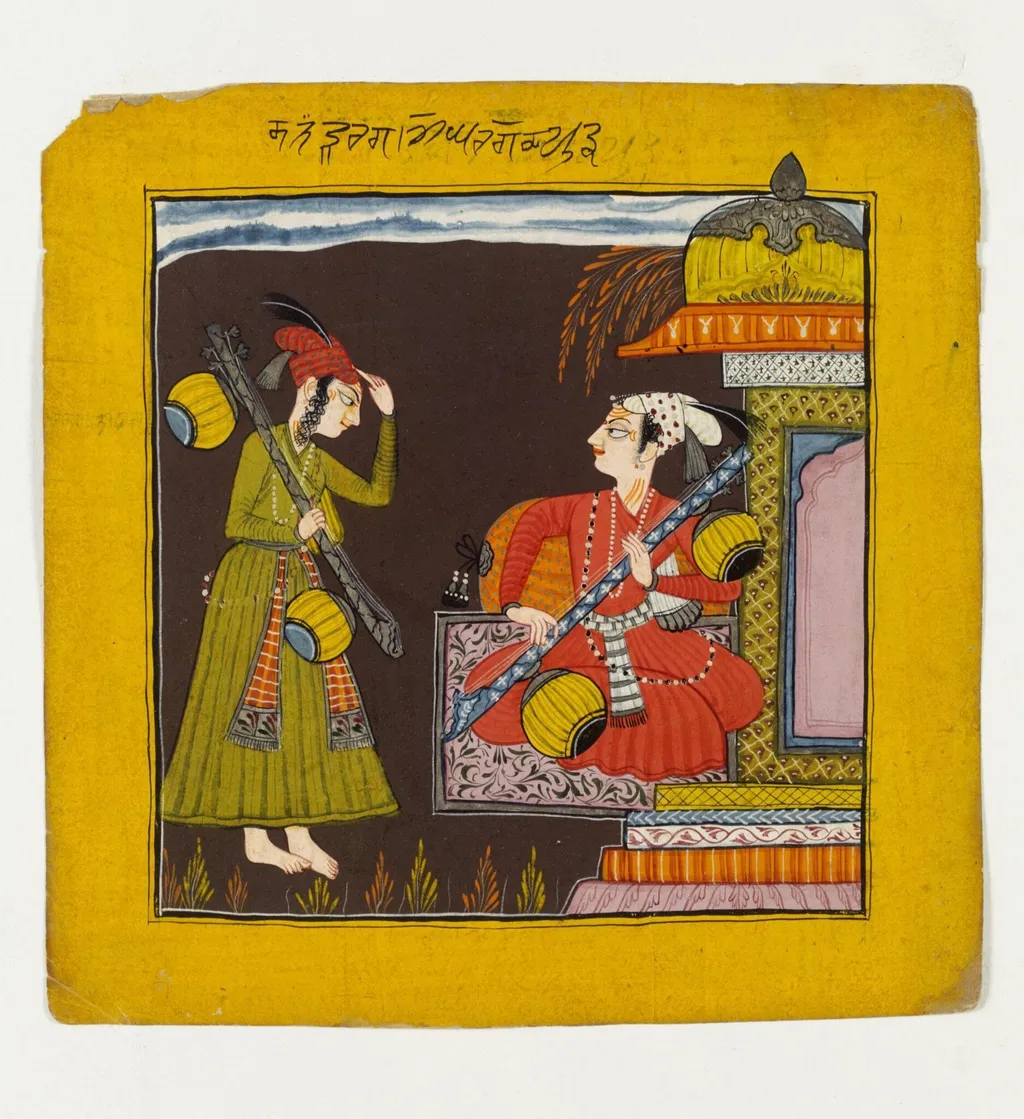
Created around 1700 on paper, this ragamala painting visualizes the Indian musical mode known as Kanada Raga. Two figures—both holding the stringed instrument vina—are positioned within an interior space, one approaching the other, which conveys the raga’s characteristic mood through narrative illustration.
Subject & Meaning
The scene depicts a courtly musician presenting a vina to a seated prince, who is also engaged in playing the same instrument. The interaction reflects the raga’s association with refined, contemplative expression, linking the act of music-making to royal patronage and the aesthetic ideals of the period.
Technique & Style
Executed in fine brushwork on paper, the work employs a richly detailed palette: the left figure wears a green garment with a red turban, while the right figure is dressed in red with a white headband. Both are adorned with jewelry, and the instruments are rendered in vivid colors against a dark brown background, echoing decorative tendencies of the Baroque era.
History & Provenance
The painting originates from the early eighteenth century, a time when ragamala series were popular across the Indian subcontinent. Its survival on paper suggests it was likely part of a private devotional or instructional collection, though specific ownership records are not documented.
Context
Ragamala paintings translate musical modes into visual narratives, a practice that flourished in the Mughal and regional courts. Kanada Raga, known for its plaintive and introspective character, is here embodied through the poised posture of the musicians and the intimate setting of the interior.
Legacy
Works like this illustrate the cross‑modal dialogue between music and visual art in pre‑colonial India, offering insight into how courtly culture codified aesthetic theory. The piece remains a valuable reference for scholars studying the interplay of performance, symbolism, and artistic style in ragamala traditions.
Artist & collection

 Domestic Scene
 Giacomo and Cardinal Marco, investing Andrea, Abbot of San Zeno, with his Benefice
 The Nymph of Fontainebleau
 Portrait of a Woman
 Madonna and Child with Saints in the Enclosed Garden
 Venus and Minerva
 Family Group of Four on Sofa
 Wall painting from Room H of the Villa of P. Fannius Synistor at Boscoreale