Artwork
King Dasaratha and Sumantra
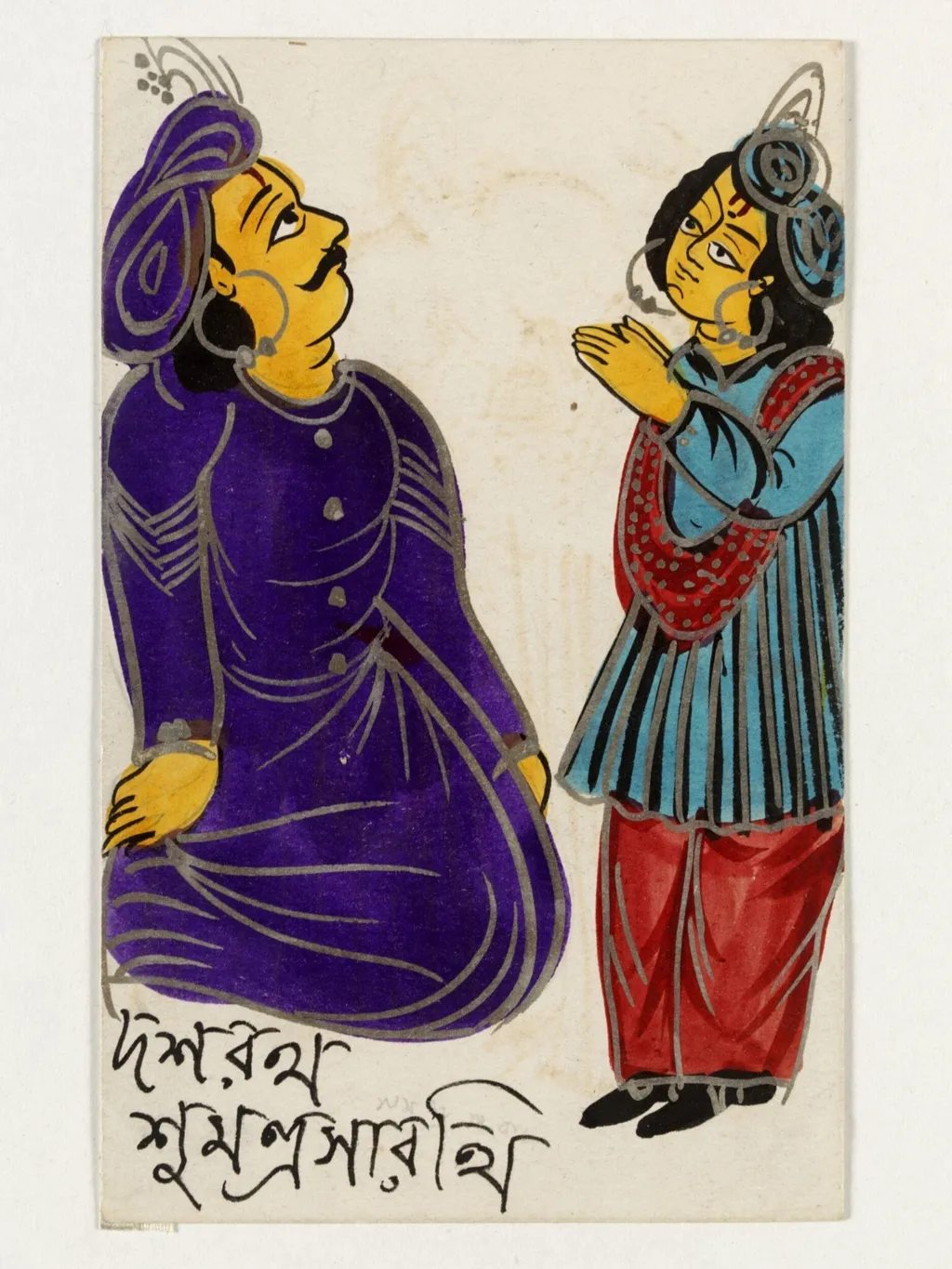
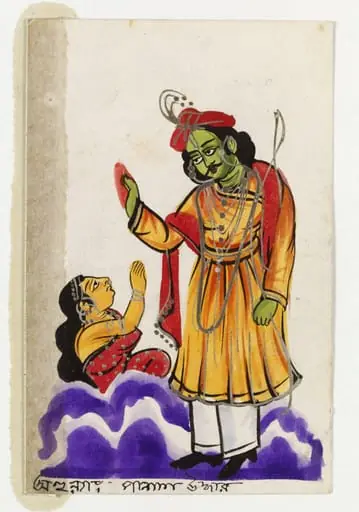
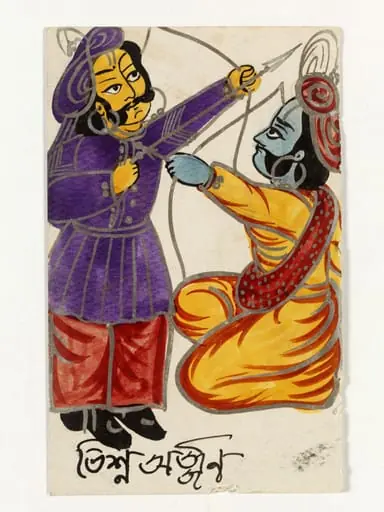
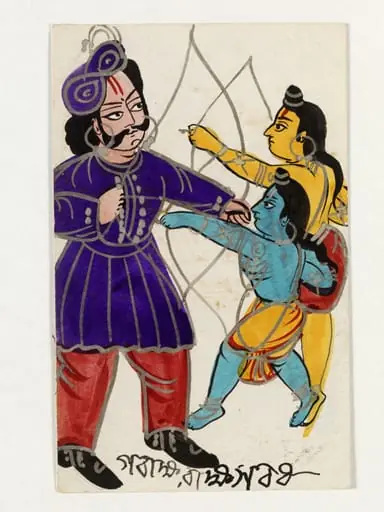
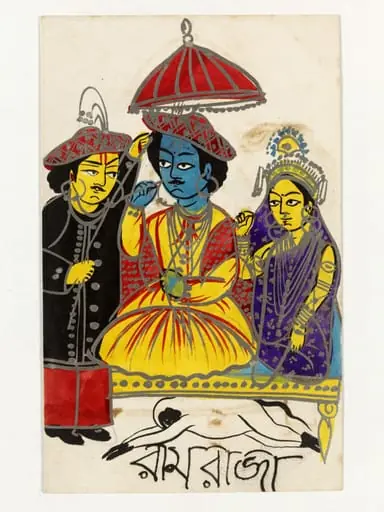
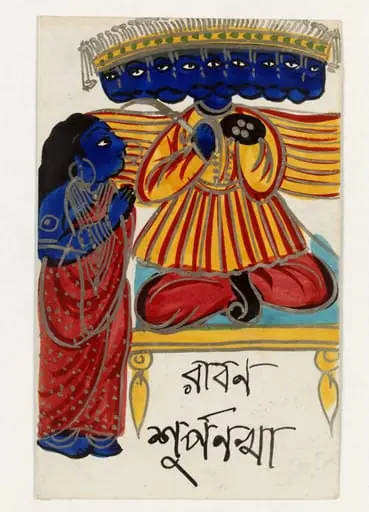
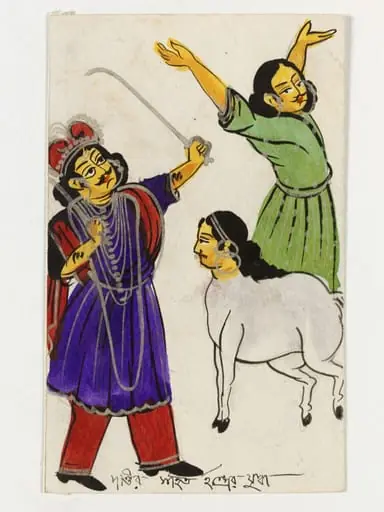
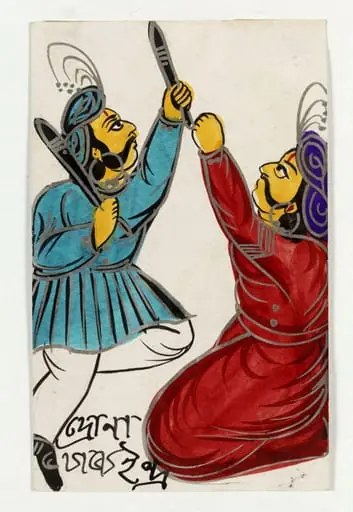
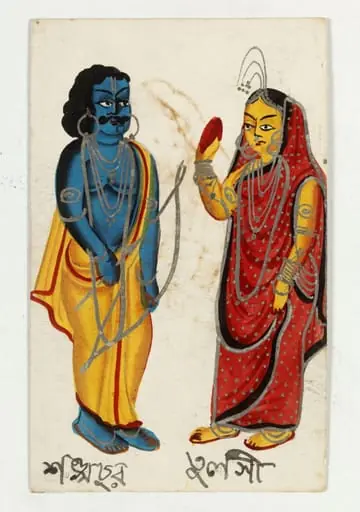
King Dasaratha and Sumantra is a paint painting by the Impressionist artist Unknown. It dates from 1890 and is held in the collection of the Victoria and Albert Museum. Created circa 1890, this work combines watercolour with tin alloy on paper.
About this work
Overview
Created circa 1890, this work combines watercolour with tin alloy on paper. It portrays King Dasaratha seated in a purple costume and turban, while a standing figure, Sumantra, wears a blue top with red and black stripes and red trousers. Both figures look upward, their gestures suggesting a moment of dialogue or revelation.
Subject & Meaning
The composition presents the legendary king of the Ramayana alongside his minister, Sumantra, a scene drawn from Hindu mythology. By focusing on their interaction, the painting emphasizes themes of authority, counsel, and the moral dilemmas that arise in the epic narrative.
Technique & Style
Executed in the Kalighat tradition, the piece employs bright pigments and a simplified, almost schematic rendering of forms. The brushwork is swift, lending a spontaneous quality that merges aspects of Impressionist lightness with a realist attention to costume detail.
History & Provenance
Kalighat painters emerged in the early nineteenth century, catering to a growing urban audience in colonial Calcutta. This painting reflects that lineage, where artists blended indigenous mythological subjects with the visual language shaped by the city's colonial context.
Context
During the 1830s onward, Bengali artists began to depict familiar religious stories while subtly commenting on contemporary social and political conditions. The vivid coloration and directness of the figures echo the popular prints that circulated among the city's diverse populace.
Artist & collection

 Domestic Scene
 Giacomo and Cardinal Marco, investing Andrea, Abbot of San Zeno, with his Benefice
 The Nymph of Fontainebleau
 Portrait of a Woman
 Madonna and Child with Saints in the Enclosed Garden
 Venus and Minerva
 Family Group of Four on Sofa
 Wall painting from Room H of the Villa of P. Fannius Synistor at Boscoreale