Artwork
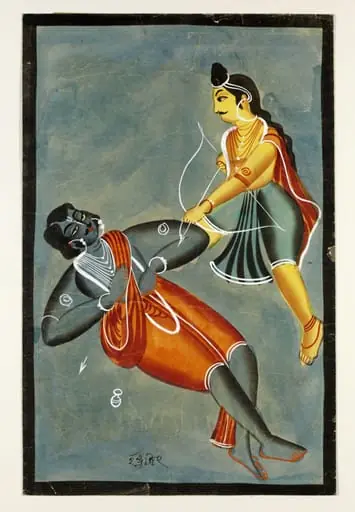
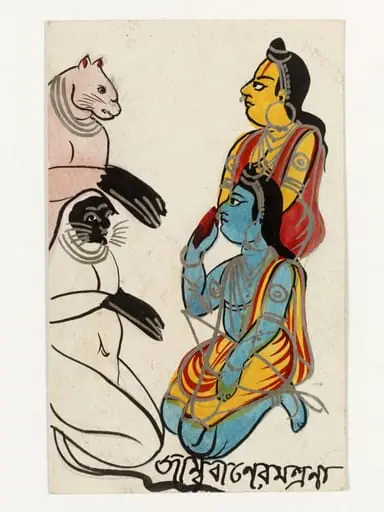
Rama, Lakshmana and Gavaksha
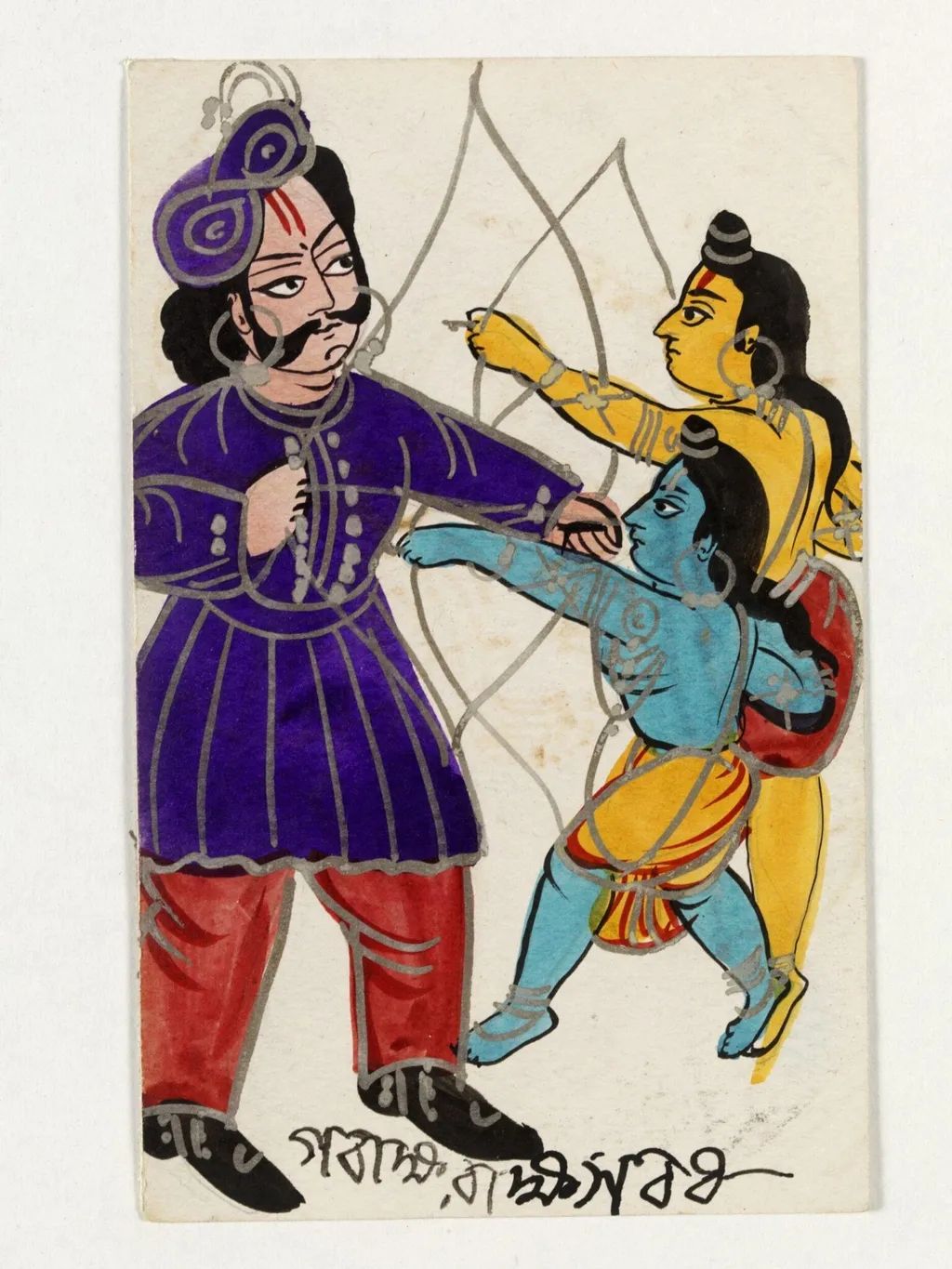
Rama, Lakshmana and Gavaksha is a paint painting by the Impressionist artist Unknown. It dates from 1890 and is held in the collection of the Victoria and Albert Museum.
About this work
Overview
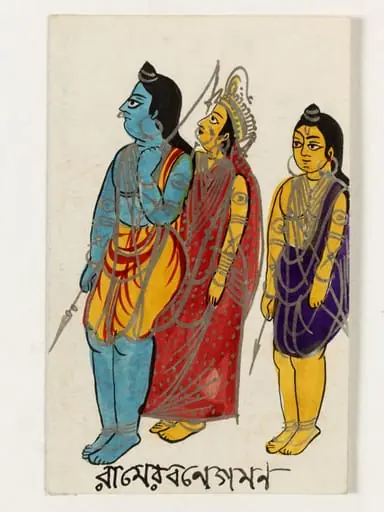
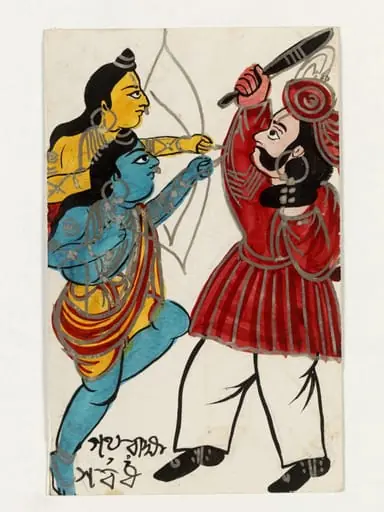
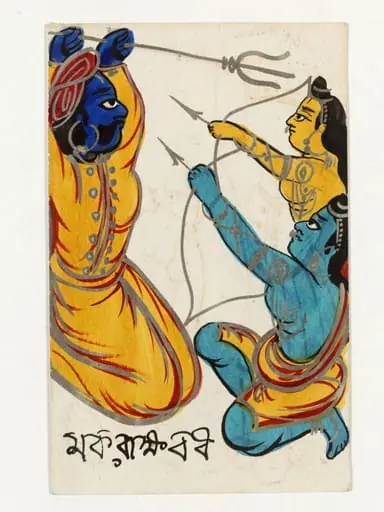
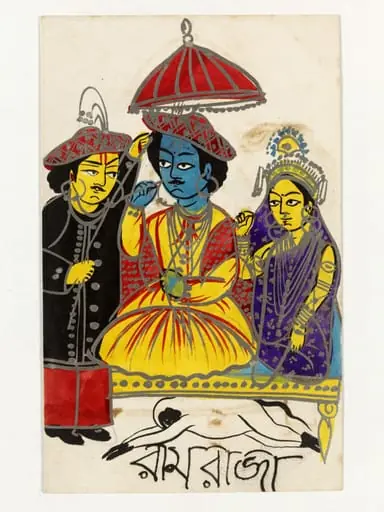
A watercolor painting on paper, executed with tin alloy pigments, portrays a moment from the Indian epic Ramayana where the heroes Rama and Lakshmana confront the demon Gavaksha. The composition centers on three figures rendered in striking, saturated hues, set against an unadorned backdrop that emphasizes the vivid palette and the narrative tension of the encounter.
Subject & Meaning
The work illustrates the climactic episode in which Rama and his brother Lakshmana defeat the antagonist Gavaksha, a story symbolizing the triumph of dharma over chaos. The central figure, armed with a sword, represents Rama’s decisive action, while the contorted posture of the fallen figure conveys the drama of the struggle, underscoring themes of loyalty and moral duty.
Technique & Style
Executed in the Kalighat school of painting, the piece employs flat washes of color bounded by crisp outlines, a hallmark of the style’s rapid brushwork. The artist’s use of bright pigments—purples, reds, blues, yellows, golds, and blacks—creates a graphic contrast, while the simplified forms and lack of background detail focus attention on the narrative figures.
History & Provenance
Created in Calcutta in the latter part of the 19th century, the painting emerges from a period when itinerant Bengali artists migrated to urban centers and began producing works for a growing market. These artists, many of whom originated in rural villages, catered to both devotional and secular tastes, integrating local mythological subjects with contemporary concerns under British colonial rule.
Context
The Kalighat tradition developed alongside the rise of public exhibitions and the demand for affordable devotional images. By depicting a well‑known episode from the Ramayana, the painting reflects the intersection of popular religious narratives with the visual language of a modernizing city, offering insight into how colonial-era Bengal negotiated its cultural identity through art.
Artist & collection

 Domestic Scene
 Giacomo and Cardinal Marco, investing Andrea, Abbot of San Zeno, with his Benefice
 The Nymph of Fontainebleau
 Portrait of a Woman
 Madonna and Child with Saints in the Enclosed Garden
 Venus and Minerva
 Family Group of Four on Sofa
 Wall painting from Room H of the Villa of P. Fannius Synistor at Boscoreale