Artwork
Krishna
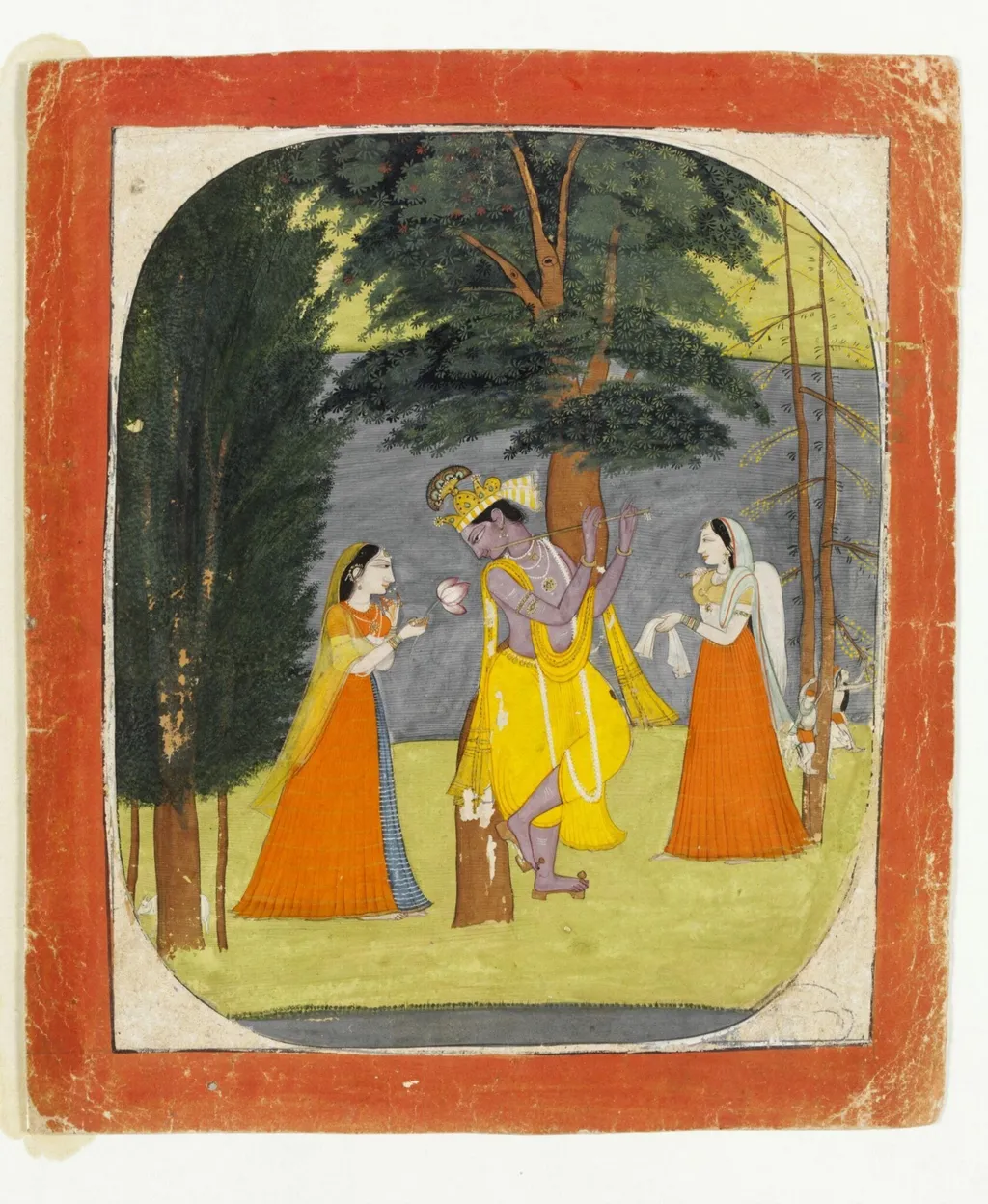
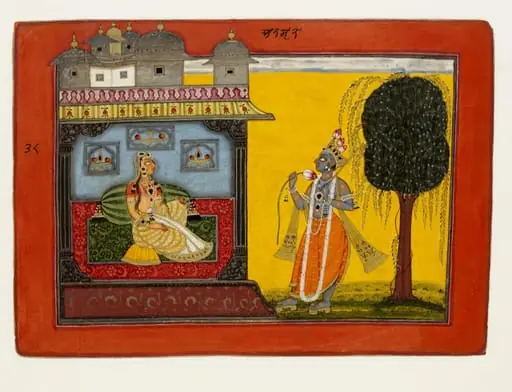
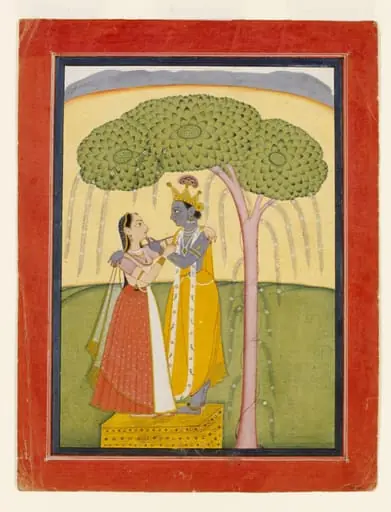
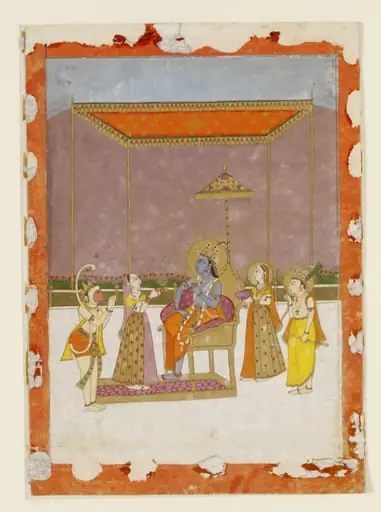
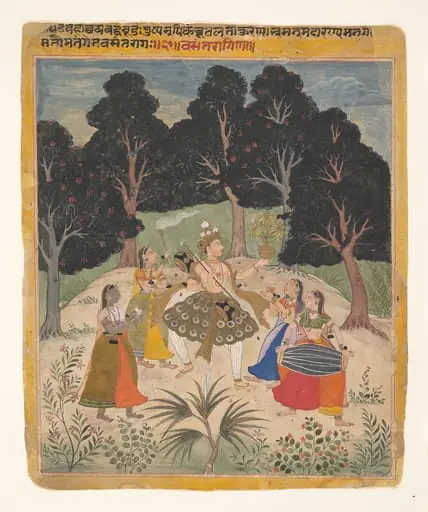
Krishna is a paint painting by the Romanticist artist Unknown. It dates from 1790 and is held in the collection of the Victoria and Albert Museum. Created circa 1790, this work combines opaque watercolor with gold pigment on paper.
About this work
Overview
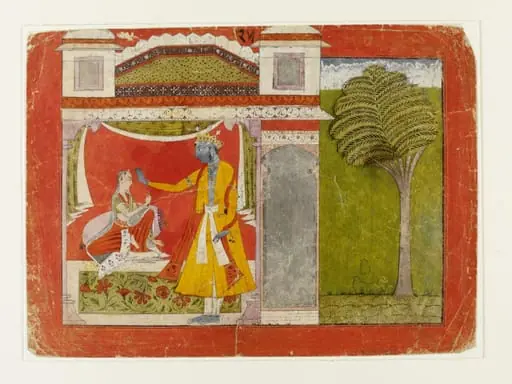
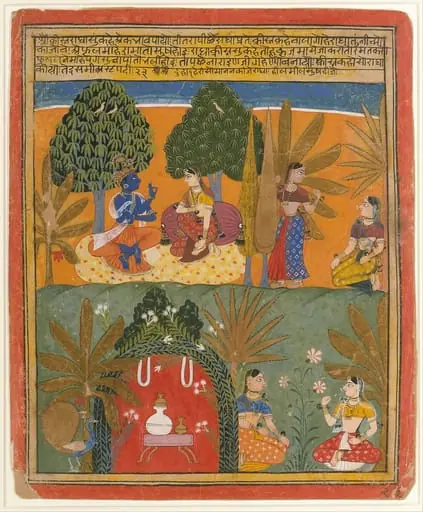
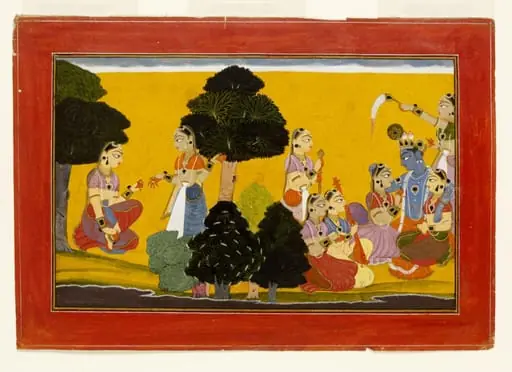
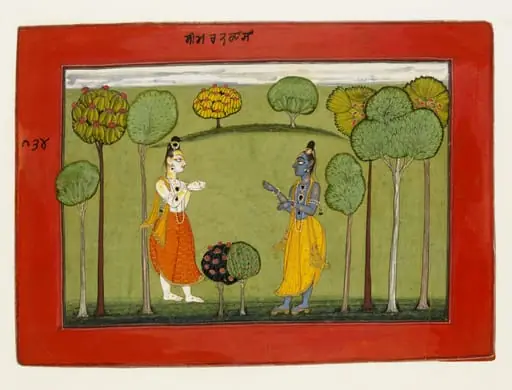
Created circa 1790, this work combines opaque watercolor with gold pigment on paper. The composition centers on a youthful figure playing a flute beneath a large tree, flanked by two women and observed by distant cowherds. A vivid red border frames the scene, while the surrounding garden is rendered in bright, flat tones without deep shading.
Subject & Meaning
The central figure represents the Hindu deity Krishna, identifiable by his golden crown, blue torso and flute, symbols of divine love and music. The two women, traditionally known as gopis, accompany him, while the background cowherds suggest a pastoral setting along the Jumna River, evoking themes of devotion and idyllic rural life.
Technique & Style
The artist employed opaque watercolor, allowing saturated, uniform washes of color, and applied gold leaf to highlight the crown and decorative elements. The palette is vivid yet flat, lacking chiaroscuro, which emphasizes decorative pattern over naturalistic depth. The red border functions as a framing device common in South Asian manuscript and panel painting.
History & Provenance
The painting originates from the late 18th‑century Indian tradition of devotional art, likely produced for private worship or elite patronage. It entered the collection of the Victoria and Albert Museum, where it is catalogued as a watercolor and gold work depicting Krishna, reflecting the museum’s broader holdings of South Asian visual culture.
Artist & collection

 Domestic Scene
 Giacomo and Cardinal Marco, investing Andrea, Abbot of San Zeno, with his Benefice
 The Nymph of Fontainebleau
 Portrait of a Woman
 Madonna and Child with Saints in the Enclosed Garden
 Venus and Minerva
 Family Group of Four on Sofa
 Wall painting from Room H of the Villa of P. Fannius Synistor at Boscoreale