Artwork
Krishna and Balarama
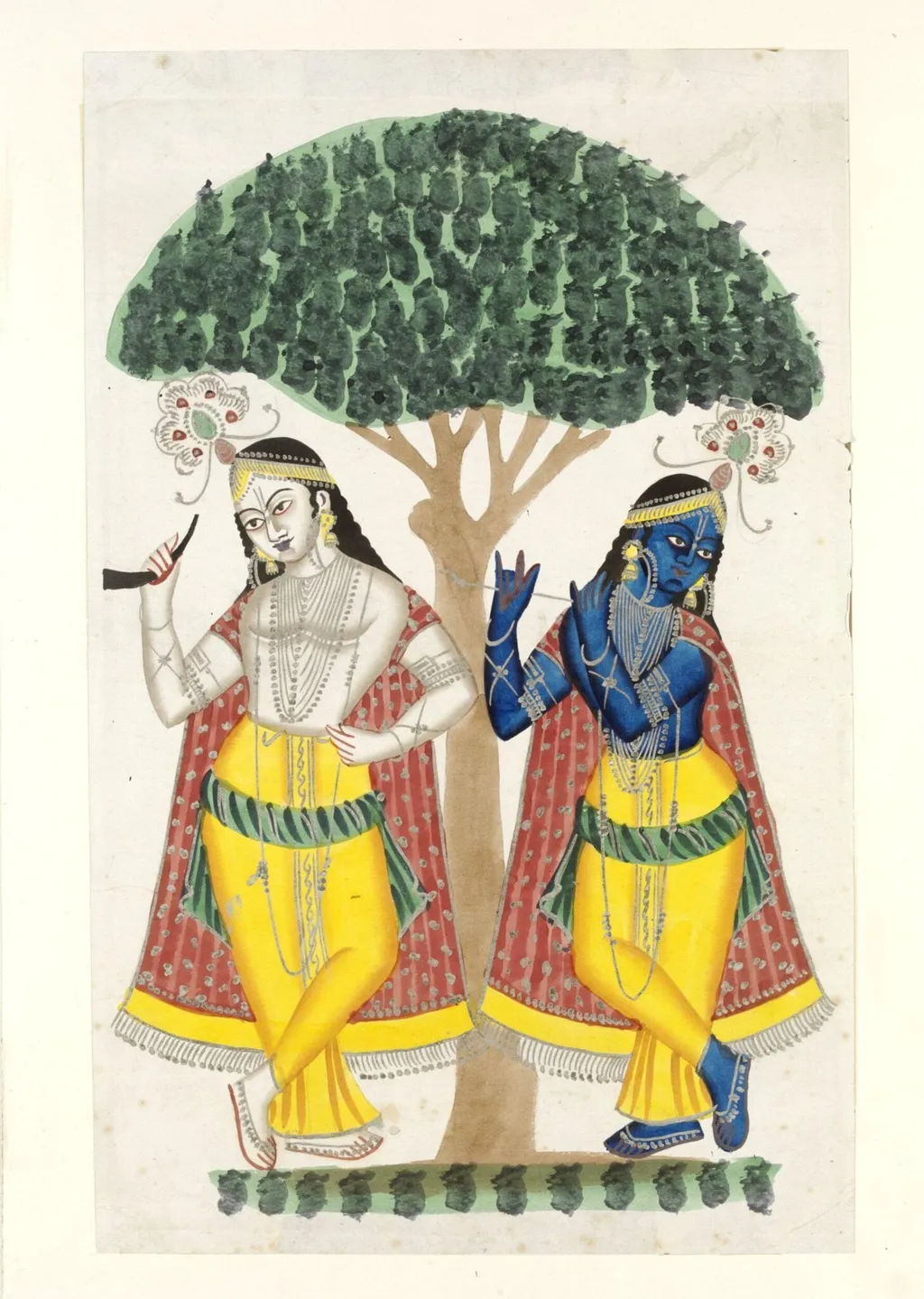
Krishna and Balarama is a paint painting by the Romanticist artist Unknown. It dates from 1830 and is held in the collection of the Victoria and Albert Museum.
About this work
Overview
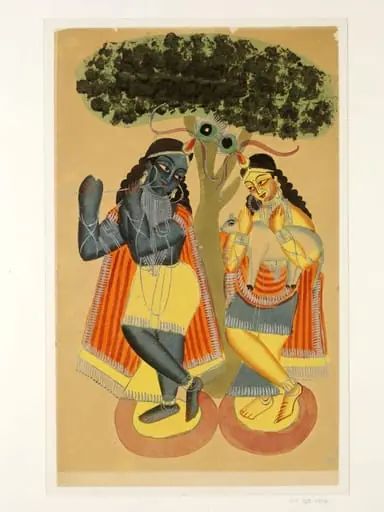
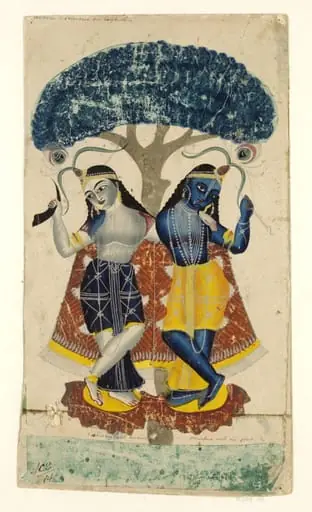
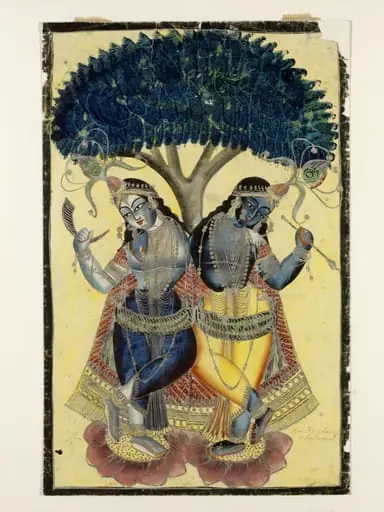
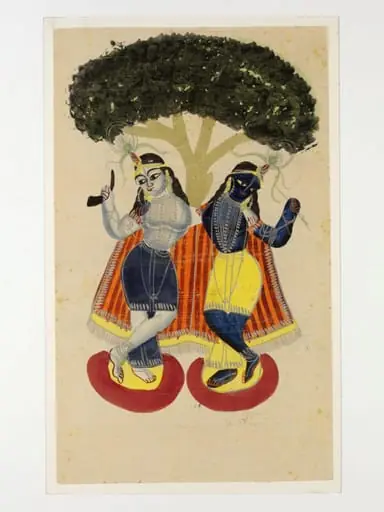
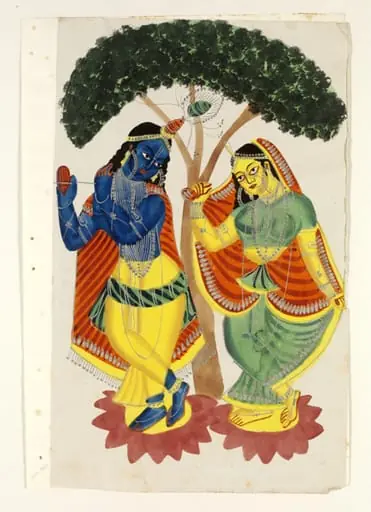
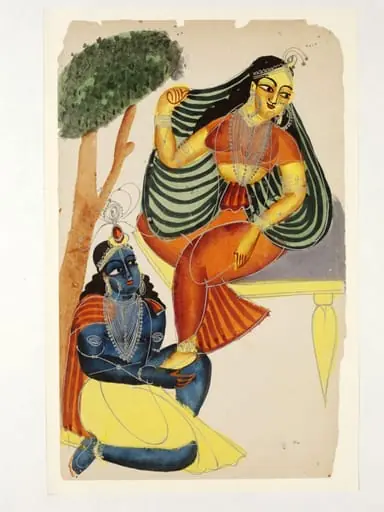
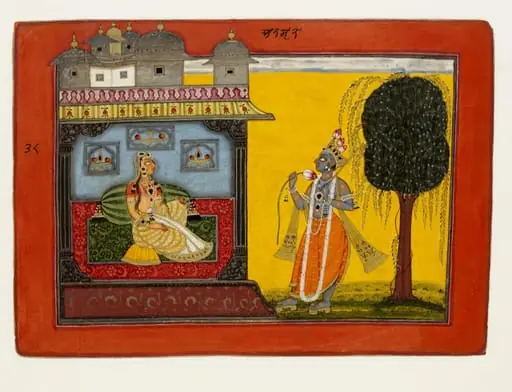
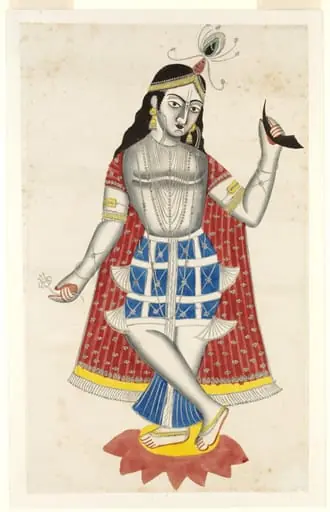
This opaque watercolour on paper portrays Krishna and Balarama, two central figures from Hindu tradition, standing beneath a stylized tree. The composition is deliberately flat, with no perspective or shading, emphasizing pattern and color over spatial depth. Tin alloy is used sparingly to highlight jewelry and ornaments, adding subtle luminosity against the muted paper ground.
Subject & Meaning
Krishna, identified by his dark blue skin and flute, and Balarama, with his lighter complexion and horn, are depicted as divine brothers.
Krishna, identified by his dark blue skin and flute, and Balarama, with his lighter complexion and horn, are depicted as divine brothers. Their raised hands suggest gesture of blessing or calm authority. The tree, though minimally rendered, anchors them in a sacred natural setting, common in devotional imagery. Their adornments signify divine status, reinforcing their roles as protectors and embodiments of cosmic order.
Technique & Style
Executed in opaque watercolour, the painting relies on bold outlines and flat planes of color to define form. Details in jewelry and clothing are rendered with precision, while the background remains unadorned to focus attention on the figures. Tin alloy accents, applied to necklaces and headpieces, catch light to enhance sacredness. The style reflects regional Indian miniature traditions, prioritizing symbolic clarity over naturalism.
History & Provenance
The work likely originates from a Pahari or Rajasthani atelier in the 18th century, a period when devotional painting flourished under royal patronage. Though its exact provenance is unrecorded, its materials and iconography align with regional workshops producing images for temple or courtly use. Such paintings were often part of illustrated manuscripts or standalone devotional objects.
Context
This painting belongs to a broader tradition of Indian miniature art that visualized Hindu epics and devotional themes for private contemplation. The emphasis on divine figures, ornate adornment, and symbolic setting reflects a worldview in which the sacred permeates daily life. Similar compositions appear in collections across South Asia, underscoring shared aesthetic and religious conventions.
Legacy
Works like this preserved devotional iconography through centuries, influencing later artistic interpretations of Krishna and Balarama. Their enduring presence in museum collections highlights the continuity of regional painting traditions. While no longer used in ritual, they remain vital as cultural artifacts that convey spiritual narratives through disciplined visual language.
Artist & collection

 Domestic Scene
 Giacomo and Cardinal Marco, investing Andrea, Abbot of San Zeno, with his Benefice
 The Nymph of Fontainebleau
 Portrait of a Woman
 Madonna and Child with Saints in the Enclosed Garden
 Venus and Minerva
 Family Group of Four on Sofa
 Wall painting from Room H of the Villa of P. Fannius Synistor at Boscoreale