Artwork
Krishna and Jambhavati
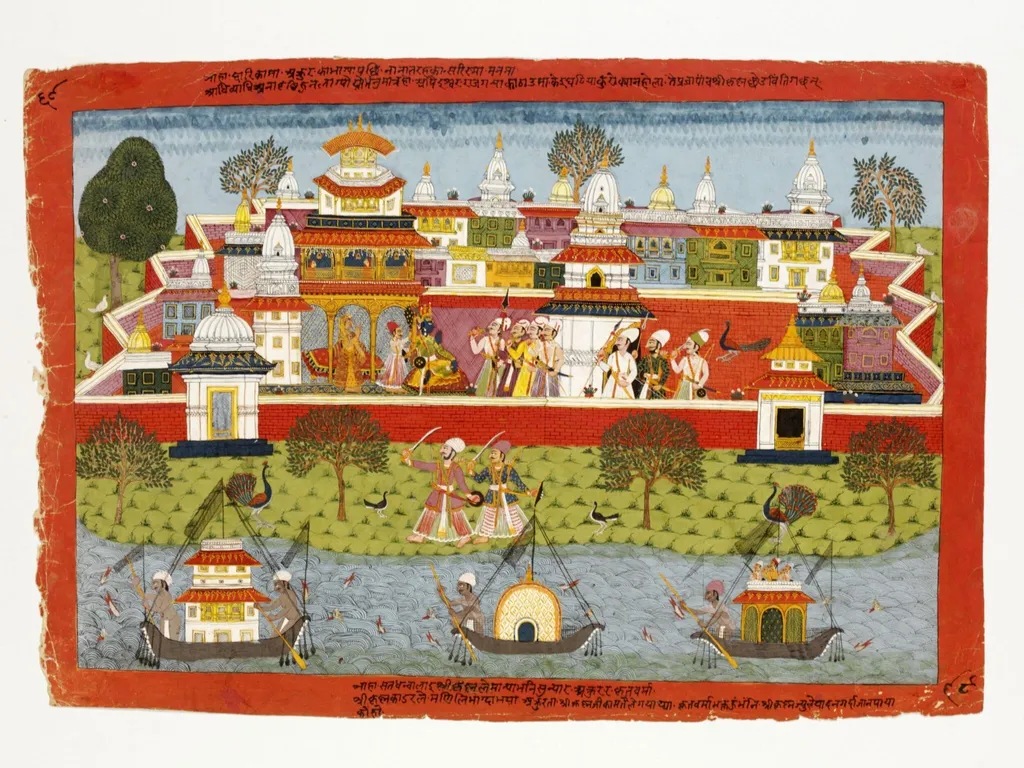
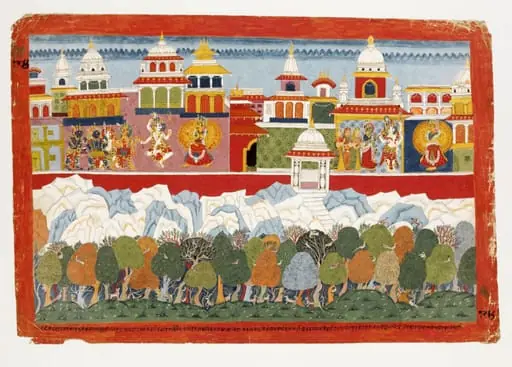
Krishna and Jambhavati is a paint painting by the Romanticist artist Unknown. It dates from 1800 and is held in the collection of the Victoria and Albert Museum. This opaque watercolour on paper illustrates a moment from the Bhagavata Purana, depicting Krishna’s marriage to Jambhavati.
About this work
Overview
This opaque watercolour on paper illustrates a moment from the Bhagavata Purana, depicting Krishna’s marriage to Jambhavati.
This opaque watercolour on paper illustrates a moment from the Bhagavata Purana, depicting Krishna’s marriage to Jambhavati. The scene is divided horizontally: an elevated cityscape with domed structures and bustling figures occupies the upper register, while a verdant landscape with trees, peacocks, and riverboats fills the lower half. The composition balances architectural grandeur with natural elements, creating a layered narrative space characteristic of Indian miniature painting traditions.
Subject & Meaning
The painting captures the union of Krishna and Jambhavati, daughter of Sattrajit, who presents him with the Syamantaka jewel as part of the marriage ritual. The jewel, held by Jambhavati, symbolizes divine legitimacy and the resolution of past conflict. The scene reflects themes of dharma, royal alliance, and divine grace, embedding religious narrative within a vividly rendered social setting that emphasizes both spiritual and earthly harmony.
Technique & Style
Executed in opaque watercolour on paper, the work employs fine brushwork and rich, saturated pigments to define intricate patterns in clothing, architecture, and foliage. Figures are stylized with elongated eyes and delicate gestures, while architectural details are rendered with precision. The use of flat planes and layered perspectives, rather than linear depth, aligns with regional Pahari or Rajasthani miniature conventions, enhancing the symbolic rather than naturalistic character of the scene.
History & Provenance
The painting likely originated in a royal atelier in northern India during the late 17th or early 18th century, a period when illustrated manuscripts of the Bhagavata Purana flourished under Hindu princely patronage. Though its exact origin is unconfirmed, stylistic elements suggest association with the Kangra or Bundi schools. It entered the Victoria and Albert Museum’s collection through documented acquisitions of South Asian art in the 19th century.
Context
This work emerged during a time when devotional texts like the Bhagavata Purana were increasingly visualized in courtly art, serving both religious devotion and political legitimacy. Rulers commissioned such images to align themselves with Krishna’s divine authority. The inclusion of urban life, riverine activity, and natural motifs reflects a broader cultural interest in integrating sacred narrative with the observable world, blending myth with everyday reality.
Legacy
The painting exemplifies the enduring tradition of illustrating Hindu epics in miniature form, influencing later regional styles and preserving narrative conventions across centuries. Its preservation in major collections underscores its role as a cultural artifact that bridges religious storytelling and artistic craftsmanship. It continues to inform scholarly understanding of how sacred texts were visually interpreted in pre-modern India.
Artist & collection

 Domestic Scene
 Giacomo and Cardinal Marco, investing Andrea, Abbot of San Zeno, with his Benefice
 The Nymph of Fontainebleau
 Portrait of a Woman
 Madonna and Child with Saints in the Enclosed Garden
 Venus and Minerva
 Family Group of Four on Sofa
 Wall painting from Room H of the Villa of P. Fannius Synistor at Boscoreale
 Krishna and Balarama
 Story of Krishna and Radha
 Folio from a Bhagavata Purana series
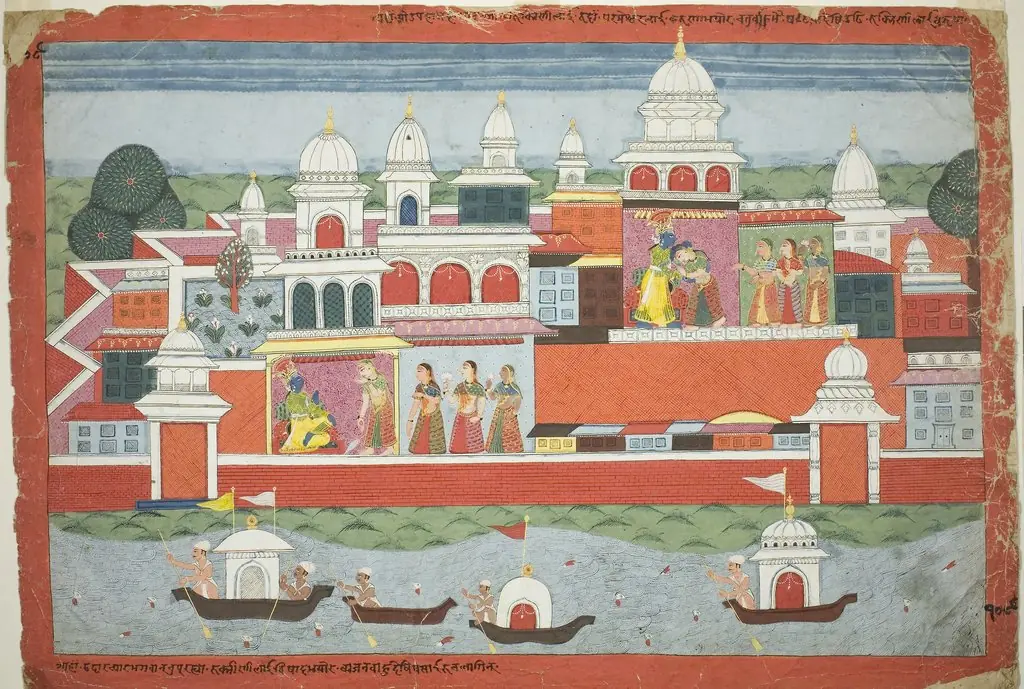 Rukmini Seeks Krishna's Permission to Visit her Brother Rukma, page from a manuscript of the Bhagavata Purana
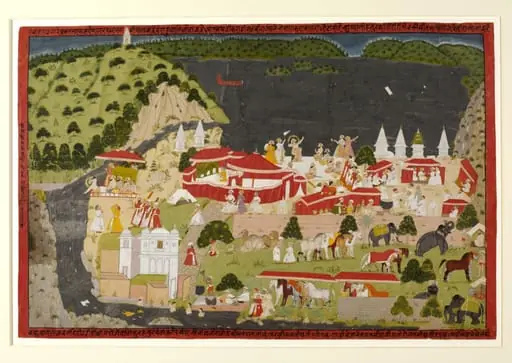 Maharana Sangram Singh
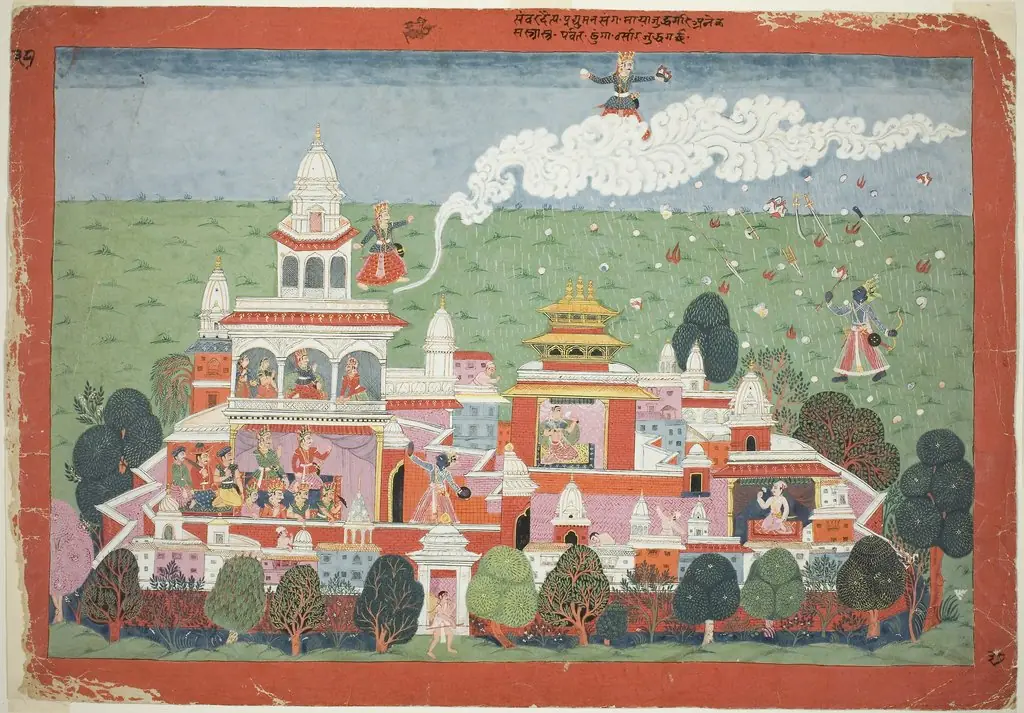 Pradyumna Enters the Palace of the Demon Sambar and Challenges him to Battle, page from a manuscript of the Bhagavata Purana
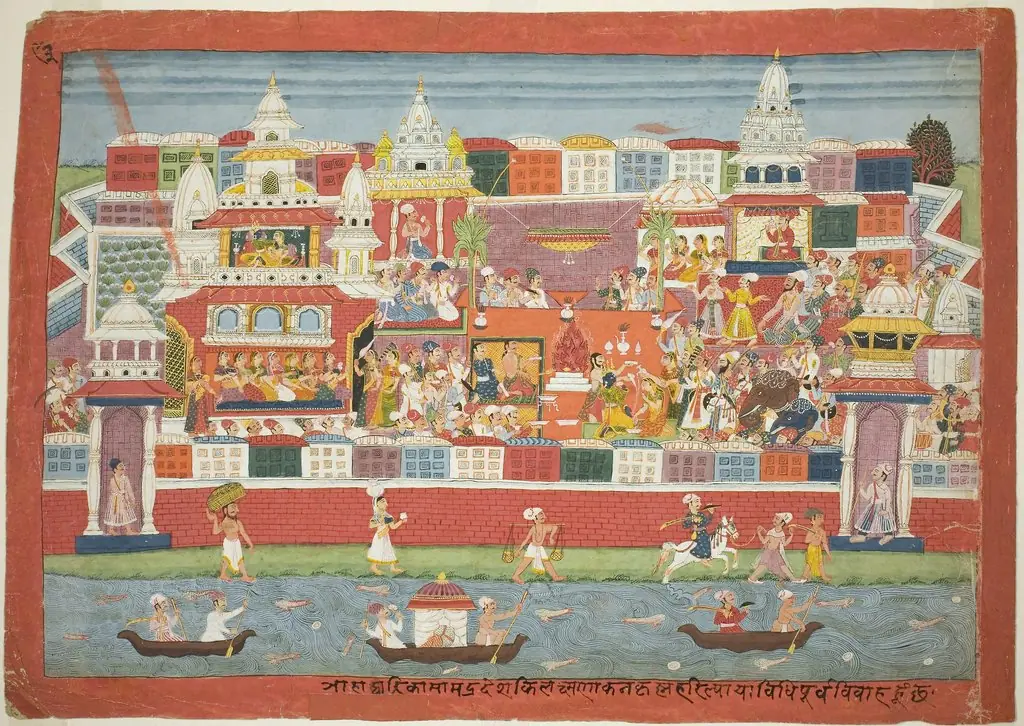 Krishna's Marriage to Kalinda, page from a manuscript of the Bhagavata Purana
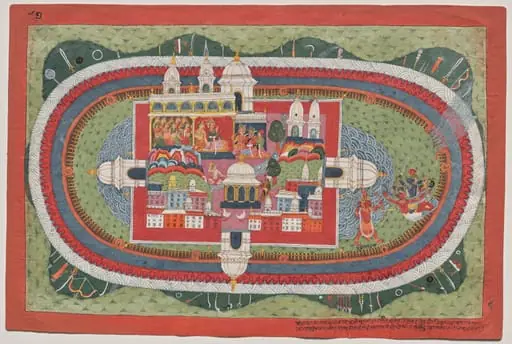 Krishna and Satyabhama Storm the Citadel of Naraka, folio 97 from a Bhagavata Purana
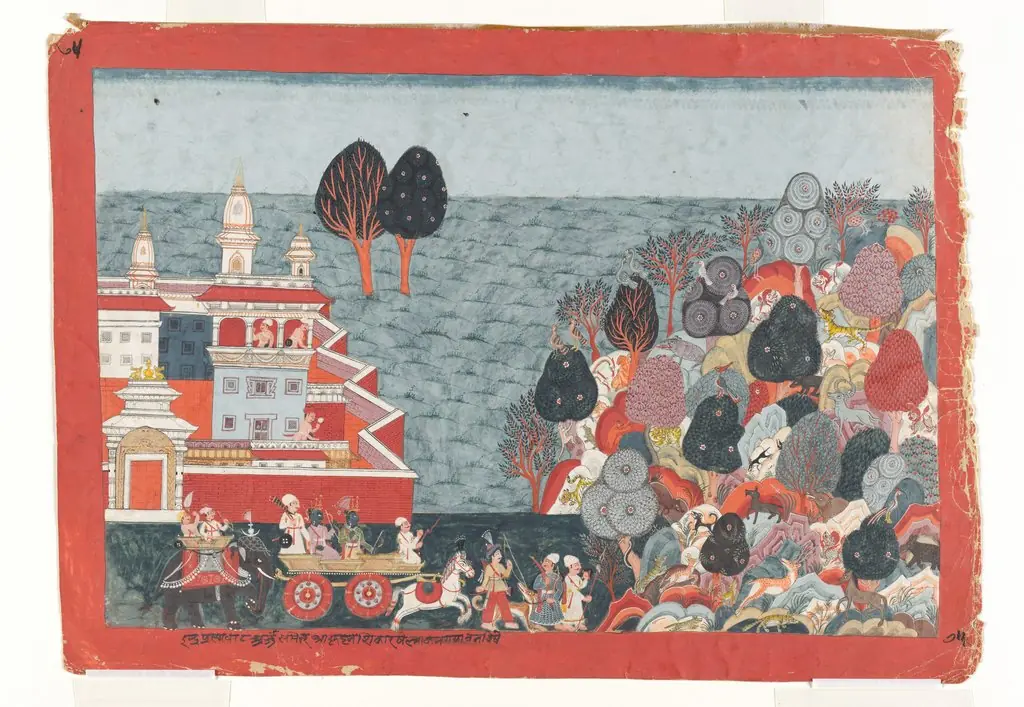 Folio from a Bhagavata Purana series
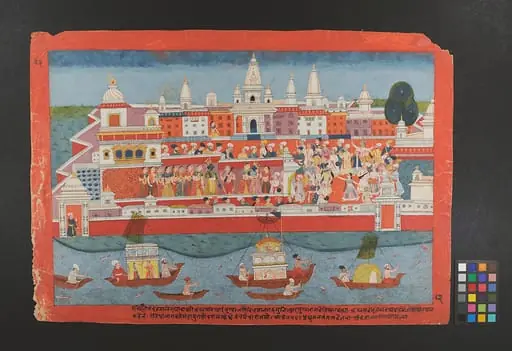 Untitled
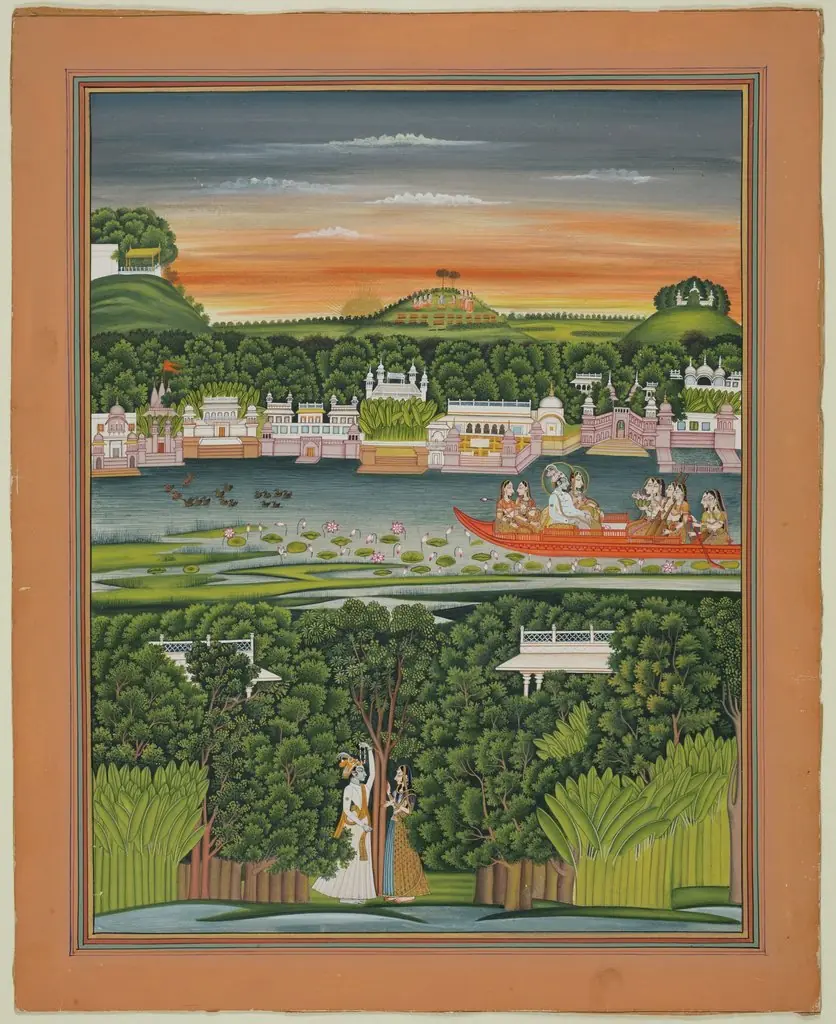 Krishna and Radha
 Vanasura, Shiva and Parvati