Artwork
Krishna and Satyabhama Storm the Citadel of Naraka, folio 97 from a Bhagavata Purana
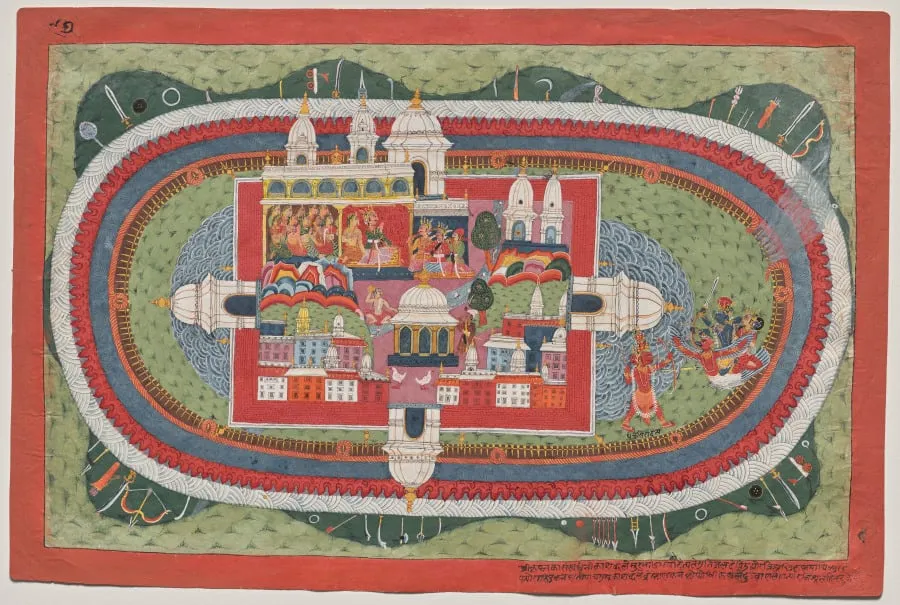
Krishna and Satyabhama Storm the Citadel of Naraka, folio 97 from a Bhagavata Purana is an unspecified painting by the Mughal Painting artist Unknown. It dates from 1775 and is held in the collection of the Cleveland Museum of Art. This folio is part of a illustrated manuscript of the Bhagavata Purana, a Hindu text chronicling the deeds of Krishna.
About this work
Overview
This folio is part of a illustrated manuscript of the Bhagavata Purana, a Hindu text chronicling the deeds of Krishna. Created in the Kathmandu Valley, it depicts a climactic moment from Krishna’s campaign against the demon king Naraka. The composition frames the battle as a cosmic event, using architectural symmetry to evoke sacred geometry rather than literal geography.
Subject & Meaning
Krishna, blue-skinned and mounted on Garuda, assaults Naraka’s fortress to liberate abducted celestial nymphs and restore cosmic order. Naraka, seated in luxury amid his captives, symbolizes corruption and attachment. The layered citadel, structured like a mandala, reflects the Hindu cosmological model—where spiritual victory requires penetrating successive layers of illusion and evil.
Technique & Style
Figures are rendered with stylized proportions, while the fortress is densely packed with chambers and walls, creating a rhythmic, almost hypnotic pattern.
The painting employs fine brushwork and mineral pigments to render intricate architectural details and vivid figures. Figures are rendered with stylized proportions, while the fortress is densely packed with chambers and walls, creating a rhythmic, almost hypnotic pattern. Color contrasts—Krishna’s blue skin against the red demon guards and golden architecture—enhance narrative clarity without naturalism.
History & Provenance
Produced in the Kathmandu Valley during the late 17th or early 18th century, this folio belongs to a series commissioned for devotional use. Such manuscripts were circulated among elite patrons and temple communities in Nepal, where Vaishnavism flourished. Its survival reflects the enduring cultural value placed on illustrated religious texts in the region.
Context
Nepalese artists of this period synthesized indigenous Himalayan aesthetics with North Indian Pahari traditions, emphasizing symbolic form over spatial realism. The mandala-like fortress aligns with tantric visual practices common in Nepal, where sacred space was mapped as a path to transcendence. This folio thus functions both as narrative illustration and ritual object.
Legacy
The folio exemplifies how regional Himalayan painting traditions adapted Puranic stories into visually complex, spiritually charged compositions. Its influence can be traced in later Nepalese and Tibetan devotional art, where cosmological symbolism and narrative density remained central to religious imagery.
Artist & collection

 Domestic Scene
 Giacomo and Cardinal Marco, investing Andrea, Abbot of San Zeno, with his Benefice
 The Nymph of Fontainebleau
 Portrait of a Woman
 Madonna and Child with Saints in the Enclosed Garden
 Venus and Minerva
 Family Group of Four on Sofa
 Wall painting from Room H of the Villa of P. Fannius Synistor at Boscoreale
 Untitled
 Pradyumna Enters the Palace of the Demon Sambar and Challenges him to Battle, page from a manuscript of the Bhagavata Purana
 Krishna and Jambhavati
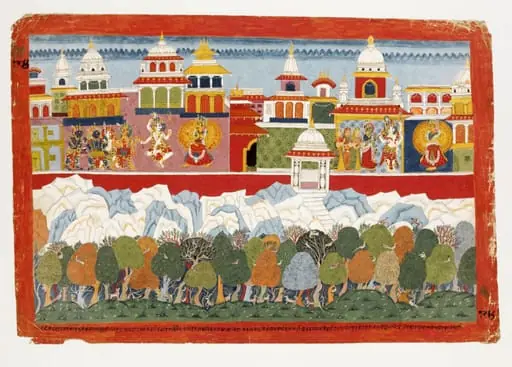 Vanasura, Shiva and Parvati
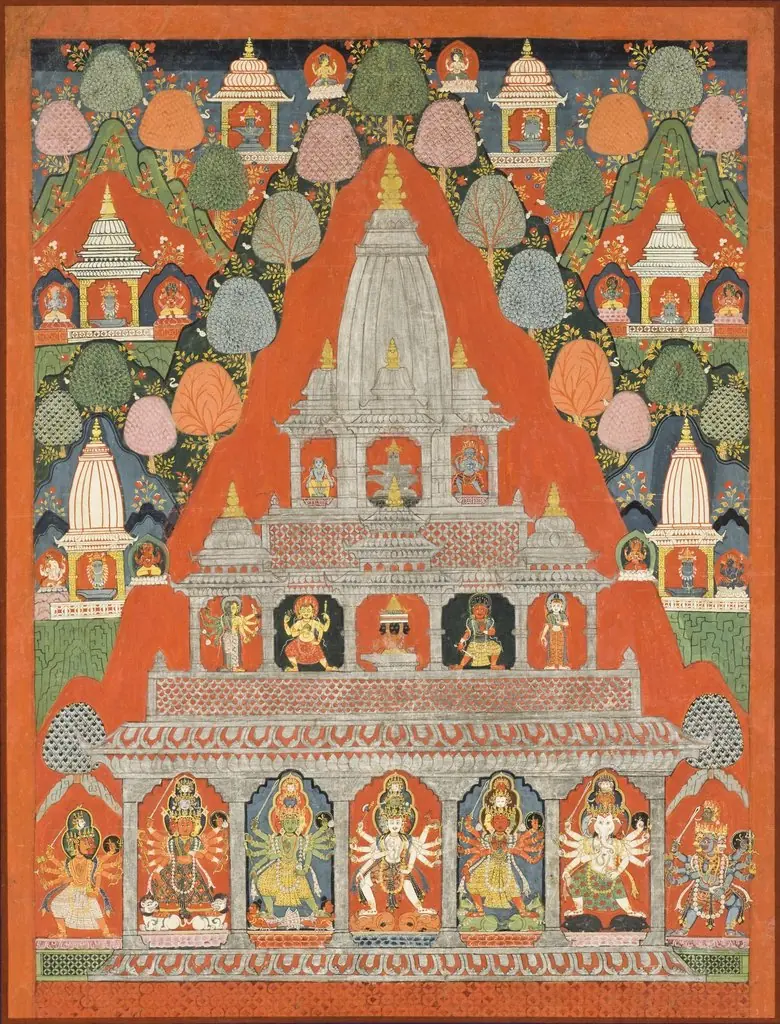 Shaiva Shrines in a Landscape
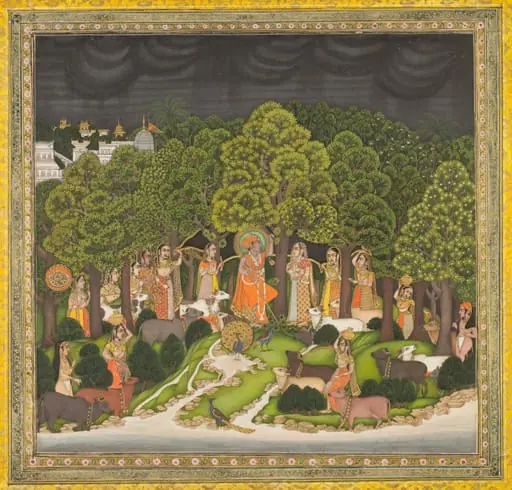 Radha and Krishna meet in the forest during a storm
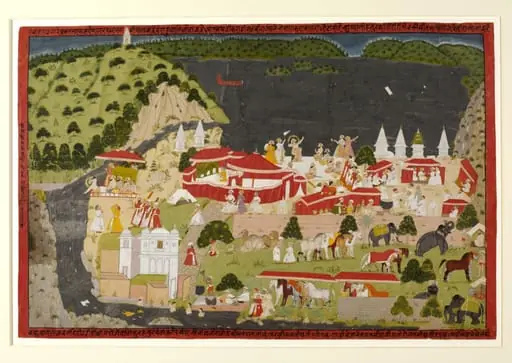 Maharana Sangram Singh
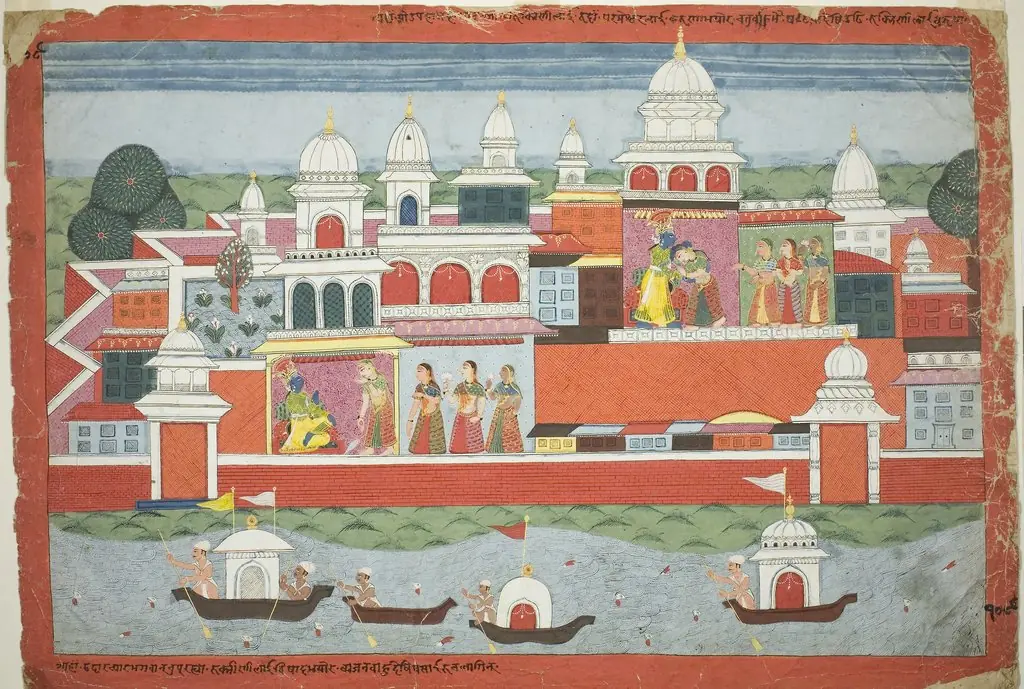 Rukmini Seeks Krishna's Permission to Visit her Brother Rukma, page from a manuscript of the Bhagavata Purana
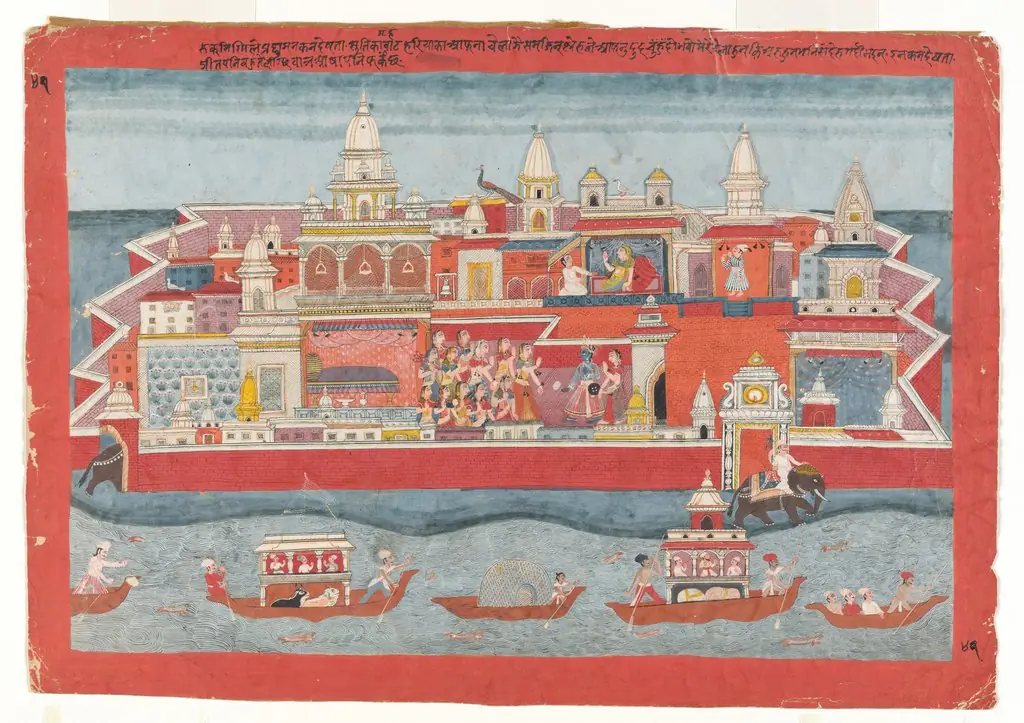 Folio from a Bhagavata Purana series
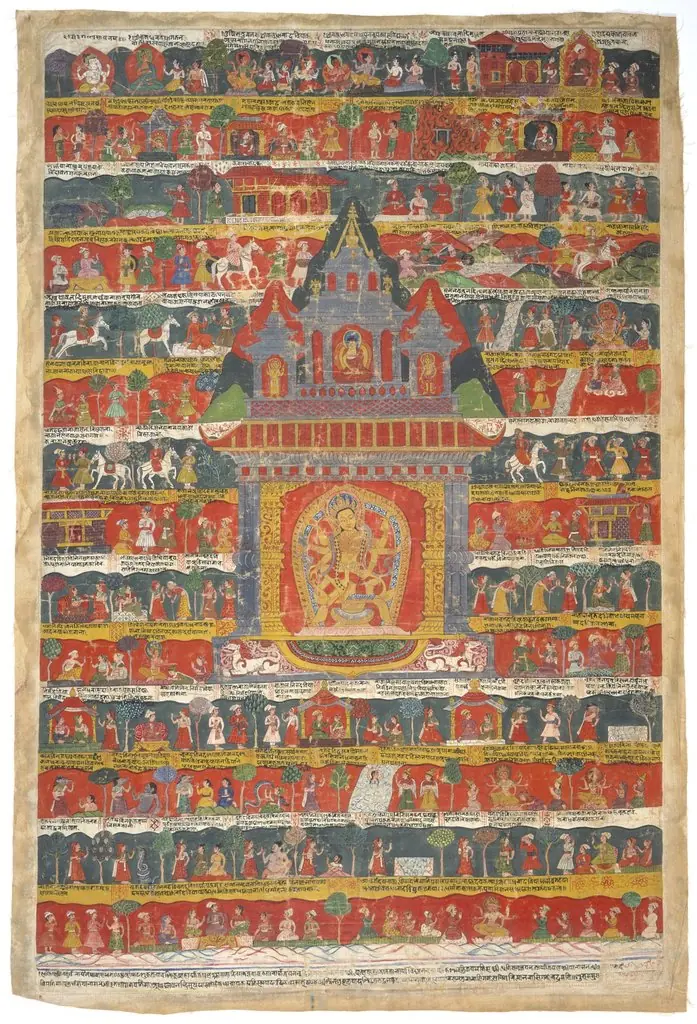 Legend of Vasudhara (Ashvaghosha Avadana)