Artwork
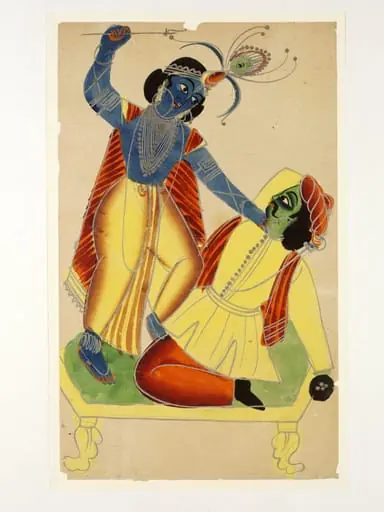
Krishna and Kansa
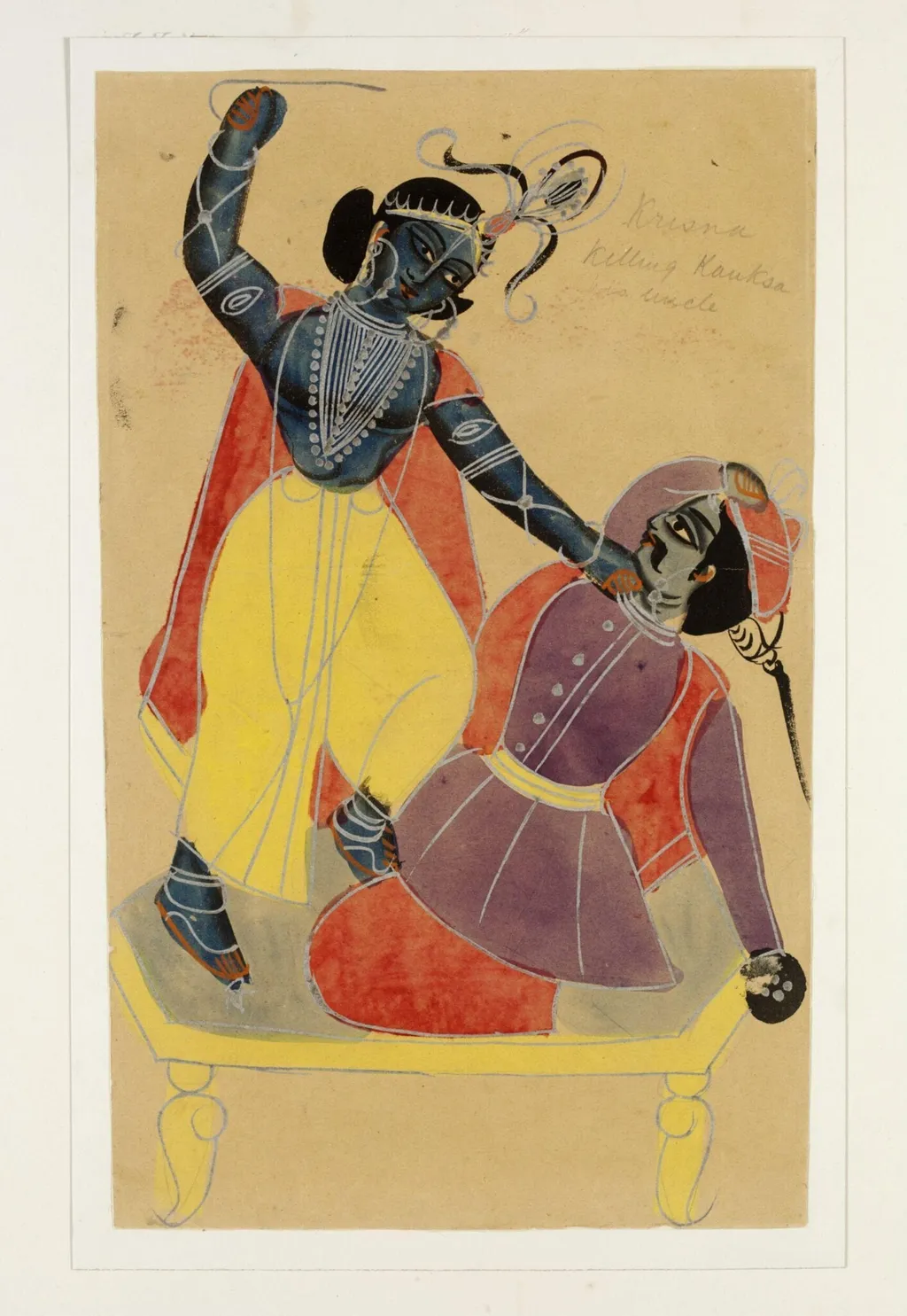
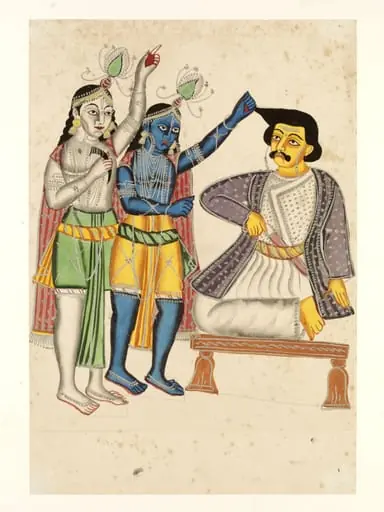
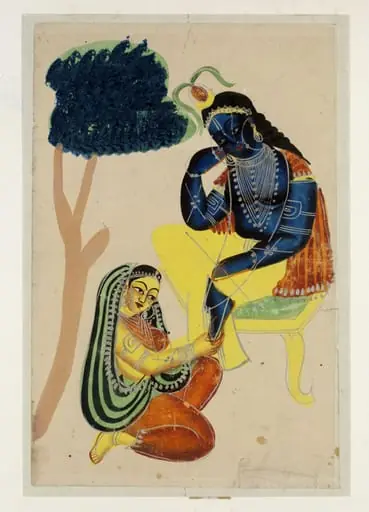
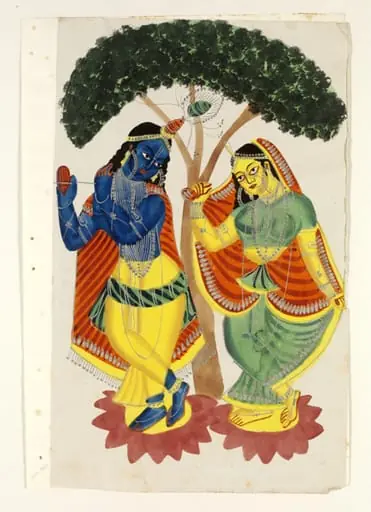
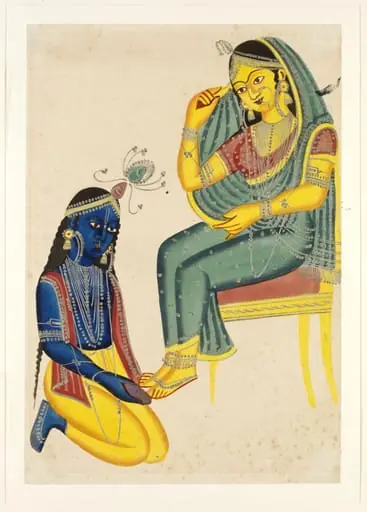
Krishna and Kansa is a paint painting by the Impressionist artist Unknown. It dates from 1885 and is held in the collection of the Victoria and Albert Museum. This 1885 painting, executed in opaque watercolor on paper, depicts a pivotal moment from Hindu mythology.
About this work
Overview
This 1885 painting, executed in opaque watercolor on paper, depicts a pivotal moment from Hindu mythology. The composition centers on two figures, one poised in dynamic confrontation, the other in a posture of defeat. The work’s restrained background directs focus to the vividly colored garments and expressive gestures, emphasizing the narrative tension.
Subject & Meaning
The scene illustrates the climactic episode in which Krishna, an avatar of Vishnu, slays his tyrannical uncle Kansa.
The scene illustrates the climactic episode in which Krishna, an avatar of Vishnu, slays his tyrannical uncle Kansa. According to legend, Kansa’s reign of oppression was prophesied to end at the hands of Krishna, his nephew. The painting captures the instant before the fatal strike, with Krishna’s calm demeanor contrasting Kansa’s submissive posture, underscoring themes of divine justice and the triumph of righteousness.
Technique & Style
Rendered in opaque watercolor, the painting employs bold, flat areas of color and precise linear detailing, particularly in the figures’ attire. The artist’s use of stark contrasts—dark skin against a light ground, vibrant hues juxtaposed—heightens the drama. Delicate patterning on the garments reflects a tradition of meticulous craftsmanship, while the minimal background ensures narrative clarity.
History & Provenance
The painting entered the museum’s collection in 1950 as a gift from Miss M. Steele, who inherited it from her mother, a Sanskrit scholar at Cambridge in 1894. Steele’s grandmother, who resided in India, may have acquired the work earlier. It belongs to a series, suggesting a broader set of mythological scenes originally assembled for scholarly or personal interest.
Context
Created during a period of British colonial presence in India, the work reflects both indigenous artistic traditions and the cross-cultural exchanges of the era. Such paintings often served as visual accompaniments to religious texts, circulated among collectors, scholars, or expatriates. The Steele family’s connection to Sanskrit scholarship hints at the painting’s role in academic or devotional contexts.
Artist & collection

 Domestic Scene
 Giacomo and Cardinal Marco, investing Andrea, Abbot of San Zeno, with his Benefice
 The Nymph of Fontainebleau
 Portrait of a Woman
 Madonna and Child with Saints in the Enclosed Garden
 Venus and Minerva
 Family Group of Four on Sofa
 Wall painting from Room H of the Villa of P. Fannius Synistor at Boscoreale