Artwork
Krishna, Balarama and Kansa
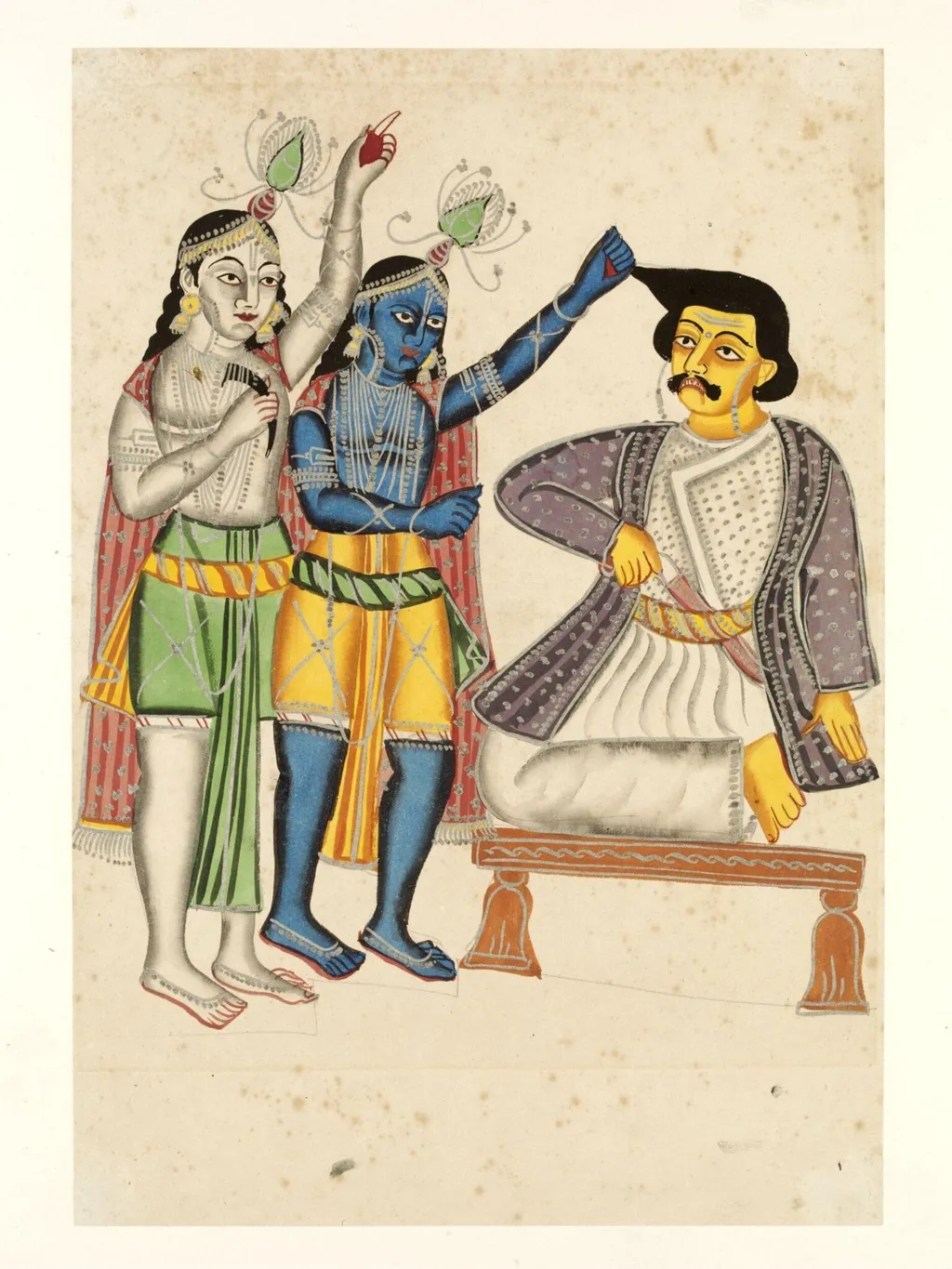
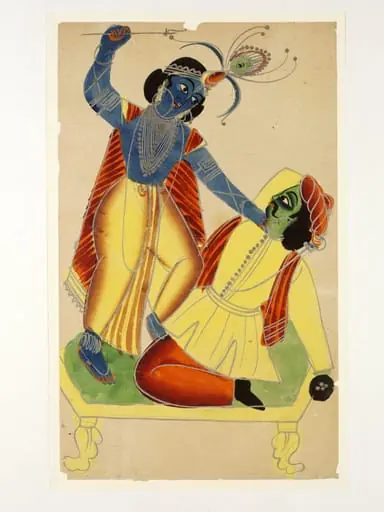
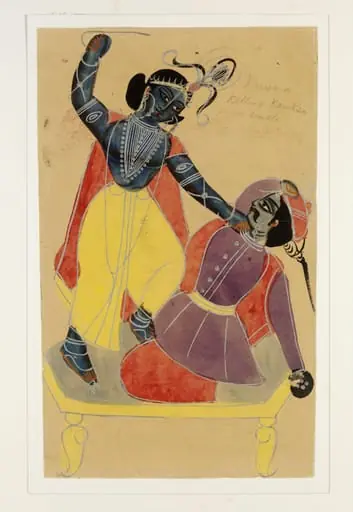
Krishna, Balarama and Kansa is a paint painting by the Romanticist artist Unknown. It dates from 1830 and is held in the collection of the Victoria and Albert Museum.
About this work
Overview
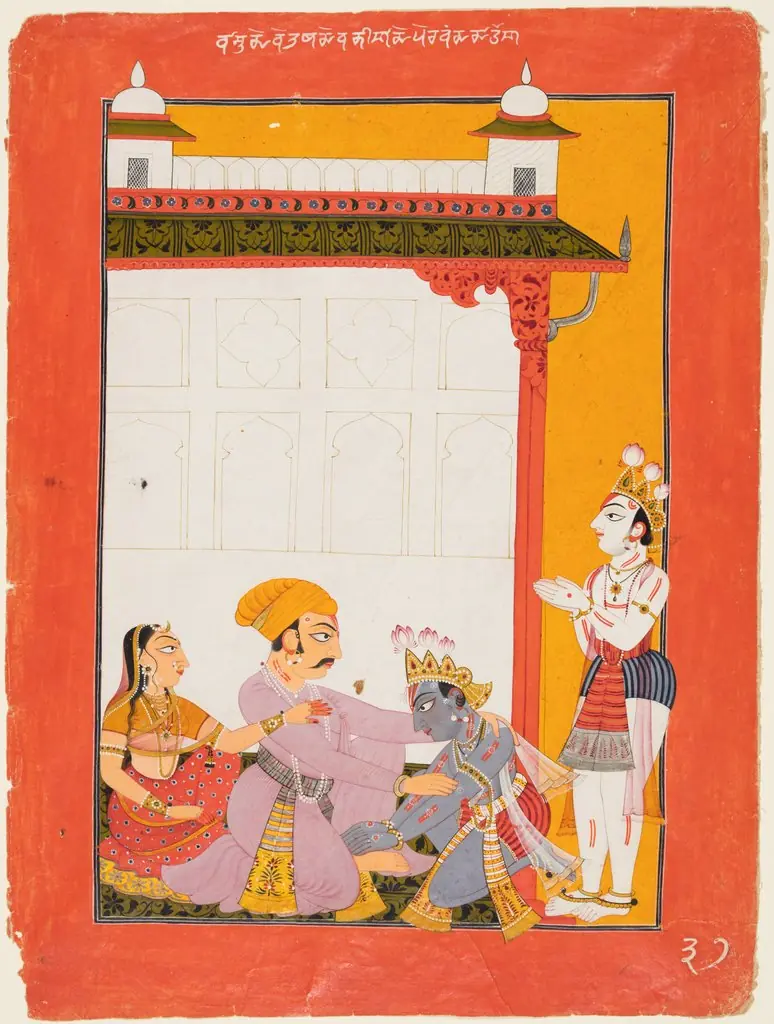
This 19th-century Indian painting, circa 1830, portrays a pivotal moment from Hindu mythology in vibrant, flat colors on paper using opaque watercolour. The scene captures the confrontation between divine brothers Krishna and Balarama and the demon king Kansa.
Subject & Meaning
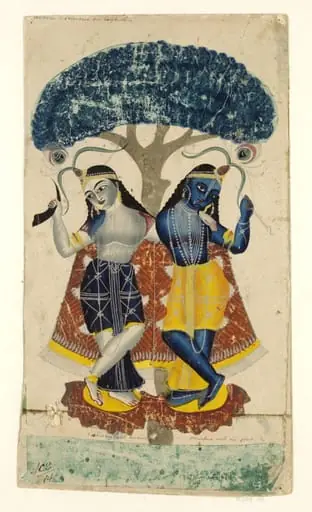
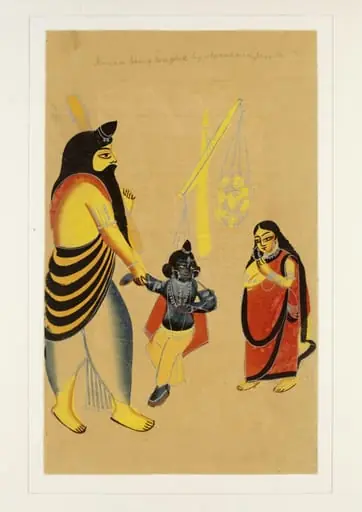
The painting depicts Krishna (blue-skinned, holding a red ball and green disc), Balarama (pale-faced, in a green skirt with red sashes), and Kansa (seated in gray and purple, with a gesture suggesting adjustment of his hair). The subject highlights the mythological narrative of Krishna and Balarama's attack on their uncle Kansa, symbolizing the triumph of good over evil.
Technique & Style
Executed in opaque watercolour on paper, the work exemplifies the Kalighat style, characterized by bold, flat forms and bright, unshaded colors. The stark contrast of Krishna's blue skin against the more subdued tones of the other figures is a notable stylistic element.
History & Provenance
Created around 1830, the painting's origins and ownership history prior to its current location are not specified in available information.
Context
Emerging from the Kalighat tradition, this painting reflects the popular religious art of 19th-century India, particularly in the Bengal region, where such works were often created for devotional and narrative purposes.
Legacy
As part of the Kalighat painting tradition, this work contributes to the understanding and appreciation of Indian folk art's evolution and its representation of mythological themes in a distinctive, accessible visual language.
Artist & collection

 Domestic Scene
 Giacomo and Cardinal Marco, investing Andrea, Abbot of San Zeno, with his Benefice
 The Nymph of Fontainebleau
 Portrait of a Woman
 Madonna and Child with Saints in the Enclosed Garden
 Venus and Minerva
 Family Group of Four on Sofa
 Wall painting from Room H of the Villa of P. Fannius Synistor at Boscoreale