Artwork
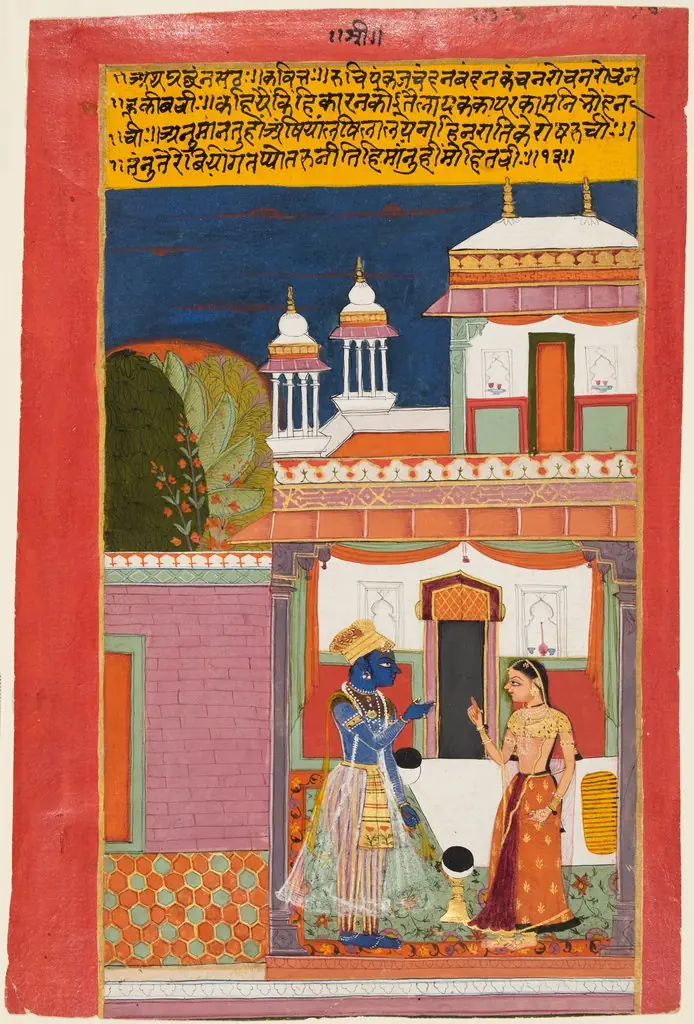
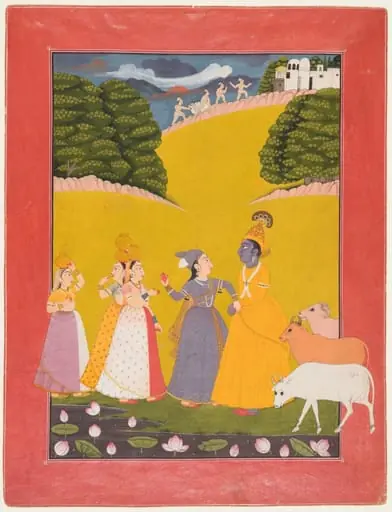
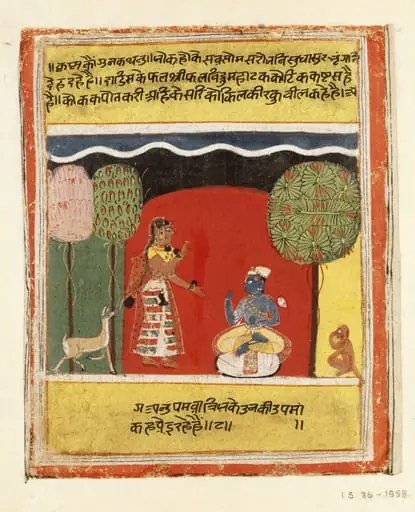
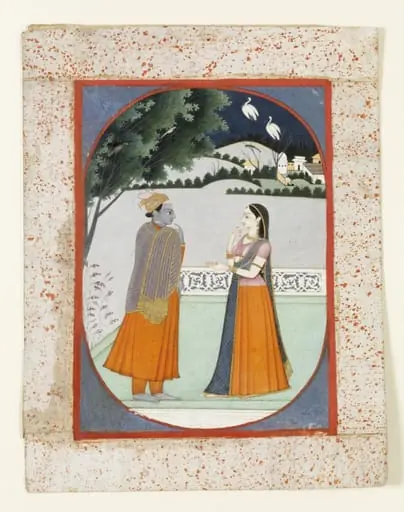
Krishna and Radha Quarreling: Shatha Nayaka, from a Rasikapriya
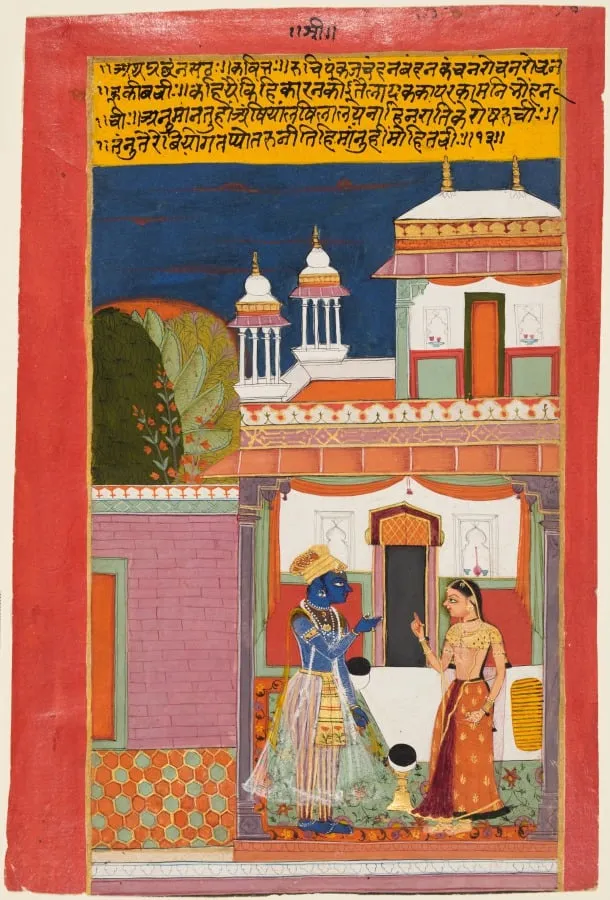
Krishna and Radha Quarreling: Shatha Nayaka, from a Rasikapriya is an unspecified painting by the Baroque artist Unknown. It dates from 1680 and is held in the collection of the Cleveland Museum of Art.
About this work
Overview
This painting illustrates a moment from the Rasikapriya, a 17th-century poetic text that categorizes emotional states in romantic relationships.
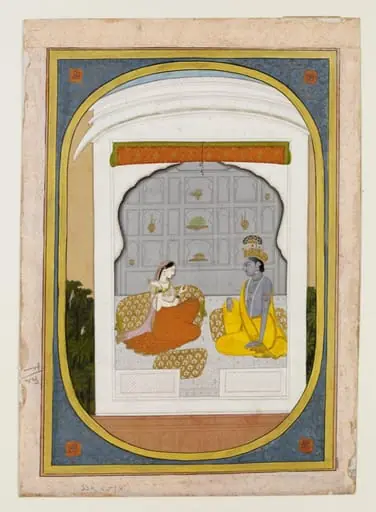
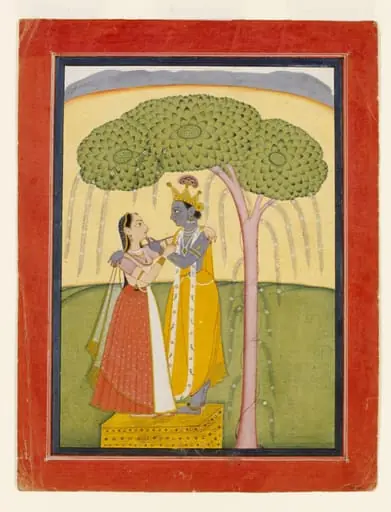
This painting illustrates a moment from the Rasikapriya, a 17th-century poetic text that categorizes emotional states in romantic relationships. It depicts Krishna and Radha in a tense exchange at dawn, following Krishna’s absence through the night. The scene is rendered in the Bundi style, known for its vivid palette and intricate detailing, capturing a private emotional climax rather than a grand narrative.
Subject & Meaning
Radha confronts Krishna with accusations of betrayal, her anger rooted in the depth of her devotion. Krishna responds not with defiance but with tender reassurance, comparing her tear-filled eyes to lotus petals—a metaphor meant to soothe yet underscore the fragility of their bond. The moment reflects the Nayaka-nayika tradition, where emotional nuance in love is elevated to spiritual metaphor, blending human passion with divine symbolism.
Technique & Style
The artist employs fine, precise brushwork to define facial expressions and textile patterns, while bold, saturated hues—crimson for Radha, deep blue for Krishna—heighten emotional contrast. The pink-tinged sky, filtered through dense foliage, suggests early morning light without direct illumination. Background elements are minimized, focusing attention on the figures’ psychological tension and the intimacy of their interaction.
History & Provenance
Created in the mid-17th century in the Rajput court of Bundi, this work belongs to a series illustrating the Rasikapriya, commissioned by local nobility who patronized illustrated manuscripts. Such paintings were kept in royal libraries and viewed during private gatherings, serving both aesthetic and didactic purposes within a courtly culture that valued refined emotional expression.
Context
The painting emerges from a tradition where poetry and visual art converged to explore the dynamics of love, particularly the interplay between separation and reunion. In Bundi, artists adapted literary themes into intimate compositions, often drawing from Vaishnavite devotional cycles. The focus on Radha’s emotional state reflects a broader cultural interest in female subjectivity within divine romance.
Legacy
Works like this helped codify visual conventions for depicting romantic emotion in Rajput painting, influencing later regional styles. Though not widely exhibited in modern times, they remain key references for scholars studying the intersection of text, emotion, and image in pre-colonial Indian art. Their quiet intensity continues to inform interpretations of Indian miniature traditions beyond mere ornamentation.
Artist & collection

 Domestic Scene
 Giacomo and Cardinal Marco, investing Andrea, Abbot of San Zeno, with his Benefice
 The Nymph of Fontainebleau
 Portrait of a Woman
 Madonna and Child with Saints in the Enclosed Garden
 Venus and Minerva
 Family Group of Four on Sofa
 Wall painting from Room H of the Villa of P. Fannius Synistor at Boscoreale