Artwork
Krishna as Kali, and Radha
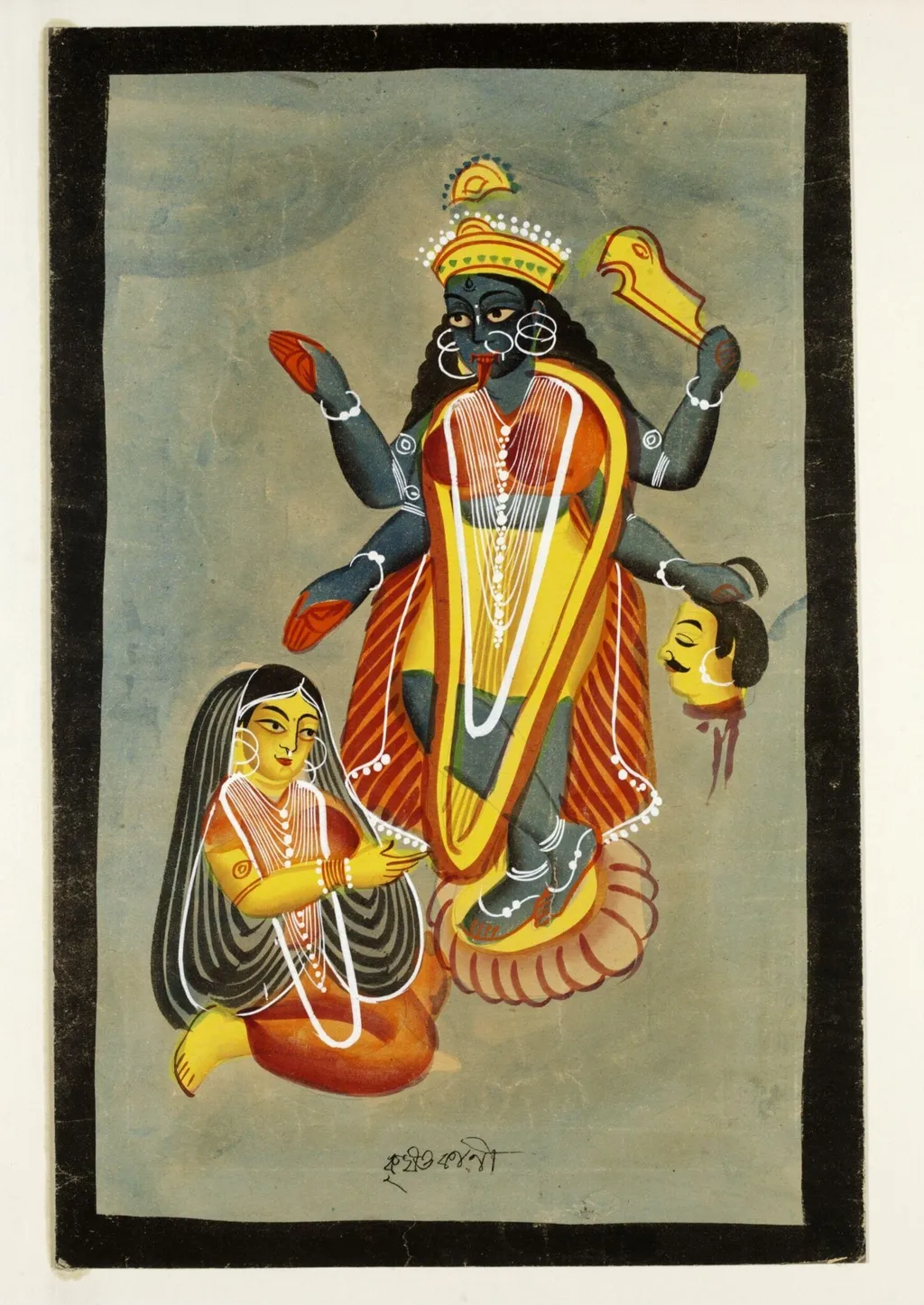
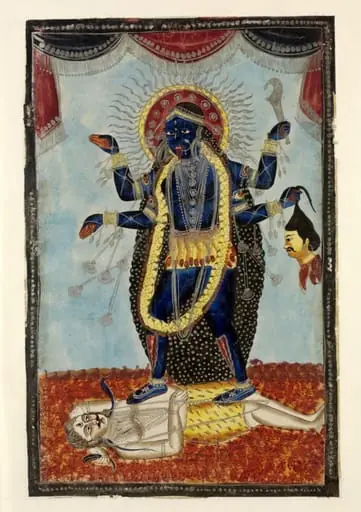
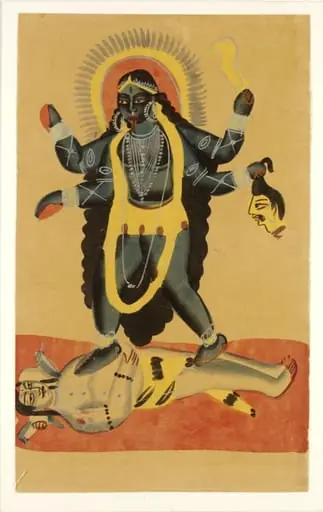
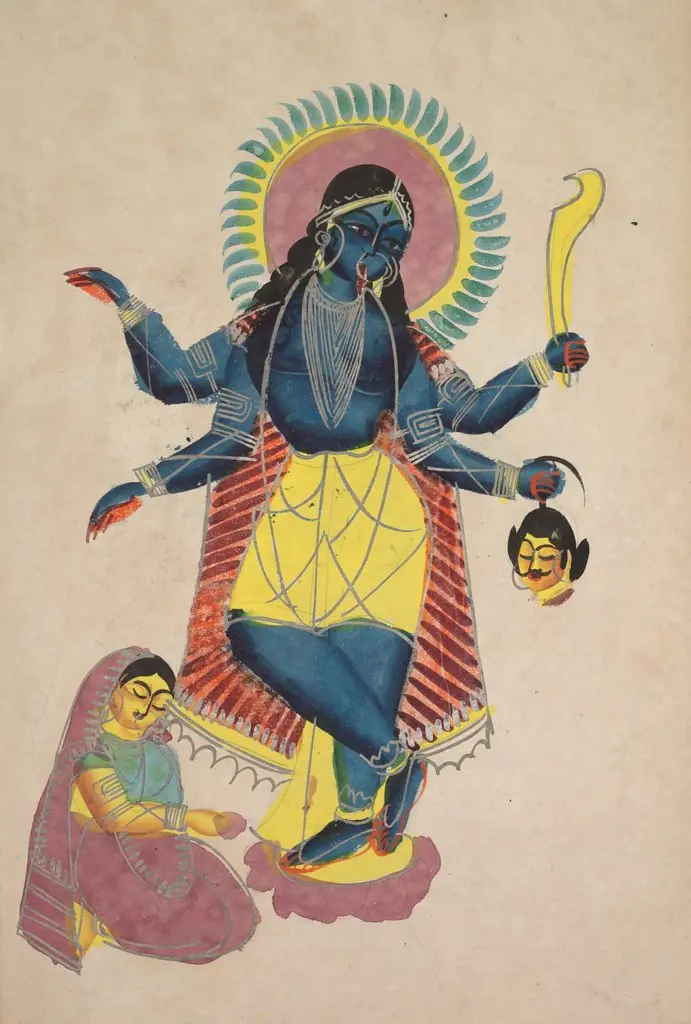
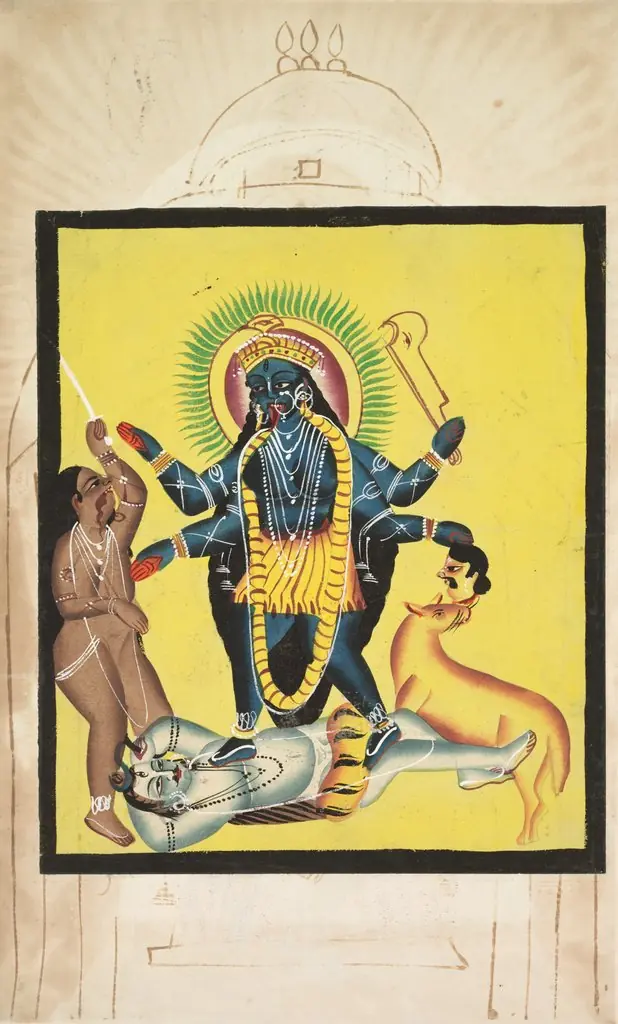
Krishna as Kali, and Radha is a paint painting by the Impressionist artist Unknown. It dates from 1885 and is held in the collection of the Victoria and Albert Museum. Created in 1885, this work is an opaque watercolor on paper that merges two prominent figures from Hindu mythology.
About this work
Overview
Created in 1885, this work is an opaque watercolor on paper that merges two prominent figures from Hindu mythology. The composition presents a tall, dark‑skinned deity rendered in blue‑black tones, adorned in vivid yellow and orange garments, while a smaller, kneeling figure offers reverence. The painting’s palette is dominated by striking colors set against a muted green backdrop.
Subject & Meaning
The central figure is identified as Krishna portrayed in the guise of the goddess Kali, a rare syncretic iconography that blends masculine and feminine divine aspects. Opposite him, Radha is shown in a posture of worship, her striped black‑and‑white attire and calm gaze emphasizing devotion and the spiritual union between the lover and the beloved.
Technique & Style
Executed with opaque watercolour, the artist achieves a solid, almost sculptural quality in the figures. The four arms of the deity are delineated with precise gestures: one holds a yellow object, another rests on the hip, while the remaining two gesture toward the chest. Contrasting white circles around the eyes and the bright costume enhance the visual impact against the subdued background.
History & Provenance
The painting entered the museum’s collection in 1894, purchased from Miss M. Steele. Steele’s mother, a Sanskrit scholar at Cambridge, had inherited the work, suggesting the piece may have been part of a family collection assembled during a period of residence in India, possibly by Steele’s grandmother.
Context
The late nineteenth‑century fascination with Indian art and mythology among British scholars and collectors provides a backdrop for this work. Its hybrid iconography reflects both the Victorian interest in exotic subjects and the scholarly engagement with Sanskrit texts that informed the family’s acquisition.
Artist & collection

 Domestic Scene
 Giacomo and Cardinal Marco, investing Andrea, Abbot of San Zeno, with his Benefice
 The Nymph of Fontainebleau
 Portrait of a Woman
 Madonna and Child with Saints in the Enclosed Garden
 Venus and Minerva
 Family Group of Four on Sofa
 Wall painting from Room H of the Villa of P. Fannius Synistor at Boscoreale