Artwork
Kali and Shiva
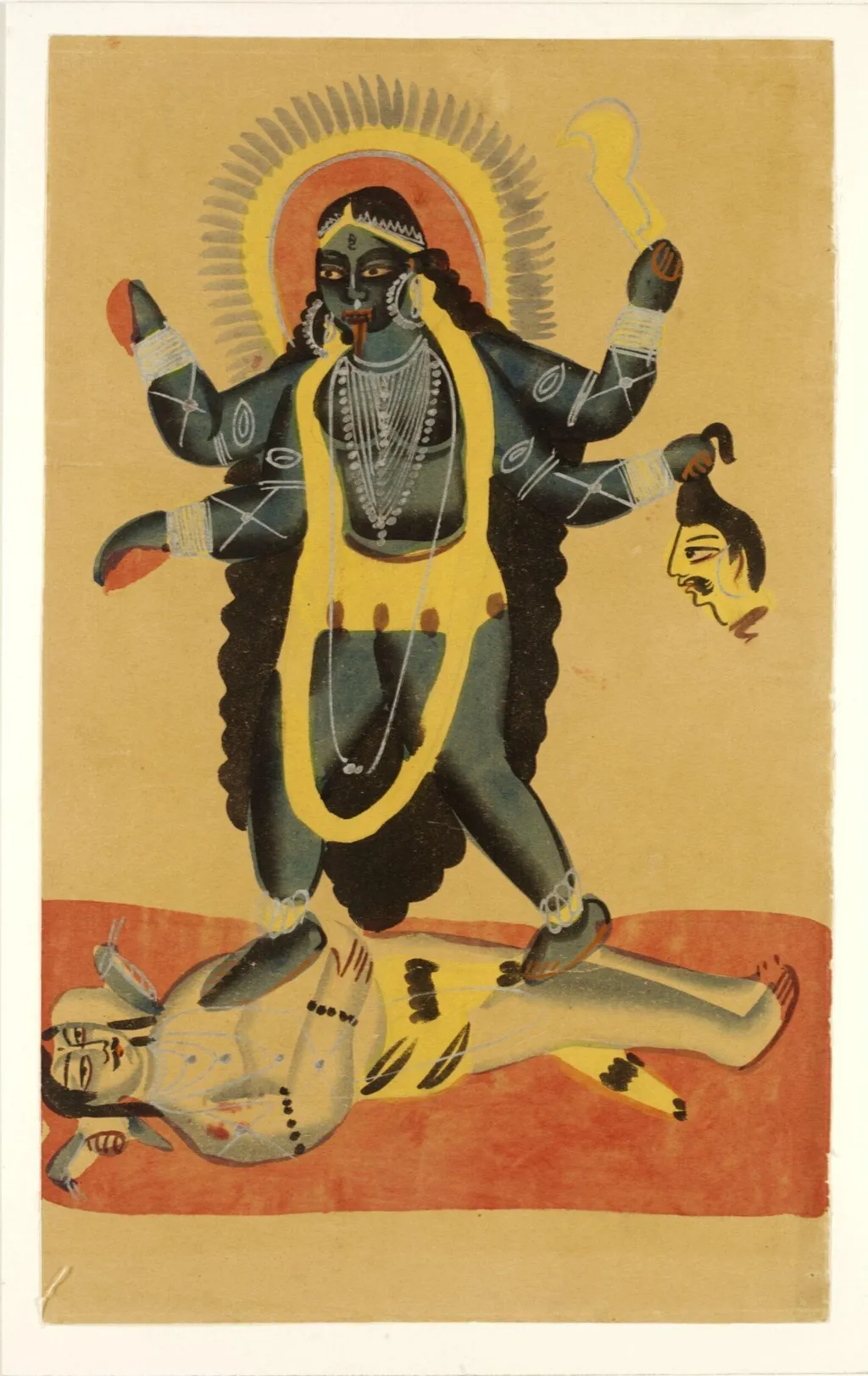
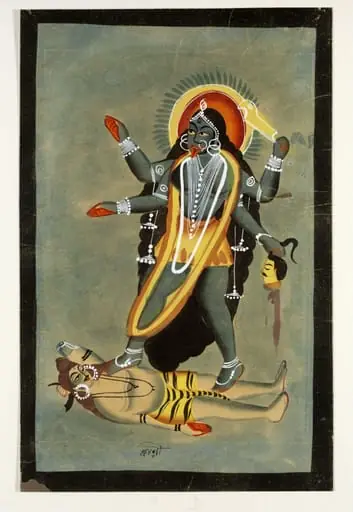
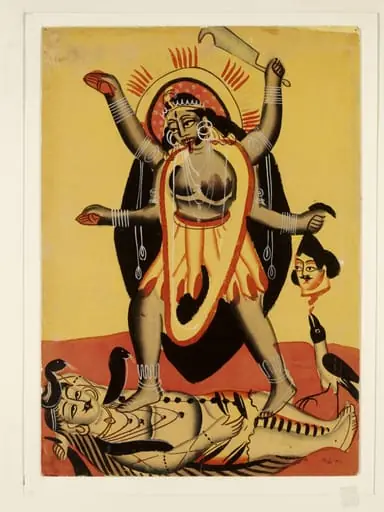
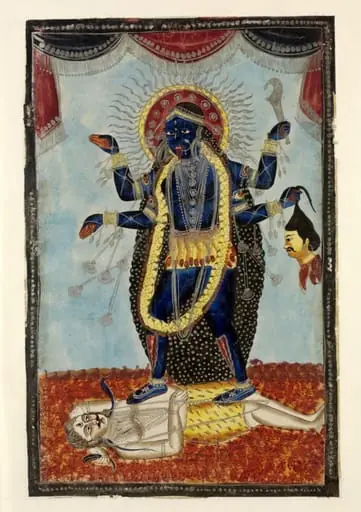
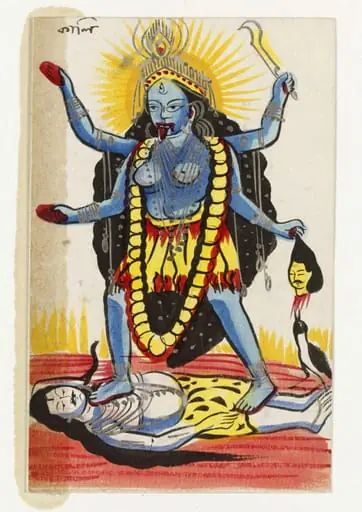
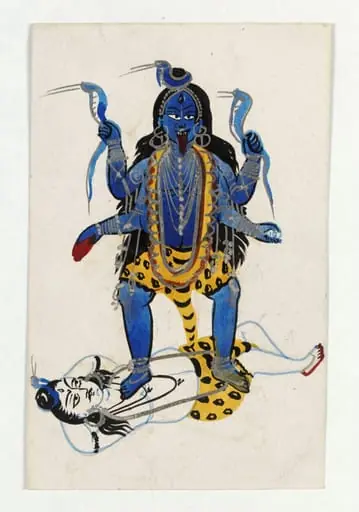
Kali and Shiva is a paint painting by the Impressionist artist Unknown. It dates from 1885 and is held in the collection of the Victoria and Albert Museum.
About this work
Overview
Attributed to an anonymous artist, the work originates from the Kalighat tradition of Bengal, known for its vivid imagery and devotional themes.
This opaque watercolour on paper, dated 1885, portrays the Hindu deities Kali and Shiva in a dynamic mythological scene. Attributed to an anonymous artist, the work originates from the Kalighat tradition of Bengal, known for its vivid imagery and devotional themes. It was acquired by a British institution in 1950 from Miss M. Steele, whose family had connections to Sanskrit scholarship and possible residence in India during the late 19th century.
Subject & Meaning
The painting illustrates Kali, the fierce goddess of time and transformation, standing upon Shiva, the ascetic destroyer and regenerator. Her four arms hold a sword and a severed head, symbols of destruction and transcendence. Shiva’s supine form signifies his surrender to her power, representing the balance between creative force and stillness. The scene reflects a theological moment where divine energy is both unleashed and contained.
Technique & Style
Executed in bold, flat areas of opaque watercolour, the painting employs high-contrast hues—deep reds, yellows, and blacks—to define form and movement. The figures are rendered with simplified contours and minimal detail, characteristic of Kalighat art. The background is unadorned, with a soft golden glow framing the central figures, directing focus to their interaction without narrative distraction.
History & Provenance
The painting entered the collection in 1950 through Miss M. Steele, who inherited it from her mother, a Cambridge-based Sanskrit scholar. The family’s connection to India likely stems from the grandmother’s time there in the 1890s, suggesting the work was acquired during British colonial residence. Its journey from a devotional context in Bengal to a Western institutional setting reflects broader patterns of colonial-era art collection.
Context
Produced in the Kalighat region near Kolkata, this work emerged from a tradition of affordable, mass-produced devotional paintings sold to pilgrims. Artists adapted classical Hindu iconography into accessible, emotionally charged compositions. Though rooted in religious practice, these works also responded to urban life and changing social dynamics, blending spiritual themes with contemporary visual language.
Legacy
As a representative of Kalighat painting, this work preserves a distinctive regional style that bridged folk and classical traditions. Its survival in a Western collection highlights the global circulation of South Asian religious art. While its original devotional purpose may have shifted, it remains a tangible record of 19th-century Bengal’s artistic and spiritual culture.
Artist & collection

 Domestic Scene
 Giacomo and Cardinal Marco, investing Andrea, Abbot of San Zeno, with his Benefice
 The Nymph of Fontainebleau
 Portrait of a Woman
 Madonna and Child with Saints in the Enclosed Garden
 Venus and Minerva
 Family Group of Four on Sofa
 Wall painting from Room H of the Villa of P. Fannius Synistor at Boscoreale